June 9, 2026
Strategic Investment Architecture and Scale Analysis
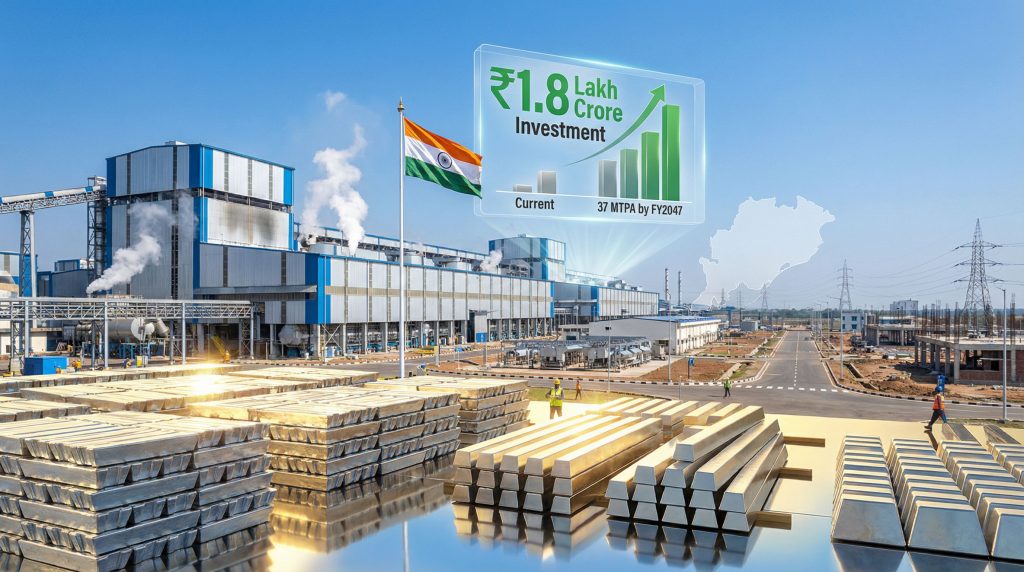
Vedanta's commitment to expanding its Vedanta Aluminium expansion in Odisha represents one of the most substantial private sector investments in India's metals sector, with a total deployment of ₹1.8 lakh crore structured across multiple industrial components. This investment framework demonstrates a methodical approach to building integrated production capabilities rather than isolated facility development.
The expansion encompasses several critical elements working in coordination. The greenfield smelter facility targets 3 million tonnes per annum capacity while captive power generation through a 4,900 MW power plant ensures energy security. Furthermore, the alumina refinery operations scaled to 6 MTPA processing capability work alongside downstream manufacturing parks for value-added product development.
This integrated approach addresses a fundamental challenge in aluminium production: energy intensity and supply chain coordination. The captive power component ensures stable electricity supply for smelting operations, which typically consume 13,000-15,000 kWh per tonne of primary aluminium produced.
Investment Phasing and Capital Deployment
| Project Component | Capacity Scale | Investment Focus | Implementation Phase |
|---|---|---|---|
| Primary Smelting | 3 MTPA | Core production capability | Phase 1 Priority |
| Power Generation | 4,900 MW | Energy security | Concurrent development |
| Alumina Processing | 6 MTPA | Feedstock integration | Phase 2 expansion |
| Downstream Parks | Multi-facility | Value chain extension | Phase 3 development |
The phased implementation strategy allows for market condition adjustments and technology integration as global aluminium markets evolve. In addition, this approach enables capital efficiency through staged commissioning and operational optimization.
Technology Integration and Industrial Architecture
Modern aluminium smelting requires sophisticated technological coordination across multiple systems. The Vedanta Aluminium expansion in Odisha incorporates advanced Hall-Héroult process technology, which has seen significant efficiency improvements in recent years.
Contemporary smelters achieve amperage levels exceeding 400,000 amps per cell, substantially higher than older facilities operating at 150,000-200,000 amps. The integration of captive power generation with smelting operations creates opportunities for waste heat recovery and process optimization that standalone facilities cannot achieve.
This technological synergy becomes increasingly important as environmental regulations tighten and energy costs fluctuate. Moreover, these renewable energy solutions contribute to sustainable production methods essential for future competitiveness.
When big ASX news breaks, our subscribers know first
Demand Trajectory Analysis and Strategic Market Positioning
India's aluminium consumption trajectory reflects broader economic transformation patterns occurring across developing economies. Current projections indicate consumption growth from existing levels to approximately 37 MTPA by FY2047, representing a dramatic expansion in market size and complexity.
Sectoral Demand Drivers and Growth Vectors
The projected consumption increase stems from multiple industrial sectors experiencing simultaneous growth. Automotive sector evolution includes electric vehicle component requirements, whilst infrastructure development spans transportation and urban construction.
Renewable energy systems require aluminium for wind turbines and solar installations, while packaging industry expansion is driven by consumer market growth. Additionally, aerospace and defense manufacturing localization initiatives contribute to demand growth.
Each sector exhibits distinct aluminium intensity patterns and quality requirements. Electric vehicles, for example, utilise 50-100% more aluminium per unit than conventional internal combustion engine vehicles, primarily in battery housing and structural components designed for weight reduction.
Resource Security and Competitive Positioning
Odisha's bauxite reserves, constituting approximately 55% of India's total deposits, provide fundamental raw material security for integrated operations. This geological advantage becomes strategically significant as global bauxite markets face potential supply disruptions and transportation cost pressures.
However, market volatility hedging strategies remain crucial for managing commodity price fluctuations that affect profitability across production cycles.
"The strategic positioning in resource-rich regions creates competitive advantages that extend beyond immediate cost benefits to include supply chain resilience and operational flexibility during market volatility periods."
Vertical integration from bauxite extraction through finished product manufacturing eliminates multiple cost layers and quality control points that fragmented supply chains cannot match. This integration proves particularly valuable during commodity price volatility cycles when input cost management becomes critical for maintaining margins.
Import Substitution Economics and Trade Balance Impact
India's current aluminium trade position involves substantial import volumes for specialised grades and downstream products despite domestic smelting capacity. The expansion targets these high-value segments where imports currently dominate market share.
Foreign exchange implications extend beyond direct import substitution to include export revenue potential. As domestic capacity exceeds consumption growth in specific product categories, the expansion positions India to participate in global aluminium trade as an exporter rather than primarily an importer.
Employment Generation Model and Regional Economic Multipliers
The employment architecture surrounding large-scale aluminium operations extends far beyond direct production workforce requirements. Industrial economics research indicates each primary metals job typically generates 4-5 indirect positions across supplier networks, transportation systems, and service sectors.
Direct Employment Structure and Skill Requirements
Initial phase employment creation targets nearly 50,000 direct positions, expanding to more than 200,000 as full operational capacity comes online. This employment structure spans multiple skill levels and technical specialisations.
Production operations require specialised smelting and refining expertise, while engineering and technical support handles process optimisation and maintenance. Furthermore, quality assurance and laboratory functions ensure product specification compliance alongside logistics and transportation coordination for raw materials and finished products.
The technical skill requirements in modern aluminium production have evolved significantly with digitalisation and automation integration. Contemporary facilities require workers comfortable with computerised process control systems, predictive maintenance protocols, and quality management databases.
MSME Ecosystem Development and Distributed Economic Impact
The expansion strategy includes supporting over 20,000 micro, small, and medium enterprises across various industrial functions. This approach creates distributed economic value rather than concentrated industrial employment, fostering entrepreneurship and local business development.
MSME Integration Categories include:
- Input suppliers for chemicals, consumables, and maintenance materials
- Equipment service providers offering specialised maintenance and repair
- Transportation and logistics companies handling material movement
- Packaging and processing businesses for downstream product handling
- Professional services including engineering, environmental, and financial support
This distributed model transforms traditional industrial development approaches by embedding local entrepreneurship within global value chains. Rather than creating dependency relationships, it establishes symbiotic business networks that can adapt to market changes and technological evolution.
Skills Development and Human Capital Formation
Large-scale industrial operations require comprehensive workforce development programmes that extend beyond immediate employment needs. The aluminium industry's technical complexity demands continuous learning systems and capability building initiatives.
Training programmes must address both current operational requirements and future technological changes including automation integration, environmental compliance systems, and digital manufacturing protocols. Consequently, this investment in human capital creates lasting regional advantages that persist beyond individual project lifecycles.
Global Market Positioning and Competitive Dynamics
The combined existing and planned capacity approaching 4.8 MTPA positions Vedanta among significant global aluminium producers. The Vedanta Aluminium expansion in Odisha places the company in a strong competitive position, though exact ranking depends on capacity utilisation rates and market conditions across competing facilities worldwide.
International Competitive Landscape Analysis
Global aluminium production remains concentrated among major players including China Hongqiao Group, Rusal, Alcoa, and Emirates Global Aluminium. The industry exhibits significant economies of scale advantages for integrated operations, making capacity scale and technological efficiency critical competitive factors.
| Producer Category | Typical Capacity Range | Competitive Advantages |
|---|---|---|
| Mega Producers | 3+ MTPA | Scale economies, technology leadership |
| Regional Leaders | 1-3 MTPA | Market proximity, specialisation |
| Niche Players | <1 MTPA | Product differentiation, flexibility |
The expansion trajectory places the company firmly in the regional leader category with potential progression toward mega producer status. This positioning aligns with broader industry evolution trends shaping global production patterns.
Export Market Development and International Trade Integration
Current export activities spanning 60+ countries provide foundation infrastructure for scaling international market presence as additional capacity comes online. This established trade network creates competitive advantages through customer relationships, logistics systems, and market intelligence.
Export market development requires understanding diverse quality specifications, regulatory requirements, and competitive dynamics across multiple regions. The aluminium industry exhibits significant regional price variations based on transportation costs, local market conditions, and trade policy environments.
Moreover, trade war impacts strategies continue to influence global supply chain configurations, creating opportunities for diversified production bases.
Technology Leadership and Sustainable Production
Contemporary aluminium production faces increasing pressure for environmental performance improvement and carbon footprint reduction. The industry's energy-intensive nature makes power source composition and efficiency optimisation critical factors for long-term competitiveness.
Advanced smelting technologies incorporated in new facilities can achieve specific energy consumption levels 10-15% lower than older installations. These efficiency gains translate directly to cost advantages and environmental compliance capabilities.
Additionally, the focus on decarbonisation benefits drives investment in cleaner production technologies and renewable energy integration across the expansion project.
Regional Development Patterns and Industrial Cluster Formation
The Dhenkanal and Rayagada project locations create dual industrial nodes with potential for triggering complementary investments across eastern India. Industrial cluster development typically follows predictable patterns where anchor investments attract supporting industries and infrastructure improvements.
Infrastructure Development Cascades
Large-scale industrial investments necessitate infrastructure enhancements that benefit broader regional development. Transportation network improvements facilitate raw material and product movement, whilst power transmission upgrades handle industrial load requirements.
Water management systems address process requirements and environmental compliance, while digital connectivity enhancement supports operational and administrative functions. These infrastructure improvements create positive externalities for other economic activities and residential communities throughout the region.
Industrial Ecosystem Development and Agglomeration Effects
Successful industrial clusters exhibit agglomeration economies where co-located businesses achieve cost advantages and operational efficiencies unavailable to isolated facilities. The aluminium industry's complex supply chain requirements make it particularly suited to cluster development.
Downstream manufacturing operations often locate near primary production facilities to minimise transportation costs and enable closer technical collaboration. This proximity effect can attract additional investment in specialised processing, fabrication, and assembly operations.
Risk Assessment and Mitigation Strategies
Large-scale industrial investments face multiple risk categories requiring comprehensive management approaches. The aluminium industry's cyclical nature and capital intensity make risk assessment particularly critical for long-term project success.
What Are the Key Market Risks and How Can They Be Managed?
Aluminium markets exhibit significant price volatility driven by global supply-demand imbalances, energy cost fluctuations, and macroeconomic conditions. Integrated operations provide natural hedging mechanisms through cost control across multiple value chain segments.
Risk Mitigation Approaches include:
- Vertical integration reducing external input cost exposure
- Product diversification across multiple end-user markets
- Geographic market distribution minimising regional demand concentration
- Flexible production systems enabling capacity adjustment during downturns
Environmental and Regulatory Compliance
Environmental regulations affecting aluminium production continue evolving as governments address climate change and pollution concerns. Proactive compliance strategies and technology adoption become essential for maintaining operational licences and market access.
The ₹500 crore community investment commitment demonstrates recognition that social acceptance and environmental stewardship are fundamental to long-term operational sustainability. Furthermore, this investment supports local development initiatives beyond direct industrial operations.
The next major ASX story will hit our subscribers first
Future Market Scenarios and Strategic Implications
What Are the Potential Outcomes for This Expansion?
Optimal Execution Scenario: Full capacity achievement by 2030 could establish Odisha as a recognised global aluminium production hub. This success would attract additional downstream manufacturers and create self-reinforcing industrial ecosystem development comparable to established clusters in China or the Gulf region.
Gradual Scaling Scenario: Phased capacity additions responding to market absorption rates could extend implementation timelines while reducing execution risks and capital intensity pressures. This approach allows for technology upgrades and market condition adjustments during the development process.
Market Integration Scenario: Successful integration with global value chains could position Indian aluminium production as a preferred supplier for multinational manufacturers. This positioning supports supply chain diversification away from concentrated production regions.
Strategic Investment Implications for Industry Stakeholders
The Vedanta Aluminium expansion in Odisha represents transformational potential extending beyond capacity addition to encompass strategic repositioning of India's metals industry within global value chains. This repositioning involves shifting from import dependence toward export leadership while establishing domestic industrial capabilities.
The success of this expansion could influence industrial policy approaches and private sector investment decisions across India's metals and materials sectors. It demonstrates viability of large-scale integrated operations in competitive global markets, setting precedents for future development projects.
Long-term Industry Structure Implications
| Impact Dimension | Near-term Development | Long-term Transformation |
|---|---|---|
| Employment Ecosystem | 50,000 direct positions | 200,000+ total impact |
| State Revenue Generation | ₹9,000 crore annually | Potential substantial growth |
| Export Market Position | Enhanced current base | Major global participant |
| Technology Leadership | Modern facility deployment | Innovation hub development |
According to recent Vedanta Aluminium press releases, the company continues demonstrating commitment to Odisha's industrial development. Additionally, industry analysis reports highlight the strategic significance of this investment for regional economic transformation.
Disclaimer: This analysis is based on publicly available information and industry research. Investment decisions should consider comprehensive due diligence including financial analysis, market conditions, and risk assessment. Projected figures represent estimates based on current market conditions and may vary significantly based on actual implementation and market developments.
What Are the Investment Implications of Large-Scale Industrial Expansions?
Discovery Alert's proprietary Discovery IQ model delivers real-time alerts on significant mineral discoveries and major industrial developments across ASX-listed companies, instantly empowering subscribers to identify actionable opportunities ahead of the broader market. Understand why major mineral discoveries and strategic industrial investments can lead to significant market returns by exploring Discovery Alert's dedicated discoveries page, showcasing historic examples of exceptional outcomes.