
May 14, 2026
Strategic Energy Realignment: Navigating Venezuela's Return to Global Oil Markets
The global energy landscape faces unprecedented complexity as traditional supply routes encounter disruption and price volatility reaches concerning levels. Against this backdrop, the US eases Venezuela oil sanctions represents a calculated attempt to restore market stability. Understanding these shifts requires examining multiple scenarios where geopolitical tensions, infrastructure constraints, and economic pressures converge to reshape international energy flows.
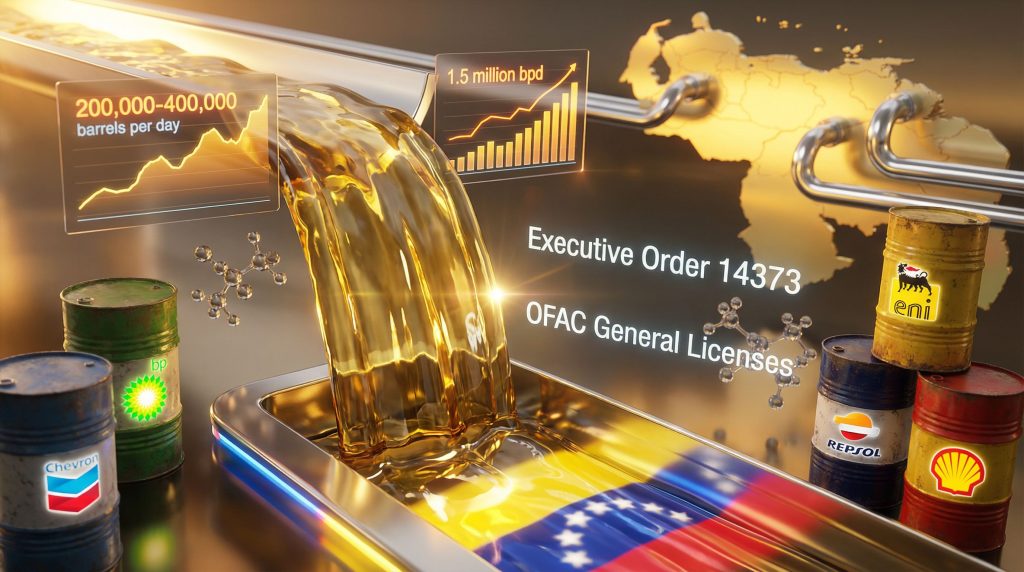
Recent developments in US sanctions policy toward Venezuela illustrate how energy security considerations can override longstanding diplomatic positions when market conditions deteriorate rapidly. The Treasury Department's broad authorization allowing Petroleos de Venezuela SA (PDVSA) to directly engage with US companies and global markets marks a fundamental pivot from years of restrictive measures.
When big ASX news breaks, our subscribers know first
Market Dynamics Driving Policy Transformation
Immediate Supply Chain Pressures
Current market tensions stem from multiple convergent factors creating sustained upward pressure on global oil prices. Furthermore, our comprehensive oil price rally analysis reveals that the halt of traffic through the Strait of Hormuz has disrupted approximately one-fifth of worldwide oil transit from Persian Gulf producers, creating immediate supply bottlenecks that affect pricing mechanisms globally.
This chokepoint disruption demonstrates the vulnerability of centralised shipping routes and highlights why policy makers seek alternative supply sources. Venezuelan heavy crude, despite infrastructure challenges, represents geographically advantageous positioning for Western Hemisphere refiners specifically designed to process higher sulfur content petroleum products.
Infrastructure Rehabilitation Requirements
Venezuela's oil production capacity requires substantial capital investment to restore previous output levels. In addition, US oil production decline trends emphasise the urgency of diversifying supply sources. Industry assessments suggest that achieving meaningful production increases involves comprehensive rehabilitation of:
- Wellhead maintenance systems that have deteriorated during years of limited investment
- Pipeline infrastructure connecting production facilities to export terminals
- Refinery upgrading to optimise heavy crude processing capabilities
- Port facility modernisation for efficient tanker loading operations
The timeline for these improvements extends beyond immediate market relief, creating a staged recovery scenario rather than rapid production restoration.
Regional Energy Security Implications
Transportation Cost Advantages
Venezuelan crude offers significant logistical benefits for US Gulf Coast refineries compared to Middle Eastern alternatives. However, recent oil price movements demonstrate the volatility affecting international supply chains. Reduced shipping distances translate to:
- Lower transportation costs per barrel delivered
- Decreased transit time allowing more flexible inventory management
- Reduced exposure to international shipping route disruptions
- Enhanced supply chain resilience through geographic diversification
These factors become particularly valuable during periods of elevated geopolitical tension affecting traditional supply routes.
Refinery Optimisation Opportunities
US Gulf Coast refining infrastructure was historically configured to process Venezuelan heavy crude before sanctions implementation. This existing compatibility creates immediate operational advantages:
- Established processing protocols requiring minimal technical adjustment
- Existing storage and handling systems designed for heavy crude specifications
- Trained operational personnel familiar with Venezuelan petroleum characteristics
- Supply chain relationships that can be reactivated relatively quickly
Investment Framework Analysis
Direct Engagement Structures
Companies authorised to engage with PDVSA must navigate complex regulatory frameworks whilst identifying profitable opportunities. The authorization structure allows for:
| Engagement Type | Regulatory Requirements | Operational Considerations | Risk Factors |
|---|---|---|---|
| Direct Purchases | OFAC compliance protocols | Supply contract negotiation | Political stability monitoring |
| Joint Operations | Enhanced due diligence | Infrastructure cost sharing | Sanctions reversal risk |
| Service Provision | Restricted entity screening | Technical expertise deployment | Revenue repatriation challenges |
| Technology Transfer | Export control compliance | Equipment and knowledge sharing | Intellectual property protection |
Risk Management Considerations
Successful engagement with Venezuelan operations requires sophisticated risk assessment frameworks addressing multiple uncertainty categories. Consequently, understanding how the US eases Venezuela oil sanctions creates new market dynamics is essential:
Political Risk Factors:
- Government stability and policy continuity
- Electoral cycles and administrative changes
- Regional diplomatic relationship evolution
- Opposition party positioning on energy policy
Operational Risk Elements:
- Infrastructure reliability and maintenance requirements
- Workforce stability and technical capability
- Supply chain security and logistics coordination
- Environmental and safety compliance standards
Financial Risk Components:
- Currency volatility and exchange rate fluctuations
- Revenue repatriation mechanisms and restrictions
- Contract enforceability and dispute resolution
- Insurance availability and cost considerations
Global Market Integration Scenarios
Short-Term Price Impact Modelling
Venezuelan oil market re-entry creates multiple pricing scenario possibilities depending on production recovery speed and global demand patterns. For instance, examining potential oil price crash insights helps contextualise these developments:
Scenario 1: Rapid Integration (12-18 months)
If Venezuelan production reaches 800,000 to 1.2 million barrels per day within this timeframe, global markets could experience modest price stabilisation, particularly during peak demand seasons when supply margins typically tighten.
Scenario 2: Gradual Recovery (24-36 months)
A more conservative production ramp-up reaching 600,000 to 900,000 barrels per day would provide psychological market benefits whilst offering limited immediate price relief during supply disruptions elsewhere.
Scenario 3: Constrained Growth (36+ months)
Infrastructure limitations restricting production to 400,000 to 600,000 barrels per day would primarily serve as strategic reserve capacity rather than providing substantial market impact.
Regional Market Positioning
Venezuelan heavy crude integration affects different regional markets distinctively based on refining capacity and existing supply arrangements. Furthermore, understanding OPEC production impact helps frame these regional considerations:
US Gulf Coast Impact:
- Immediate compatibility with existing refining infrastructure
- Reduced dependence on Canadian heavy crude imports
- Enhanced flexibility during seasonal demand variations
- Improved profit margins for complex refineries designed for heavy crude processing
Caribbean and Latin American Markets:
- Restoration of traditional supply relationships
- Reduced transportation costs for regional refiners
- Political and economic stability benefits for petroleum product importers
- Enhanced energy security for smaller island economies
Regulatory Compliance Framework
Authorization Scope and Limitations
The Treasury Department's authorisation provides broad engagement permissions whilst maintaining specific restrictions designed to ensure compliance with broader US foreign policy objectives. Nevertheless, companies must carefully navigate US sanctions relief measures to ensure full compliance:
Permitted Activities Include:
- Direct crude oil purchases from PDVSA
- Global market resale of Venezuelan petroleum products
- Technical service provision for production enhancement
- Infrastructure development and maintenance contracts
Prohibited Interactions Encompass:
- Dealings with specifically sanctioned Venezuelan individuals
- Transactions involving restricted third-country entities (Russia, Iran, North Korea, Cuba)
- Revenue transfers outside authorised oversight mechanisms
- Technology sharing that could enhance military capabilities
Due Diligence Requirements
Companies engaging with Venezuelan operations must implement enhanced screening and monitoring protocols:
- Enhanced Know Your Customer (KYC) procedures for all Venezuelan counterparts
- Continuous sanctions list monitoring to ensure ongoing compliance
- Transaction documentation meeting Treasury Department reporting standards
- Regular compliance auditing with qualified legal and regulatory experts
These requirements create operational overhead but provide legal protection and regulatory certainty for authorised activities.
The next major ASX story will hit our subscribers first
Long-Term Strategic Implications
Energy Diplomacy Evolution
The decision where the US eases Venezuela oil sanctions demonstrates how energy security considerations can drive pragmatic policy adjustments even when broader diplomatic relationships remain strained. This approach suggests potential application to other sanctioned producers facing similar market conditions.
Supply Chain Resilience Building
Geographic diversification of oil supply sources reduces systematic risk from regional disruptions whilst providing policy makers with additional diplomatic leverage. Venezuelan integration contributes to this diversification strategy by:
- Reducing concentration risk in Middle Eastern supply chains
- Providing alternative sources during shipping route disruptions
- Creating competitive pressure on other producers for favourable terms
- Enhancing strategic petroleum reserve options for emergency situations
Investment Capital Allocation
Long-term Venezuelan energy sector development requires substantial capital investment across multiple operational areas. Successful restoration involves coordinated investment in:
Upstream Development: Well drilling, completion, and maintenance programmes requiring advanced oilfield service capabilities and sustained capital deployment over multi-year periods.
Midstream Infrastructure: Pipeline network rehabilitation, pumping station upgrades, and storage facility expansion to handle increased production volumes efficiently.
Downstream Integration: Refinery optimisation, product quality improvement, and distribution network enhancement to maximise value capture from heavy crude production.
Market Psychology and Investor Sentiment
Perception Versus Reality Dynamics
Market reactions to Venezuelan sanctions relief often exceed the immediate physical supply impact due to psychological factors affecting trader behaviour and investment decisions. Understanding these dynamics helps predict price movements and investment flows:
Positive Sentiment Drivers:
- Perception of increased supply optionality reducing shortage fears
- Demonstration of policy flexibility during crisis situations
- Potential for additional sanctions relief creating upside scenarios
- Geographic diversification benefits for supply security planning
Negative Sentiment Concerns:
- Political risk premium requirements for Venezuelan investments
- Infrastructure reliability questions affecting production forecasts
- Regulatory complexity increasing operational costs and uncertainty
- Potential sanctions reversal creating stranded asset risks
Technical Considerations for Heavy Crude Processing
What Are the Refinery Configuration Requirements?
Venezuelan heavy crude characteristics require specific refining infrastructure capabilities not universally available across global processing facilities:
Key Technical Specifications:
- API Gravity: Typically ranging from 16-24 degrees requiring specialised processing units
- Sulfur Content: Higher levels necessitating enhanced desulfurisation capabilities
- Viscosity Management: Temperature and additive requirements for efficient handling
- Metals Content: Vanadium and nickel levels affecting catalyst selection and lifecycle
Processing Optimisation Strategies:
- Coking unit utilisation for heavy residue conversion
- Hydrocracking integration for higher value product yields
- Blending operations with lighter crudes for specification management
- Catalyst management programmes for sustained operational efficiency
Infrastructure Modernisation Priorities
Successful Venezuelan oil sector restoration requires prioritised investment in critical infrastructure components based on production impact and capital efficiency:
- Wellhead Equipment Replacement: Immediate production impact with relatively low capital requirements
- Pipeline Integrity Programmes: Essential for sustained production growth and environmental compliance
- Export Terminal Upgrades: Critical bottleneck relief for increased production volumes
- Power System Reliability: Fundamental requirement for consistent operational capability
This analysis provides strategic framework modelling for understanding complex energy policy developments. The interplay of geopolitical, technical, and market factors requires ongoing assessment and adaptive strategic planning as conditions evolve.
Looking to Capitalise on Energy Sector Opportunities in Small-Cap Mining?
Discovery Alert's proprietary Discovery IQ model delivers real-time alerts on significant mineral discoveries across the ASX, including energy-related commodities that often respond to major geopolitical shifts like sanctions relief. Start your 14-day free trial today to identify actionable opportunities ahead of the broader market as global energy dynamics continue reshaping commodity demand patterns.