August 5, 2026
Venezuelan oil price movements remain heavily influenced by the complex web of Venezuelan oil trade licenses, which represents one of the most sophisticated sanctions management systems ever implemented by the U.S. Treasury Department. These authorization frameworks operate through multiple layers of compliance oversight, transaction-specific approvals, and strategic policy objectives that extend far beyond simple trade facilitation.
Current market data reveals that Venezuela maintains 29 million barrels in floating storage, creating substantial inventory pressure that licensed operators must navigate. This storage capacity represents approximately 45 days of normal Venezuelan export volumes, indicating the scale at which these regulatory frameworks must function.
The Office of Foreign Assets Control employs a transaction-by-transaction approval mechanism rather than blanket authorizations. Licensed entities must demonstrate established compliance infrastructure and proven capacity for managing sanctions-adjacent operations. Recent developments show this approach prioritizing major international trading houses with demonstrated regulatory experience over smaller operators.
Key Authorization Components:
- Individual company designations with specific operational parameters
- Volume-based transaction limits tied to quarterly reporting cycles
- Revenue channeling requirements through approved trustee mechanisms
- Compliance audit protocols with penalty enforcement structures
The licensing framework distinguishes between preliminary authorizations and extended operational permits. This tiered approach allows Treasury officials to adjust permissions based on changing geopolitical circumstances and compliance performance metrics.
How Current Venezuelan Oil Trade Licenses Differ From Historical Sanctions Approaches
The 2026 licensing system represents a fundamental departure from previous sanctions methodologies, operating with unprecedented implementation velocity and direct integration with regime transition objectives. Unlike earlier frameworks that maintained structural separation between humanitarian exceptions and commercial operations, current authorizations consolidate these categories under unified strategic guidance.
Following the January 3, 2026 political transition in Venezuela, interim leadership under Delcy Rodríguez redirected oil deliveries to United States markets within days rather than months. This rapid operational pivot demonstrates how modern licensing frameworks function as real-time policy instruments rather than static regulatory structures. Furthermore, this shift coincides with broader US oil production decline trends affecting domestic supply dynamics.
Timeline Analysis:
- 2019-2021: Comprehensive PDVSA sanctions with limited humanitarian carve-outs
- 2022-2024: Targeted operational exceptions for specific infrastructure projects
- 2025: Strategic expansion pilot programs for qualified international operators
- 2026: Accelerated implementation under interim Venezuelan government cooperation
The compressed four-day window between White House discussions (January 8) and formal licensing approvals (January 12) reflects policy implementation speeds previously unseen in sanctions administration. This acceleration indicates that licensing decisions now operate through direct executive channels rather than traditional bureaucratic review processes.
Previous frameworks required months of regulatory review and inter-agency coordination. Current Venezuelan oil trade licenses receive approval through high-level policy discussions that bypass standard administrative timelines, suggesting these authorizations serve broader strategic objectives beyond routine sanctions management.
When big ASX news breaks, our subscribers know first
Licensed Operators in Venezuelan Oil Trade Markets
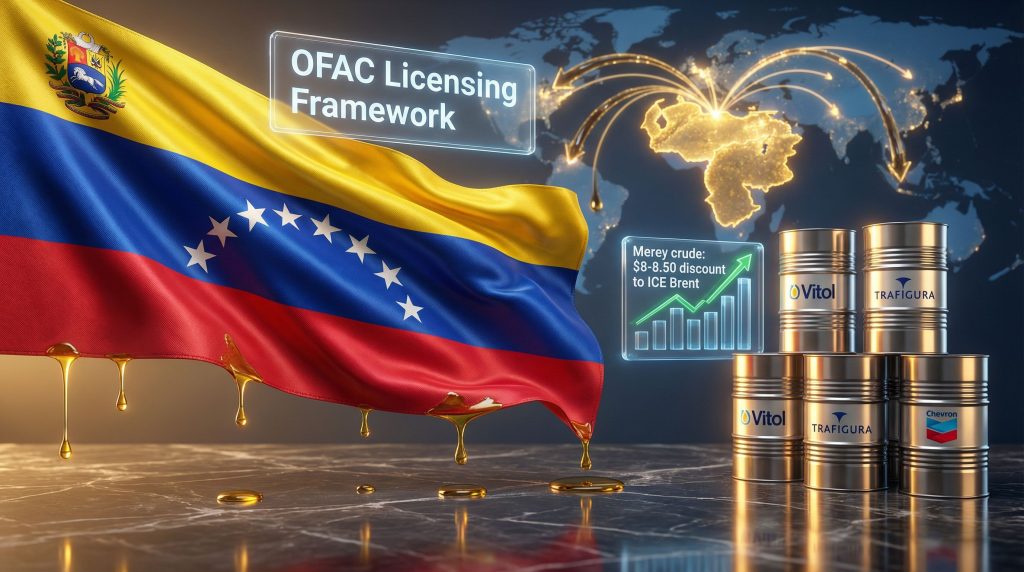
As of January 12, 2026, Vitol and Trafigura have secured U.S. licenses for Venezuelan oil trade operations, representing the first major authorizations under the expanded framework. These companies were selected following direct White House consultations rather than standard application procedures, according to recent reports from trading houses.
| Company | License Status | Authorization Date | Operational Focus |
|---|---|---|---|
| Vitol | Active License | January 12, 2026 | Import/Export Operations |
| Trafigura | Active License | January 12, 2026 | Logistics & Marketing |
| Additional Applicants | Under Review | Pending | Various Sectors |
The selection criteria appear to prioritize companies with established global trading platforms and demonstrated experience managing complex compliance requirements. Both licensed operators maintain extensive relationships across multiple commodity markets, providing operational flexibility for Venezuelan crude integration.
Chinese energy companies are actively working to protect Venezuelan assets as licensing changes disrupt previously established partnerships. This competitive pressure indicates that authorization decisions create immediate market advantages for licensed operators while potentially displacing non-U.S. aligned trading relationships.
Licensed operators function through distinct operational categories. Vitol operates with import/export authority focused on crude trading and marketing, while Trafigura emphasizes logistics support and sales coordination. This functional differentiation suggests Treasury officials view complete supply chain control as more effective than consolidated single-licensee operations.
The preliminary nature of these authorizations indicates potential for scope adjustments and renewal negotiations throughout 2026. Companies receiving these licenses accept substantial compliance obligations in exchange for access to discounted Venezuelan crude and associated profit opportunities.
Venezuelan Crude Pricing Dynamics Under Licensed Trade
Venezuelan oil pricing operates within a complex discount structure that reflects quality differentials, geopolitical risk premiums, and compliance cost factors. Current market conditions show Venezuelan fuel oil flows pushing Asian premiums to 8-month highs, indicating significant pricing volatility beyond static discount assumptions.
Current Benchmark Pricing:
- WTI Crude: $59.15 per barrel
- Brent Crude: $63.50 per barrel
- OPEC Basket: $61.20 per barrel
- Venezuelan Merey: Approximately $55 per barrel (estimated $8.50 Brent discount)
Goldman Sachs analysis suggests WTI could potentially decline to $50 per barrel, creating additional downside pressure on Venezuelan crude valuations. Licensed traders must incorporate these price risks into their margin calculations alongside compliance costs and operational complexities.
Venezuelan crude's high sulfur content and heavy density characteristics require specialized refining capacity. The geographic shift toward Atlantic-side delivery for Gulf Coast refineries creates shorter transportation distances compared to traditional trans-Pacific routing, potentially improving logistics economics for licensed operators.
Pricing Structure Components:
- Base quality discounts reflecting sulfur content and density specifications
- Transportation cost differentials between delivery destinations
- Geopolitical risk premiums for sanctions-adjacent operations
- Compliance overhead costs built into transaction pricing
The 8-month premium surge in Asian fuel oil markets reflects supply route restructuring as Venezuelan exports concentrate on U.S. destinations. This geographic reallocation creates temporary pricing advantages for licensed traders willing to absorb increased logistics coordination requirements.
Trustee oversight of revenue distribution may constrain pricing flexibility if transparency requirements limit complex supply chain arrangements or related-party transaction optimization strategies used by major trading houses.
Strategic Implications of Expanded Venezuelan Oil Licensing
The licensing expansion serves multiple simultaneous U.S. strategic objectives, including energy supply diversification, regional influence projection, and competitive displacement of Chinese-Venezuelan energy partnerships. These authorization frameworks function as geopolitical tools rather than purely commercial regulatory mechanisms. Consequently, the broader implications of Trump tariffs impact on global trade relationships further complicate this strategic landscape.
Regional Energy Security Impact:
Between January and November 2025, Venezuela supplied Cuba with an average of 27,000 barrels per day, representing approximately 50% of Cuba's oil deficit and 25% of total Cuban energy demand. The redirection of Venezuelan oil to U.S. markets has completely eliminated this critical energy lifeline.
Cuba now faces severe energy constraints with Russia emerging as a primary remaining supplier. Mexican President Claudia Sheinbaum confirmed on January 7 that recent Mexican oil exports to Cuba remain at historical levels, indicating limited alternative supply options for the island nation.
The U.S. seized two additional Venezuelan-linked tankers on January 7, 2026, further restricting alternative supply pathways and demonstrating coordinated pressure tactics beyond licensing policy implementation. In addition, emerging opportunities from Saudi exploration licenses may influence regional supply dynamics.
Competitive Displacement Effects:
Chinese energy companies' scrambling to protect Venezuelan assets indicates that licensing changes immediately disrupt established international partnerships. This displacement serves broader U.S. objectives of reducing Chinese influence in Western Hemisphere energy markets.
The licensing framework operates as both an economic tool for increasing U.S. crude supply and a strategic mechanism for consolidating post-transition political stability in Venezuela. Rather than maintaining sanctions pressure indefinitely, current policy leverages interim leadership cooperation to advance multiple objectives simultaneously.
Compliance Mechanisms and Enforcement Architecture
Venezuelan oil trade licenses operate under comprehensive oversight systems designed to ensure sanctions effectiveness while facilitating authorized transactions. These mechanisms include trustee revenue management, quarterly reporting requirements, and graduated penalty structures for non-compliance.
Trustee Oversight Functions:
- Revenue collection verification and documentation
- Project approval processes for authorized fund utilisation
- Stakeholder communication and transparency maintenance
- Compliance monitoring with regular reporting to Treasury officials
Licensed operators face significant penalties for non-compliance, including immediate licence revocation, financial sanctions against company assets, and potential criminal prosecution of responsible individuals. These enforcement mechanisms create strong incentives for rigorous compliance protocol adherence.
Revenue from Venezuelan oil sales flows through U.S.-supervised trustees who direct proceeds toward approved humanitarian and infrastructure projects. This structure prevents direct government access to oil revenues while supporting broader policy objectives of post-transition stability and development.
The trustee framework requires transparency regarding total transaction values, potentially limiting licensees' ability to optimise pricing through complex supply chain arrangements commonly used in international commodity trading.
Operational Challenges for Licensed Venezuelan Oil Traders
Licensed operators must navigate substantial logistical complexities including aging Venezuelan production infrastructure, transportation bottlenecks, and quality control challenges that affect crude specifications and delivery reliability.
Primary Operational Risk Factors:
- Production facility maintenance requirements and upgrade needs
- Transportation infrastructure limitations affecting loading and delivery schedules
- Quality assurance protocols for blending and specification compliance
- Supply chain coordination across multiple jurisdictions and regulatory frameworks
Companies must balance potential profits from Venezuelan crude discounts against reputational risks associated with sanctions-adjacent operations. These considerations require sophisticated risk management strategies and stakeholder communication protocols.
The floating storage capacity of 29 million barrels creates inventory management challenges for licensed operators. This stored volume represents significant capital tied up in floating facilities, requiring careful coordination between storage drawdown and market delivery timing.
Licensed traders must maintain specialised refining partnerships capable of processing Venezuelan heavy, sour crude characteristics. This requirement limits potential customer bases and may constrain pricing flexibility compared to lighter, sweeter crude alternatives. However, recent analysis of tariffs and market impact suggests that broader trade policy changes could affect these operational considerations.
The next major ASX story will hit our subscribers first
Future Evolution of Venezuelan Oil Licensing Policy
The licensing framework will likely expand based on Venezuelan political developments, regional stability metrics, and broader U.S. Latin American policy priorities. Current rapid implementation suggests potential for additional qualified operator authorisation in coming months.
Potential Development Scenarios:
- Expanded Authorisation: Additional qualified operators receiving licences based on demonstrated compliance capability
- Conditional Licensing: Permissions tied to specific Venezuelan democratic progress benchmarks
- Sector-Specific Permits: Infrastructure development authorisations for upstream and midstream projects
- Graduated Relief: Systematic sanctions reduction based on sustained compliance and political stability
Market integration prospects depend on successful pilot implementation by current licensed operators. Vitol and Trafigura's operational performance will influence Treasury decisions regarding additional authorisation grants and scope expansions.
The interim Venezuelan government's cooperation level will significantly affect licensing policy evolution. Sustained redirection of oil exports toward U.S. markets supports continued authorisation expansion, while any policy reversals could trigger immediate licence suspensions.
What Are the Long-term Strategic Considerations?
Successful licensing implementation could establish precedents for sanctions policy innovation in other regions. The combination of rapid authorisation procedures with comprehensive oversight mechanisms may serve as a model for managing complex geopolitical transitions involving critical commodity flows.
The framework demonstrates how modern sanctions regimes can evolve from static prohibition tools into dynamic policy instruments that capitalise on changing political circumstances whilst maintaining pressure for desired outcomes.
Venezuelan oil trade licenses represent a sophisticated balance between strategic policy objectives and practical market realities. Their continued evolution will depend on sustained compliance by licensed operators, political stability in Venezuela, and broader U.S. regional strategic priorities in Latin America.
Looking to Stay Ahead of Energy Market Shifts?
Discovery Alert's proprietary Discovery IQ model delivers real-time alerts on significant mineral discoveries across the ASX, helping investors identify actionable opportunities as geopolitical events like Venezuelan oil trade licensing reshape global commodity markets. Start your 30-day free trial today to position yourself ahead of market movements and gain insights that could transform your investment strategy.