May 11, 2026
Vietnam's steel industry has reached a pivotal moment with the implementation of comprehensive trade protection measures designed to address unfair competition in critical market segments. The vietnam anti-dumping tariff on chinese steel represents a sophisticated approach to trade defence, targeting specific hot-rolled coil products while maintaining broader economic cooperation frameworks. This development reflects the evolving dynamics of Southeast Asian steel markets, where precision-engineered trade barriers address specific competitive distortions without disrupting entire supply chains.
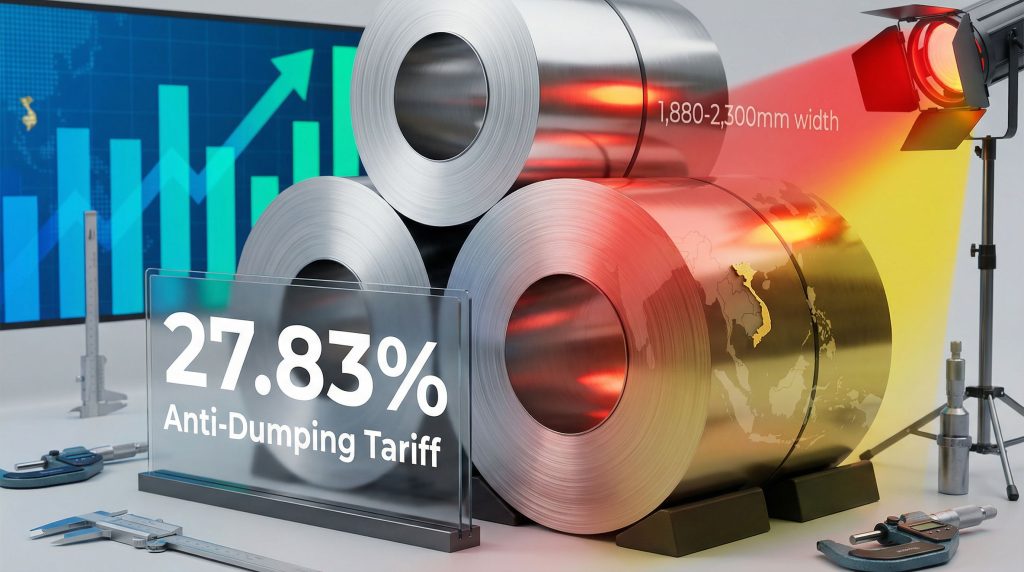
The emergence of targeted anti-dumping mechanisms represents a new phase in this evolution, where precision-engineered trade barriers address specific market segments while maintaining broader economic cooperation frameworks. Vietnam's recent implementation of a 27.83% anti-dumping tariff on Chinese hot-rolled coil products exemplifies this sophisticated approach to trade defense, targeting narrow product specifications while preserving broader bilateral economic relationships.
Understanding Anti-Dumping Mechanisms in Southeast Asian Steel Markets
What Are Anti-Dumping Tariffs and Why Do They Matter?
Anti-dumping tariffs operate as defensive trade instruments designed to protect domestic industries from unfair pricing practices by foreign producers. Under World Trade Organization regulations, specifically Article VI of the General Agreement on Tariffs and Trade (GATT 1994), these measures can be implemented when three conditions are met: dumping has occurred, domestic industry has suffered material injury, and a causal relationship exists between the dumping and the injury.
The economic rationale behind anti-dumping measures centers on preventing predatory pricing strategies that could eliminate domestic competition through below-cost selling. When foreign producers sell goods at prices below their normal value in domestic markets, this creates unfair competitive advantages that can devastate local industries. The vietnam anti-dumping tariff on chinese steel represents a textbook application of these principles, targeting specific hot-rolled coil products measuring between 1,880mm and 2,300mm in width with thickness parameters ranging from 1.2mm to 25.4mm.
Key Technical Framework Elements:
• Normal value determination methodology using home market prices or constructed costs
• Export price calculations based on actual transaction values
• Dumping margin calculations representing the difference between normal value and export price
• Material injury assessment examining production volumes, sales, market share, and profitability
• Causation analysis linking dumped imports to domestic industry harm
Vietnamese trade authorities implemented their investigation under domestic trade remedy legislation that aligns with WTO requirements, ensuring compliance with international trade law while protecting domestic steel producers. The precision of the 27.83% maximum rate reflects detailed economic analysis of dumping margins and injury levels affecting Vietnamese hot-rolled coil manufacturers.
How Vietnam's Steel Industry Positioned Itself for Protection
Vietnam's steel sector has experienced rapid growth over the past decade, with domestic production capacity expanding to meet rising construction and manufacturing demand. However, the industry faced increasing pressure from low-priced imports, particularly Chinese hot-rolled coil products that were undercutting domestic prices and gaining substantial market share.
The domestic steel industry's petition for protection likely emphasised several critical factors that Vietnamese authorities considered during their investigation. Market share erosion patterns would have shown declining sales volumes for domestic producers despite growing overall demand in the Vietnamese market. Furthermore, price undercutting analysis would have demonstrated that Chinese imports were consistently priced below comparable Vietnamese products, forcing domestic producers to reduce margins or lose customers.
Market Position Analysis Factors:
• Domestic production capacity utilisation rates declining despite market growth
• Employment levels at Vietnamese steel facilities under pressure from competitive pricing
• Investment plans delayed or cancelled due to uncertain market conditions
• Technology upgrade programmes threatened by reduced cash flow from margin compression
• Regional market share redistribution favouring imported products over domestic alternatives
Vietnamese steel producers demonstrated their case through comprehensive data submission showing how import competition was undermining their ability to compete fairly in their home market. In addition, the industry's consolidation around major players like Hoa Phat Group and Hoa Sen Group provided a unified voice for pursuing trade protection, essential for successful anti-dumping petitions under WTO rules requiring domestic industry support.
When big ASX news breaks, our subscribers know first
The Economics Behind Vietnam's 27.83% Tariff Decision
Quantifying Market Harm: The Investigation Framework
Vietnamese trade authorities conducted an extensive investigation to establish the precise dumping margins that justified the 27.83% maximum tariff rate. This investigation involved detailed analysis of Chinese exporters' pricing practices, production costs, and sales data to determine normal values in the Chinese domestic market. The methodology required examining home market sales, constructed costs, and third-country export prices to establish appropriate benchmarks for fair pricing.
The damage assessment process examined multiple economic indicators affecting Vietnamese hot-rolled coil producers between 2022 and 2024. Investigators analysed production volumes, capacity utilisation rates, sales quantities, market share evolution, pricing trends, profitability indicators, employment levels, and capital investment patterns to demonstrate material injury to the domestic industry.
Investigation Methodology Components:
| Assessment Category | Key Metrics Analysed | Time Period |
|---|---|---|
| Price Undercutting | Chinese export prices vs. Vietnamese domestic prices | 2022-2024 |
| Volume Analysis | Import surge patterns and market penetration rates | 2022-2024 |
| Injury Indicators | Production, sales, employment, profitability trends | 2022-2024 |
| Causation Analysis | Correlation between imports and domestic industry performance | 2022-2024 |
The 27.83% rate reflects the calculated dumping margin based on the difference between fair value (normal value) and actual export prices from Chinese producers. This precise calculation suggests that Chinese exporters were selling hot-rolled coil products at approximately 28% below fair market value, creating substantial competitive distortions in the Vietnamese market.
Consequently, price undercutting analysis would have examined transaction-level data showing systematic underpricing of Chinese imports compared to comparable Vietnamese products. This analysis likely revealed consistent patterns where Chinese producers offered prices below Vietnamese manufacturers' costs, making competition impossible on fair terms.
Targeted Product Specifications and Market Segmentation
The vietnam anti-dumping tariff on chinese steel demonstrates sophisticated targeting by focusing on specific hot-rolled coil products rather than applying broad-based protection across all steel categories. The measure applies exclusively to HRC products measuring between 1,880mm and 2,300mm in width, with thickness specifications ranging from 1.2mm to 25.4mm. This precision targeting allows Vietnamese authorities to address specific competitive problems while maintaining access to other steel products not produced domestically.
These technical specifications correspond to hot-rolled coil products commonly used in construction, automotive manufacturing, and appliance production. The width range of 1,880-2,300mm represents standard specifications for steel processing equipment and end-use applications in Vietnamese manufacturing sectors. Moreover, thickness parameters from 1.2mm to 25.4mm cover a broad range of applications from lightweight construction materials to heavy industrial components.
Product Classification Details:
• HS Code Classification: Likely falls under 7208.37 for hot-rolled iron or non-alloy steel coils
• Width Specifications: 1,880mm to 2,300mm (targeting specific processing capabilities)
• Thickness Range: 1.2mm to 25.4mm (covering multiple application categories)
• Steel Grade Coverage: Hot-rolled coil products meeting specified dimensional requirements
• Origin Requirements: Products manufactured in China subject to tariff assessment
The narrow product scope indicates that Vietnamese producers compete primarily in this specific market segment, while other steel products may be sourced from various suppliers without significant domestic production. This targeted approach minimises disruption to downstream industries while providing effective protection for Vietnamese hot-rolled coil manufacturers.
However, customs enforcement mechanisms require importers to provide detailed product specifications and origin documentation to determine tariff applicability. Products falling outside the specified dimensional parameters remain exempt from the anti-dumping duty, maintaining market access for complementary steel products.
Company-Specific Tariff Rates: A Risk-Based Approach
Tiered Penalty Structure Analysis
Vietnamese authorities implemented a differentiated tariff structure that assigns specific rates to individual Chinese steel producers based on their cooperation with the investigation and specific dumping margins calculated for each company. While the maximum rate reaches 27.83%, the actual rate structure likely varies among Chinese exporters depending on their pricing practices and investigation participation levels.
Anti-dumping investigations typically result in company-specific rates that reflect individual dumping margins rather than uniform tariffs applied to all exporters. Companies that fully cooperate with investigations by providing comprehensive cost and pricing data often receive calculated rates based on their specific circumstances. In contrast, non-cooperating companies receive higher "facts available" rates based on best information otherwise available.
Tariff Rate Determination Framework:
• Maximum Rate (27.83%): Applied to companies with highest calculated dumping margins or those failing to cooperate fully with investigation
• Calculated Individual Rates: Company-specific rates based on submitted cost and pricing data
• All Others Rate: Applied to Chinese producers not specifically investigated but subject to the measure
• New Shipper Reviews: Procedures for Chinese companies to request individual rate determinations
The differentiated approach encourages cooperation with Vietnamese trade authorities while ensuring that the most egregious dumping practices face the highest penalties. For instance, companies demonstrating fair pricing practices or providing transparent cost information may qualify for lower rates, creating incentives for compliance with fair trade principles.
Corporate Response Strategies and Market Adaptation
Chinese steel producers affected by the vietnam anti-dumping tariff face several strategic options for maintaining market access while complying with the new trade measures. The most immediate response involves price adjustments to absorb the tariff impact, though this approach reduces profit margins and may make exports uneconomical for some producers.
Alternative strategies include supply chain reconfiguration through third-country operations, product specification modifications to avoid tariff coverage, or market diversification to reduce dependence on Vietnamese sales. Some Chinese companies may pursue price undertaking agreements with Vietnamese authorities, committing to minimum export prices that eliminate dumping margins in exchange for tariff exemption.
Strategic Response Options:
• Price Adjustments: Increasing export prices to absorb tariff costs while maintaining market access
• Product Modifications: Adjusting specifications to fall outside tariff policy implications coverage parameters
• Market Diversification: Redirecting export volumes to alternative Southeast Asian markets
• Investment Strategies: Establishing Vietnamese operations to access domestic market status
• Undertaking Agreements: Negotiating price commitments with Vietnamese authorities
Market adaptation strategies may include establishing processing facilities in Vietnam to qualify for domestic producer status, potentially through joint ventures with Vietnamese companies or direct foreign investment. This approach provides long-term market access while supporting Vietnamese industrial development objectives.
Regional Steel Trade Architecture: Beyond Bilateral Measures
Southeast Asian Steel Protection Landscape
Vietnam's anti-dumping action represents part of a broader trend toward steel trade protection across Southeast Asian markets, where governments increasingly view domestic steel capacity as strategically important for industrial development. Thailand, Indonesia, and Malaysia have implemented various forms of steel import regulation, creating a complex regulatory environment that Chinese exporters must navigate carefully.
The regional approach to steel protection reflects growing recognition that unfair trade practices can undermine domestic industrial development and technological advancement. Furthermore, ASEAN countries are balancing their commitment to regional economic integration with the need to protect emerging domestic industries from predatory pricing practices by external suppliers.
Regional Protection Measures Comparison:
| Country | Protection Type | Target Products | Rate Range |
|---|---|---|---|
| Vietnam | Anti-dumping tariff | Chinese HRC (specific dimensions) | Up to 27.83% |
| Thailand | Safeguard measures | Various steel products | Under review |
| Indonesia | Import licensing | Steel products | Administrative barriers |
| Malaysia | Anti-dumping duties | Selected steel categories | Varies by product |
Regional steel demand growth projections for 2025-2030 indicate continued strong consumption driven by infrastructure development, urbanisation, and manufacturing expansion. This growing market provides opportunities for both domestic producers and fair trade imports, while justifying protection against unfair competition that could undermine long-term industrial development.
China's Steel Export Strategy Recalibration
Chinese steel producers must recalibrate their export strategies in response to increasing trade protection measures across Southeast Asian markets. The vietnam anti-dumping tariff on chinese steel represents one element of a broader challenge facing Chinese exporters as traditional markets implement protective measures.
Strategic recalibration options include market diversification toward regions with fewer trade barriers, product mix optimisation to focus on higher-value specialty steels less subject to protection measures, and overseas investment to establish production capabilities closer to end markets. Additionally, the us-china trade war has created alternative demand sources through Belt and Road Initiative projects that may offset reduced access to protected markets.
Export Strategy Adaptation Elements:
• Market Diversification: Increasing focus on African, Middle Eastern, and Latin American markets
• Product Upgrading: Shifting toward specialty steels and high-value applications
• Overseas Investment: Establishing production facilities in key markets
• Value Chain Integration: Developing downstream processing capabilities
• Technology Transfer: Licensing arrangements to access protected markets
Chinese producers may also pursue technology transfer agreements or joint venture arrangements that provide market access while supporting local industrial development. These strategies can help maintain commercial relationships while addressing concerns about unfair competition through collaborative approaches.
Investment and Strategic Implications
Vietnamese Steel Sector Competitiveness Enhancement
The anti-dumping protection creates opportunities for Vietnamese steel producers to strengthen their competitive position through capacity expansion, technology upgrades, and market share consolidation. Relief from unfair price competition allows domestic producers to invest in modernisation programmes that enhance long-term competitiveness rather than focusing solely on cost reduction to match dumped import prices.
Technology upgrade investments may focus on electric arc furnace capabilities that offer greater environmental compliance and operational flexibility compared to traditional blast furnace technology. Furthermore, advanced coating and finishing capabilities can enable Vietnamese producers to serve higher-value market segments while reducing dependence on commodity steel products subject to intense price competition.
Competitiveness Enhancement Opportunities:
• Capacity Expansion: Increased investment in domestic hot-rolled coil production facilities
• Technology Modernisation: Electric arc furnace adoption and advanced processing capabilities
• Product Diversification: Development of specialty steel products and value-added services
• Supply Chain Integration: Vertical integration strategies to capture additional value
• Export Development: Building capabilities to serve regional markets with fair trade products
Foreign direct investment in Vietnamese steel operations may increase as international companies seek access to the protected domestic market while benefiting from Vietnam's growing economy and strategic location. For instance, joint venture arrangements between Vietnamese and international partners can combine local market knowledge with advanced technology and management expertise.
Supply Chain Risk Management for Regional Buyers
Vietnamese steel consumers must evaluate supply chain risks and cost implications resulting from the anti-dumping tariff implementation. Construction companies, automotive manufacturers, and appliance producers need to assess whether higher steel prices justify supply chain diversification or material substitution strategies.
Cost impact analysis should examine the full range of options including domestic Vietnamese suppliers, alternative import sources from Japan, South Korea, or other ASEAN countries, and potential material substitutions that could reduce steel consumption. Long-term procurement strategies may emphasise supply security over purely price-based considerations given increasing trade protection trends.
Supply Chain Risk Mitigation Strategies:
• Supplier Diversification: Developing relationships with multiple steel suppliers across different countries
• Long-term Contracts: Securing price stability through multi-year supply agreements
• Inventory Management: Strategic stockpiling to manage price volatility and supply disruptions
• Material Substitution: Evaluating alternative materials for specific applications
• Local Sourcing: Increasing reliance on Vietnamese domestic suppliers for supply security
End-users may also explore value engineering approaches that optimise steel usage while maintaining product performance, potentially offsetting higher steel prices through improved design efficiency and reduced material consumption. This trend aligns with broader us economy tariffs impacts on global supply chains.
Regulatory Evolution and Enforcement Mechanisms
Implementation Timeline and Compliance Framework
The vietnam anti-dumping tariff became effective April 17, 2025, following a formal investigation process that culminated in the Ministry of Trade's determination dated April 2, 2025. This implementation timeline reflects standard anti-dumping procedures that provide affected parties with advance notice while ensuring prompt protection for domestic industries once unfair trade practices are established.
Under WTO rules, anti-dumping duties typically remain in effect for five years unless terminated earlier through changed circumstances or extended through sunset review procedures. Vietnamese authorities must monitor the effectiveness of the measures and conduct periodic reviews to ensure continued justification for protection based on ongoing dumping and injury concerns.
Regulatory Implementation Framework:
• Effective Date: April 17, 2025, for all covered Chinese hot-rolled coil imports
• Duration: Five-year initial period with potential extension through sunset review
• Monitoring Requirements: Annual assessment of dumping margins and injury indicators
• Review Mechanisms: Changed circumstances reviews and new shipper procedures
• Sunset Review: Mandatory review before 2030 to determine continued necessity
Customs enforcement procedures require importers to provide detailed documentation establishing product specifications, country of origin, and producer identity to determine tariff applicability. Consequently, Vietnamese customs authorities must verify that imported products meet the dimensional and specification requirements covered by the anti-dumping order.
WTO Compliance and Dispute Resolution Pathways
Vietnam's anti-dumping measure must comply with WTO Agreement provisions governing trade remedy investigations and implementation. Key compliance requirements include proper investigation procedures, adequate evidence of dumping and injury, and procedural rights for affected parties during the investigation process.
Chinese exporters or the Chinese government could potentially challenge the measure through WTO dispute settlement procedures if they believe Vietnamese authorities violated WTO rules. Potential challenge grounds might include inadequate evidence of dumping, improper injury analysis, or procedural violations during the investigation process.
WTO Compliance Elements:
• Investigation Procedures: Adherence to timing, notice, and evidence requirements under WTO agreements
• Substantive Standards: Proper dumping margin calculations and injury determinations
• Procedural Rights: Adequate opportunities for affected parties to present evidence and arguments
• Transparency Requirements: Publication of determinations with sufficient detail to understand the basis for decisions
• Review Mechanisms: Proper procedures for administrative and judicial review of determinations
Precedent cases involving Chinese steel exporters and other countries' anti-dumping measures provide guidance on likely dispute resolution outcomes and compliance requirements that Vietnamese authorities must consider in maintaining their protective measures.
The next major ASX story will hit our subscribers first
Market Outlook and Strategic Scenarios
Short-Term Market Adjustment Dynamics (2025-2026)
The immediate market response to Vietnam's anti-dumping tariff involves price equilibrium restoration as the 27.83% duty eliminates the artificial price advantages that Chinese imports previously enjoyed. Vietnamese domestic producers can gradually increase prices toward fair market levels while improving capacity utilisation and profit margins.
Import volume normalisation is expected as Chinese suppliers either exit the Vietnamese market due to uneconomical pricing or adjust their strategies to maintain reduced market presence. However, alternative import sources may increase market share as Vietnamese buyers seek competitively priced steel from countries not subject to anti-dumping duties.
Short-Term Adjustment Indicators:
• Price Recovery: Gradual increase in Vietnamese domestic steel prices toward regional market levels
• Volume Shifts: Reduced Chinese import volumes with potential increases from other suppliers
• Capacity Utilisation: Improved operating rates at Vietnamese steel facilities
• Market Share: Redistribution favouring domestic producers and fair trade imports
• Investment Activity: Renewed capital spending by Vietnamese steel companies
Construction and manufacturing sectors may experience temporary cost pressures during the adjustment period, but stable pricing based on fair competition should provide better long-term planning certainty compared to the previous environment of predatory pricing volatility. This mirrors broader ferro alloys trade war dynamics affecting global supply chains.
Long-Term Structural Changes in Regional Steel Markets
The vietnam anti-dumping tariff represents part of broader structural evolution in regional steel markets toward greater emphasis on fair competition and domestic industrial development. Long-term market changes may include permanent market share redistribution, increased domestic production capacity, and stronger regional supply chain relationships based on sustainable competitive advantages.
Technology transfer acceleration is likely as international steel companies seek market access through joint ventures and technology licensing arrangements with Vietnamese partners. This process can enhance overall regional competitiveness while providing alternatives to unfair trade practices for accessing growing Southeast Asian markets.
Long-Term Structural Evolution:
• Market Consolidation: Stronger Vietnamese domestic steel industry with improved financial performance
• Technology Advancement: Accelerated modernisation through protection-enabled investment
• Regional Integration: Enhanced ASEAN steel trade relationships based on fair competition
• Supply Chain Resilience: Reduced dependence on single-source suppliers subject to unfair trade practices
• Industrial Development: Strengthened domestic steel capabilities supporting broader manufacturing growth
Investment flow redirection toward Vietnamese domestic capacity may create positive spillover effects for related industries including iron ore processing, steel fabrication, and downstream manufacturing that benefit from reliable domestic steel supply at fair market prices.
According to recent analysis by Vietnamese trade officials, the anti-dumping measures are expected to "create a level playing field for domestic producers while maintaining healthy competition in the steel market". Furthermore, industry observers note that Vietnam's anti-dumping framework represents a sophisticated approach to trade protection that balances domestic industrial development with international trade obligations.
Disclaimer: This analysis is for educational purposes only and should not be considered as investment advice. Steel market dynamics involve complex factors including trade policies, economic conditions, and technological changes that may affect actual outcomes. Readers should conduct independent research and consult qualified professionals before making investment or business decisions related to steel markets or affected companies.
Looking to Invest in Companies Affected by Shifting Trade Dynamics?
Stay ahead of market-moving trade policy changes with Discovery Alert's proprietary Discovery IQ model, which delivers instant notifications on significant ASX mineral and commodity discoveries. Whether it's steel tariffs reshaping supply chains or emerging resource opportunities, subscribers gain actionable insights into how global trade shifts create investment opportunities across Australian markets. Begin your 14-day free trial today to position yourself ahead of evolving market dynamics.