
August 6, 2026
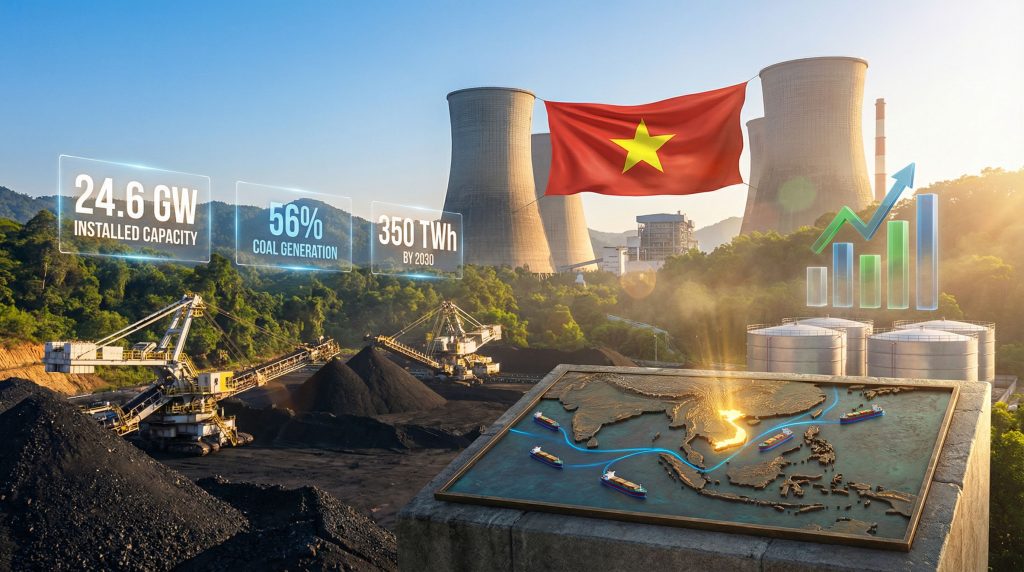
Vietnam's response to the escalating US-Iran conflict in early 2026 exemplifies how Vietnam leans on coal power as US-Iran war escalates, demonstrating the complex interplay between energy security, economic development, and climate commitments in developing nations. This situation reflects broader tensions where emerging economies must balance immediate survival needs against long-term sustainability goals during geopolitical crises.
The Economic Vulnerability Matrix: Why Small Nations Double Down on Coal During Crisis
Developing economies face unique vulnerabilities when global energy markets experience disruption. Unlike developed nations with diversified energy portfolios and strategic reserves, smaller economies often depend heavily on imported fuels and lack the infrastructure flexibility to rapidly shift between energy sources during supply emergencies.
Furthermore, these nations face additional pressures from LNG market implications and volatile oil price movements that compound their economic vulnerability.
Vietnam's Strategic Energy Calculus in Times of Global Uncertainty
Vietnam leans on coal power as US-Iran war escalates became starkly apparent during March 2026, when coal-fired generation surged to represent 56% of total electricity production, marking the highest share since mid-2025. This dramatic shift occurred as the US-Iran conflict escalated in late February, creating immediate concerns about energy supply stability across Southeast Asia.
The nation's coal-fired output reached 16.09 TWh in March 2026, representing a remarkable 44% month-on-month increase from February levels. This surge constituted the sharpest monthly increase in two years, underscoring how rapidly utilities can pivot to domestic energy sources when geopolitical uncertainty emerges.
While the increase was partially amplified by the nine-day lunar new year holiday in February, the underlying trend demonstrated Vietnam's reliance on coal as its primary energy insurance mechanism. State-owned utility EVN data revealed that this dramatic increase occurred despite ongoing climate commitments and international pressure to reduce coal dependency.
The timing correlation between conflict escalation and generation increases suggests that energy security concerns override environmental considerations when immediate supply threats emerge. Vietnam's limited gas-fired capacity further constrains alternatives during crisis periods.
Gas-fired utilities produced only 2.1 TWh in March 2026, representing approximately 7% of total electricity generation. This infrastructure limitation means natural gas cannot serve as an immediate substitution mechanism when imported energy costs spike or supply disruptions occur.
Coal as Economic Insurance: The Infrastructure Investment Perspective
Vietnam's existing coal infrastructure represents decades of capital investment that utilities maximise during crisis periods. The economic rationale becomes compelling when seaborne alternatives experience price volatility, making domestic coal generation relatively cheaper despite transportation and environmental costs.
During March 2026, Vietnam likely imported 4.1 million tonnes of thermal coal, demonstrating continued reliance on seaborne markets even as domestic generation increased. However, this import level remained below the 5.2 million tonnes imported in March 2025, suggesting utilities prioritised existing domestic capacity utilisation over additional imports.
The first quarter of 2026 revealed the broader pattern, with thermal coal imports totalling 10.29 million tonnes, up from 8.31 million tonnes in the fourth quarter of 2025. This increase occurred despite elevated international coal prices, indicating that Vietnam's energy security strategy involves both domestic capacity maximisation and strategic import timing.
Consequently, the government directive issued to utilities instructed them to bolster coal stocks and prepare for a harsher dry season ahead, revealing proactive energy security planning. This policy response demonstrates how quickly nations can mobilise domestic energy resources when external supply chains face uncertainty.
The situation is further complicated by existing coal supply challenges affecting the global market, making domestic production even more attractive during crisis periods.
When big ASX news breaks, our subscribers know first
What Are the Macroeconomic Drivers Behind Vietnam's Coal Dependency Surge?
Vietnam's economic development trajectory creates structural energy demand that must be met regardless of fuel source preferences. The nation's growth-oriented policies require reliable baseload power generation, making energy security a prerequisite for economic stability rather than an optional policy consideration.
Industrial Growth Patterns Reshaping Energy Demand
Vietnam's manufacturing-driven economy requires consistent electricity supply to maintain export competitiveness and industrial production schedules. Economic growth trajectories support power demand increases, creating pressure on utilities to maintain generation capacity margins even during energy transition periods.
The correlation between electricity demand and economic output becomes critical when evaluating energy policy decisions. Monthly generation data showed total electricity production reaching approximately 28.75 TWh in March 2026, with coal representing the largest single component.
This level suggests annual generation approaching 345 TWh, indicating substantial energy requirements for maintaining economic activity. Hydropower contributed 4.96 TWh in March 2026, up 11% year-on-year, but seasonal variations limit reliability as a baseload alternative.
Wind power output declined month-on-month following typical seasonal patterns, while electricity imports increased modestly but remained a limited share of total supply. In addition, deployment of renewable energy solutions remains limited during crisis periods.
Import Dependency Economics and Supply Chain Vulnerabilities
Vietnam's energy import dependency creates economic vulnerabilities that become acute during geopolitical disruptions. The combined reliance on thermal coal and petroleum products for approximately 80% of energy needs means price volatility in international markets directly impacts domestic costs.
Thermal Coal Import Dependency Analysis:
| Period | Import Volume (million tonnes) | Price Environment | Strategic Context |
|---|---|---|---|
| March 2026 | 4.1 | Elevated conflict premium | Peak crisis response |
| February 2026 | 2.8 | Baseline pricing | Pre-conflict levels |
| Q1 2026 | 10.29 | Escalating volatility | Sustained high demand |
| Q4 2025 | 8.31 | Stable pricing | Normal operations |
Seaborne coal price dynamics during this period revealed significant volatility amplification. Indonesian GAR 4,200 kcal/kg coal prices increased by 10% between February 27 and April 2, 2026, reaching $59.51/t fob Kalimantan.
More dramatically, year-to-date increases reached 33% from the January 1 baseline of $44.91/t. This price volatility created economic incentives for utilities to maximise domestic coal utilisation rather than increasing imports.
The cost differential became substantial enough to justify higher capacity factors at existing plants versus importing alternatives at premium prices. LNG infrastructure limitations compound import dependency challenges.
Vietnam's projected 12.3% LNG share by 2030 remains constrained by delayed deployment timelines, meaning gas-fired generation cannot provide immediate coal substitution during supply disruptions. These challenges contribute to broader energy export challenges across the region.
How Do Regional Conflicts Accelerate Energy Infrastructure Lock-in Effects?
Geopolitical conflicts create dual pressures on energy systems: supply-side cost increases for imported fuels and demand-side preferences for proven domestic capacity. This combination accelerates utilisation of existing infrastructure regardless of long-term sustainability considerations.
The Coal Capacity Utilisation Surge During Crisis Periods
Vietnam leans on coal power as US-Iran war escalates was demonstrated through the March 2026 performance, showing how quickly utilities can respond to external threats by maximising existing capacity. The 44% month-on-month increase in coal generation represented the most dramatic shift in the generation mix in two years.
This indicated that infrastructure lock-in effects can activate rapidly when security concerns emerge. The timing mechanism proved critical: conflict escalation occurred in late February 2026, with generation increases manifesting immediately in March data.
This rapid response time suggests that utilities maintain operational flexibility to surge coal capacity when alternatives become economically or logistically constrained. Coal's share reaching 56% of total generation represented a significant departure from the gradually declining trend observed in previous quarters.
This reversal demonstrates that crisis periods can temporarily halt or reverse energy transition trajectories when immediate reliability concerns take precedence. Seasonal factors amplified the crisis response, as utilities prepared for increased summer demand while facing supply uncertainty.
The combination of higher baseline demand and reduced confidence in import availability created conditions favouring maximum domestic capacity utilisation.
Economic Rationale Behind Fossil Fuel Expansion During Transition
The economic logic supporting increased coal utilisation during crisis periods reflects rational utility decision-making under uncertainty. When import costs for alternative fuels increase by 15-33% within weeks, the marginal cost of deploying existing coal capacity drops dramatically relative to importing LNG or oil-fired alternatives.
Furthermore, Vietnam's energy crisis has prompted consideration of renewable alternatives to reduce import dependency.
Crisis Economics Insight: When geopolitical disruptions create supply-demand imbalances, utilities operating under cost minimisation principles will rationally maximise domestic generation capacity, regardless of long-term climate transition targets.
This economic response mechanism operates independently of policy preferences, driven by immediate cost comparisons and supply reliability assessments. The March 2026 surge represented utilities responding to price signals rather than abandoning climate commitments, though the practical effect remained identical.
Price premium analysis revealed that conflict-related increases varied by coal specification and delivery terms, but consistently elevated costs across all seaborne alternatives. Indonesian coal experienced approximately 10% monthly increases, while year-to-date appreciation reached 33%, making domestic alternatives increasingly attractive on a delivered-cost basis.
Infrastructure Investment Timing and Geopolitical Risk Assessment
The conflict period revealed how existing infrastructure investments create path-dependent responses during crisis situations. Vietnam's coal generation capacity, representing decades of capital expenditure, becomes economically rational to maximise when alternatives face supply disruptions or price volatility.
Utilities face competing pressures between international climate financing conditions and immediate operational requirements. While transition financing may offer long-term benefits, immediate energy security needs often take precedence when supply chains face disruption.
However, the interplay between international funding mechanisms and domestic energy security creates complex decision matrices for policymakers. Renewable energy acceleration timelines may conflict with current demand growth patterns, especially when geopolitical uncertainty reduces confidence in import-dependent alternatives.
What Does Vietnam's Energy Strategy Reveal About Emerging Market Priorities?
Vietnam's energy response during the 2026 crisis illuminates broader patterns in how emerging market nations balance competing priorities. The data reveals that energy security considerations can override climate commitments when policymakers perceive immediate threats to economic stability or national security.
The Energy Security Versus Climate Commitment Trade-off Analysis
The March 2026 operational data directly demonstrates the trade-off mechanism: despite international climate commitments, Vietnam leans on coal power as US-Iran war escalates, maximising coal generation to 56% of total electricity precisely when geopolitical uncertainty peaked.
This pattern suggests that emerging market nations treat energy infrastructure as essential rather than discretionary, subordinating transition timelines to reliability imperatives when external disruptions occur. This behaviour pattern likely extends across Southeast Asia and other emerging markets with similar vulnerability profiles.
Nations facing immediate energy security threats consistently prioritise short-term supply stability over long-term transition goals, creating infrastructure lock-in effects that can persist for decades beyond the initial crisis period. The policy flexibility demonstrated during crisis periods indicates that climate commitments remain conditional on energy security maintenance.
When supply disruptions threaten economic activity or social stability, operational priorities shift toward proven domestic capacity regardless of environmental considerations.
Economic Diversification Strategies Under Geopolitical Pressure
Vietnam's crisis response revealed attempts to diversify both energy sources and supply partnerships while maintaining immediate operational stability. The simultaneous increase in domestic coal utilisation and continued import activity suggests a risk management approach rather than complete supply chain abandonment.
Alternative energy development continues during crisis periods, but deployment timelines often extend when immediate security concerns emerge. LNG import infrastructure development faces delays when international partnerships become uncertain or financing conditions change due to geopolitical tensions.
Electric vehicle adoption and renewable energy deployment may accelerate as petroleum hedging strategies, but these longer-term initiatives cannot address immediate generation capacity requirements during supply emergencies.
How Are Global Energy Markets Responding to Southeast Asian Demand Shifts?
Regional demand pattern changes during crisis periods create ripple effects throughout international energy markets, influencing pricing, supply allocation, and investment decisions across multiple fuel categories.
Seaborne Coal Market Dynamics and Price Discovery
Vietnamese demand behaviour contributed to broader seaborne coal price appreciation during the conflict period. Regional buyers collectively increased domestic capacity utilisation while maintaining strategic import purchases, creating sustained demand pressure despite elevated prices.
Indonesian GAR 4,200 kcal/kg coal price movements reflected this demand dynamic, with 33% year-to-date increases indicating sustained market tightness. The 10% monthly increase between late February and early April directly correlated with conflict escalation timing, suggesting geopolitical premiums embedded in delivered costs.
Newcastle NAR 5,500 kcal/kg coal experienced similar appreciation patterns, rising 24% year-to-date and demonstrating that higher-quality coal grades faced comparable demand pressure. This broad-based price appreciation indicates that Southeast Asian utilities competed with global buyers for available supply during the uncertainty period.
Freight rate impacts compounded delivered energy costs across the region, as shipping rates increased due to both higher demand and potential routing changes to avoid conflict zones. These logistics premiums affected all imported fuels, further reinforcing the economic logic of domestic capacity maximisation.
Alternative Energy Source Competition and Market Positioning
The crisis period revealed competitive dynamics between coal and alternative energy sources across pricing, availability, and deployment timelines. LNG imports faced delayed infrastructure development limiting immediate substitution capacity, while renewable integration encountered grid stability concerns during peak demand periods.
Energy Source Cost Analysis During Crisis:
- Domestic Coal Utilisation: Marginal costs favourable when import premiums spike
- LNG Infrastructure: Limited immediate capacity for coal substitution
- Renewable Integration: Grid stability challenges during demand surges
- Import Alternatives: 15-25% price premiums during conflict periods
Petroleum coke prices experienced 24% increases since conflict outbreak, reaching $160/t cfr India by April 1, with 36% year-to-date appreciation. This broad-based fossil fuel price appreciation reinforced coal's relative attractiveness for baseload generation.
Currency volatility added additional complexity to import cost calculations. The Indian rupee's decline from Rs90.76 in February to Rs92.90 in March, and further to Rs93.46 in early April, demonstrated how exchange rate movements compound energy import costs during crisis periods.
How Should Investors Interpret Southeast Asia's Energy Transition Paradox?
The apparent contradiction between climate commitments and crisis-period coal utilisation creates complex investment considerations for energy sector participants. Understanding these dynamics requires distinguishing between tactical responses and strategic direction changes.
Short-term Tactical Positioning Versus Long-term Strategic Themes
Vietnam's March 2026 coal surge represented tactical utility operations rather than strategic policy abandonment. Investors should interpret increased capacity factors during crisis periods as rational short-term responses to supply disruptions rather than reversals of long-term transition commitments.
Coal infrastructure utilisation rates during crisis periods demonstrate the economic value of existing capacity as reliability insurance. This creates investment implications for both traditional energy assets and renewable alternatives, as grid stability requirements become more apparent during supply emergencies.
Energy storage deployment necessity becomes clearer when examining crisis-period generation patterns. The inability to substitute coal with renewables during supply emergencies highlights infrastructure gaps that create investment opportunities in grid stability technologies.
Policy Risk Assessment Framework for Energy Investments
The Vietnamese experience reveals that climate commitment flexibility increases during security crises, creating policy risk considerations for long-term investment planning. International funding conditionality may conflict with domestic operational priorities when external supply chains face disruption.
Technology transfer acceleration under geopolitical pressure can create opportunities for domestic energy equipment manufacturing and infrastructure development. Nations experiencing supply vulnerability may prioritise energy independence through domestic production capabilities.
Investment frameworks should account for crisis-response patterns when evaluating emerging market energy projects. The demonstrated willingness to prioritise security over environmental considerations during emergencies affects long-term asset valuation and policy risk assessments.
The next major ASX story will hit our subscribers first
The New Energy Security Paradigm for Emerging Markets
Vietnam's 2026 crisis response illuminates fundamental tensions in global energy transition planning. The data demonstrates that emerging market nations facing immediate vulnerabilities will consistently prioritise supply security over climate timing when external disruptions threaten economic stability.
Lessons for Global Energy Transition Planning
Crisis resilience requirements reshape transition pathway planning, indicating that energy security infrastructure remains essential even during decarbonisation efforts. The Vietnamese experience suggests that transition timelines must account for geopolitical uncertainty and supply chain vulnerability rather than assuming linear progression toward renewable alternatives.
Economic development priorities consistently align with climate timeline considerations only when supply security remains assured. The March 2026 surge to 56% coal generation occurred despite ongoing climate commitments, revealing the conditional nature of environmental policy implementation during security crises.
Regional cooperation frameworks face stress testing during supply emergencies, as individual nations prioritise domestic security over collective climate goals. This dynamic affects international financing mechanisms and technology transfer agreements when crisis conditions emerge.
The energy security paradigm for emerging markets increasingly requires balancing multiple objectives simultaneously: climate transition, economic development, supply reliability, and geopolitical independence. Vietnam's experience demonstrates that when these objectives conflict during crisis periods, immediate security concerns typically take precedence over longer-term sustainability goals.
Understanding these dynamics becomes essential for policymakers, investors, and international organisations working on energy transition initiatives in developing economies. The Vietnamese case study reveals that successful transition planning must account for crisis response mechanisms rather than assuming uninterrupted progress toward renewable energy goals.
Investment and policy decisions discussed in this analysis involve significant uncertainties and risks. Historical performance patterns may not predict future outcomes, and geopolitical developments can rapidly alter energy market dynamics. Readers should conduct independent research and consult qualified professionals before making investment or policy decisions based on this analysis.
Considering investing in small-cap ASX mining stocks during global energy uncertainty?
Discovery Alert's proprietary Discovery IQ model delivers real-time alerts on significant ASX mineral discoveries, instantly empowering subscribers to identify actionable opportunities ahead of the broader market. Understand why major mineral discoveries can lead to substantial market returns by exploring Discovery Alert's dedicated discoveries page, showcasing historic examples of exceptional outcomes. Begin your 14-day free trial today to position yourself ahead of the market.