
June 6, 2026
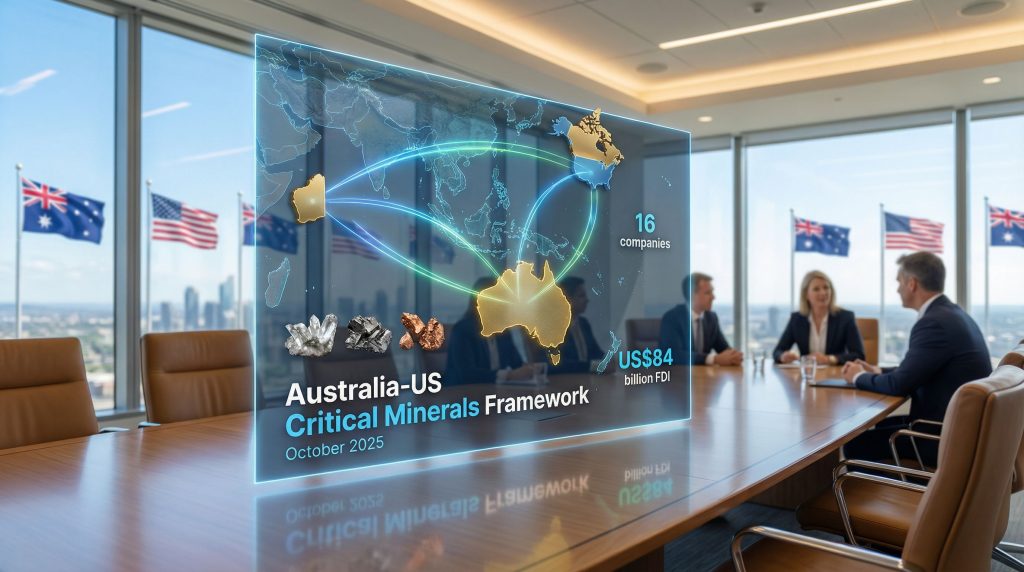
Western Australia's WA mines and petroleum minister delegation to Canada and US represents a pivotal moment in how sub-national jurisdictions are reshaping global critical minerals strategy through targeted diplomatic engagement. Supply chain resilience has emerged as the defining challenge for critical minerals markets in the 2020s, fundamentally reshaping how resource-rich jurisdictions approach international partnerships. Traditional commodity trading relationships are giving way to strategic alliances that prioritise security of supply over purely economic considerations. This transformation creates new opportunities for established mining jurisdictions to leverage diplomatic channels in ways that extend far beyond conventional trade missions.
Strategic Frameworks Driving Critical Minerals Diplomacy
The Emergence of Resource Diplomacy in the Indo-Pacific
Resource diplomacy has evolved into a sophisticated instrument for mineral-rich regions seeking to maximise their strategic value within global supply networks. Unlike traditional trade missions focused on immediate commercial outcomes, contemporary resource diplomacy integrates long-term geopolitical positioning with economic development objectives.
Western Australia's diplomatic engagement with North America represents this evolution in action. The state's strategic approach demonstrates how mining industry evolution is increasingly characterised by autonomous sub-national actors leveraging their geological advantages to secure preferential access to strategic partnerships.
The delegation composition of 16 critical minerals companies reflects careful strategic curation rather than broad industry representation. This focused approach maximises the potential for meaningful engagement while ensuring participants represent diverse stages of the mining value chain, from exploration through to advanced development projects.
Furthermore, Canada's position as Australia's fourth-largest source of foreign direct investment, with a stock value of US$84 billion as of 2024, provides quantitative context for the scale of existing economic relationships. This substantial investment foundation creates natural pathways for expanding cooperation into critical minerals sectors.
Critical Minerals Framework: Beyond Traditional Commodity Trading
The October 2025 Australia-US Critical Minerals Framework represents a fundamental departure from commodity-based trade relationships toward strategic material partnerships. This framework establishes institutional mechanisms for coordination that extend beyond market-driven transactions to include technology sharing, joint research initiatives, and coordinated stockpile management.
Key components of strategic partnership models include:
• Preferential procurement arrangements that prioritise allied suppliers over lowest-cost alternatives
• Technology transfer protocols enabling shared development of processing innovations
• Joint infrastructure investments reducing individual nation capital requirements
• Coordinated reserve management optimising stockpile efficiency across partner nations
• Regulatory harmonisation streamlining approval processes for cross-border projects
These frameworks differ substantially from traditional free trade agreements by incorporating national security considerations into commercial relationships. In addition, the integration of these partnerships into broader Australia-US strategic cooperation reflects recognition that resource security has become inseparable from defence and technology competition.
When big ASX news breaks, our subscribers know first
Economic Integration Pathways and Investment Implications
Supply Chain Architecture Options for North American Market Access
Critical minerals supply chain integration presents two primary architectural approaches, each with distinct capital requirements and risk profiles. Direct integration models involve establishing processing facilities within North American markets, creating shortened supply chains with reduced transportation costs and enhanced security of supply.
This approach requires substantial capital expenditure but offers several strategic advantages:
• Reduced geopolitical risk through domesticated processing capacity
• Lower transportation costs for finished products relative to raw materials
• Enhanced customer relationships through proximity to end users
• Regulatory compliance advantages through local operations
• Technology absorption opportunities via collaboration with North American partners
Hub-and-spoke distribution models represent an alternative approach emphasising centralised processing in Western Australia with strategic distribution points in key North American markets. However, this model reduces initial capital requirements while maintaining operational flexibility, though it potentially increases supply chain vulnerability.
Geographic diversification through North American partnerships offers substantial risk mitigation benefits for Western Australian producers. Traditional dependence on Asian markets, while economically rational, creates concentration risk that strategic minerals reserve partnerships can partially offset.
Investment Flow Dynamics Under Enhanced Cooperation
Historical foreign direct investment patterns provide baseline expectations for potential capital flows under enhanced cooperation frameworks. Canada's US$84 billion FDI stock in Australia represents accumulated investment over decades, suggesting that meaningful capital deployment requires sustained institutional relationships rather than episodic engagement.
Moreover, venture capital and private equity interest in critical minerals projects has intensified significantly since 2022, driven by recognition of supply chain vulnerabilities and government policy support for domestic processing capacity. However, investment deployment in extractive industries typically follows extended timelines due to regulatory requirements.
| Investment Stage | Typical Capital Range | Timeline to Deployment | Primary Investor Types |
|---|---|---|---|
| Exploration | $1-10 million | 6-18 months | Venture capital, strategic investors |
| Development | $50-500 million | 2-5 years | Private equity, strategic corporations |
| Production | $200 million-2 billion | 3-7 years | Sovereign funds, major corporations |
| Processing Infrastructure | $100 million-1 billion | 2-4 years | Government partnerships, strategic alliances |
The delegation's focus on New York and Washington DC reflects recognition that critical minerals investment decisions increasingly involve both commercial and policy considerations. Consequently, New York's financial markets provide access to capital, while Washington's policy environment shapes regulatory frameworks and strategic priorities.
Strategic Alliance Formation in the "Pax Silica" Framework
Understanding Economic Security Blocs in Critical Materials
The concept of "Pax Silica" represents an emerging framework for Western alliance coordination on semiconductor and critical materials supply chains. Unlike traditional trade agreements focused on reducing barriers, this framework emphasises positive coordination to ensure strategic supply chain resilience among aligned nations.
This economic security approach differs fundamentally from market-driven trade relationships by incorporating national security priorities into commercial decision-making. Key characteristics include:
• Preferred supplier status for alliance members in government procurement
• Coordinated research and development initiatives across partner nations
• Shared infrastructure investments reducing individual nation capital burdens
• Joint stockpile management optimising strategic reserve efficiency
• Technology sharing protocols accelerating innovation across the alliance
For instance, the framework's emphasis on "economic security" reflects recognition that traditional economic efficiency metrics may inadequately capture the strategic value of reliable supply chains. This creates opportunities for suppliers that can demonstrate long-term reliability and strategic alignment, even if their immediate cost structures are less competitive than alternatives.
Western Australia's positioning within this framework leverages several strategic advantages, including political stability, established regulatory frameworks, and alignment with Western democratic values. These characteristics have become increasingly important as supply chain security considerations have gained prominence in national security planning.
Technology Transfer and Innovation Partnerships
Critical minerals processing technology represents a rapidly evolving field where international collaboration can accelerate innovation and reduce development costs. Furthermore, AI in mining innovation and joint research initiatives between Western Australian companies and North American partners create opportunities for shared intellectual property development.
Key areas for technology collaboration include:
• Advanced extraction techniques for low-grade ores and complex mineralisation
• Environmental remediation technologies reducing processing environmental impact
• Automation and digitalisation improving operational efficiency and safety
• Battery recycling and circular economy approaches extending material lifecycles
• Alternative processing chemistries reducing dependence on problematic reagents
Technology transfer arrangements typically involve complex intellectual property frameworks that balance innovation sharing with competitive protection. However, successful partnerships require clear agreements on ownership, commercialisation rights, and technology dissemination protocols.
Company Positioning and Market Entry Strategies
Delegation Composition Analysis and Strategic Positioning
The 16-company delegation represents a carefully curated selection of Western Australian critical minerals companies spanning different development stages and mineral types. This composition reflects strategic considerations about market readiness, complementary capabilities, and collective representation of the state's critical minerals value chain.
Companies participating in such delegations typically fall into several categories:
• Exploration-stage companies seeking development capital and offtake partnerships
• Development-stage companies requiring construction financing and technology partnerships
• Production-ready companies seeking market access and supply chain integration
• Processing and technology companies offering specialised capabilities to North American partners
Each category requires different engagement strategies and offers distinct value propositions to North American partners. For instance, exploration companies provide early-stage investment opportunities with higher risk-return profiles, while production-ready companies offer immediate supply chain integration possibilities.
The delegation's focus on integration into North American supply chains suggests participants have been selected for their ability to contribute to supply chain resilience rather than purely on the basis of company size or production capacity. This approach maximises the strategic value of the mission while ensuring meaningful engagement opportunities for all participants.
Sector-Specific Opportunities by Mineral Type
Different critical minerals present distinct market opportunities and integration challenges within North American supply chains. Lithium processing and battery manufacturing integration represents perhaps the most immediate opportunity, given the rapid expansion of electric vehicle production across North America.
Key considerations for lithium market entry include:
• Processing technology requirements for converting spodumene to battery-grade chemicals
• Transportation logistics for moving products from Australian production to North American markets
• Quality specifications meeting automotive and energy storage industry standards
• Supply chain timing coordinating production with customer demand cycles
• Environmental compliance meeting increasingly stringent sustainability requirements
Rare earth elements present unique opportunities in defence applications, where supply chain security considerations often outweigh cost optimisation. North American defence contractors increasingly prioritise suppliers from allied nations, creating market access opportunities for qualified Western Australian producers.
In addition, copper market integration focuses primarily on renewable energy infrastructure demands, where high-quality copper products command premium pricing. The transition to renewable energy systems requires substantial copper infrastructure, creating sustained demand growth that favours reliable suppliers with established production capacity.
Long-Term Economic Transformation Implications
From Raw Material Export to Value-Added Production
Western Australia's traditional role as a raw material exporter faces increasing pressure from changing global trade dynamics and customer preferences for processed products. The transition toward value-added production requires substantial investments in processing infrastructure, technical capabilities, and market development.
Midstream processing development represents the most immediate opportunity for economic upgrade, involving conversion of raw materials into intermediate products suitable for further processing or direct use in manufacturing. This approach captures additional value while maintaining competitive advantages in resource extraction.
Key requirements for successful transformation include:
• Technical expertise in processing technologies and quality control
• Infrastructure investments including power, transportation, and waste management
• Market development establishing customer relationships for processed products
• Regulatory compliance meeting environmental and safety standards for processing operations
• Financial capacity supporting extended development timelines and higher capital requirements
The timeline for meaningful economic transformation typically extends over multiple decades, requiring sustained commitment from government, industry, and financial partners. However, the energy transition in critical minerals can accelerate this process by providing technology transfer, market access, and capital support.
Competitive Response Strategies and Market Dynamics
Western Australia's enhanced focus on North American market integration will likely prompt competitive responses from other Australian states and international jurisdictions. Queensland's established relationships with Asian markets and South Australia's growing renewable energy focus represent potential competitive positioning that could influence market dynamics.
International competitor responses may include:
• Accelerated development of competing supply sources in friendly jurisdictions
• Enhanced bilateral relationships with North American partners
• Technology partnerships offering alternative supply chain solutions
• Price competition attempting to maintain market share through cost leadership
• Vertical integration strategies reducing dependence on external suppliers
Chile and Argentina's substantial lithium resources represent particular competitive challenges, given their geographic proximity to North American markets and established production capabilities. Nevertheless, political stability and regulatory predictability may provide Western Australia with competitive advantages that offset geographic considerations.
The next major ASX story will hit our subscribers first
Success Measurement and Institutional Framework Development
Quantifiable Outcomes and Performance Metrics
Measuring trade mission success requires establishing clear metrics that capture both immediate commercial outcomes and longer-term strategic positioning improvements. Investment commitments secured during the delegation provide the most immediate quantifiable measure, though these commitments may require months or years to finalise and implement.
Key performance indicators for delegation success include:
• Investment commitments secured by participating companies
• Offtake agreements signed or advanced to final negotiations
• Technology partnerships established with North American companies
• Market access improvements including customer introductions and relationship development
• Follow-up engagements scheduled for ongoing relationship development
Qualitative measures of success include relationship depth, strategic alignment with partner nation priorities, and improved understanding of market requirements and opportunities. These qualitative outcomes often prove more valuable than immediate commercial results, as they establish foundations for long-term partnership development.
Timeline expectations for converting diplomatic engagement into commercial outcomes typically extend over multiple years, particularly for capital-intensive projects requiring regulatory approvals. Consequently, realistic success measurement must account for these extended timelines while tracking interim progress indicators.
Building Sustainable Cooperation Frameworks
Sustainable cooperation requires institutional frameworks that extend beyond individual trade missions to encompass ongoing diplomatic, commercial, and technical engagement. Regular diplomatic consultation mechanisms ensure continued government-level support while providing forums for addressing emerging challenges and opportunities.
Industry-to-industry partnership development involves establishing communication channels, sharing market intelligence, and coordinating on technical standards and regulatory requirements. These partnerships often prove more durable than government relationships, as they directly serve commercial interests of participating companies.
Furthermore, according to Australia's trade mission announcement, government-to-government coordination mechanisms must balance state-level autonomy with federal coordination requirements. The delegation's engagement with federal-level stakeholders in Washington DC reflects recognition that critical minerals partnerships involve national security considerations.
Investment Decision Timeline Considerations: Critical minerals projects typically require 5-10 years from initial investment to production, making immediate commercial outcomes unlikely while emphasising the importance of relationship building and strategic positioning.
Institutional memory and continuity represent critical success factors for long-term partnership development. Political transitions, personnel changes, and evolving strategic priorities can disrupt partnership momentum without robust institutional frameworks supporting continued engagement.
The delegation's focus on both commercial and policy engagement recognises that sustainable cooperation requires alignment at multiple levels, from company-to-company relationships through government-to-government strategic coordination. In addition, as reported by Mining News, this multi-level approach maximises partnership resilience while creating multiple pathways for continued development.
Disclaimer: This analysis contains forward-looking statements and projections based on current market conditions and policy frameworks. Investment decisions should be based on comprehensive due diligence and professional financial advice. Critical minerals markets involve significant technical, regulatory, and market risks that could materially affect projected outcomes. Government policy frameworks and international relationships may change, affecting the viability of strategic partnerships and market access arrangements discussed herein.
Ready to Capitalise on Australia's Critical Minerals Surge?
Discovery Alert's proprietary Discovery IQ model delivers instant notifications on significant ASX mineral discoveries, turning complex geological data into actionable investment insights for both short-term traders and long-term investors. Experience why major mineral discoveries can generate exceptional market returns by exploring Discovery Alert's dedicated discoveries page, then begin your 14-day free trial to secure your market-leading advantage in Australia's evolving critical minerals landscape.