August 8, 2026
How Waste-to-Resource Conversion Transforms India's Mining Economics
The mining industry stands at a critical inflection point where traditional waste management approaches are being fundamentally reimagined. Rather than viewing processed materials as end-of-life liabilities, forward-thinking operations are discovering substantial economic value locked within accumulated tailings. This shift toward circular resource utilisation represents more than operational efficiency gains—it signals a strategic reallocation of capital from environmental remediation toward productive asset development through innovative mining waste management solutions.
India's mining sector generates millions of tonnes of processing residues annually, with zinc operations alone producing complex tailings containing recoverable metals that were previously considered extraction losses. The economic rationale for reprocessing these materials has strengthened considerably as primary ore grades decline and metal prices maintain elevated levels. Furthermore, the development of india's first zinc tailings recycling facility represents a groundbreaking transformation in how the nation approaches resource recovery.
Advanced separation technologies now enable profitable recovery of zinc, silver, and lead from previously processed materials at industrial scale. The ₹3,823 crore investment approved for this pioneering facility demonstrates the substantial capital commitment required for transforming mining waste into productive assets.
When big ASX news breaks, our subscribers know first
Understanding the Hidden Economics of Mining Waste
Zinc tailings represent one of the most significant untapped resource opportunities in India's mining landscape. These accumulated materials, stored in engineered facilities across multiple decades of production, contain substantial residual metal content that original processing circuits could not economically extract. Modern analytical techniques reveal that tailings often retain 15-25% of the original contained metals, creating a secondary resource base with established infrastructure access and known geological characteristics.
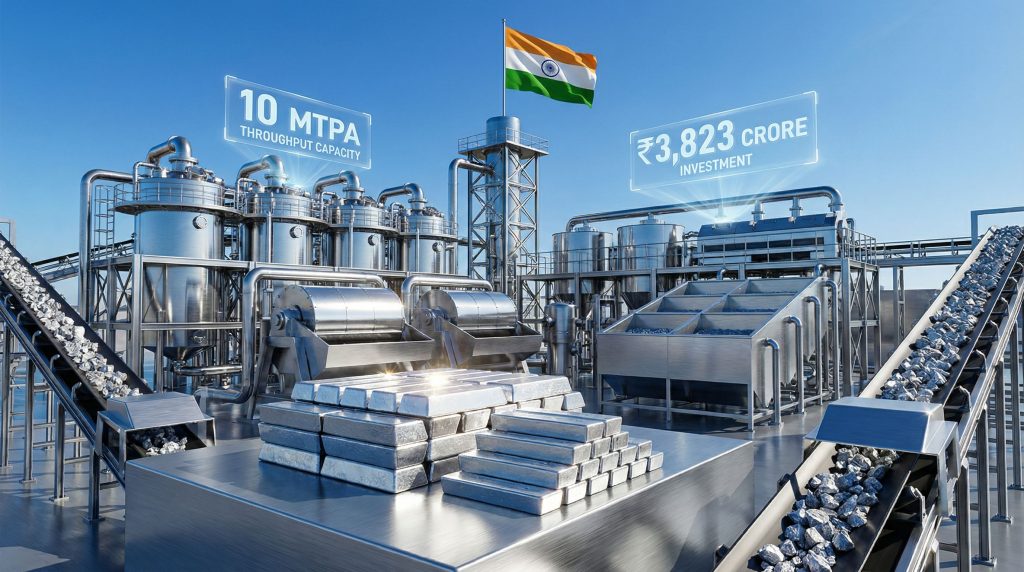
The ₹3,823 crore investment approved for india's first zinc tailings recycling facility at Rampura Agucha demonstrates the scale of capital being deployed toward waste-to-resource conversion. This facility, designed to process 10 million tonnes per annum, represents approximately ₹382.30 crore per MTPA of processing capacity—a capital intensity that reflects the sophisticated technology required for effective secondary metal recovery.
Legacy tailings accumulations offer several distinct advantages over primary mining operations:
- Pre-concentrated material with known metal content distribution
- Existing infrastructure including power, water, and transportation access
- No additional mining permits or land acquisition requirements
- Reduced geological risk compared to exploration-dependent projects
- Environmental liability reduction through productive reuse
The 28-month project timeline for facility development indicates streamlined permitting and construction processes. In addition, tailings recycling operations typically face fewer regulatory hurdles than greenfield mining projects. This accelerated development schedule enables faster capital deployment and earlier revenue generation compared to traditional mining investments.
Advanced Processing Technologies for Secondary Metal Recovery
Flotation Circuit Design for Fine Particle Recovery
Modern tailings recycling facilities deploy sophisticated separation technologies specifically engineered for fine-grained materials that conventional circuits previously could not economically process. Flotation systems represent the primary recovery mechanism, utilising chemical reagents to selectively separate metallic minerals based on surface chemistry differences.
Contemporary flotation circuit designs incorporate multiple staged configurations:
- Rougher flotation cells provide initial metal concentration from bulk tailings feed
- Scavenger circuits recover additional metal values from rougher tailings
- Cleaner stages upgrade concentrate quality to meet marketing specifications
- Recleaners further refine product grades for premium pricing
The particle size distribution in aged tailings requires specialised equipment configurations. Pneumatic flotation cells excel at processing fine particles below 20 microns, whilst column flotation systems provide enhanced selectivity for complex mineral assemblages containing multiple valuable metals.
Magnetic and Gravity Separation Integration
Magnetic separation serves as a crucial pre-concentration stage, removing ferrous minerals that would otherwise consume flotation reagents and reduce circuit efficiency. High-intensity magnetic separators can process weakly magnetic minerals, whilst low-intensity units handle strongly magnetic materials like magnetite.
Gravity separation technologies complement flotation circuits by concentrating high-density minerals before chemical processing. Key equipment includes:
- Spiral concentrators for continuous gravity separation
- Shaking tables for precision separation of similar-density materials
- Centrifugal concentrators for ultrafine particle recovery
- Dense media separators for coarse fraction pre-concentration
The integration of multiple separation technologies maximises overall metal recovery whilst minimising reagent consumption and processing costs. Moreover, these advances in processing technology align with broader industry evolution trends that emphasise operational efficiency and environmental sustainability.
Recovery rates for zinc from tailings recycling typically range between 50-80%, depending on tailings age, oxidation state, and original processing conditions.
Metallurgical Testing and Quality Optimisation
Comprehensive metallurgical characterisation forms the foundation of successful tailings recycling operations. This testing programme evaluates:
Mineralogical Analysis:
- X-ray diffraction for mineral identification
- Quantitative evaluation of materials by scanning electron microscopy (QEMSCAN)
- Microprobe analysis for mineral chemistry determination
- Liberation analysis to assess grinding requirements
Chemical Characterisation:
- Multi-element assays across representative tailings sections
- Acid-base accounting for environmental compliance
- Trace element analysis for concentrate specifications
- Oxidation state determination for processing optimisation
Processing Testwork:
- Batch flotation tests for reagent optimisation
- Continuous pilot testing for equipment sizing
- Locked cycle tests for circuit performance prediction
- Environmental testing for regulatory approval
Engineering Partnerships and Implementation Strategy
EPC Contract Architecture for Complex Projects
The Engineering, Procurement, and Construction (EPC) contract structure for india's first zinc tailings recycling facility demonstrates sophisticated risk allocation between international expertise and domestic execution capabilities. CIMIC Group companies have been awarded contracts with distinct responsibility divisions designed to optimise project delivery efficiency.
Sedgman's Technical Leadership Role encompasses:
- Detailed engineering including process flow sheet development
- Equipment specification for specialised mineral processing systems
- Offshore procurement of advanced flotation and separation equipment
- Process control system design and integration
- Commissioning support and technology transfer protocols
Leighton Asia's Construction Management covers:
- Onshore procurement of structural materials and utilities
- Civil construction including foundations and buildings
- Mechanical installation of imported processing equipment
- Electrical integration and instrumentation systems
- Project management and regulatory compliance coordination
This dual-contractor approach leverages specialised competencies whilst managing technology transfer risks. International mineral processing expertise ensures optimal equipment selection and circuit design, whilst local construction capabilities provide cost-effective infrastructure development and regulatory navigation.
Technology Transfer and Knowledge Development
The partnership structure facilitates comprehensive knowledge transfer from international operators to Indian technical teams. This capability development includes:
Process Engineering Transfer:
- Flotation chemistry optimisation techniques
- Circuit troubleshooting and performance monitoring
- Equipment maintenance protocols and procedures
- Quality control laboratory procedures and standards
Operational Excellence Development:
- Plant optimisation methodologies
- Safety systems and risk management protocols
- Environmental monitoring and compliance procedures
- Cost management and efficiency improvement techniques
The 28-month project timeline incorporates extensive training phases to ensure Indian personnel can independently operate the facility upon completion. This knowledge retention strategy builds institutional capabilities applicable to future tailings recycling projects across India's mining sector.
Economic Analysis of India's Pioneer Tailings Facility
Capital Investment Structure and Allocation
The ₹3,823 crore total investment for the Rampura Agucha tailings recycling facility represents one of India's largest single investments in secondary resource recovery. This capital deployment reflects the economic viability of converting accumulated mining waste into productive revenue streams.
| Investment Category | Estimated Range | Percentage Allocation |
|---|---|---|
| Processing Equipment | ₹1,900-2,100 crore | 50-55% |
| Civil & Infrastructure | ₹750-900 crore | 20-24% |
| Engineering & Project Management | ₹380-450 crore | 10-12% |
| Contingency & Working Capital | ₹400-500 crore | 10-13% |
Processing equipment represents the largest capital component, reflecting the sophisticated technology required for effective secondary metal recovery. Key equipment categories include:
- Flotation systems with pneumatic and column cell configurations
- Thickening and filtration equipment for water management
- Classification systems including cyclones and screens
- Magnetic separators for pre-concentration stages
- Process control systems with automated optimisation capabilities
Revenue Generation and Market Positioning
Metal recovery projections indicate the facility will generate substantial revenue streams from multiple products:
Primary Revenue Sources:
- Zinc concentrate as the primary valuable product
- Silver recovery providing significant co-product revenue
- Lead concentrate from selective flotation circuits
- Pyrite concentrate for sulfuric acid production potential
Market Pricing Assumptions for revenue calculations:
- Zinc concentrate pricing linked to London Metal Exchange quotations
- Silver recovery valued at precious metals market rates
- Treatment charges deducted based on concentrate quality specifications
- Transportation costs to smelting facilities included in netback calculations
Operating Cost Framework and Optimisation
Annual operating costs for the 10 MTPA facility encompass multiple expense categories:
Variable Costs:
- Flotation reagents including collectors, frothers, and modifiers
- Grinding media for size reduction requirements
- Power consumption estimated at 25-30 kWh per tonne processed
- Water management costs including treatment and recycling
Fixed Costs:
- Labour requirements for specialised technical operations
- Maintenance programmes for complex processing equipment
- Laboratory analysis for quality control and environmental monitoring
- Insurance and regulatory compliance expenses
Energy efficiency optimisation represents a critical cost management focus, with power consumption typically accounting for 15-20% of total operating expenses. Advanced process control systems enable real-time optimisation to minimise energy usage whilst maintaining recovery performance.
Strategic Resource Security and Circular Economy Integration
Critical Minerals Independence Through Secondary Recovery
The tailings recycling facility addresses India's critical minerals security by converting accumulated waste into domestic resource production. This strategic repositioning reduces import dependency for essential industrial metals whilst creating economic value from previously unproductive assets.
Domestic Supply Chain Strengthening:
- Zinc production for galvanising and alloy applications
- Silver recovery supporting electronics and renewable energy sectors
- Lead extraction for battery manufacturing and industrial applications
- Reduced logistics costs through domestic production versus imports
Strategic Buffer Creation against global commodity price volatility enables more predictable input costs for downstream manufacturing sectors. Domestic secondary production provides supply security during international trade disruptions or geopolitical tensions affecting traditional supply chains. Furthermore, the project demonstrates significant mining decarbonisation benefits through reduced energy consumption compared to primary extraction.
Environmental Liability Transformation
Tailings recycling fundamentally transforms environmental liabilities into productive assets. Traditional tailings storage facilities require perpetual monitoring, maintenance, and environmental remediation expenditures. Secondary processing converts these ongoing costs into revenue-generating operations through effective mine reclamation innovation.
Environmental Benefits Include:
- Land rehabilitation through tailings volume reduction
- Water quality improvement via reduced seepage potential
- Carbon footprint reduction compared to primary metal production
- Dust emission control through material reprocessing
- Ecosystem restoration opportunities on reclaimed land
Water management optimisation becomes particularly significant, as recycling operations can achieve 85-95% water recycling rates through advanced thickening and filtration systems. This efficiency reduces freshwater consumption whilst minimising discharge requirements.
Policy Alignment and Regulatory Framework
The project aligns with India's resource efficiency objectives and circular economy development priorities. Regulatory frameworks increasingly favour secondary resource recovery over traditional waste storage approaches.
Policy Support Mechanisms:
- Environmental clearances streamlined for recycling versus storage operations
- Tax incentives for circular economy investments and waste reduction
- Land use optimisation through reduced tailings storage requirements
- Critical minerals strategy support for domestic production enhancement
Compliance advantages for recycling operations include reduced long-term monitoring obligations and elimination of perpetual care requirements associated with traditional tailings storage facilities.
The next major ASX story will hit our subscribers first
Technical Implementation Challenges and Solutions
Tailings Characterisation and Variability Management
Historical tailings deposits present unique technical challenges due to compositional variability across different production periods and processing conditions. Oxidation effects from decades of atmospheric exposure alter mineral chemistry and flotation characteristics.
Characterisation Requirements:
- Spatial sampling programmes across tailings depth profiles
- Temporal variation analysis reflecting different production campaigns
- Weathering assessment for oxidised versus fresh material zones
- Particle size distribution changes from consolidation and weathering
- Mineralogical evolution through secondary mineral formation
Processing Adaptations for aged tailings include:
- Reagent suite modifications for oxidised mineral surfaces
- pH control systems to optimise flotation chemistry
- Particle size management through classification and grinding circuits
- Selective flotation sequences for complex mineral assemblages
Infrastructure Integration and Logistics Optimisation
Integration with existing infrastructure at Rampura Agucha requires careful coordination with ongoing mining operations. Key considerations include:
Power System Integration:
- 25-30 MW power requirements for full-scale operations
- Grid connection and backup power systems
- Load balancing with existing mining electrical demands
- Power quality management for sensitive flotation equipment
Water System Coordination:
- Process water supply from existing mine dewatering systems
- Recycled water management through integrated treatment facilities
- Emergency water storage for process continuity
- Discharge management meeting environmental compliance requirements
Transportation Infrastructure:
- Concentrate handling and storage facilities
- Raw material feed systems from tailings storage areas
- Product shipping coordination with existing logistics networks
- Maintenance access for specialised equipment servicing
Industry Transformation and Replication Potential
Scaling Secondary Recovery Across India's Mining Sector
The Rampura Agucha success model provides a template for replication across India's diverse mining operations. Base metal mines, iron ore operations, and industrial mineral facilities all maintain substantial tailings inventories with secondary recovery potential.
Replication Criteria Assessment:
- Tailings volume sufficient for economic processing scale (minimum 5-10 million tonnes)
- Metal content exceeding processing cost thresholds (typically >0.3% combined recoverable metals)
- Infrastructure availability including power, water, and transportation access
- Market proximity for concentrate sales and logistics optimisation
- Regulatory environment supporting circular economy investments
Technology Adaptation Requirements vary by tailings composition:
- Copper tailings require different flotation chemistry and equipment configurations
- Iron ore tailings may emphasise magnetic separation over flotation techniques
- Gold mine tailings necessitate specialised fine particle recovery systems
- Complex sulfide tailings demand multi-stage selective flotation circuits
Investment Capital Allocation Trends
Mining sector capital allocation increasingly favours sustainable resource development over traditional expansion approaches. ESG (Environmental, Social, Governance) investment criteria drive institutional capital toward circular economy projects.
Investment Attraction Factors:
- Lower geological risk compared to exploration-dependent projects
- Faster development timelines with established infrastructure
- Environmental impact reduction supporting ESG objectives
- Diversified revenue streams from multiple metal recoveries
- Government policy support for critical minerals security
Employment Generation from tailings recycling operations creates specialised technical positions in:
- Process engineering for circuit optimisation and troubleshooting
- Metallurgical analysis for quality control and product development
- Environmental monitoring for compliance and community relations
- Equipment maintenance for sophisticated processing systems
- Project management for facility expansion and replication
Global Technology Export Opportunities
Indian expertise development in tailings recycling positions the country as a potential technology exporter to similar emerging market mining jurisdictions. Knowledge transfer programmes could generate additional revenue streams through:
- Consulting services for tailings assessment and feasibility studies
- Technology licensing for proven processing configurations
- Equipment manufacturing for specialised recycling systems
- Training programmes for international mining operations
- Joint venture partnerships in other developing mining economies
Performance Metrics and Long-term Strategic Outcomes
Success Measurement Framework
Operational excellence indicators for india's first zinc tailings recycling facility encompass multiple performance dimensions:
Technical Performance Metrics:
| Parameter | Target Range | Industry Benchmark |
|---|---|---|
| Zinc Recovery Rate | 60-75% | 50-80% |
| Silver Recovery Rate | 70-85% | 65-85% |
| Plant Availability | >90% | 85-95% |
| Processing Rate | 10 MTPA | Design Capacity |
Economic Performance Indicators:
- Payback period targeting 5-7 years based on current metal pricing
- Net present value exceeding 15% internal rate of return
- Operating cost per tonne competitive with international benchmarks
- Revenue per tonne processed optimised through product quality enhancement
Environmental Impact Measurements:
- Tailings volume reduction of 60-80% through processing
- Water recycling efficiency above 90% in processing circuits
- Carbon footprint reduction compared to primary metal production
- Land rehabilitation enabling productive reuse of former storage areas
Strategic Resource Security Enhancement
Critical minerals independence achieved through domestic secondary production reduces India's vulnerability to supply chain disruptions. Strategic stockpile development becomes feasible through consistent domestic production rather than import dependency. However, successful implementation requires sophisticated data-driven operations to optimise recovery rates and maintain competitive processing costs.
Industrial Sector Support includes:
- Galvanising industry accessing consistent domestic zinc supply
- Renewable energy sector utilising recovered silver for solar applications
- Battery manufacturing benefiting from domestic lead production
- Construction industry accessing locally produced metal products
Export potential for excess production provides foreign exchange earnings whilst establishing India as a regional metals supplier. Hindustan Zinc's pioneering project represents a significant milestone in transforming mining waste into valuable resources. Value-added processing opportunities include refined metal production and specialised alloy development.
Technology Leadership and Innovation Development
Research and development initiatives emerging from operational experience position India at the forefront of tailings recycling technology. Academic partnerships with mining engineering institutions create knowledge development ecosystems.
Innovation Focus Areas:
- Artificial intelligence optimisation for process control enhancement
- Advanced sensor technology for real-time quality monitoring
- Biotechnology applications for selective metal extraction
- Nanotechnology integration for fine particle recovery improvement
- Automation systems reducing operational labour requirements
The success of india's first zinc tailings recycling facility establishes a foundation for transforming the nation's approach to mining waste management. By converting accumulated environmental liabilities into productive economic assets, this pioneering project demonstrates how circular economy principles can strengthen resource security whilst generating substantial returns on investment. The technological capabilities developed through this initiative position India as a potential global leader in secondary metal recovery, creating opportunities for technology export and knowledge transfer to similar emerging market economies.
Disclaimer: This analysis is based on publicly available information and industry benchmarks. Actual project performance may vary based on operational conditions, market factors, and technical implementation details. Investment decisions should be made based on comprehensive due diligence and professional financial advice.
Ready to Invest in the Next Major Mineral Discovery?
Discovery Alert instantly alerts investors to significant ASX mineral discoveries using its proprietary Discovery IQ model, turning complex mineral data into actionable insights. Understand why historic discoveries can generate substantial returns by visiting Discovery Alert's dedicated discoveries page, and begin your 30-day free trial today to position yourself ahead of the market.