August 25, 2026
The efficiency of water use in mining has become a critical operational priority as mining companies navigate increasing water scarcity, regulatory pressure, and the need for sustainable practices. Furthermore, the intersection of declining ore grades, expanding extraction activities, and mounting scrutiny has transformed water management from a peripheral concern into a core imperative that directly impacts project economics and social licence to operate.
Understanding Water Consumption Patterns in Modern Mining Operations
The efficiency of water use in mining varies dramatically across different extraction methods and mineral types, creating complex challenges for operations seeking to minimise their hydrological footprint. Comprehensive analysis of consumption patterns reveals significant variations that directly correlate with geological factors, processing requirements, and regional water availability constraints.
Quantifying Water Demand Across Mining Sectors
Water intensity measurements across mining sectors demonstrate substantial variation in consumption patterns. Copper mining operations typically require 1.62 cubic metres of water per tonne of extracted material, while lithium brine operations can consume up to 500,000 litres per tonne of lithium carbonate equivalent produced. These figures represent baseline consumption before implementing advanced efficiency measures.
Iron ore operations generally exhibit lower water intensity compared to base metals, averaging 0.8 to 1.2 cubic metres per tonne, though this varies significantly based on processing methods and ore characteristics. Gold mining operations present particular challenges, with conventional processing requiring 2.5 to 3.5 cubic metres per tonne due to flotation and cyanide leaching requirements.
Underground mining operations typically consume 30-40% less water than comparable surface operations, primarily due to reduced dust suppression requirements and more contained processing environments. However, groundwater management and dewatering activities can offset these efficiencies in certain geological settings.
Critical Water Stress Mapping for Mining Assets
Geographic analysis reveals that approximately 16% of critical mineral mining sites operate in regions experiencing high water stress, defined as areas where water demand exceeds 40% of available renewable freshwater resources. This concentration creates significant operational risks and necessitates advanced water management strategies.
The correlation between water stress and mining activity is particularly pronounced in:
- Chile's Atacama Desert lithium operations
- Western Australia's iron ore regions
- Northern Mexico's copper mining districts
- South Africa's platinum belt mining areas
Risk assessment frameworks now incorporate water availability projections extending 20-30 years into operational timelines, accounting for climate change impacts and competing water demands from agricultural and urban development sectors.
Impact Correlation Between Declining Ore Grades and Increased Water Requirements
As easily accessible, high-grade ore deposits become depleted, mining operations increasingly target lower-grade materials that require more intensive processing. This trend directly translates to increased water consumption, with every 10% reduction in ore grade typically resulting in a 15-25% increase in water requirements per unit of metal produced.
The relationship between ore grade and water consumption becomes particularly critical for copper operations, where average grades have declined from 1.6% in the 1990s to approximately 0.8% currently. This degradation necessitates processing twice the volume of material to achieve equivalent metal recovery, proportionally increasing water demands.
When big ASX news breaks, our subscribers know first
How Do Closed-Loop Water Systems Transform Mining Efficiency?
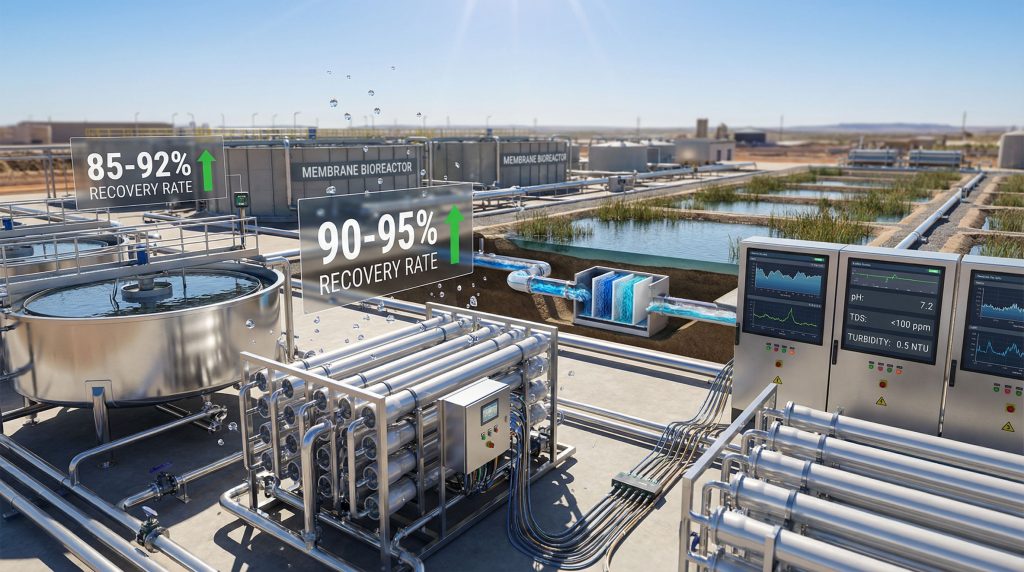
Closed-loop water recycling systems represent the most significant technological advancement in mining water management, enabling operations to achieve 85-95% water recovery rates compared to traditional once-through systems that typically recover less than 60% of process water.
Engineering Closed-Loop Recycling Infrastructure
Modern closed-loop systems integrate multiple treatment technologies in sequential process trains designed to remove specific contaminants while maintaining water quality suitable for reuse in mining operations. The engineering complexity requires careful balancing of treatment efficiency, energy consumption, and capital investment considerations.
Primary treatment components include high-rate clarifiers utilising advanced flocculant chemistry to achieve rapid settling of suspended solids. These systems typically achieve 85-92% suspended solids removal at hydraulic loading rates of 1.5-2.0 metres per hour, significantly higher than conventional clarification systems.
Secondary treatment employs membrane technologies, particularly reverse osmosis systems configured for mining-specific water chemistry. These installations achieve 90-95% dissolved solids removal while maintaining membrane life through advanced pretreatment and anti-scaling protocols.
| System Component | Recovery Rate | Capital Cost Range | Operational Benefits |
|---|---|---|---|
| Clarifier Systems | 85-92% | $2-5M | Suspended solids removal |
| Reverse Osmosis | 90-95% | $3-8M | Dissolved solids reduction |
| Constructed Wetlands | 75-85% | $1-3M | Natural biological treatment |
| Membrane Bioreactors | 88-94% | $4-7M | Biological contaminant removal |
Tertiary treatment systems address specific mining contaminants including heavy metals, residual chemicals, and pH adjustment. Advanced oxidation processes and selective ion exchange systems enable achievement of water quality standards suitable for direct reuse in flotation circuits and dust suppression applications.
Real-Time Monitoring and Control Systems
Implementation of Internet of Things sensor networks enables continuous monitoring of critical water quality parameters throughout treatment processes. Advanced monitoring systems track turbidity, pH, conductivity, heavy metal concentrations, and chemical oxygen demand in real-time, providing immediate feedback for treatment optimisation.
Artificial intelligence algorithms analyse sensor data patterns to predict treatment system performance and optimise chemical dosing rates. Moreover, data-driven operations through machine learning models trained on historical operational data can reduce chemical consumption by 15-25% while maintaining treatment efficacy standards.
Predictive maintenance protocols utilise vibration analysis, thermal imaging, and performance trending to anticipate equipment failures before they impact water treatment capacity. These systems typically reduce unplanned downtime by 30-40% compared to reactive maintenance approaches.
Advanced Water Recovery Technologies Reshaping Mining Operations
Innovation in water recovery technologies focuses on reducing freshwater inputs while maintaining operational efficiency and meeting increasingly stringent discharge standards. These advancements enable mining operations to achieve water neutrality or even positive water balance in certain circumstances.
Dry Processing and Minimal-Water Extraction Methods
Pneumatic separation technologies are replacing traditional flotation processes in applications where mineral liberation characteristics permit effective dry separation. These systems eliminate flotation water requirements while achieving comparable recovery rates for certain ore types.
Dry magnetic separation systems achieve 85-92% recovery rates for iron ore beneficiation while eliminating flotation water consumption entirely. Similar technologies applied to rare earth mineral processing can reduce water consumption by 60-75% compared to conventional wet processing methods.
Sensor-based ore sorting technologies enable pre-concentration of ore streams before water-intensive processing stages. X-ray transmission sorting and near-infrared spectroscopy systems can remove 40-60% of waste material before flotation, proportionally reducing water requirements while maintaining metal recovery rates.
Alternative Water Source Integration
Seawater desalination systems specifically engineered for mining applications address freshwater scarcity constraints in coastal regions. Modern desalination plants designed for mining operations achieve energy consumption rates of 3.5-4.2 kWh per cubic metre, significantly lower than conventional municipal desalination systems.
Atmospheric water generation technologies extract moisture from ambient air using solar-powered adsorption systems. These installations can produce 100-500 litres per day per unit in arid regions with relative humidity above 30%, providing supplemental water sources for critical applications.
Industrial wastewater partnerships enable mining operations to utilise treated municipal wastewater or industrial process water from nearby facilities. These arrangements typically provide cost savings of 40-60% compared to freshwater procurement while reducing pressure on local water resources.
Tailings Water Recovery Optimisation
Advanced thickening technologies maximise water recovery from tailings streams through application of high-efficiency flocculants and improved settling basin design. Modern paste thickening systems achieve water recovery rates exceeding 85%, substantially higher than conventional thickening methods.
Modern tailings facilities can recover up to 85% of process water through advanced thickening and filtration, compared to 60% with conventional methods.
Ceramic membrane filtration systems provide tertiary treatment of thickener overflow water, removing residual suspended solids and enabling direct reuse in processing circuits. These systems maintain flux rates of 50-80 litres per square metre per hour while achieving consistent water quality standards.
Filter press technologies applied to tailings dewatering can achieve solid contents of 80-85% compared to 45-55% for conventional tailings ponds, dramatically reducing water lock-up in tailings storage facilities and enabling accelerated water recovery. Consequently, this approach supports broader waste management solutions throughout mining operations.
What Benchmarking Frameworks Drive Water Efficiency Improvements?
Standardised benchmarking frameworks enable mining companies to measure performance against industry best practices while identifying opportunities for efficiency improvements. These frameworks incorporate regional water stress factors, operational complexity metrics, and absolute consumption measurements.
ICMM Water Stewardship Standards Implementation
The International Council on Mining and Metals water stewardship framework establishes performance indicators focusing on water use efficiency, discharge quality, ecosystem impact, and stakeholder engagement metrics. Implementation requires comprehensive baseline establishment and continuous monitoring protocols.
Performance indicator development incorporates site-specific factors including climate conditions, ore characteristics, processing requirements, and regulatory frameworks. Normalised efficiency metrics account for these variables while enabling meaningful comparisons across different operations and regions.
Third-party verification protocols ensure data accuracy and consistency across reporting periods. Independent auditors assess monitoring systems, data collection procedures, and calculation methodologies to validate reported performance achievements. Furthermore, these assessments align with broader industry innovation trends transforming mining practices globally.
Corporate Water Reduction Targets and Achievements
Leading mining companies have established ambitious water efficiency targets aligned with operational timelines and technological implementation schedules. These commitments drive innovation adoption and operational optimisation initiatives.
| Company | Baseline Year | Reduction Target | Timeline | Key Technologies |
|---|---|---|---|---|
| SQM | 2020 | 65% reduction | 2040 | Brine concentration, solar evaporation |
| Glencore | 2019 | Contextual targets | 2030 | Site-specific optimisation |
| Anglo American | 2018 | 75% efficiency | 2025 | Process water recycling |
| Rio Tinto | 2020 | Net positive impact | 2030 | Advanced treatment systems |
| BHP | 2019 | 30% intensity reduction | 2030 | Closed-loop systems |
Anglo American's Minas-Rio operation exemplifies successful water efficiency implementation, achieving 75% water efficiency through comprehensive recycling systems and alternative water source development. Their Porto do Açu water reuse project, developed in partnership with Prumo Logística, processes filtered water for industrial reuse at rates up to 1,000 cubic metres per hour.
Regional Benchmarking and Best Practice Identification
Chilean copper mining operations serve as global benchmarks for water efficiency in arid environments, with leading operations achieving water intensities below 0.5 cubic metres per tonne of copper produced through comprehensive seawater utilisation and advanced recycling systems.
Australian iron ore operations demonstrate efficiency achievements in high-volume, low-margin mining contexts. Pilbara region operations achieve water recycling rates exceeding 90% through integration of closed-loop systems with seasonal water capture and storage infrastructure.
African platinum group metals operations showcase water management innovations in complex geological settings. In addition, South African operations achieve 60-75% water efficiency despite challenging water quality conditions and multiple processing stages requiring different water specifications.
Emerging Technologies Revolutionising Mining Water Management
Technological innovation continues advancing water management capabilities through application of artificial intelligence, biotechnology, and modular treatment systems designed specifically for mining environments and operational requirements.
Artificial Intelligence and Machine Learning Applications
Predictive analytics systems analyse historical consumption patterns, weather data, production schedules, and equipment performance to forecast water demand with accuracy rates exceeding 95% for planning horizons up to 30 days. These capabilities enable optimised treatment system operation and chemical inventory management.
Automated treatment system optimisation utilises machine learning algorithms to continuously adjust chemical dosing rates, settling parameters, and membrane operating conditions based on influent water quality variations. These systems achieve chemical cost reductions of 20-30% while maintaining treatment performance standards.
Real-time leak detection systems employ acoustic monitoring, pressure analysis, and flow balance calculations to identify pipeline failures within minutes of occurrence. Advanced systems can locate leaks within 50-metre accuracy across pipeline networks spanning hundreds of kilometres, enabling rapid repair response.
Biotechnology Solutions for Water Treatment
Bioremediation systems utilise specially selected microorganisms to remove heavy metals, residual chemicals, and organic contaminants from mining process water. These biological treatment systems achieve heavy metal removal rates of 85-95% while operating at significantly lower energy requirements than conventional chemical treatment methods.
Algae-based treatment systems provide dual benefits of water treatment and biomass production for potential economic utilisation. Specially cultivated algae strains remove nitrogen, phosphorus, and trace metals while producing biomass suitable for biofuel production or agricultural applications.
Constructed wetland ecosystems engineered for mining applications provide passive treatment capabilities requiring minimal energy inputs. These systems achieve consistent treatment performance while creating habitat value and supporting biodiversity conservation objectives.
Modular and Mobile Water Treatment Systems
Containerised treatment units enable rapid deployment of water treatment capabilities during exploration phases, construction periods, and temporary operations. These modular systems achieve treatment capacities of 100-2,000 cubic metres per day while maintaining portability for relocation as operational requirements change.
Scalable treatment capacity matching enables mining operations to align water treatment infrastructure with production growth trajectories. Modular system designs accommodate capacity expansions of 25-100% through addition of parallel treatment trains without disrupting existing operations.
Mobile treatment units provide emergency response capabilities during equipment failures, extreme weather events, or regulatory compliance requirements. These systems can be deployed within 24-48 hours and provide interim treatment capacity while permanent repairs are completed.
Economic and Environmental Impact Assessment
Comprehensive evaluation of water efficiency investments requires analysis of capital costs, operational savings, risk mitigation value, and environmental performance metrics. These assessments guide technology selection and implementation prioritisation decisions.
Cost-Benefit Analysis of Water Efficiency Investments
Capital expenditure requirements for comprehensive water efficiency systems typically range from $50-150 per cubic metre of daily treatment capacity, depending on water quality characteristics and treatment objectives. These investments generate operational savings through reduced freshwater procurement, lower discharge fees, and decreased regulatory compliance costs.
Operational savings calculations must incorporate avoided costs of freshwater procurement, wastewater discharge fees, regulatory penalties, and operational disruptions due to water shortages. In water-stressed regions, these avoided costs can exceed $2-5 per cubic metre of water conserved, providing attractive payback periods for efficiency investments.
Risk mitigation value includes reduced exposure to water supply disruptions, regulatory changes, and community opposition. These risk factors can impact project economics through production delays costing $100,000-500,000 per day for large mining operations, justifying significant investments in water security measures.
Environmental Performance Metrics
Freshwater consumption reduction achievements through comprehensive efficiency programmes typically range from 40-65% compared to conventional operations, with leading implementations achieving reductions exceeding 70% in optimal circumstances.
Ecosystem impact minimisation through source diversification reduces pressure on local watersheds and groundwater resources. Advanced operations achieve net positive water impact through watershed restoration projects and community water infrastructure development that exceeds operational consumption. These initiatives often connect to broader mine reclamation innovation programmes throughout the industry.
Carbon footprint implications of water treatment technologies require careful evaluation, as energy-intensive treatment systems can increase operational emissions. However, lifecycle analysis typically demonstrates net environmental benefits when considering avoided impacts of freshwater extraction and ecosystem disruption.
Community Relations and Social Licence Considerations
Stakeholder engagement in water management planning incorporates community concerns, traditional water uses, and local development priorities into operational planning processes. Comprehensive engagement programmes achieve community approval rates exceeding 80% for water management initiatives compared to 45-60% for conventional consultation approaches.
Benefit-sharing mechanisms for local water security include infrastructure development, technical capacity building, and shared access to treated water resources. Anglo American's watershed restoration programme recovered more than 500 springs across 27,000 hectares, demonstrating tangible community benefits from corporate water stewardship initiatives.
Transparency reporting and community monitoring programmes enable independent verification of water management performance while building trust and accountability. These programmes incorporate community representatives in monitoring activities and provide regular public reporting of water consumption, quality, and conservation achievements.
The next major ASX story will hit our subscribers first
Implementation Roadmap for Mining Water Efficiency
Successful implementation of comprehensive water efficiency programmes requires systematic planning, phased deployment, and continuous optimisation over multi-year timelines. Strategic implementation approaches maximise efficiency gains while minimising operational disruptions and capital requirements.
Phase 1: Assessment and Planning (Months 1-6)
Comprehensive water audits establish baseline consumption patterns, identify efficiency opportunities, and quantify potential savings across all operational activities. These assessments incorporate:
- Detailed flow measurement across all water uses
- Quality analysis of available water sources
- Treatment requirement evaluation for reuse applications
- Economic analysis of efficiency investment options
- Regulatory compliance assessment and permitting requirements
Technology selection processes evaluate available solutions based on site-specific conditions, operational requirements, and economic objectives. Selection criteria include treatment efficiency, energy requirements, maintenance complexity, modular expansion capabilities, and integration compatibility with existing infrastructure.
Regulatory approval and permitting processes establish compliance frameworks for water treatment systems, discharge standards, and monitoring requirements. Early engagement with regulatory agencies reduces approval timelines and ensures alignment with evolving environmental standards. These developments reflect broader mining water efficiency trends recognised by leading research institutions.
Phase 2: Infrastructure Development (Months 6-24)
Treatment system construction and commissioning activities require careful coordination with ongoing mining operations to minimise production disruptions. Construction sequencing enables phased system startup while maintaining existing water management capabilities.
Staff training and operational procedure development ensure successful technology adoption and optimal system performance. Comprehensive training programmes address:
- System operation and control procedures
- Maintenance protocols and troubleshooting techniques
- Safety procedures for chemical handling and equipment operation
- Environmental monitoring and reporting requirements
- Emergency response protocols and contingency procedures
Monitoring system installation and calibration establish data collection capabilities for performance tracking and regulatory compliance. Advanced monitoring networks enable real-time system optimisation and provide documentation for efficiency achievement verification.
Phase 3: Optimisation and Scaling (Months 24+)
Performance monitoring and continuous improvement processes identify optimisation opportunities and guide system upgrades. Data analysis capabilities enable predictive maintenance scheduling and operational parameter optimisation for maximum efficiency achievement.
Technology upgrades and capacity expansion accommodate production growth and incorporate advancing treatment technologies. Modular system designs enable capacity increases of 50-200% through parallel system installation without disrupting existing treatment capabilities.
Best practice sharing across mining portfolios accelerates efficiency achievements and reduces implementation costs for subsequent projects. Standardised design approaches and proven operational procedures enable 30-50% faster deployment for similar geological and operational conditions.
Future Outlook: Water Efficiency Innovation Trends
Emerging technologies and regulatory trends continue advancing water efficiency capabilities while addressing increasingly stringent environmental standards and community expectations for responsible water stewardship.
Next-Generation Treatment Technologies
Graphene-based filtration membranes demonstrate potential for energy consumption reductions of 40-60% compared to conventional reverse osmosis systems while achieving superior contaminant removal performance. Commercial deployment timelines extend 3-5 years as manufacturing processes achieve cost-competitive production scales.
Atmospheric water harvesting at industrial scale utilises solar-powered adsorption systems capable of producing 1,000-5,000 litres per day per unit in regions with relative humidity above 40%. These technologies provide supplemental water sources for critical applications while reducing freshwater dependency.
Zero liquid discharge system integration enables complete elimination of wastewater discharge through advanced evaporation and crystallisation technologies. While energy-intensive, these systems provide ultimate environmental protection and enable operations in extremely sensitive watershed areas.
Regulatory Evolution and Market Drivers
Strengthening water use regulations in mining jurisdictions increasingly require demonstration of water efficiency achievements and long-term sustainability planning. Regulatory frameworks incorporate ecosystem impact assessment, cumulative watershed effects, and climate change adaptation requirements.
ESG investor pressure for water stewardship drives corporate commitments to ambitious efficiency targets and transparency reporting. Investment decision frameworks increasingly incorporate water risk assessment and efficiency performance as material factors affecting project valuations and financing availability.
Climate change adaptation requirements necessitate resilient water management systems capable of operating under variable precipitation patterns and extended drought conditions. Design standards increasingly require redundant water sources and storage capabilities for sustained operations during extreme weather events. Furthermore, these requirements align with comprehensive sustainability transformation initiatives across the mining sector.
Industry Collaboration and Knowledge Sharing
Multi-company research consortiums focus on advancing water treatment technologies specific to mining applications while sharing development costs and technical risks. Collaborative programmes address membrane fouling mechanisms, chemical recovery optimisation, and energy efficiency improvements through coordinated research efforts.
Technology transfer mechanisms facilitate adoption of proven water management innovations across different mining operations and regional contexts. Standardised performance measurement protocols enable comparative analysis and best practice identification across diverse operational environments.
Standardised reporting frameworks development enables consistent measurement and comparison of water efficiency achievements while supporting regulatory compliance and stakeholder communication. Industry-wide adoption of common metrics facilitates benchmarking analysis and performance improvement initiatives. These efforts are supported by comprehensive water management research demonstrating best practices across the industry.
The evolution of the efficiency of water use in mining reflects broader trends toward sustainable resource utilisation and operational resilience in the face of increasing environmental constraints. As technological capabilities continue advancing and regulatory requirements strengthen, water management will increasingly become a competitive differentiator for mining operations seeking to maintain social licence and operational sustainability in water-stressed regions worldwide.
Want to Identify the Next Mining Water Innovation Winner?
Discovery Alert's proprietary Discovery IQ model delivers real-time alerts on significant ASX mineral discoveries, instantly empowering subscribers to identify actionable opportunities ahead of the broader market. Begin your 14-day free trial today and secure your market-leading advantage.