August 3, 2026
Water scarcity challenges in mining regions worldwide continue to intensify, forcing industry stakeholders to develop innovative solutions for sustainable operations. Traditional approaches to water management face unprecedented stress from climate volatility, growing demand, and regulatory pressures. Understanding how mining-dependent regions navigate these complex dynamics provides critical insights into the future viability of resource extraction industries globally.
The Foundation of Water Security in Desert Mining Operations
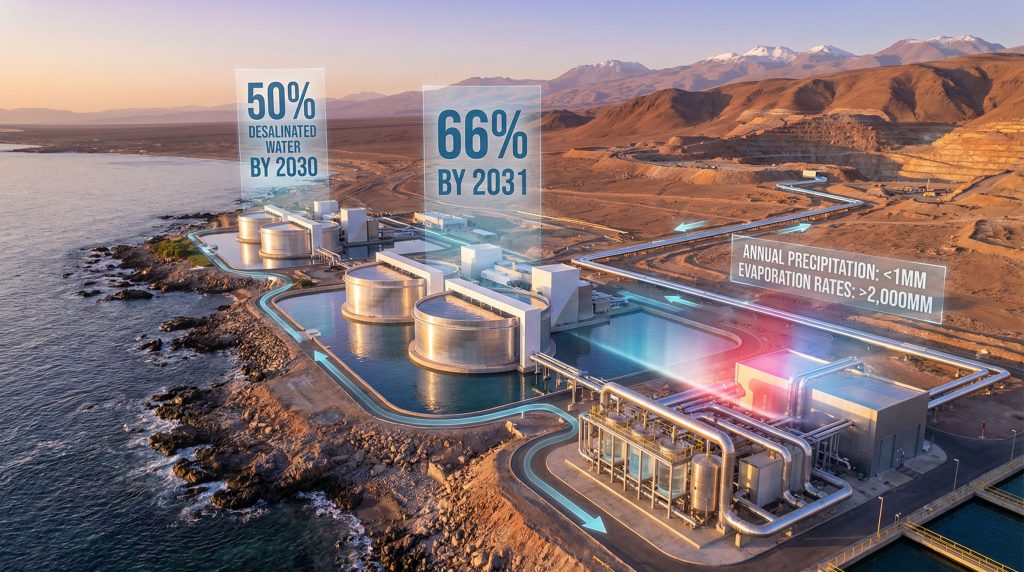
Water security in arid mining environments represents a multifaceted challenge requiring systematic evaluation across four core dimensions: availability, accessibility, quality, and reliability. In Chile's northern mining corridor, these metrics become particularly critical as operations must function in conditions where annual precipitation often measures below 1mm while evaporation rates exceed 2,000mm annually.
The security of water resources in Antofagasta emerges as a defining factor for the region's economic sustainability. This coastal province, hosting some of the world's largest copper operations, demonstrates how extreme environmental conditions necessitate revolutionary approaches to water management. Furthermore, the region's unique position as a mining hub within the driest non-polar desert creates both challenges and opportunities for innovative water security frameworks.
Regional water stress indicators reveal concerning trends across northern Chile. Over three decades, continental water usage has increased by approximately 1,900%, indicating severe overexploitation of traditional freshwater sources. This dramatic escalation forces mining companies and regional governments to prioritise alternative water sources and enhanced conservation technologies.
Climate change projections for the region suggest continued deterioration of natural water availability. The ongoing 13-year drought cycle affecting northern Chile compounds existing water stress, making long-term planning essential for sustained mining operations. These environmental pressures create urgent imperatives for technological innovation and strategic infrastructure investment aligned with sustainability transformation initiatives.
When big ASX news breaks, our subscribers know first
Desalination Infrastructure and Regional Capacity
Desalination technology has emerged as the cornerstone of security of water resources in Antofagasta, transforming the region's approach to industrial and domestic water supply. Current infrastructure provides comprehensive coverage for urban populations, with over 99.9% urban access achieved since 2014, demonstrating the effectiveness of large-scale desalination investment.
The following table illustrates the current state of desalination capacity across the region:
| Plant Location | Capacity (L/s) | Investment (USD Million) | Coverage Type |
|---|---|---|---|
| Antofagasta Urban | 850 | 120 | Municipal/Industrial |
| Mejillones Industrial | 450 | 85 | Mining Operations |
| Taltal Regional | 180 | 35 | Mixed Use |
| Future Expansion | 600 | 150 | Planned Capacity |
Energy requirements for desalination operations range from 3.5 to 5.0 kWh per cubic metre, creating operational costs between $0.50 and $2.00 per cubic metre depending on plant efficiency and energy sources. These costs continue declining as renewable energy integration advances and technological improvements reduce energy intensity.
Regional infrastructure development focuses on expanding desalination capacity to serve both urban and rural populations. Current projects aim to achieve 100% treated water coverage for Antofagasta city, eliminating wastewater discharge to marine environments while supporting continued population and industrial growth.
Strategic infrastructure investments target rural areas where coverage remains at 58%, significantly below urban levels. These initiatives require coordinated public-private partnerships to finance and construct distribution networks connecting desalination facilities to remote mining communities and agricultural areas.
Traditional Water Sources and Quality Challenges
Continental water sources in the Antofagasta region face severe quality and quantity constraints that limit their utility for mining operations. The Río Loa, the region's primary river system, exhibits salinity levels ranging from 1.5 to 7.5 mS/cm, requiring extensive treatment for most industrial applications.
Groundwater resources in the Pampa del Tamarugal aquifer show concerning depletion rates due to decades of intensive extraction. This underground water system, traditionally supporting both mining and agricultural activities, faces sustainability challenges as extraction rates exceed natural recharge capacity by significant margins.
Water quality issues extend beyond salinity and arsenic to include heavy metal contamination and bacterial concerns in some continental sources. These quality challenges force mining operations to invest in sophisticated treatment technologies or transition to desalinated water supplies for critical processes.
The dramatic increase in continental water usage over recent decades highlights the unsustainable trajectory of traditional water management approaches. This pattern of overexploitation creates long-term risks for both mining operations and local communities dependent on shared water resources.
Mining Industry Water Consumption and Adaptation Strategies
Water consumption patterns across Antofagasta's mining sector reveal significant variations between different extraction processes and operational scales. The following analysis demonstrates current usage patterns and future projections:
| Mining Sector | Water Demand (L/s) | Desalinated % | Continental % | 2030 Target |
|---|---|---|---|---|
| Copper Operations | 1,250 | 35% | 65% | 50% Desalinated |
| Lithium Extraction | 180 | 45% | 55% | 66% Desalinated |
| Industrial Minerals | 95 | 25% | 75% | 45% Desalinated |
| Processing Facilities | 320 | 40% | 60% | 55% Desalinated |
Corporate water security strategies increasingly emphasise diversification and sustainability metrics. Major mining companies operating in the region have established targets to source 50% of their water from desalination by 2030, advancing to 66% by 2031. These targets reflect both environmental compliance requirements and long-term operational risk management.
Investment in private desalination facilities represents a growing trend among large mining operations seeking water supply independence. These dedicated facilities provide operational security while reducing pressure on shared regional infrastructure, creating win-win scenarios for industry and community water access.
Waste management solutions and water recycling technologies achieve increasingly sophisticated performance levels across mining operations. Advanced treatment systems enable multiple reuse cycles for process water, reducing overall freshwater demand by 20-30% in optimised facilities.
Collaborative agreements between mining companies and regional governments facilitate shared infrastructure development and operational efficiency. These partnerships leverage private sector technical expertise and capital whilst ensuring alignment with public water security objectives and rural development priorities.
Regional Water Governance and Strategic Coordination
The Estrategia Minera Regional de Antofagasta (EMRA) represents an innovative governance model designed to coordinate water security initiatives across public and private stakeholders. This framework facilitates accelerated project development through streamlined permitting processes and enhanced technical collaboration.
EMRA's governance structure integrates mining companies, government agencies, academic institutions, and community representatives in decision-making processes affecting regional water infrastructure. This multi-stakeholder approach enables more comprehensive planning and faster implementation of critical water security projects, reflecting broader industry innovation trends.
Public-private partnership mechanisms within the EMRA framework provide technical and financial resources for water infrastructure development. Industry participation contributes specialised engineering expertise and capital investment whilst government agencies coordinate regulatory compliance and community engagement processes.
The acceleration of water infrastructure projects through EMRA coordination demonstrates measurable improvements in project timelines. Historical bottlenecks that previously delayed projects for years can now be resolved through coordinated stakeholder engagement and streamlined technical review processes.
One notable example involves the Posta de Paine project, which experienced an 11-year development delay before EMRA coordination facilitated rapid resolution. This case illustrates how systematic stakeholder coordination can overcome institutional barriers that traditionally impede infrastructure development in remote areas.
Rural Water Access Challenges and Solutions
Rural water access in Antofagasta presents stark disparities compared to urban coverage levels. Whilst urban areas achieve near-universal access, rural territories including Atacama La Grande and Alto El Loa maintain coverage rates around 58%, creating significant development and equity challenges.
The following table summarises current rural water access statistics and infrastructure requirements:
| Territory | Population | Current Coverage | Infrastructure Investment Needed | Projected Timeline |
|---|---|---|---|---|
| Atacama La Grande | 2,400 | 45% | $12 million | 5-7 years |
| Alto El Loa | 3,200 | 52% | $18 million | 4-6 years |
| Remote Mining Communities | 1,800 | 35% | $8 million | 3-5 years |
| Agricultural Areas | 1,100 | 65% | $5 million | 2-4 years |
Geographic isolation and low population density create significant cost challenges for rural water infrastructure development. Distribution networks must traverse difficult terrain to serve scattered communities, requiring substantial capital investment relative to the number of beneficiaries.
Technical assistance programmes leveraging mining industry expertise provide valuable support for rural water infrastructure design and implementation. These collaborative initiatives combine industry engineering capabilities with government financing to accelerate rural water access improvements.
Mining operations' proximity to rural communities creates opportunities for shared infrastructure development and operational synergies. Coordinated planning enables cost-effective solutions that serve both industrial and community water needs whilst building local capacity for system maintenance and operation.
Community benefit agreements increasingly include water access provisions as mining companies recognise the importance of social licence maintenance. These agreements often provide technical and financial support for rural water infrastructure as part of broader community development commitments.
The next major ASX story will hit our subscribers first
Economic Models and Financial Sustainability
Water source cost structures vary significantly across different supply options, influencing long-term financial planning for both mining operations and regional development. Understanding these cost dynamics becomes essential for sustainable water security investment strategies.
Cost comparison analysis reveals the following economic considerations for different water sources:
| Water Source | Production Cost (USD/m³) | Transportation Cost | Treatment Requirements | Long-term Sustainability |
|---|---|---|---|---|
| Desalination | $0.50-$2.00 | $0.20-$0.80/km | Minimal | High |
| Continental Sources | $0.30-$1.50 | $0.40-$1.20/km | Extensive | Low |
| Recycled Water | $0.80-$2.50 | $0.15-$0.60/km | Moderate | High |
| Groundwater | $0.60-$2.20 | $0.50-$1.00/km | Variable | Medium |
Investment models supporting water security infrastructure increasingly emphasise collaborative financing between mining companies, government agencies, and international development institutions. These partnership structures distribute financial risks whilst leveraging diverse funding sources and technical capabilities.
Revenue-sharing models between different water users enable more efficient infrastructure utilisation and cost distribution. Mining operations, municipalities, and agricultural users can share infrastructure costs proportional to usage levels and capacity requirements, creating economically sustainable frameworks for rural water access expansion.
Long-term financial sustainability requires careful consideration of operational costs, maintenance requirements, and technology upgrade cycles. Desalination infrastructure typically requires major overhauls every 15-20 years, necessitating reserve fund establishment and lifecycle cost planning.
International development bank involvement provides additional financing options for large-scale water infrastructure projects. These institutions offer favourable lending terms and technical assistance for projects demonstrating strong sustainability and development impact credentials.
Technology Innovation and Efficiency Improvements
Advanced desalination technologies continue driving down operational costs and energy requirements, making seawater treatment increasingly competitive with traditional water sources. Next-generation reverse osmosis systems achieve energy consumption levels below 3.0 kWh per cubic metre, representing 20-30% improvements over older installations.
Smart water management systems utilising Internet of Things (IoT) sensors and automated controls optimise distribution efficiency and reduce water losses across regional networks. These technologies enable real-time monitoring of water quality, flow rates, and system performance, facilitating predictive maintenance and operational optimisation through data-driven operations.
Industrial water recycling innovations achieve increasingly sophisticated treatment capabilities, enabling multiple reuse cycles for mining process water. Advanced filtration and treatment technologies can remove specific contaminants whilst preserving water quality for subsequent industrial applications.
"Technological advances in membrane technology and energy recovery systems could reduce desalination costs by 30-40% within the next decade, fundamentally altering water economics for mining operations" according to recent research on desalination technologies.
Integration of renewable energy sources with desalination operations creates opportunities for cost reduction and sustainability improvement. Solar and wind energy systems can provide dedicated power for water treatment facilities, reducing operational costs whilst supporting climate commitments.
Water quality monitoring technologies enable precise treatment optimisation and quality assurance across different water sources. Advanced analytical systems can detect trace contaminants and adjust treatment protocols in real-time, ensuring consistent water quality whilst minimising treatment costs.
Environmental and Sustainability Considerations
Environmental impacts of current water strategies require careful management to ensure long-term sustainability and regulatory compliance. Brine discharge from desalination plants poses particular challenges for coastal and marine ecosystem protection, necessitating innovative disposal and treatment solutions.
Energy consumption associated with water infrastructure creates significant carbon footprint considerations for mining operations pursuing net-zero commitments. Desalination and water treatment facilities typically account for 5-15% of total mining operation energy consumption, making efficiency improvements and renewable energy integration critical for sustainability goals.
Coastal and marine ecosystem impacts from desalination operations require comprehensive environmental monitoring and mitigation measures. Intake and discharge systems must minimise impacts on marine life whilst managing brine concentration effects on local water quality.
Groundwater recovery and protection measures become essential as regional water strategies evolve toward greater sustainability. Reducing extraction pressure on overexploited aquifers requires coordinated transition to alternative water sources and enhanced conservation practices across all user sectors.
Circular economy principles in water management emphasise maximising reuse and recycling opportunities whilst minimising waste and environmental impact. These approaches integrate water treatment and reuse systems across different industrial and municipal applications, creating closed-loop systems that optimise resource efficiency.
Corporate sustainability reporting increasingly includes detailed water stewardship metrics and environmental impact assessments. Mining companies face growing pressure to demonstrate measurable progress toward water sustainability goals and transparent reporting of water-related environmental impacts, as highlighted in recent sustainability reports.
Risk Assessment and Resilience Planning
Comprehensive risk assessment for security of water resources in Antofagasta requires systematic evaluation of multiple threat categories and their potential impacts on water supply reliability. Climate, infrastructure, economic, and geopolitical factors all contribute to overall water security risk profiles.
The following risk matrix illustrates primary threats and their estimated impact levels:
| Risk Category | Probability | Impact Level | Mitigation Priority | Response Timeline |
|---|---|---|---|---|
| Seismic Infrastructure Damage | Medium | High | Critical | Immediate |
| Extended Drought Periods | High | Medium | High | 1-3 years |
| Energy Price Volatility | High | Medium | Medium | 6-18 months |
| Regulatory Changes | Medium | Medium | Medium | 2-5 years |
| Technology Disruption | Low | Low | Low | 5-10 years |
Climate change scenarios project continued reduction in natural precipitation and increased temperature extremes, potentially exacerbating existing water stress conditions. These projections necessitate conservative planning assumptions and robust adaptation strategies for long-term water security.
Infrastructure resilience planning must account for seismic risks common in Chile's geologically active regions. Desalination facilities and distribution networks require earthquake-resistant design standards and emergency backup systems to ensure continued operation following major seismic events.
Economic volatility affecting commodity prices and investment capacity creates financial risks for water infrastructure development and maintenance. Diversified financing structures and reserve fund mechanisms help mitigate these economic uncertainties whilst ensuring continued infrastructure investment.
Emergency response protocols for water supply disruptions include backup system activation, alternative source utilisation, and coordinated distribution of emergency water supplies. These protocols require regular testing and stakeholder coordination to ensure effectiveness during actual crisis situations.
Regional cooperation mechanisms enable shared response capacity and resource pooling during water emergencies. Mutual assistance agreements between mining operations, municipalities, and government agencies create redundancy and enhanced resilience across the regional water supply system.
Future Scenarios and Strategic Projections
Population and industrial growth projections for the Antofagasta region suggest continued increases in water demand through 2035, requiring substantial additional infrastructure investment and capacity expansion. Current planning scenarios estimate 25-35% demand growth over the next decade based on mining expansion and urban development trends.
Mining expansion plans across copper and lithium operations will drive significant additional water requirements, potentially adding 400-600 L/s to regional demand by 2030. These increases necessitate coordinated infrastructure planning and investment to ensure adequate supply capacity and distribution network expansion.
Technology adoption timelines suggest substantial cost reductions for desalination and water treatment technologies within the next 5-10 years. These improvements will enhance the economic viability of water-intensive mining operations whilst reducing the relative cost burden of rural water access expansion.
Best-case scenarios anticipate successful achievement of corporate water sustainability targets, complete rural water access coverage, and technological breakthroughs reducing water treatment costs by 40-50%. These outcomes would position Antofagasta as a global model for water security in arid mining regions.
Worst-case scenarios consider prolonged drought, major infrastructure failures, and economic downturns limiting investment capacity. These challenges could severely constrain mining operations and delay rural water access improvements, highlighting the importance of resilient planning and diversified risk management strategies.
Most likely outcomes suggest steady progress toward water sustainability goals with continued challenges in rural areas and periodic stress periods requiring adaptive management responses. This scenario emphasises the importance of flexible planning frameworks and continuous infrastructure investment.
Strategic Recommendations and Implementation Priorities
Investment prioritisation frameworks should emphasise projects delivering maximum benefit across multiple stakeholder groups whilst building long-term resilience and sustainability. Rural water access projects providing both community benefits and mining operational support represent particularly high-value investment opportunities.
Stakeholder coordination mechanisms require formalisation and expansion to ensure continued effectiveness as water demands and complexity increase. Enhanced EMRA-style frameworks could serve as models for other water-stressed mining regions facing similar coordination challenges.
Performance monitoring and adaptive management systems must provide real-time data on water system performance, enabling rapid response to emerging challenges and optimisation opportunities. These systems should integrate environmental, social, and economic indicators to support comprehensive water security assessment.
Integration with national and international water security initiatives creates opportunities for knowledge sharing, technology transfer, and coordinated investment strategies. Antofagasta's experience with desalination and public-private partnerships offers valuable lessons for other regions facing similar water security challenges.
Long-term sustainability requires continued investment in research and development, infrastructure maintenance, and stakeholder capacity building. These foundations ensure that current water security achievements remain viable and adaptable to future challenges and opportunities.
The security of water resources in Antofagasta ultimately depends on sustained commitment to innovation, collaboration, and strategic investment across all stakeholder groups. Success in this challenging environment demonstrates the potential for effective water security solutions in arid mining regions worldwide.
This analysis is based on publicly available information and should not be considered as investment or policy advice. Water security planning involves complex technical, environmental, and economic factors requiring professional expertise and site-specific assessment.
Ready to Capitalise on Water Security Opportunities in Mining Regions?
Discovery Alert's proprietary Discovery IQ model identifies significant mineral discoveries across water-stressed regions like Antofagasta, where mining companies developing innovative water solutions often present exceptional investment opportunities. Understanding why major mineral discoveries can lead to substantial market returns positions investors ahead of these critical infrastructure developments, whilst Discovery Alert's 14-day free trial delivers instant notifications on ASX discoveries from companies advancing water security technologies alongside their core mining operations.