May 23, 2026
The global mining sector faces unprecedented pressure to transform its relationship with water resources. Traditional extraction models that prioritised immediate operational efficiency over long-term environmental stewardship are rapidly becoming obsolete. Water stewardship and technological transformation in mining now represents a critical strategic imperative as companies worldwide must navigate complex regulatory frameworks while implementing advanced technologies that fundamentally alter how they acquire, utilise, and manage water throughout the complete operational lifecycle.
This transformation extends far beyond simple compliance measures. Companies are discovering that integrated water management systems can deliver substantial operational advantages, reduce regulatory risks, and create competitive differentiation in an increasingly scrutinised industry. Furthermore, the convergence of artificial intelligence, advanced sensor networks, and predictive analytics is enabling mining operations to achieve previously unattainable levels of water efficiency while maintaining production targets.
Understanding Comprehensive Water Management in Modern Mining
Ecosystem-Level Water Resource Planning
Modern water stewardship in mining requires a fundamental shift from isolated conservation efforts toward comprehensive ecosystem management. This approach integrates surface water protection protocols, groundwater conservation strategies, and watershed-level monitoring systems that extend operational responsibility far beyond traditional mining boundaries.
Successful implementation demands detailed understanding of regional hydrological cycles, seasonal water availability patterns, and the interconnected relationships between surface and subsurface water systems. Mining operations must now consider their impact on entire watersheds, including downstream communities, agricultural users, and natural ecosystems that depend on shared water resources.
Strategic Water Resource Optimisation
Advanced water stewardship programmes distinguish themselves through proactive resource optimisation rather than reactive compliance measures. These systems continuously analyse water usage patterns, identify efficiency opportunities, and implement predictive management protocols that prevent resource conflicts before they develop.
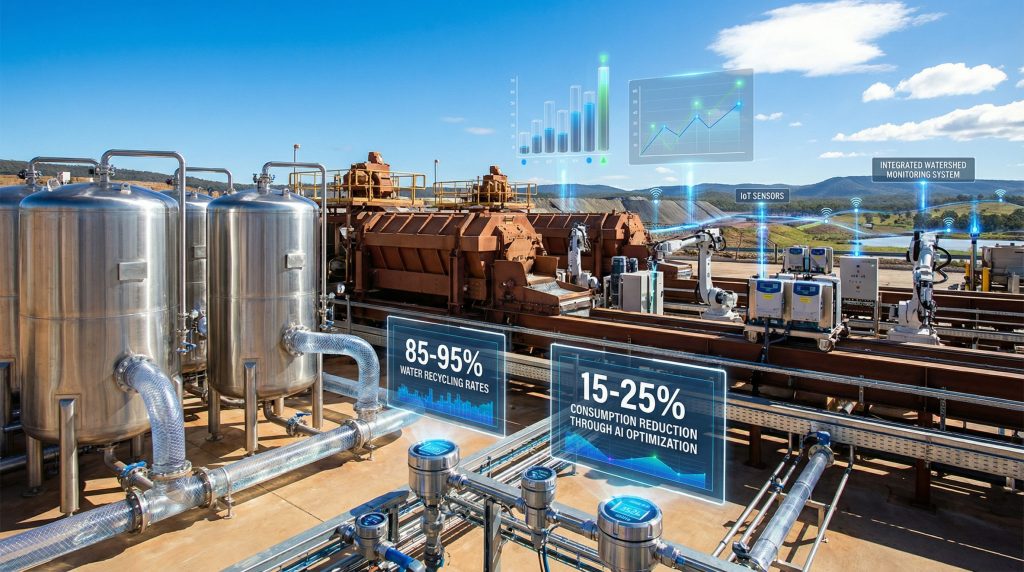
Leading mining companies demonstrate measurable improvements in water recycling rates, achieving 85-95% water reuse in their operations through integrated treatment and recovery systems. These achievements require substantial technological investment but deliver significant long-term cost savings through reduced water acquisition costs and enhanced regulatory compliance.
When big ASX news breaks, our subscribers know first
Regulatory Adaptation and Compliance Evolution
Mexican Water Law Reform Implementation
Mexico's water law reforms have fundamentally altered the regulatory landscape for mining operations. The changes prioritise human consumption over industrial use while strengthening state control through CONAGUA oversight mechanisms. For instance, navigating water stewardship requires mining companies to demonstrate comprehensive watershed impact assessments and implement real-time monitoring systems as standard permit requirements.
The regulatory framework requires mining operations to establish contingency protocols for water scarcity scenarios, maintain continuous oversight of water quality parameters, and ensure strict compliance with evolving permit requirements. These changes represent a shift from basic extraction permits toward comprehensive water stewardship responsibilities.
Global Water Governance Standards
International mining corporations are increasingly adopting International Council on Mining and Metals (ICMM) water stewardship principles. These standards mandate catchment-based approaches that consider all stakeholder water needs within shared watersheds, requiring companies to engage with local communities, agricultural users, and environmental protection agencies.
Key regulatory changes affecting global mining operations:
- Strengthened watershed impact assessment requirements
- Mandatory real-time water quality monitoring systems
- Enhanced community consultation protocols
- Increased penalties for non-compliance incidents
- Extended corporate responsibility for water resource protection
Technological Innovation in Water Management Systems
Artificial Intelligence and Predictive Analytics Integration
AI-powered water management systems are revolutionising mining operations through sophisticated data analysis capabilities. These systems process vast datasets from multiple sensors to optimise consumption patterns, predict equipment maintenance requirements, and identify process inefficiencies that traditional monitoring approaches cannot detect.
Machine learning algorithms analyse historical water usage data, weather patterns, and operational parameters to predict optimal water allocation strategies. Additionally, data-driven operations using advanced systems can reduce water consumption by 15-25% while maintaining production targets, delivering substantial cost savings and environmental benefits.
Sensor Network Development and Implementation
Modern mining operations deploy extensive sensor networks that monitor water quality parameters including pH levels, dissolved solids concentrations, heavy metal content, and flow rates across entire operational sites. These systems generate continuous data streams that enable immediate response to water quality deviations and process optimisation opportunities.
Automated alert systems notify operators of parameter changes that could affect production efficiency or environmental compliance. Integration with AI analytics platforms enables predictive maintenance scheduling that reduces unplanned downtime by 30-40% while extending equipment operational lifespan.
Remote Monitoring and Digital Integration
Remote monitoring technologies enable centralised oversight of water management systems across multiple mining sites. Digital integration platforms compile data from various monitoring points to provide comprehensive operational visibility and enable coordinated response to system-wide challenges.
These systems support real-time decision-making processes that optimise water allocation between different operational areas, predict maintenance requirements, and ensure continuous regulatory compliance across complex mining operations.
Dry-Stack Tailings Technology and Water Conservation
Economic Analysis of Alternative Tailings Management
Dry-stack tailings systems require higher initial capital investment but deliver substantial long-term savings through eliminated dam maintenance costs, reduced closure expenses, and decreased water consumption requirements. Financial modelling demonstrates positive return on investment within 7-10 years for most mining operations.
The economic benefits extend beyond direct cost savings to include reduced regulatory compliance costs, decreased insurance premiums, and enhanced community relations that facilitate future project approvals and operational expansions. Moreover, mine reclamation innovation supports these long-term cost benefits through advanced closure strategies.
Technical Implementation Requirements
Filtered tailings technology removes moisture content to 10-15%, compared to 40-60% in conventional slurry systems. This dramatic reduction requires specialised dewatering equipment, modified transport systems, and engineered storage facilities designed specifically for dry material handling and long-term stability.
Tailings management technology comparison:
| Technology Type | Water Content | Initial Investment | Long-term Costs | Environmental Risk |
|---|---|---|---|---|
| Conventional Slurry | 40-60% | Low | High | Elevated |
| Thickened Tailings | 25-35% | Medium | Medium | Moderate |
| Filtered/Dry-Stack | 10-15% | High | Low | Minimal |
Implementation requires comprehensive trade-off analysis that considers site-specific conditions, regulatory requirements, and long-term operational objectives. Successful projects demonstrate the importance of conducting detailed feasibility studies that evaluate all available alternatives including filtered, thickened, and paste tailings options.
Big Data Applications in Mining Water Efficiency
Data Integration and Analytics Platforms
Modern mining operations generate terabytes of data from water monitoring systems, process sensors, and environmental monitoring equipment. Specialised analytics platforms compile this information to identify optimisation opportunities, predict system performance trends, and support strategic decision-making processes.
Advanced data integration systems connect previously isolated monitoring networks to provide comprehensive operational visibility. These platforms enable mining companies to understand complex relationships between different operational parameters and optimise entire systems rather than individual components.
Predictive Maintenance and System Optimisation
Machine learning algorithms analyse equipment performance data to predict pump failures, filter replacement requirements, and system maintenance needs before problems develop. This approach reduces unplanned downtime and extends equipment operational lifespan while maintaining optimal water treatment efficiency.
Predictive maintenance systems integrate with inventory management platforms to ensure spare parts availability and coordinate maintenance activities with production schedules. These capabilities enable mining operations to maintain continuous water treatment efficiency while minimising operational disruptions.
Performance Measurement and Success Metrics
Key Performance Indicator Development
Successful water stewardship programmes establish comprehensive KPI frameworks that measure water intensity per tonne processed, recycling rates, discharge quality parameters, and community water access improvements. These metrics provide quantifiable evidence of environmental performance and regulatory compliance.
Advanced measurement systems track multiple parameters simultaneously to provide comprehensive performance assessment:
- Water consumption intensity (m³/tonne processed)
- Water recycling and reuse percentages
- Discharge quality compliance rates
- Community water access improvement metrics
- Ecosystem health indicator trends
Third-Party Verification and Certification
Independent water stewardship assessments provide credible validation of company performance through standardised evaluation criteria. Organisations like the Alliance for Water Stewardship offer certification programmes that demonstrate commitment to responsible water management practices and stakeholder engagement.
However, water stewardship must become central to mining's future according to industry experts who emphasise the critical importance of comprehensive programmes.
Companies achieving superior water stewardship performance typically invest 2-3% of operational budgets in advanced treatment technologies and comprehensive monitoring systems. This investment level enables achievement of 90%+ water recycling rates while maintaining full regulatory compliance.
Third-party certification processes include detailed assessment of water management policies, operational procedures, monitoring system effectiveness, and community engagement initiatives. These evaluations provide independent verification of water stewardship claims and support corporate sustainability reporting requirements.
The next major ASX story will hit our subscribers first
Investment Implications and Capital Allocation Strategies
Capital Expenditure Analysis
Mining companies typically allocate 8-12% of capital expenditure to water management systems, with advanced operations investing up to 15% in comprehensive stewardship programmes. These investments generate returns through reduced operating costs, enhanced regulatory compliance, and improved community relations that facilitate future project development.
Investment analysis must consider both direct financial returns and indirect benefits including reduced regulatory risk, enhanced social licence to operate, and improved access to capital markets. Companies demonstrating superior water management practices often access lower-cost financing and attract sustainability-focused institutional investors.
ESG Performance and Market Positioning
Environmental, Social, and Governance (ESG) ratings increasingly weight water stewardship performance in investment decisions. Companies with superior water management practices demonstrate enhanced market positioning through improved ESG scores that attract institutional investment and reduce capital costs.
Water stewardship and technological transformation in mining directly impacts corporate valuation through multiple channels:
- Reduced regulatory compliance costs and penalties
- Enhanced social licence to operate in water-stressed regions
- Improved access to sustainability-focused capital markets
- Reduced operational risks from water scarcity events
- Enhanced corporate reputation and stakeholder relationships
Future Technology Development and AI Integration
Autonomous Water Treatment Systems
Next-generation AI systems will enable fully autonomous water treatment operations with minimal human intervention. These systems continuously optimise chemical dosing, adjust treatment parameters, and predict maintenance requirements using real-time data analysis and machine learning algorithms.
Autonomous systems integrate multiple AI technologies including computer vision, predictive analytics, and automated control systems to maintain optimal treatment efficiency across varying operational conditions. These capabilities reduce labour costs while maintaining superior treatment consistency and regulatory compliance.
Integrated Ecosystem Monitoring
Advanced AI platforms will integrate mining water systems with broader watershed monitoring capabilities, enabling companies to understand their operations' impact on regional water resources and collaborate more effectively with other stakeholders including agricultural users and municipal authorities.
Integration extends beyond individual mining sites to encompass entire watersheds, providing comprehensive understanding of water resource availability, quality trends, and ecosystem health indicators. This capability supports strategic planning for long-term operational sustainability and regulatory compliance.
Implementation Challenges and Technical Barriers
Skills Development and Technical Expertise
Advanced water management technologies require specialised technical expertise that many mining companies struggle to develop internally. Skills gaps in data science, automation engineering, and water chemistry limit implementation effectiveness and create dependencies on external service providers.
Successful technology adoption requires comprehensive training programmes, strategic partnerships with technology providers, and long-term human resource development initiatives. Companies must invest in technical education and retention programmes to build internal capabilities for advanced water management system operation and maintenance.
Legacy System Integration Complexities
Existing mining operations face significant challenges integrating new water technologies with legacy infrastructure. Retrofitting older facilities requires substantial capital investment, operational disruption during transition periods, and comprehensive system redesign to achieve full integration benefits.
Integration challenges include:
- Compatibility issues between new sensors and existing control systems
- Data integration difficulties across different monitoring platforms
- Operational disruption during system upgrade implementations
- Training requirements for personnel operating hybrid systems
- Maintenance complexity for integrated technology platforms
Strategic Outlook: Competitive Advantage Through Water Innovation
Critical Minerals Demand and Resource Constraints
Growing global demand for lithium, cobalt, and rare earth elements intensifies pressure on water resources in mining regions worldwide. Companies developing water-efficient extraction processes will gain significant competitive advantages in securing future project approvals and maintaining operational licences in water-stressed environments.
Water efficiency capabilities directly impact mining companies' ability to access critical mineral deposits in water-constrained regions. Consequently, green transition strategies enable operations in previously inaccessible locations while maintaining environmental compliance and community acceptance.
Innovation Convergence and Technology Acceleration
Convergence of artificial intelligence, Internet of Things sensors, and advanced materials science will create breakthrough water management solutions over the next decade. Companies investing in research and development partnerships with technology providers position themselves to capitalise on emerging innovations that could fundamentally transform mining water management practices.
Technology convergence trends include:
- Integration of quantum computing capabilities for complex water system optimisation
- Deployment of advanced materials for more efficient water treatment processes
- Implementation of blockchain technologies for water usage tracking and verification
- Development of biotechnology solutions for water treatment and resource recovery
- Application of nanotechnology for enhanced filtration and purification systems
What Does the Future Hold for Water Stewardship in Mining?
The mining industry's transformation toward comprehensive water stewardship represents both a significant challenge and a substantial opportunity for forward-thinking companies. Furthermore, industry evolution trends demonstrate how organisations that successfully integrate advanced technologies with strategic water management approaches will establish competitive advantages that extend far beyond operational efficiency.
These advantages encompass regulatory compliance, community relations, and long-term sustainability. Moreover, sustainability transformation initiatives require comprehensive integration of water stewardship and technological transformation in mining to achieve meaningful results.
As water scarcity intensifies globally and regulatory frameworks become increasingly stringent, the ability to demonstrate superior water stewardship will become a critical factor in mining project success and corporate valuation. Water stewardship and technological transformation in mining will ultimately determine which companies thrive in the increasingly complex and environmentally conscious mining landscape of the future.
Want to Invest in Water-Efficient Mining Technologies?
Discovery Alert's proprietary Discovery IQ model delivers real-time alerts on significant ASX mineral discoveries, instantly empowering subscribers to identify actionable opportunities in companies pioneering advanced water management and sustainable mining practices. Begin your 14-day free trial today and secure your market-leading advantage in the evolving mining sector.