May 21, 2026
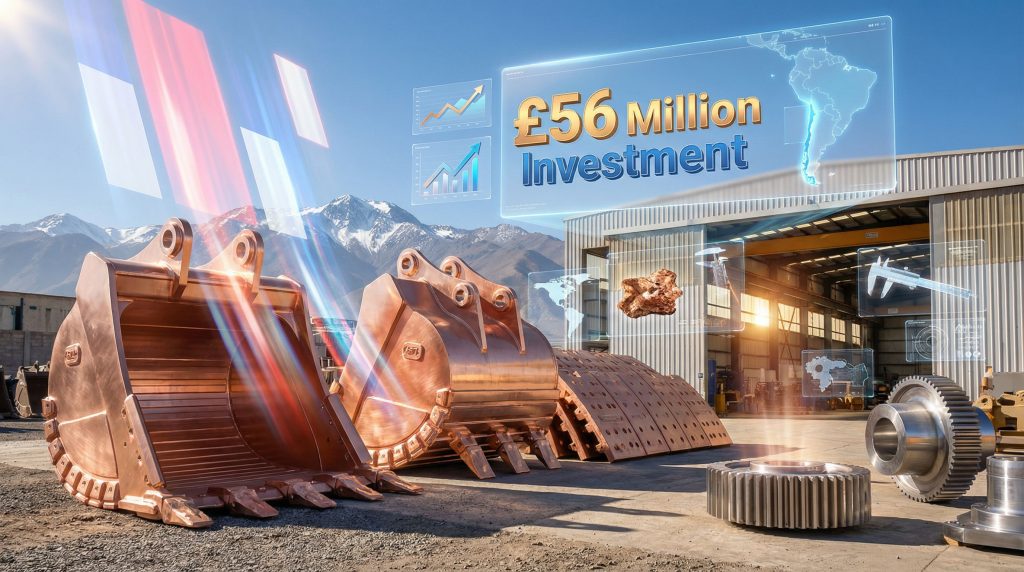
The industrial mining equipment landscape continues evolving through strategic consolidation, where manufacturers seek operational control and geographic diversification to strengthen supply chain resilience. The Weir acquisition of ESEL represents a significant milestone in this transformation, reflecting broader trends toward vertical integration and regional manufacturing optimization, particularly in markets with significant mineral resource concentrations. Understanding these dynamics provides crucial context for evaluating mining industry consolidation and major corporate acquisitions in the mining equipment sector.
The Strategic Context Behind Industrial Consolidation
Mining equipment manufacturers increasingly pursue full operational control over previously shared assets as they adapt to changing market dynamics. The sector has witnessed accelerating consolidation activity throughout 2025-2026, driven by companies seeking to eliminate intermediary dependencies and capture greater value from their manufacturing networks.
Vertical integration strategies have become particularly attractive in ground engaging tools manufacturing, where quality control and customer relationships directly impact market positioning. Furthermore, companies recognise that joint venture structures, while historically beneficial for market entry and risk sharing, can create operational constraints that limit strategic flexibility and customer engagement depth.
Regional manufacturing hubs play increasingly critical roles in global mining supply chains, offering advantages including proximity to key customers, reduced transportation costs, and enhanced service delivery capabilities. This geographical positioning becomes especially valuable in markets with concentrated mining activity, where responsive supply chain management translates directly to competitive advantage. These developments align with broader industry evolution trends shaping the mining equipment sector.
When big ASX news breaks, our subscribers know first
ESEL's Historical Market Position and Operational Framework
ESCO Elecmetal Fundición Limitada operated as a joint venture between Weir and Elecmetal, manufacturing high-quality ground engaging tools from its Chile-based foundry operations. This partnership structure enabled both companies to share operational responsibilities while leveraging their respective strengths in the South American mining equipment market.
The joint venture model provided several historical advantages, including:
- Shared investment requirements for facility development and maintenance
- Combined expertise from both parent companies
- Risk distribution across operational and market uncertainties
- Access to established customer relationships through both partners
However, joint venture arrangements also presented inherent limitations that became increasingly apparent as market conditions evolved. Decision-making processes required coordination between multiple stakeholders, potentially slowing response times to customer needs or market opportunities. Additionally, strategic initiatives often needed alignment across different corporate priorities, which could constrain agility in competitive situations.
The Chilean foundry's position within South America's mining corridor provided natural advantages for serving major copper and other mineral extraction operations throughout the region. Chile's established mining industry infrastructure, skilled workforce, and regulatory framework for industrial operations created a favourable environment for precision manufacturing activities.
Manufacturing Capacity and Operational Control Enhancement
The transition from joint venture to full operational control represents a fundamental shift in manufacturing strategy and capability utilisation. Full ownership enables streamlined decision-making processes, accelerated technology implementation, and standardised operational procedures across the manufacturing network. This transformation aligns with Weir's global expansion strategy of strengthening operational control across key markets.
Key Manufacturing Transformation Areas:
| Operational Aspect | Joint Venture Model | Full Control Model |
|---|---|---|
| Decision Implementation | Requires partner alignment | Direct management authority |
| Quality Standards | Negotiated specifications | Unified corporate standards |
| Technology Deployment | Shared investment approval | Independent strategic decisions |
| Customer Relationships | Distributed responsibilities | Direct client management |
Manufacturing capacity enhancement through this acquisition creates several strategic benefits. The Chilean foundry integration expands global production flexibility, enabling better demand response across regional markets. This increased capacity provides buffer capabilities during peak demand periods while supporting geographic diversification of production capabilities.
Operational control benefits extend beyond manufacturing efficiency into quality assurance and customer service delivery. Standardised processes ensure consistent product specifications across all facilities, while direct customer relationships enable more responsive service and customised solutions. These improvements strengthen competitive positioning in markets where reliability and technical support significantly influence purchasing decisions.
Go-Direct Strategy Implementation Framework
The elimination of intermediary distribution channels represents a strategic pivot toward direct customer engagement and relationship management. This approach enables companies to capture additional value while improving service delivery and market responsiveness.
Direct customer relationship management provides several competitive advantages:
- Enhanced understanding of specific customer requirements and preferences
- Faster response times for technical support and service issues
- Direct feedback loops for product development and improvement initiatives
- Improved customer loyalty through personalised service delivery
Revenue margin improvement opportunities emerge through the elimination of intermediary markups and distribution costs. Direct sales models typically provide higher gross margins while enabling more competitive pricing strategies that can strengthen market share positions. However, companies must be mindful of management red flags when implementing such significant operational changes.
The implementation framework for transitioning to direct operations involves multiple phases, including customer relationship transfer, service infrastructure development, and sales team establishment. Success requires careful management of existing relationships while building new capabilities for direct market engagement.
What Are the Key Benefits of Direct Customer Engagement?
Weir's acquisition of ESEL enables the company to establish direct relationships with mining customers throughout South America. This approach eliminates intermediary dependencies and creates opportunities for enhanced value capture across the supply chain.
Financial Structure and Investment Analysis
The Weir acquisition of ESEL represents a significant capital deployment reflecting confidence in South American mining market fundamentals and long-term growth prospects. The financial structure enables immediate operational control while providing foundation for future expansion initiatives. According to Weir's official announcement, the acquisition strengthens the company's position in the South American ground engaging tools market.
Financial Impact Assessment:
| Financial Metric | Impact | Timeline |
|---|---|---|
| Immediate Cash Flow | Neutral to modest positive | First 12 months |
| Operational Synergies | Cost reduction opportunities | 18-24 months |
| Revenue Enhancement | Market share growth potential | 24-36 months |
| Return Realisation | Full benefits achievement | 36+ months |
Integration costs associated with operational transition, system harmonisation, and workforce alignment require careful management to achieve projected returns. These investments in operational excellence and standardisation create foundation for sustained competitive advantages and improved profitability.
The financing approach demonstrates strategic capital allocation focused on strengthening core business capabilities rather than diversification into new markets or technologies. This concentration strategy enables deeper market penetration and enhanced competitive positioning in established business segments. Companies pursuing similar strategies often benefit from developing robust capital raising strategies to support their growth initiatives.
Chile's Strategic Importance in Global Mining Supply Chains
Chile's position as a global mining hub creates significant advantages for equipment manufacturers serving the industry. The country's substantial copper production, alongside other mineral resources, generates consistent demand for high-quality ground engaging tools and related equipment.
Geographic advantages of Chilean manufacturing include:
- Proximity to major mining operations throughout South America
- Established transportation infrastructure for regional distribution
- Skilled workforce experienced in precision manufacturing
- Stable regulatory environment supporting industrial operations
Labour cost competitiveness enhances manufacturing economics while maintaining quality standards essential for mining equipment applications. Chilean industrial workers possess technical skills developed through the country's extensive mining and manufacturing sectors, providing reliable workforce capabilities for specialised production requirements.
Market Access and Distribution Benefits
The Chilean location provides strategic access to mining operations throughout South America, where transportation costs and delivery times significantly impact customer satisfaction and operational efficiency. Reduced shipping distances enable more responsive service delivery and lower total cost of ownership for customers.
Export potential extends beyond immediate regional markets, as Chilean manufacturing can serve as a hub for broader South American distribution. This positioning enables economies of scale while maintaining proximity to key customer concentrations throughout the mining corridor.
The next major ASX story will hit our subscribers first
Competitive Positioning and Market Dynamics
The Weir acquisition of ESEL strengthens competitive positioning through vertical integration and enhanced customer relationship capabilities. Full operational control enables more aggressive market strategies and improved response to competitive pressures. Industry analysis from IM-Mining highlights the strategic importance of this transaction for Weir's regional market position.
Competitive Advantages Development:
- Manufacturing Control: Direct oversight of quality and production scheduling
- Customer Intimacy: Deeper relationships through direct engagement
- Service Delivery: Faster response times and customised solutions
- Cost Structure: Elimination of intermediary markups and coordination costs
Market share implications extend beyond immediate sales increases to include customer retention and lifetime value enhancement. Direct relationships create switching costs for customers while providing opportunities for expanded product and service offerings.
Technology and innovation advantages emerge through concentrated research and development efforts focused on customer-specific requirements. Direct customer feedback enables more targeted innovation while reducing development cycle times for new products and services.
Strategic moat development through this acquisition creates barriers to entry for competitors while strengthening existing market positions. Customer switching costs increase when service relationships are established directly, while operational efficiency improvements enable more competitive pricing strategies.
Industry Consolidation Trends and Implications
Mining equipment sector consolidation reflects broader industry trends toward operational efficiency and strategic focus. Companies increasingly recognise that scale advantages and operational control provide competitive benefits that justify consolidation investments.
"Consolidation activities typically accelerate during periods of market uncertainty, as companies seek greater control over their operational destinies while eliminating dependencies on external partners."
Supply chain localisation movements gain momentum as companies seek to reduce transportation costs and improve service delivery capabilities. Regional manufacturing strategies enable better customer relationships while providing operational flexibility for demand fluctuations.
Innovation investment patterns in consolidated markets often favour companies with direct customer relationships and operational control. These advantages enable more targeted research and development investments while providing better returns on innovation expenditures.
Risk Factors and Mitigation Strategies
Integration execution represents the primary risk factor for acquisition success, requiring careful management of operational transitions, workforce integration, and customer relationship maintenance. Historical acquisition performance demonstrates that successful integration depends on clear communication, adequate resource allocation, and experienced management oversight.
Key Risk Considerations:
- Operational Disruption: Potential service interruptions during transition periods
- Customer Retention: Risk of relationship disruption during ownership changes
- Cultural Integration: Workforce adaptation to new operational standards
- Market Competition: Competitive responses to enhanced capabilities
Market demand volatility exposure increases with concentrated geographic positioning, though this risk is partially offset by Chile's stable mining industry fundamentals. Diversification across multiple customer segments and mineral types provides some protection against specific commodity cycles.
Currency fluctuation impact management becomes more critical with expanded South American operations, requiring sophisticated hedging strategies and financial risk management capabilities. These considerations must be balanced against operational benefits of regional manufacturing positioning.
Long-term Value Creation and Strategic Development
Technology development acceleration opportunities emerge through concentrated investment in manufacturing capabilities and customer-focused innovation. Direct customer relationships provide better market intelligence while enabling more targeted product development initiatives.
Customer relationship deepening strategies benefit from direct engagement capabilities and enhanced service delivery infrastructure. These improvements create competitive moats while generating opportunities for expanded product and service offerings that increase customer lifetime value.
Operational excellence implementation provides foundation for sustained competitive advantages through continuous improvement initiatives and best practice deployment. Standardised procedures and quality systems enable consistent performance while supporting expansion into adjacent markets or customer segments.
Future Expansion Considerations:
- Additional acquisition targets in complementary geographic markets
- Organic growth through enhanced capacity and capability development
- Market penetration strategies in adjacent mining regions
- Technology platform expansion for broader customer applications
The Weir acquisition of ESEL establishes a platform for sustained market leadership in South American mining equipment markets while providing capabilities for selective expansion into related opportunities. Success will depend on effective execution of integration plans and realisation of anticipated operational synergies.
This analysis is based on publicly available information and industry observations. Investment decisions should consider additional factors including detailed financial analysis, market research, and professional investment advice. Future performance may differ from historical results and forward-looking projections involve inherent uncertainties.
Looking to Capitalise on Industrial Consolidation Opportunities?
Discovery Alert's proprietary Discovery IQ model delivers real-time alerts on significant ASX mineral discoveries, helping investors identify actionable opportunities in mining equipment manufacturers and resource companies ahead of the broader market. Begin your 14-day free trial today and secure your market-leading advantage in this rapidly consolidating sector.