May 22, 2026
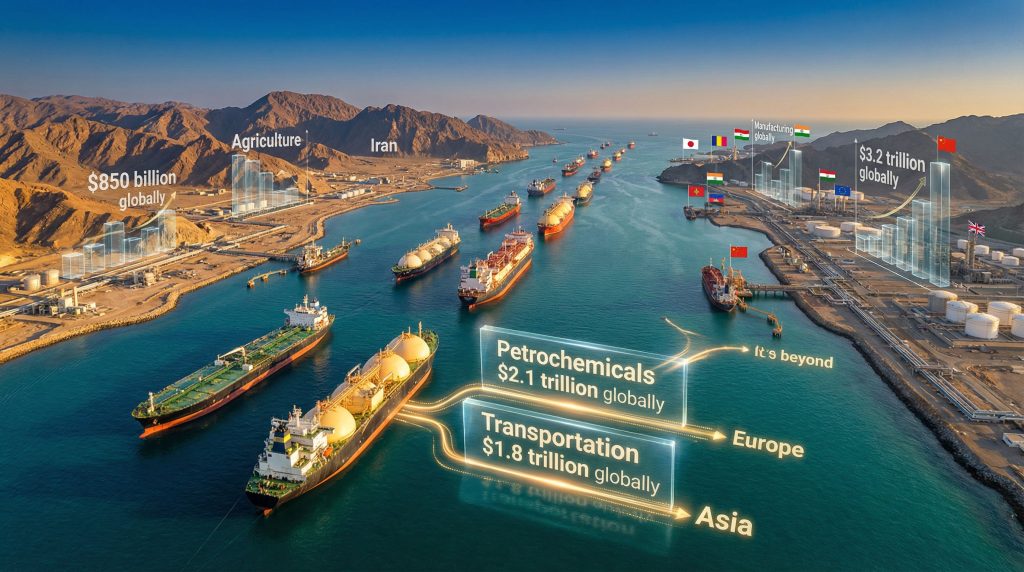
Global supply chains face unprecedented vulnerability as interconnected energy networks become increasingly fragile under mounting geopolitical pressures. The complexity of modern economies has created systemic dependencies that transform regional instabilities into worldwide economic disruptions, with energy markets serving as the primary transmission mechanism for crisis propagation across continents. Furthermore, the West Asia conflict impacts energy supply through multiple channels, creating cascading effects that ripple across global markets and threaten economic stability worldwide.
Understanding the Strategic Energy Corridor Dependencies
Maritime chokepoints represent the most critical vulnerabilities in global energy infrastructure, with approximately 17 million barrels per day of crude oil transiting through the Strait of Hormuz alone. This narrow waterway, spanning just 21 miles at its narrowest point, carries roughly 21% of global petroleum liquids, making it perhaps the world's most strategically important oil transit route.
The concentration risk extends beyond single chokepoints to encompass entire regional networks. The Suez Canal and SUMED Pipeline system handle an additional 9% of global oil trade, while the Bab al-Mandab strait facilitates the passage of 4.8 million barrels daily. These interconnected passages create cascading vulnerability patterns where disruption at any single point can trigger supply rerouting costs exceeding $2.3 billion annually.
Supply chain concentration analysis reveals that 68% of global liquefied natural gas exports originate from just ten countries, with Qatar alone accounting for 22% of worldwide LNG production. This geographic clustering amplifies price volatility during regional conflicts, as demonstrated by historical events where single-country supply disruptions triggered 15-25% price spikes within 48-hour periods.
The Anatomy of Energy Supply Shock Transmission Mechanisms
Energy price transmission occurs through multiple interconnected channels, beginning with crude oil futures markets where speculative positioning can amplify price movements by 40-60% during geopolitical uncertainty. The financialisation of commodity markets means that physical supply disruptions interact with derivative trading to create price volatility far exceeding fundamental supply-demand imbalances.
Historical analysis demonstrates predictable transmission timelines:
• Day 1-3: Futures market reaction and inventory positioning
• Week 1-2: Refined product price adjustments at wholesale level
• Week 3-4: Consumer price transmission begins
• Month 2-3: Secondary economic effects emerge through input costs
The 2019 Abqaiq attack in Saudi Arabia provides a recent case study, where 5% of global oil production was temporarily disrupted, causing Brent crude prices to surge 19% in a single trading session. While physical supply was restored within weeks, price volatility persisted for months as markets reassessed geopolitical risk premiums.
Natural gas markets exhibit even greater transmission sensitivity due to limited storage capacity and pipeline inflexibility. European gas prices during the 2022 supply crisis demonstrated how regional disruptions can trigger 500-800% price increases when alternative supply sources reach capacity constraints.
When big ASX news breaks, our subscribers know first
Macro-Economic Implications of Energy Supply Disruptions
Inflationary Pressure Dynamics Across Global Markets
Energy costs represent a fundamental input across all economic sectors, creating inflation transmission mechanisms that extend far beyond direct fuel expenditures. Economic modelling indicates that a $10 per barrel sustained oil price increase typically translates to 0.2-0.4 percentage points of additional inflation across developed economies within six months.
The transmission occurs through both direct and indirect channels:
Direct Effects:
• Transportation fuel costs affecting consumer expenditure
• Heating and electricity price adjustments
• Industrial energy input cost increases
Indirect Effects:
• Manufacturing cost increases passed through to consumer goods
• Agricultural input price rises affecting food inflation
• Service sector cost adjustments due to energy-intensive operations
Central bank policy responses during energy-driven inflation face complex trade-offs between price stability and economic growth. The Federal Reserve's response to 1970s oil shocks demonstrates how aggressive monetary tightening can successfully control inflation but at the cost of significant recessionary pressure, with GDP contractions reaching 2-3% during adjustment periods.
GDP Impact Modelling for Major Economic Regions
Economic vulnerability to energy price shocks varies significantly across regions based on energy intensity, import dependency, and industrial structure. Advanced economies typically exhibit GDP elasticity to oil prices of -0.05 to -0.08, meaning a 10% sustained energy price increase reduces GDP growth by approximately 0.5-0.8 percentage points.
| Economic Region | Energy Import Dependency | GDP Oil Price Elasticity | Recession Threshold (Price Increase) |
|---|---|---|---|
| European Union | 61% | -0.07 | 85% sustained increase |
| Japan | 94% | -0.06 | 75% sustained increase |
| United States | 19% | -0.05 | 120% sustained increase |
| China | 72% | -0.08 | 90% sustained increase |
Emerging markets face disproportionate impacts due to higher energy intensity and limited fiscal space for counter-cyclical policies. Countries with energy import bills exceeding 8% of GDP typically experience recession probability increases of 40-60% during major supply disruptions.
Energy Import Dependencies and Systemic Economic Vulnerabilities
Asia-Pacific Energy Security Architecture Analysis
The Asia-Pacific region's rapid economic growth has created extraordinary energy import dependencies, with regional oil consumption increasing 180% since 2000 while domestic production declined 15% over the same period. This structural shift has transformed the region into the world's largest energy import market, consuming 36% of global oil production and 74% of LNG trade.
Strategic petroleum reserve adequacy varies dramatically across major Asian economies. While Japan maintains 167 days of import cover, reflecting post-1970s crisis planning, other major consumers show concerning gaps:
• South Korea: 96 days strategic and commercial reserves combined
• India: 13 days strategic reserves plus 65 days commercial storage
• China: 85 days estimated total reserves (limited transparency)
• Thailand: 58 days total storage capacity
LNG supply contract structures reveal additional vulnerabilities, with 72% of Asian LNG imports tied to oil-indexed pricing that amplifies crude price volatility. Take-or-pay contract provisions, while ensuring supply security, create $23 billion in annual payment obligations regardless of demand fluctuations, limiting flexibility during economic downturns.
Industrial energy intensity across the region ranges from 0.8-2.1 tons of oil equivalent per $1,000 GDP, with heavy manufacturing centres like South Korea exhibiting particularly high vulnerability to input cost shocks. Fuel switching capabilities remain limited due to infrastructure constraints and capital requirements exceeding $340 billion for meaningful diversification.
European Energy Diversification Strategies and Limitations
European energy diversification efforts have accelerated dramatically following the 2022 supply crisis, with LNG import capacity increasing 48% through new terminal construction and floating storage regasification units. However, infrastructure constraints continue limiting supply flexibility, particularly during peak winter demand periods.
Pipeline infrastructure constraints create bottlenecks even with diversified supply sources. The Trans-Adriatic Pipeline capacity of 10 billion cubic metres annually represents less than 3% of European gas consumption, while the Turkish Stream system's 31.5 billion cubic metres remains vulnerable to single-country transit risks.
Renewable energy acceleration serves dual security and climate objectives, with wind and solar capacity additions reaching 73 GW in 2023 across EU member states. However, intermittency challenges require backup generation capacity, often gas-fired, that maintains fossil fuel dependency during supply stress periods. Moreover, energy transition challenges continue to complicate Europe's efforts to achieve complete energy independence while maintaining economic competitiveness.
Economic Sectors Facing Greatest Disruption Risk
Fertiliser Industry Supply Chain Vulnerabilities
The global fertiliser industry's dependence on natural gas as both feedstock and energy source creates severe vulnerability to West Asian supply disruptions. Ammonia production requires approximately 28-35 million BTU of natural gas per metric ton, making energy costs 60-80% of total production expenses in gas-intensive manufacturing processes.
Production capacity concentration amplifies risk, with the Middle East accounting for 31% of global ammonia capacity and 27% of urea production. When combined with Russia's 13% global urea market share, geopolitical tensions can rapidly affect 44% of worldwide nitrogen fertiliser supply.
Agricultural productivity impacts demonstrate severe economic consequences. Historical analysis shows that 50% fertiliser price increases typically reduce crop yields by 8-12% in the following growing season, with effects persisting 18-24 months due to soil nutrient depletion and planting decision lags.
Food security implications extend globally through trade interconnections:
• Sub-Saharan Africa imports 85% of fertiliser requirements
• Latin American economies face $18 billion annual fertiliser import bills
• South Asian agricultural productivity depends on 73% imported nitrogen fertilisers
Transportation and Logistics Cost Escalation
Shipping industry responses to geopolitical tensions create immediate cost pressures through insurance premium increases and route diversification requirements. War risk insurance premiums can increase 0.075-0.25% of cargo value during regional conflicts, adding $750-2,500 per million-dollar shipment.
Alternative routing costs compound these pressures significantly. Rerouting from Suez Canal to Cape of Good Hope adds approximately 3,500 nautical miles and 10-14 additional sailing days, increasing fuel consumption by 15-20% and requiring additional vessel capacity to maintain service frequency.
Supply chain reconfiguration expenses affect manufacturers dependent on just-in-time delivery systems. Automotive industry analysis indicates that regional supply disruptions can trigger inventory rebuilding costs of $230-440 per vehicle when safety stock requirements increase from 7 to 21 days of production.
Aviation sector vulnerability stems from jet fuel price sensitivity, where 10% fuel cost increases typically translate to 2-3% operating cost rises for commercial carriers. Given that fuel represents 20-30% of airline operating expenses, sustained energy price elevation can eliminate profit margins across the industry.
Currency and Financial Market Response Mechanisms
Petrodollar Flow Disruptions and Exchange Rate Volatility
Petrodollar recycling mechanisms face disruption during regional conflicts as oil-exporting economies experience fiscal balance deterioration when production capacity becomes threatened. Saudi Arabia's fiscal breakeven oil price of approximately $70-80 per barrel means that supply disruption paradoxically improves fiscal positions through higher prices, but creates currency volatility through uncertain production levels.
Energy-importing economies face opposite pressures, with current account deficits widening by 0.3-0.7% of GDP for each $10 per barrel sustained price increase. Countries with energy imports exceeding 6% of GDP typically experience currency depreciation pressure of 8-15% during major supply disruptions.
Capital flow patterns shift dramatically as investors seek energy security exposure through equity markets and commodity derivatives. Energy sector market capitalisation can increase 25-40% during geopolitical crises, even when fundamental earnings remain unchanged, reflecting risk premium adjustments and portfolio rebalancing toward resource-rich economies.
Consequently, the West Asia conflict impacts energy supply through complex financial transmission mechanisms that amplify physical disruptions. Furthermore, these dynamics coincide with broader market concerns about an oil production decline in major producing regions, creating compounding effects on global price stability.
Energy Commodity Financialisation and Market Speculation
Derivatives market dynamics amplify physical supply disruption effects through speculative position building and hedge fund momentum strategies. Open interest in crude oil futures typically increases 30-60% during geopolitical tensions as financial participants expand positions to capture volatility opportunities.
Strategic petroleum reserve release coordination provides counter-speculation mechanisms, with IEA member countries maintaining 1.4 billion barrels of emergency stocks. However, release effectiveness depends on coordination timing and market psychology, with poorly timed releases sometimes interpreted as supply desperation rather than market stabilisation.
Central bank intervention strategies during energy-driven inflation require careful calibration between price stability and growth preservation. Forward guidance communication becomes crucial as premature monetary tightening can trigger recessionary spirals while delayed responses risk inflation expectation anchoring at elevated levels.
Long-Term Structural Economic Adaptations
Accelerated Energy Transition Investment Patterns
Geopolitical energy security concerns drive renewable energy investment acceleration beyond climate policy motivations. Global clean energy investment reached $1.8 trillion in 2023, with energy security considerations accounting for approximately 35% of investment decisions according to industry surveys.
Solar photovoltaic deployment exhibits dramatic cost curve improvements, with levelised costs declining 85% since 2010 to reach $0.048 per kWh in optimal locations. Wind energy costs similarly decreased 69% over the same period, making renewable electricity generation cost-competitive with fossil fuel alternatives across 140+ countries.
Battery storage system deployment addresses intermittency challenges while providing grid stability services. Global battery capacity additions exceeded 15 GW in 2023, with system costs declining 80% since 2013. Four-hour duration lithium-ion systems now achieve $132-200 per kWh installed costs in major markets.
Green hydrogen production scaling offers industrial decarbonisation pathways while reducing energy import dependencies. Electrolyser capacity under construction globally exceeds 134 GW, with production cost targets of $1.50-2.50 per kilogram expected by 2030 through scale economies and technological improvements.
Supply Chain Regionalisation and Nearshoring Trends
Energy-intensive manufacturing relocation patterns reflect dual cost optimisation and supply security objectives. Aluminium smelting capacity increasingly concentrates in renewable energy-rich regions, with 138% capacity growth in hydroelectric-powered locations since 2018.
Steel production regionalisation follows similar patterns, with electric arc furnace adoption increasing 43% globally as scrap steel availability and clean electricity access influence facility location decisions. Integrated steel mills face stranded asset risks in high-energy-cost jurisdictions.
Regional energy cooperation frameworks develop through cross-border infrastructure projects and shared reserve systems. The ASEAN Power Grid initiative aims to interconnect member country electricity systems, enabling renewable energy sharing and supply security enhancement through geographic diversification.
Trade policy adjustments increasingly incorporate energy security considerations alongside economic efficiency metrics. Critical minerals export restrictions affect 31 countries as governments balance domestic supply security with international trade obligations.
The next major ASX story will hit our subscribers first
Economic Policy Frameworks for Enhanced Energy Resilience
Strategic Reserve Management and Emergency Response Protocols
Optimal strategic reserve sizing requires economic modelling that balances storage costs against supply disruption insurance value. Contemporary analysis suggests 90-180 days of import coverage provides optimal cost-benefit ratios for major importing economies, depending on alternative supply accessibility and domestic production capacity.
International energy sharing agreements enhance collective security through coordinated emergency responses. The IEA Emergency Response System enables member countries to share supplies and coordinate releases during major disruptions, with historical activation during the 1990 Gulf War, 2005 Hurricane Katrina, and 2022 Russian supply crisis.
Public-private partnership models facilitate infrastructure development while distributing financial risks between government entities and commercial operators. Strategic petroleum reserve expansion in India and China utilises hybrid ownership structures combining state strategic needs with commercial storage services.
Fiscal Policy Tools for Energy Shock Mitigation
Targeted subsidy mechanisms require careful design to avoid market distortion while providing vulnerable sector protection. Transportation fuel subsidies during price spikes can cost 0.5-2.0% of GDP annually but may reduce inflation transmission by 40-60% when strategically implemented.
Tax policy adjustments enable energy efficiency investment incentives while maintaining revenue neutrality through carbon tax mechanisms. Accelerated depreciation schedules for energy-efficient equipment can stimulate private investment while reducing long-term supply vulnerability.
Carbon pricing system modifications during supply disruption periods require automatic adjustment mechanisms to prevent economic disruption while maintaining long-term decarbonisation incentives. Price collar systems with temporary suspension triggers provide policy flexibility during emergency conditions.
Additionally, policymakers must consider broader market dynamics when crafting these frameworks. For instance, periods of oil price stagnation can create false senses of security that undermine long-term resilience planning, while sudden oil price rally events expose the inadequacy of existing emergency response mechanisms.
Investment Opportunities in Energy Security Enhancement
Clean Energy Technology Deployment Acceleration
Solar photovoltaic manufacturing capacity expansion presents significant investment opportunities as energy security concerns drive domestic production requirements. U.S. Inflation Reduction Act provisions allocate $370 billion in clean energy incentives, while European REPowerEU commits €210 billion for energy independence acceleration.
Wind energy infrastructure development requires $78 billion annually to meet 2030 deployment targets, with offshore wind representing particularly attractive returns due to higher capacity factors and proximity to demand centres. Floating offshore platforms unlock deeper water resources with 60% greater energy generation potential.
Grid modernisation and smart infrastructure investments address intermittency challenges while enhancing system resilience. Global grid investment requirements exceed $820 billion annually through 2030, with digital transformation and energy storage integration representing fastest-growing segments.
Alternative Energy Supply Infrastructure Development
LNG terminal construction and pipeline diversification projects offer strategic investment opportunities as importing countries reduce supply concentration risks. Floating LNG terminal leasing provides flexible capacity additions with $2-4 billion project values and 15-25 year operating periods.
Renewable energy interconnection projects enable geographic diversity benefits while creating investment opportunities in cross-border transmission infrastructure. High-voltage direct current systems facilitate long-distance renewable energy transport with $1.2-2.8 million per kilometre construction costs.
Hydrogen production and distribution network development represents emerging investment opportunities with $11 trillion cumulative investment potential through 2050. Green hydrogen costs approaching $2.50 per kilogram enable competitive industrial applications, particularly in steel production, ammonia synthesis, and long-duration storage.
In parallel, investors should monitor natural gas forecasts to understand transitional fuel opportunities as renewable energy infrastructure scales. Furthermore, disrupted energy supply chains across Asia demonstrate both the urgency of energy security investments and the potential returns from alternative infrastructure development. Meanwhile, energy vulnerability assessments highlight specific regional opportunities for infrastructure investment and supply chain resilience enhancement.
Building economic resilience against energy supply disruptions requires multi-dimensional approaches combining diversification strategies, technological innovation, and international cooperation. The interconnected nature of global energy systems means that regional conflicts increasingly threaten worldwide economic stability, making energy security enhancement a critical economic priority.
Investment in alternative energy infrastructure, strategic reserve optimisation, and supply chain diversification provides both immediate risk mitigation and long-term competitive advantages. As geopolitical tensions continue reshaping global energy markets, economies that proactively address vulnerabilities through comprehensive policy frameworks will achieve greater stability and sustainable growth.
The transition toward renewable energy systems offers dual benefits of energy independence and climate goals achievement, while creating substantial economic opportunities across manufacturing, infrastructure development, and technological innovation. Strategic planning that integrates energy security considerations with economic development objectives enables resilient growth in an increasingly uncertain global landscape.
Ready to Navigate Energy Market Volatility Before Your Competitors?
Discovery Alert's proprietary Discovery IQ model provides instant notifications on significant ASX mineral discoveries, empowering investors to capitalise on energy and commodity opportunities ahead of market movements. With energy supply chains facing unprecedented vulnerability and commodity markets experiencing heightened volatility, subscribers gain critical insights into emerging opportunities across mining sectors that benefit from resource security premiums. Begin your 14-day free trial today to position yourself strategically as global energy dynamics reshape investment landscapes.