August 14, 2026
The escalating tensions across West Asia have created unprecedented challenges for global energy security, with the West Asia oil conflict threatening to disrupt supply chains that underpin the world's economic stability. Furthermore, oil price movements during regional conflicts demonstrate how geopolitical instability can trigger cascading effects across multiple sectors. In addition, tariffs impact markets in ways that compound energy-related economic pressures. The complex interdependencies between regional conflicts, financial markets, and industrial supply chains create cascading vulnerabilities that extend far beyond immediate conflict zones.
What Makes the Current West Asia Crisis Different from Previous Oil Disruptions?
Scale of Supply Chain Vulnerability
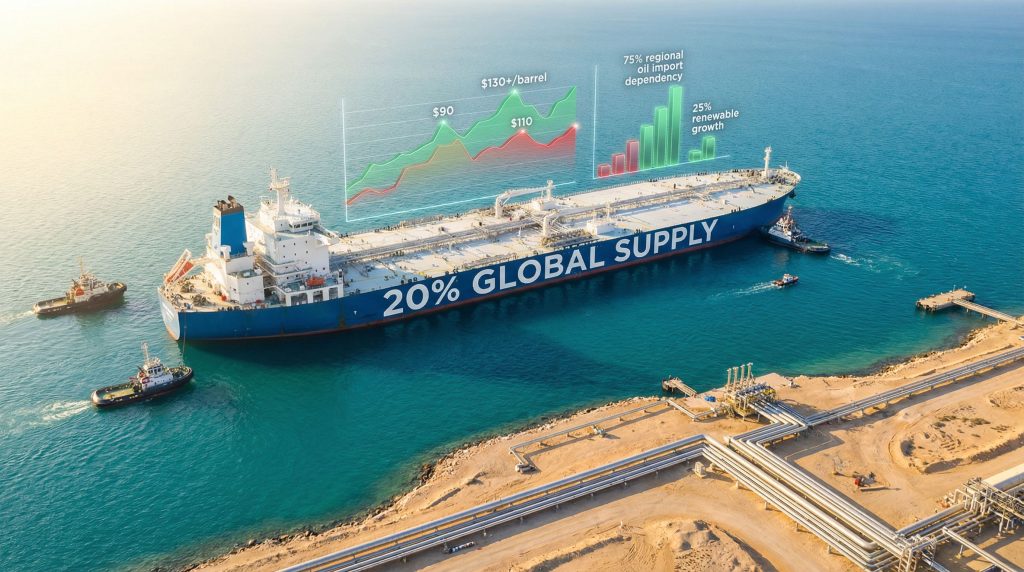
Contemporary energy markets face unprecedented concentration risks through critical maritime chokepoints. The Strait of Hormuz alone controls approximately 20% of global oil transit, creating systemic vulnerabilities that dwarf historical precedents. Unlike previous disruptions during the 1973 oil embargo or 1979 Iranian Revolution, today's interconnected financial systems amplify price volatility through algorithmic trading and derivative markets.
The current West Asia oil conflict demonstrates how modern supply chains operate under different parameters than past crises. Financial markets now react instantaneously to geopolitical developments, with oil futures experiencing significant volatility even when physical supplies remain adequate. This represents a fundamental shift from previous decades when price adjustments followed actual supply shortages.
International Energy Agency officials have acknowledged that while abundant oil exists globally, logistical disruptions create temporary bottlenecks that affect regional pricing mechanisms. The situation differs markedly from historical supply crises because current market infrastructure depends heavily on just-in-time delivery systems that cannot easily absorb even brief interruptions.
Geopolitical Complexity Beyond Traditional State Conflicts
The involvement of multiple actors creates unpredictable escalation patterns that traditional conflict analysis frameworks struggle to model effectively. Insurance markets have withdrawn coverage for vessels transiting contested waterways, creating logistical paralysis even where direct military action remains limited. This insurance market response represents a new dimension of supply chain vulnerability not present in previous oil crises.
Technological warfare capabilities now threaten critical infrastructure in ways that conventional military planning could not anticipate. Cyber attacks on pipeline control systems, GPS jamming affecting tanker navigation, and sophisticated drone capabilities create multi-vector threat environments that complicate risk assessment for energy traders and logistics coordinators.
The West Asia oil conflict has exposed how modern energy security depends on complex coordination between state actors, private shipping companies, insurance providers, and financial institutions. When any component of this ecosystem experiences disruption, the effects propagate through global markets regardless of actual physical supply availability.
When big ASX news breaks, our subscribers know first
Which Economic Sectors Face the Greatest Disruption Risk?
Asian Manufacturing and Trade Corridors
Asian manufacturing centers demonstrate acute vulnerability to West Asia energy supply disruptions due to concentrated import dependencies. China imports approximately 75% of its oil requirements from the region, creating strategic vulnerabilities that extend beyond immediate energy costs into manufacturing competitiveness and export pricing.
Industrial production timelines in Japan and South Korea face particular pressure because their economies depend on stable energy input costs for competitive advantage in global markets. Manufacturing sectors including automotive, steel production, and petrochemicals operate on thin margins that cannot easily absorb sustained energy price volatility.
India's strategic petroleum reserves face depletion timelines that create policy pressure for alternative supply arrangements. The country's rapid industrial expansion increases energy import requirements precisely when regional supply security faces maximum uncertainty. This timing creates compounding vulnerabilities for South Asian economic growth trajectories.
Global Shipping and Logistics Networks
Freight rate calculations across alternative routing scenarios reveal significant cost penalties for avoiding contested waterways. Ships rerouted around the Cape of Good Hope face journey extensions of 15-20 days, dramatically increasing transportation costs and delivery uncertainties for energy-intensive goods.
Port capacity constraints at non-Gulf terminals create bottlenecks that cannot easily absorb redirected traffic volumes. European and Asian ports lack sufficient storage and processing infrastructure to handle sudden influxes of diverted shipments, creating secondary chokepoints in global supply chains.
Insurance cost escalation affects trade margins across multiple sectors beyond direct energy transportation. Marine insurance premiums have increased 300-500% for vessels transiting contested zones, with these costs ultimately passed through to end consumers via higher commodity prices.
How Are Oil Price Scenarios Unfolding Across Different Conflict Durations?
Short-Term Market Dynamics (4-8 Week Resolution)
| Scenario | Current Price Impact | Peak Projection | Market Adaptation |
|---|---|---|---|
| Baseline Resolution | $80-82/barrel | $85/barrel | Normal flows resume |
| Extended Disruption | $82-90/barrel | $100/barrel | Alternative routes activated |
| Infrastructure Targeting | $90-110/barrel | $130+/barrel | Strategic reserve releases |
Market pricing mechanisms demonstrate how financial instruments respond to geopolitical uncertainty even when physical supply disruptions remain theoretical. Oil futures curves show significant backwardation, indicating that traders expect current supply constraints to resolve within months rather than persisting long-term.
Energy market participants distinguish between temporary logistical disruptions and fundamental supply capacity destruction. Current West Asia oil conflict pricing reflects transportation bottlenecks rather than actual production facility damage, explaining why price premiums remain moderate compared to historical precedents involving infrastructure destruction.
Medium-Term Structural Adjustments (2-6 Months)
OPEC+ spare capacity limitations constrain the organisation's ability to compensate for sustained supply disruptions. Saudi Arabia maintains approximately 2 million barrels per day of spare capacity, while other members operate closer to maximum sustainable production levels. This capacity constraint becomes critical if West Asia supply disruptions persist beyond initial crisis periods.
Strategic petroleum reserve coordination mechanisms between International Energy Agency members provide temporary supply buffers but cannot substitute for sustained production capacity. These reserves contain approximately 90 days of net import requirements for member countries, creating definitive timelines for resolving supply disruptions before more dramatic market interventions become necessary.
Alternative supply route development requires significant infrastructure investment and regulatory coordination between multiple jurisdictions. Pipeline capacity expansions and new terminal construction operate on 2-3 year development timelines that cannot address immediate supply security concerns but become crucial for long-term resilience planning.
What Alternative Energy Transit Routes Could Emerge?
Existing Pipeline Infrastructure Capacity
Saudi Arabia's East-West pipeline system maintains 1-2 million barrel per day spare capacity that could partially offset Strait of Hormuz disruptions. However, this alternative requires coordination with Red Sea shipping routes that face their own security challenges during regional conflicts.
UAE pipeline alternatives provide additional routing flexibility but operate under throughput limitations that prevent full compensation for major supply disruptions. The Habshan-Fujairah pipeline can process 1.5 million barrels daily, representing significant but incomplete alternative capacity for regional exports.
Iraq-Turkey pipeline security considerations demonstrate how alternative routes face their own operational vulnerabilities. Kurdish regional authority control over pipeline sections creates political complications that affect reliability for sustained energy transit during crisis periods.
Maritime Route Diversification Strategies
Cape of Good Hope routing economics impose substantial cost penalties that affect global energy pricing structures. Additional voyage time requirements increase shipping costs by $2-3 per barrel, while vessel availability constraints limit the volume of traffic that can be redirected through alternative routes.
Suez Canal capacity constraints create secondary bottlenecks for redirected traffic attempting to reach European and North American markets. Daily transit capacity limitations prevent the canal from absorbing all traffic diverted from West Asia routes, particularly for large crude carriers requiring specific berth facilities.
Red Sea security considerations affect alternative maritime passages that might otherwise provide redundancy for West Asia energy exports. Shipping insurance requirements and naval escort coordination create additional complexity for vessels attempting to maintain regional energy trade relationships.
How Are Financial Markets Pricing Long-Term Energy Security Risks?
Commodity Market Positioning and Hedging Strategies
Contango versus backwardation patterns in oil futures curves reveal market expectations about conflict duration and resolution probability. Current backwardation suggests traders anticipate supply normalisation within 6-12 months, with longer-dated contracts pricing modest premiums for sustained geopolitical risk.
Natural gas price correlations in European and Asian markets demonstrate how regional energy crises propagate through interconnected commodity pricing mechanisms. LNG spot prices have increased 40-60% as industrial users hedge against potential oil supply disruptions by securing alternative fuel sources.
However, record-high gold prices and defensive asset allocation trends during energy crises show investor psychology responding to supply security uncertainties. Precious metals and government bonds experience capital inflows as portfolio managers hedge against potential inflationary pressures from sustained energy price increases.
Sector Rotation and Investment Implications
Energy sector equity performance relative to broader market stress creates opportunities for investors with appropriate risk tolerances. Integrated oil companies and pipeline operators benefit from higher commodity prices and increased demand for alternative supply infrastructure development.
Renewable energy investment acceleration serves as a strategic hedge against fossil fuel supply security vulnerabilities. Solar and wind project financing enjoys premium valuations during periods of conventional energy price volatility, as investors recognise the geopolitical stability advantages of domestic renewable generation.
Defence and aerospace sector beneficiary analysis reveals secondary investment opportunities from increased regional military spending. Maritime security requirements and surveillance technology demand create revenue opportunities for specialised defence contractors with relevant capabilities.
Which Countries Gain Strategic Advantage During Supply Disruptions?
Non-Gulf Oil Producers Capturing Market Share
Kazakhstan and Central Asian producers optimise export routes through Russian and Chinese pipeline systems to capture premium pricing during West Asia supply disruptions. These countries benefit from their geographic position outside contested maritime chokepoints while maintaining substantial production capacity.
West African crude grade premium adjustments reflect global refiners' willingness to pay higher prices for supply sources with lower geopolitical risk profiles. Nigerian and Angolan exports command price premiums of $3-5 per barrel above traditional benchmarks during regional supply uncertainties.
North American shale production response capabilities demonstrate how unconventional oil resources provide strategic flexibility during global supply crises. US producers can increase output by 500,000-800,000 barrels per day within six months, providing partial offset for international supply disruptions.
Energy Transit Hub Repositioning
Singapore and Rotterdam storage facility utilisation increases dramatically as traders accumulate inventory in strategic locations outside potential conflict zones. These facilities operate at 85-95% capacity during supply security crises, commanding premium storage rates and creating investment opportunities in additional capacity development.
Turkey's growing role as an alternative energy corridor connects Central Asian producers with European markets while bypassing traditional Gulf routes. The country's geographic position allows it to capture transit fees and strategic influence over European energy security during regional disruptions.
Eastern Mediterranean gas field development accelerates as European consumers seek alternatives to both Russian supplies and Gulf-dependent energy sources. Israeli and Cypriot offshore development projects receive expedited investment and regulatory approval during periods of conventional supply uncertainty.
The next major ASX story will hit our subscribers first
What Inflation and Monetary Policy Responses Should Markets Expect?
Central Bank Policy Coordination Challenges
Federal Reserve energy price exclusion from core inflation targeting creates policy complications when supply shocks persist beyond temporary timeframes. Central bank officials must balance inflation control objectives against economic growth support during periods of sustained energy cost increases.
European Central Bank supply shock versus demand management dilemmas intensify when energy price increases coincide with broader economic uncertainty. The bank faces conflicting pressures to support economic activity while preventing inflation expectations from becoming entrenched at higher levels.
Emerging market currency pressure from energy import costs creates additional complexity for monetary policy coordination during global supply disruptions. Consequently, countries with current account deficits face particular vulnerability to energy price increases that exacerbate foreign exchange pressures and limit domestic policy flexibility.
Fiscal Policy Tools for Energy Security
Strategic petroleum reserve release coordination mechanisms provide governments with temporary tools for moderating market volatility during supply crises. However, these releases consume inventory that requires eventual replacement, potentially creating future market pressure when reserves must be replenished.
Fuel subsidy programmes create government budget implications that constrain fiscal policy flexibility during extended energy price increases. Countries maintaining consumer fuel subsidies face $10-15 billion annual cost increases for each sustained $10 per barrel oil price rise, requiring difficult choices between subsidy maintenance and fiscal stability.
Carbon tax policy adjustments during supply crisis periods reveal the tension between long-term climate objectives and short-term energy security requirements. Governments may suspend or reduce carbon pricing mechanisms to moderate consumer cost impacts, potentially delaying decarbonisation timelines.
How Might This Crisis Accelerate Energy Transition Timelines?
Renewable Energy Investment Security Premium
Solar and wind project financing advantages during fossil fuel volatility create investment opportunities that combine financial returns with energy security benefits. Renewable projects offer price stability and domestic supply security that become particularly valuable during international energy market disruptions.
Grid storage technology deployment urgency increases as policymakers recognise the strategic value of energy independence through renewable generation combined with battery storage systems. Investment in storage infrastructure accelerates when conventional energy supplies face geopolitical uncertainties.
Green hydrogen production scaling serves as an energy security hedge by providing domestic alternatives to imported fossil fuels for industrial applications. Furthermore, critical energy transition minerals become increasingly valuable as hydrogen production facilities utilising renewable electricity offer strategic independence from international energy markets during supply crises.
Industrial Decarbonisation Acceleration Factors
Manufacturing sector energy source diversification strategies gain urgency when conventional supply chains face persistent disruption risks. Industrial facilities invest in electrification and renewable energy systems to reduce exposure to fossil fuel price volatility and supply security concerns.
Electric vehicle adoption rates increase during sustained high oil prices as consumers seek alternatives to gasoline dependency. EV sales acceleration creates demand for domestic electricity generation and battery manufacturing, supporting broader energy transition objectives while reducing imported oil requirements.
Industrial heat pump and electrification investment drivers include both cost savings and supply security considerations. Manufacturing facilities replace natural gas and oil heating systems with electric alternatives to reduce exposure to international energy market volatility.
What Long-Term Geopolitical Realignments Could Emerge?
Energy Alliance Restructuring
OPEC+ internal cohesion faces testing under supply constraint scenarios that reveal conflicting national interests among member countries. Nations with spare production capacity gain leverage over those operating at maximum output, potentially reshaping organisational decision-making dynamics.
International Energy Agency emergency response mechanism effectiveness depends on member country coordination and willingness to share strategic reserves during crisis periods. The organisation's collective action protocols receive practical testing that may influence future energy security cooperation frameworks.
China-Russia energy partnership strategic implications extend beyond immediate supply relationships to encompass long-term geopolitical alignment during periods of Western energy market instability. In addition, US–China trade war impacts create alternative energy trading systems that reduce dependence on traditional market mechanisms.
Regional Power Balance Shifts
Gulf state internal coordination versus competition dynamics intensify when supply disruptions affect different countries' export capabilities unequally. Saudi Arabia and UAE may gain relative influence over smaller producers whose export routes face greater vulnerability during regional conflicts.
Iran's energy weapon effectiveness faces limitations from alternative supply sources and strategic reserve releases that moderate its ability to influence global markets through supply manipulation. The country's regional influence depends partly on its capacity to affect international energy prices through production decisions.
Israel's Eastern Mediterranean gas field strategic positioning provides the country with energy export opportunities and regional diplomatic leverage during periods when traditional Gulf suppliers face operational challenges. These offshore resources create new energy partnership possibilities with European consumers.
Key Takeaways for Energy Market Participants
Investment Strategy Adjustments
Portfolio hedging recommendations for energy price volatility include diversification across multiple commodity exposure mechanisms and geographic regions. Investors should consider combinations of energy sector equities, commodity futures, and renewable energy infrastructure investments to balance risk exposure during supply security crises.
Geographic diversification priorities for energy-intensive industries emphasise reducing concentration risk through supply chain optimisation and alternative sourcing arrangements. Companies should develop contingency plans that include multiple supplier relationships and flexible production facility locations.
Timing considerations for renewable energy infrastructure investments favour accelerated deployment schedules that capture both financial incentives and strategic security benefits. Projects initiated during fossil fuel supply uncertainties benefit from favourable policy support and investor interest in energy independence solutions.
Risk Management Framework Updates
Supply chain resilience assessment methodologies require regular updates that incorporate geopolitical risk factors alongside traditional operational considerations. Companies should evaluate their energy dependencies across multiple disruption scenarios and develop contingency plans for alternative supply arrangements.
Geopolitical risk pricing models for energy commodities must account for the interconnected nature of modern supply chains and financial markets. Traditional risk assessment frameworks require updates that consider cyber warfare capabilities, insurance market responses, and multi-actor conflict dynamics.
Insurance and financial hedging instrument optimisation becomes crucial for companies with significant energy cost exposure during periods of supply uncertainty. Appropriate hedging strategies should balance cost mitigation with flexibility to capture potential opportunities from market volatility.
This analysis incorporates publicly available information and market data current as of publication. Energy market conditions remain highly dynamic, and readers should consult current sources and qualified financial advisors before making investment decisions. Geopolitical developments can significantly impact energy markets in ways that historical analysis may not fully predict.
Ready to Invest in the Next Market-Moving Discovery?
Discovery Alert's proprietary Discovery IQ model delivers real-time notifications on significant ASX mineral discoveries, providing immediate insights into actionable opportunities that could benefit from increased commodity demand during global supply disruptions. Understand why historic discoveries can generate substantial returns by exploring Discovery Alert's dedicated discoveries page, showcasing exceptional outcomes from major mineral finds, and begin your 14-day free trial today to position yourself ahead of the market during these volatile times.