West Cobar Metals Ltd
- ASX Code: WC1
- Market Cap: $7,486,611
West Cobar Metals Targets Higher-Grade Scandium at Salazar as Global Supply Tightens
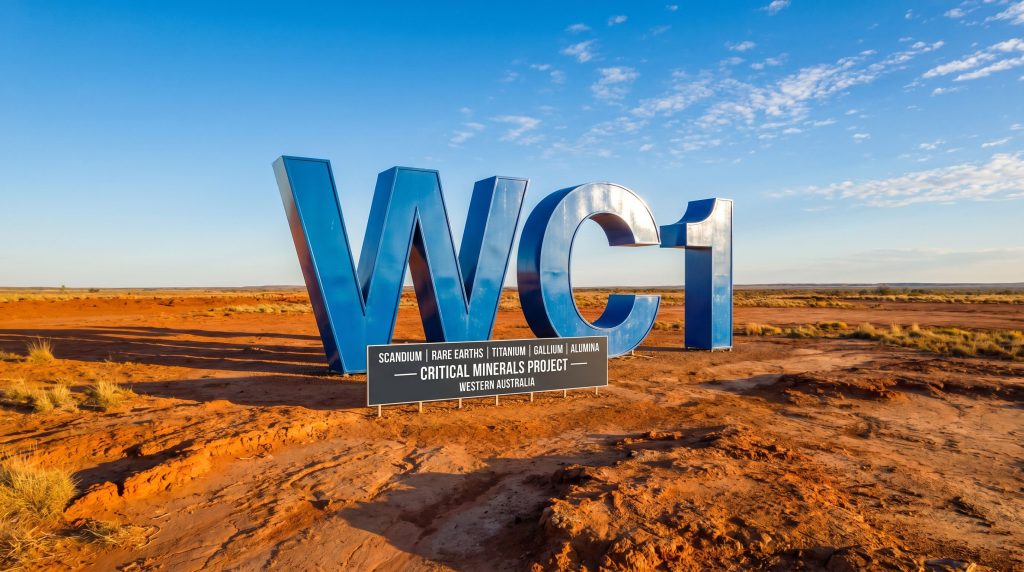
West Cobar Metals Ltd (ASX: WC1) has reported that a detailed technical review of the Salazar Critical Minerals Project in Western Australia has identified priority drill targets for higher-grade scandium mineralisation and confirmed encouraging metallurgical pathways using atmospheric leaching and bioleaching. These West Cobar Metals Salazar scandium drill targets and leach testwork results mark a significant step forward for the project.
According to the ASX announcement dated 8 July 2026, the Salazar project currently hosts an Inferred scandium resource of 15Mt at 153ppm Sc₂O₃, with multiple higher-grade drill intersections already recorded and testwork indicating potential for lower-cost processing at atmospheric pressure.
West Cobar Metals Ltd has also highlighted growing attention on scandium following tightening Chinese export controls and recent feasibility work by ASX-listed peer Sunrise Energy Metals, which has drawn further focus to Western scandium supply for defence, aerospace, advanced aluminium alloys, solid oxide fuel cells and semiconductor applications.
When big ASX news breaks, our subscribers know first
Salazar Project Overview: Multi-Commodity Critical Minerals Platform
The Salazar Critical Minerals Project lies approximately 120km northeast of Esperance, Western Australia and is described by West Cobar Metals Ltd as a large-scale, shallow, saprolite-hosted mineral system. Saprolite refers to weathered, clay-rich rock near surface that is generally softer and cheaper to mine than hard rock.
According to previous Salazar resource announcements referenced in the 8 July 2026 release, JORC 2012-compliant Mineral Resources at Salazar include:
| Commodity | Resource estimate | Classification |
|---|---|---|
| Scandium | 15Mt at 153ppm Sc₂O₃ | Inferred |
| Rare earth elements (TREO) | 230Mt at 1,178ppm TREO | Indicated + Inferred |
| Rare earths (higher confidence) | 44Mt at 1,239ppm TREO | Indicated |
| Titanium dioxide (TiO₂) | 42Mt at 5.2% TiO₂ | Inferred |
| Gallium (Ga₂O₃) | 263Mt at 35ppm Ga₂O₃ | Inferred |
| Alumina (Al₂O₃) | 4Mt at 29.7% Al₂O₃ | Inferred |
The rare earth element inventory is reported to contain:
- Elevated heavy rare earth elements (HREE) such as dysprosium (Dy) and terbium (Tb)
- Yttrium representing approximately 16% of total rare earth oxide (TREO) content
Heavy rare earths typically attract higher pricing than light rare earths and are used in permanent magnets and high-performance technologies.
Salazar's mineralisation is hosted in shallow saprolitic clays, which may allow low-strip-ratio mining methods. West Cobar Metals Ltd notes that this, combined with promising atmospheric leach results, could support a lower capital intensity development pathway compared with deeper, hard-rock operations that rely on high-pressure processing.
Scandium Potential at Newmont: From Broad Resource to High-Grade Targets
The current scandium Inferred Resource at the Newmont deposit within Salazar stands at 15Mt at 153ppm Sc₂O₃, based on aircore drilling at approximately 500m x 100m spacing. This drilling pattern was primarily designed to define rare earth and titanium dioxide resources rather than optimised for scandium specifically.
As part of the new technical review, West Cobar Metals Ltd has re-analysed existing data and highlighted several higher-grade scandium intersections within the saprolite clay zone. Examples cited in the ASX release include:
- SAC358: 13m at 318ppm Sc₂O₃ from 9m, including 3m at 649ppm Sc₂O₃ from 10m
- SAC391: 11m at 282ppm Sc₂O₃ from 6m, including 4m at 350ppm Sc₂O₃ from 9m
These grades are reported to be more than double, and in places more than four times, the current resource average of 153ppm Sc₂O₃. Furthermore, the review has confirmed that scandium mineralisation is associated with a weathered magnetic amphibolite horizon, which is the same geological unit that influences heavy rare earth element and titanium dioxide distribution at Salazar.
On the basis of this work, West Cobar Metals Ltd plans a closer-spaced aircore drilling program at 100m x 50m spacing targeting these higher-grade zones, with the aim of:
- Better defining the geometry and continuity of high-grade scandium lenses
- Providing data that could support resource upgrades in both tonnage and grade
- Supplying material for ongoing metallurgical testwork and potential development studies
"Salazar has a significant established scandium resource, which also contains several high grade scandium drill targets. The early testwork conducted to date is encouraging in that a lower cost processing pathway may be feasible.
There are only a small number of scandium proponents on the ASX and the recent Sunrise Energy Limited (ASX: SRL) feasibility study has highlighted both the commercial value of scandium and the strategic importance of establishing secure Western supply.
If ongoing metallurgical optimisation work continues to support these results, Salazar has the potential to become a lower capital cost scandium development opportunity while simultaneously producing rare earths and other critical minerals."
— Matt Szwedzicki, Managing Director, West Cobar Metals Ltd
For investors, the key point is that the scandium story at Salazar is now progressing from broad-scale definition towards focused delineation of higher-grade zones that could improve project economics.
Educational Focus: Understanding Scandium and Atmospheric Leaching
What Is Scandium and Why Is It Attracting Attention?
Scandium is a light metal used mainly in:
- Aluminium-scandium alloys for aerospace and defence, where even small additions of scandium can improve strength and reduce weight
- Solid oxide fuel cells, where scandium-stabilised electrolytes help increase efficiency
- Semiconductors and advanced manufacturing, where scandium can be used in specialised applications
Global primary scandium production is limited and often tied to by-product streams from other metals. The ASX announcement notes that Chinese export controls on scandium have tightened, consequently focusing attention on alternative sources of supply.
From an investment perspective, this constrained supply, combined with potential demand growth from defence, aerospace and clean energy technologies, is a key driver behind renewed interest in projects such as Salazar.
What Is Atmospheric-Pressure Acid Leaching?
In simple terms, leaching is the process of dissolving metals from ore into a liquid, typically using an acid solution. Once in solution, metals can be recovered through further processing.
There are two broad approaches:
-
High-pressure, high-temperature leaching:
- Uses sealed pressure vessels (autoclaves)
- Requires significant energy and capital equipment
- Often used for difficult ores
-
Atmospheric-pressure leaching:
- Takes place at normal air pressure
- Uses elevated temperatures but does not require pressure vessels
- Generally associated with lower equipment and operating costs, if recoveries are adequate
At Salazar, testwork has focused on atmospheric-pressure leaching using hydrochloric acid at around 95°C, which is considered a moderate temperature for leach circuits.
For investors, the processing route is critical because it can heavily influence:
- Capital expenditure (capex) required to build a plant
- Operating costs (opex) associated with energy, reagents and maintenance
- Overall project margins and sensitivity to scandium prices
If West Cobar Metals Ltd can refine an atmospheric-pressure flowsheet that maintains high recoveries, the company suggests this may support a lower capital cost development scenario than projects that depend on high-pressure autoclaves.
Glossary of Key Technical Terms
- Sc₂O₃ (Scandium oxide): The standard form used to report scandium grades and the usual market product.
- Saprolite: Soft, clay-rich material formed by weathering of rock near surface; generally cheaper to mine and process than fresh rock.
- Inferred Resource: A JORC category where mineralisation is estimated with lower confidence; suitable for early-stage studies but requiring further drilling to upgrade.
- TREO (Total rare earth oxide): The sum of all rare earth oxides present in a deposit.
- HREE (Heavy rare earth elements): A subset of rare earths, including dysprosium and terbium, that typically have higher unit values.
- Bioleaching: Use of microorganisms to help dissolve metals from ore, potentially at lower temperature and energy cost.
Metallurgical Testwork: Atmospheric Leach and Bioleach Options
The ASX announcement details two main leaching approaches tested on Salazar material: atmospheric-pressure acid leaching and bioleaching.
Atmospheric-Pressure Acid Leaching (Nagrom and ANSTO)
Testwork by Nagrom in Australia on Newmont saprolite samples has reported:
- Scandium leach recovery up to 81%
- Use of hydrochloric acid (HCl) as the leach reagent
- Leaching at 95°C and atmospheric pressure
These results are considered by West Cobar Metals Ltd to be supportive of a flowsheet that could produce a mixed rare earth carbonate (MREC) product, with additional downstream steps to yield a separate scandium oxide product.
Ongoing metallurgical work is focused on:
- Impurity rejection, to remove unwanted elements from the solution
- Acid consumption optimisation, to manage reagent costs
- Scandium concentration in solution, to prepare for efficient downstream recovery
- Overall flowsheet development, integrating scandium and rare earth recovery
According to the announcement, additional leach testwork is in progress at the Australian Nuclear Science and Technology Organisation (ANSTO), building on the earlier Nagrom results.
Bioleaching Testwork (BiotaTec and CSIRO)
Preliminary bioleaching screening tests were completed by BiotaTec in Estonia, using composite samples from the Newmont deposit. The best-performing microorganism achieved:
- Up to 39% scandium recovery over 27 days
- 34% scandium recovery within 96 hours under heap-leach style test conditions
A notable point reported in the announcement is that scandium extraction significantly exceeded that of rare earth elements in these tests. This suggests the potential for relatively selective scandium recovery, although this still requires detailed evaluation.
These early-stage results are being used to guide:
- Optimisation of bioleaching parameters, including microorganism selection and operating conditions
- Scale-up testwork at CSIRO, where the commercial applicability of biological leaching for scandium and other critical minerals at Salazar will be assessed
The following table summarises the two main testwork pathways:
| Leach method | Reported recovery | Conditions | Status |
|---|---|---|---|
| Atmospheric-pressure acid leach (HCl) | Up to 81% scandium | ~95°C, atmospheric pressure | Further optimisation at ANSTO underway |
| Bioleaching | Up to 39% scandium (27 days); 34% (96 hours) | Heap-leach style, atmospheric conditions | Optimisation and scale-up testwork at CSIRO in progress |
For investors, these metallurgical results suggest that multiple processing options may be available for scandium at Salazar. The final selection will depend on recovery, cost, technical risk and integration with the broader rare earth and co-product flowsheet.
Work Program and Near-Term Catalysts
West Cobar Metals Ltd has outlined a clear next-steps program at Salazar, covering drilling, metallurgical work and development planning.
Planned Technical Activities
According to the 8 July 2026 announcement, the following activities are either underway or planned:
- Leach testwork at ANSTO — focused on optimising hydrochloric and organic acid leach conditions, aimed at recovering scandium, rare earths and titanium minerals, with results expected over the coming months
- Further bioleaching testwork at CSIRO — based on BiotaTec's preliminary findings and designed to assess scalability and commercial potential
- Aircore drilling at Newmont — infill program at 100m x 50m spacing around high-grade scandium intercepts, intended to define and extend higher-grade zones within the existing resource envelope
- Process flowsheet integration — combining scandium, rare earth, titanium dioxide, gallium and alumina pathways into a single flowsheet concept
- Development studies — progressing along a Scoping Study / Preliminary Feasibility Study (PFS) pathway
- Commercial engagement — the company reports continuing U.S. funding and offtake discussions as an active workstream
A summary of key catalysts is provided below:
| Catalyst | Status / timing (as reported) |
|---|---|
| ANSTO leach testwork results | In progress, to be reported in coming months |
| CSIRO bioleaching optimisation | Ongoing |
| High-grade scandium AC drilling | Planned near term at Newmont |
| Integrated flowsheet (Sc + REE + co-products) | In development |
| Scoping Study / PFS pathway | Progressing |
| U.S. funding and offtake discussions | Continuing |
The next major ASX story will hit our subscribers first
Investment Context: Scandium, Supply Security and Multi-Commodity Optionality
The announcement positions Salazar within a broader market backdrop where scandium is receiving increased international focus. According to West Cobar Metals Ltd, key demand drivers include defence and aerospace applications for high-strength, lightweight aluminium-scandium alloys, solid oxide fuel cells for energy-efficient power generation, and semiconductor and other high-technology uses.
At the same time, the company notes that Chinese export controls on scandium have tightened. In addition, a recent feasibility study released by Sunrise Energy Metals has highlighted both the commercial potential of scandium projects and the importance of establishing Western-aligned supply chains.
Within that context, the West Cobar Metals Salazar scandium drill targets and leach testwork results present a project with several attributes that may be relevant to investors:
-
Established scandium resource base — 15Mt at 153ppm Sc₂O₃ Inferred at Newmont provides a foundation for future studies.
-
High-grade drill targets — intervals up to 649ppm Sc₂O₃ suggest zones of materially higher grade than the resource average, to be followed up with closer-spaced drilling.
-
Processing optionality — atmospheric-pressure acid leaching with up to 81% scandium recovery, alongside early-stage bioleaching results indicating up to 39% recovery with selective scandium extraction.
-
Multi-commodity potential — co-products include rare earth elements (with HREE exposure), titanium dioxide, gallium and alumina, which could provide additional revenue streams.
-
Shallow, saprolite-hosted mineralisation — potential to support simpler, low-strip mining approaches, subject to future study outcomes.
-
Active technical and commercial work program — ongoing drilling, testwork and development planning, along with reported U.S. funding and offtake discussions.
For those following ASX-listed critical minerals companies, West Cobar Metals Ltd is positioning Salazar as a scandium-centred, multi-commodity project with both grade upside and processing route optionality. Consequently, the next stages of metallurgical results, together with high-grade scandium drilling at Newmont and progression of development studies, are likely to be focal points for assessing how the project's technical and economic profile evolves.
Want to Learn More About West Cobar Metals and the Salazar Project?
With high-grade scandium drill targets identified, promising atmospheric leach and bioleach testwork results, and a substantial multi-commodity resource base in Western Australia, West Cobar Metals Ltd (ASX: WC1) is advancing Salazar as a potentially lower capital cost critical minerals development opportunity. Investors looking to explore the company's project pipeline, upcoming catalysts, and strategic positioning in the Western scandium supply chain can find further information at www.westcobarmetals.com.au.