
June 29, 2026
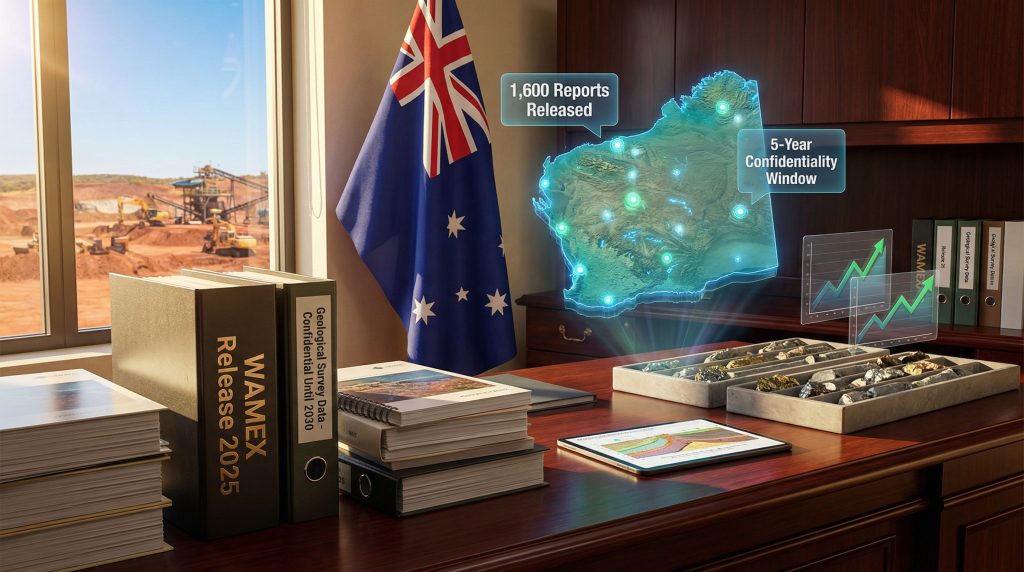
Western Australia's regulatory frameworks in mineral exploration operate as complex balancing mechanisms between commercial confidentiality and public transparency. These systems reflect decades of policy evolution designed to optimise information flows while protecting legitimate business interests. Western Australia's sunset clause mineral exploration framework exemplifies this balance through its systematic approach to data disclosure, creating predictable timelines that serve multiple stakeholder groups within the resources sector.
Understanding WA's Mandatory Data Disclosure Framework
The Mining Act 1978 and Mining Regulations 1981 establish the legislative foundation for Western Australia's systematic exploration data release mechanism. This regulatory structure operates through predetermined timelines that require minimal ongoing administrative intervention, creating transparency through automation rather than discretionary review processes.
Furthermore, the mining claims framework in Western Australia demonstrates how systematic approaches to data management can enhance exploration efficiency. The automatic nature of this system eliminates ongoing uncertainty about data release timing, enabling companies to plan strategic activities around known disclosure schedules.
The Five-Year Confidentiality Window Explained
Under the current regulatory framework, mineral exploration reports enter a mandatory five-year confidentiality period from their submission date. This 60-month window provides companies with protected access to proprietary exploration intelligence while establishing a definitive timeline for public domain transition.
The legislation mandates that tenement holders submit detailed exploration reports following designated reporting periods. These submissions become part of the Western Australian Mineral Exploration database, initially housed in confidential archives before transitioning to public accessibility upon confidentiality expiration.
Ministerial Extension Powers and Industry Objection Rights
Companies maintain specific rights to challenge automatic data release through a structured objection process. Following annual listings of eligible documents, tenement holders receive a two-month objection window to submit written challenges to specific report releases. This timeline provides sufficient opportunity for legal and commercial review while maintaining system efficiency.
Approved extensions extend confidentiality for additional five-year periods, with no option for permanent data protection. The Minister for Mines and Petroleum evaluates extension requests based on three primary criteria: legitimate commercial interests, ongoing exploration activities, and potential market sensitivity of unreleased data.
When big ASX news breaks, our subscribers know first
What Data Becomes Available Through the WAMEX Release System?
The scope of information released through WAMEX represents comprehensive exploration intelligence accumulated over decades of systematic mineral investigation. Annual releases provide substantial knowledge resources that support various analytical applications across the mining sector.
Technical Content Categories in Released Reports
Released exploration reports contain multiple categories of technical data that provide detailed insights into geological conditions and mineral prospectivity:
- Geological interpretations and structural analysis
- Drilling results and core sample data
- Geochemical survey findings and anomaly mapping
- Geophysical datasets and subsurface modelling
These technical components enable comprehensive assessment of regional exploration history. Additionally, drill results interpretation becomes significantly enhanced when historical data provides context for current exploration activities.
Scale and Scope of Annual Data Releases
The annual volume of WAMEX releases demonstrates the substantial scale of historical exploration activity becoming publicly available. Approximately 1,600 mineral exploration reports became available in 2025, representing exploration activities conducted in 2019 when exploration activity reached peak levels during the resources boom continuation.
Annual WAMEX Release Patterns
| Release Year | Submission Year | Notable Context |
|---|---|---|
| 2026 | 2020 | COVID-era exploration adaptations |
| 2025 | 2019 | Peak exploration investment period |
This systematic release schedule creates predictable information availability that supports long-term strategic planning by exploration companies, investment institutions, and research organisations.
Why Does This Regulatory Mechanism Matter for Exploration Investment?
The sunset clause framework addresses fundamental information asymmetries that traditionally favoured established mining operators over emerging exploration companies. By systematising access to historical exploration intelligence, the mechanism democratises access to critical decision-making information across different company sizes and investment capabilities.
Information Asymmetry Reduction in Resource Markets
Historical exploration data provides multiple categories of investment-relevant intelligence:
- Regional prospectivity assessment through analysis of drilling density patterns
- Technology benchmarking via comparison of exploration methodologies and costs
- Risk mitigation insights from negative exploration results that identify unprospective areas
- Enhanced due diligence capabilities for acquisition target evaluation
The availability of comprehensive exploration histories enables more efficient capital allocation by reducing information gaps. Moreover, understanding mineral deposit tiers becomes crucial when evaluating historical data for investment decisions.
Strategic Intelligence Value for Competitive Analysis
Released datasets serve multiple analytical frameworks that support strategic decision-making. Junior explorers benefit from cost-effective target generation capabilities, using historical data as foundation research for new exploration programmes.
Major mining operators utilise released information for competitive intelligence and portfolio optimisation, identifying underexplored areas within established mineral systems. Academic and research institutions access released data for geological mapping enhancement, mineral systems understanding advancement, and educational resource development.
How Do Companies Navigate the Objection and Extension Process?
The extension application process requires strategic evaluation of multiple commercial and technical factors. Companies must balance ongoing exploration advantages against the certainty of eventual public disclosure when developing objection strategies.
Strategic Considerations for Confidentiality Extensions
Extension decisions typically evaluate four primary factors:
-
Project Development Timing
- Active exploration programme status and advancement timeline
- Resource estimation progress and ore body definition requirements
- Feasibility study coordination and mine development decision timing
-
Competitive Advantage Duration
- Proprietary interpretation methodologies requiring protection periods
- Novel exploration techniques providing efficiency advantages
- First-mover opportunities in newly recognised mineral systems
-
Intellectual Property Protection
- Data processing innovations with competitive value
- Structural geological models with predictive exploration applications
- Technology applications requiring development time protection
-
Market Timing Coordination
- ASX continuous disclosure obligation alignment
- Acquisition or merger transaction confidentiality requirements
- Mineral discovery announcement timing relative to market positioning
Ministerial Decision-Making Criteria
Extension approvals require demonstration of legitimate commercial interests, evidence of ongoing exploration activities, and assessment of market sensitivity regarding unreleased data.
This evaluation framework ensures that extensions serve genuine commercial purposes rather than indefinite data hoarding. The limited five-year extension periods maintain transparency objectives while accommodating legitimate business development timelines.
What Are the Broader Implications for WA's Mining Transparency Framework?
Western Australia's systematic approach to exploration data disclosure positions the state as a transparency leader within global mining jurisdictions. This regulatory framework creates competitive advantages through predictable information access while maintaining appropriate commercial confidentiality protection.
Comparative Analysis with Other Jurisdictions
The predictable, automated nature of WA's sunset clause distinguishes it from discretionary disclosure systems operating in other mining jurisdictions. This systematised approach reduces regulatory uncertainty while ensuring consistent information flow to market participants regardless of political or administrative changes.
Furthermore, industry evolution trends indicate that transparency frameworks like Western Australia's sunset clause mineral exploration system are becoming increasingly important for competitive positioning.
Technology Integration and Digital Access Evolution
The WAMEX portal represents ongoing digitisation efforts that enhance data accessibility and analytical capabilities. Modern search functions enable users to filter information by location, commodity type, and company, supporting efficient identification of relevant exploration intelligence.
Machine learning applications increasingly utilise WAMEX datasets for geological pattern recognition, creating new analytical capabilities that enhance exploration efficiency across the sector. These technological enhancements multiply the value of historical data by enabling new forms of analysis previously impossible with manual interpretation methods.
How Does the Sunset Clause Support Different Stakeholder Groups?
The mandatory disclosure framework serves multiple stakeholder categories through different mechanisms, creating broad-based value from historical exploration investments.
Benefits for Junior Exploration Companies
Smaller exploration companies derive particular value from WAMEX releases through:
- Cost-effective target generation using historical data as foundation research
- Risk reduction through analysis of predecessor exploration programmes
- Enhanced project planning via access to regional exploration methodologies
- Resource allocation optimisation through understanding of cost-effective approaches
Historical datasets function as comprehensive study guides for targeting and planning, enabling junior explorers to compete more effectively with larger operators possessing greater internal research capabilities.
Academic and Research Institution Applications
Research organisations utilise released data for multiple analytical applications:
- Regional geological mapping enhancement and structural interpretation advancement
- Mineral systems research supporting understanding of ore-forming processes
- Student training programmes providing access to real-world exploration datasets
- Machine learning development for geological pattern recognition applications
These applications create knowledge advancement that benefits the broader exploration community through improved understanding of mineral systems and exploration methodologies.
The next major ASX story will hit our subscribers first
What Challenges and Limitations Exist Within the Current System?
Despite its systematic approach, Western Australia's sunset clause mineral exploration mechanism faces several operational challenges that affect data utility and commercial balance.
Data Quality and Standardisation Issues
Historical exploration reports reflect varying technical standards and reporting formats across different time periods. Technological evolution creates compatibility challenges when integrating older datasets with modern analytical software. These variations require additional processing efforts to achieve consistent analytical applications.
Metadata completeness varies across submissions, affecting searchability and analytical utility. Standardisation efforts continue to address these challenges while maintaining compatibility with legacy data formats.
Commercial Sensitivity Balance
The fixed five-year confidentiality period may not align optimally with all exploration development timelines. Some mineral systems require longer development periods, creating potential conflicts between disclosure timing and commercial development requirements.
Listed companies must coordinate WAMEX data releases with ASX continuous disclosure obligations, requiring careful timing management to prevent market disruption or inadvertent disclosure violations.
Western Australia Sunset Clause Exploration Data: Frequently Asked Questions
When are WAMEX reports typically released each year?
Annual releases commence in May, following publication of eligible report lists on the Department of Mines, Petroleum and Exploration website. The sunset clause annual release process follows a structured timeline with a two-month objection period beginning upon list publication.
Can companies permanently prevent data release?
No permanent confidentiality protection exists within the current regulatory framework. Extensions are limited to additional five-year periods and require ministerial approval based on legitimate commercial grounds. All exploration data eventually transitions to public domain access.
How can investors access released exploration data?
The WAMEX portal provides centralised access through the Department of Mines, Petroleum and Exploration website. Search capabilities include geographic coordinates, commodity classifications, company names, and submission date ranges.
Future Outlook: Evolution of WA's Data Transparency Framework
Ongoing technological advancement continues to enhance both the accessibility and analytical utility of released exploration data. Digital-first submission processes and enhanced metadata standards will improve searchability and integration capabilities.
Potential Regulatory Enhancements
Future framework developments may include:
- Enhanced digital submission standards improving data consistency and searchability
- Improved metadata requirements enabling more sophisticated analytical applications
- Integration with broader government data initiatives creating cross-platform research capabilities
- Streamlined extension application processes reducing administrative burden while maintaining evaluation standards
Industry Adaptation Strategies
Companies increasingly incorporate WAMEX release timing into strategic planning processes, coordinating exploration activities with disclosure requirements. Proactive data management systems ensure compliance while optimising commercial advantage periods.
Technology investments enable companies to maintain competitive advantages through proprietary analytical methodologies rather than data hoarding. Consequently, data-driven operations are becoming essential for companies seeking to maximise value from both proprietary and publicly available datasets.
The evolution of Western Australia's sunset clause mineral exploration framework reflects broader trends toward systematic transparency in resources regulation. This balance between commercial confidentiality and public information access continues to position Western Australia as a leading jurisdiction for mineral exploration investment, supporting efficient capital allocation while maintaining appropriate protection for legitimate business development activities.
Disclaimer: This analysis is for informational purposes only and should not be considered as investment advice. Readers should conduct their own research and consult with qualified professionals before making investment decisions. Regulatory frameworks may change, and historical data access does not guarantee future exploration success.
Want to Capitalise on ASX Mineral Discovery Opportunities?
Discovery Alert's proprietary Discovery IQ model delivers instant notifications when significant mineral discoveries are announced on the ASX, transforming complex exploration data into actionable investment insights. Start your 14-day free trial today and position yourself ahead of the market with real-time discovery intelligence powered by advanced AI technology.