August 11, 2026
White hydrogen exploration represents a revolutionary approach to clean energy development, where naturally occurring geological processes generate hydrogen gas through mechanisms that have operated beneath Earth's surface for millions of years. The mineral exploration importance becomes particularly evident when examining how subsurface hydrogen formations challenge conventional resource extraction methodologies and present unprecedented opportunities for sustainable energy development.
Understanding how Earth's geological systems produce hydrogen naturally requires examination of deep subsurface environments where specific chemical reactions occur continuously. The convergence of water, iron-rich minerals, and optimal temperature conditions creates natural hydrogen factories beneath our feet, potentially containing vast reserves that dwarf current global energy consumption patterns.
Geological Forces Driving Natural Hydrogen Generation
Serpentinisation: The Primary Hydrogen Production Mechanism
Water-rock interactions form the foundation of natural hydrogen generation through serpentinisation processes. When subsurface water encounters iron-rich minerals, particularly olivine formations, at temperatures ranging from 200-350°C, chemical reactions split water molecules and liberate hydrogen gas as a byproduct.
This geological process operates most effectively in:
• Mid-continental rift systems where tectonic activity exposes iron-rich crustal materials
• Ocean floor hydrothermal systems providing optimal temperature and pressure conditions
• Iron-rich crustal reservoirs containing sufficient olivine mineral concentrations
• Deep geological formations with sustained water circulation patterns
According to a 2024 U.S. Geological Survey assessment, subsurface hydrogen reserves are estimated between 1 billion and 10 trillion tonnes globally, representing a potentially massive untapped resource base that could transform energy economics if successfully accessed.
Radiolysis: Alternative Hydrogen Generation Pathways
Radioactive decay mechanisms provide continuous hydrogen production through radiolysis, where uranium, thorium, and potassium isotopes in deep geological formations split water molecules through radiation exposure. Furthermore, this process operates independently of serpentinisation and continues producing hydrogen over geological timescales.
The uranium market trends influence understanding of radiolysis potential, particularly where radioactive elements provide continuous hydrogen generation. Radiolysis occurs most prominently in:
• Granite formations with elevated radioactive mineral content
• Sedimentary basins containing uranium-bearing rock layers
• Deep aquifer systems where radioactive elements interact with groundwater
• Basement rock formations providing long-term radioactive decay environments
Hydrogen Accumulation and Geological Trap Systems
Natural hydrogen accumulation requires specific geological conditions preventing upward gas migration. Low-permeability cap rocks function as sealing mechanisms, allowing hydrogen concentrations to build within subsurface reservoirs analogous to conventional oil and gas accumulations.
Critical accumulation factors include:
• Structural traps preventing lateral and vertical hydrogen migration
• Cap rock integrity maintaining reservoir pressure and preventing seepage
• Source rock proximity ensuring continuous hydrogen generation
• Porosity and permeability balancing storage capacity with retention capability
Surface indicators of subsurface hydrogen presence create observable patterns including vegetation die-off zones called "fairy circles" and anomalous plant growth patterns indicating hydrogen seepage through overlying rock formations.
When big ASX news breaks, our subscribers know first
Advanced Detection Technologies and Exploration Methodologies
White hydrogen exploration requires sophisticated technological approaches combining traditional petroleum exploration techniques with specialised hydrogen detection equipment. In addition, the industry leverages decades of oil and gas exploration expertise while developing novel methodologies specifically designed for natural hydrogen discovery and characterisation.
Technological convergence between petroleum and hydrogen exploration creates cost advantages for companies with existing subsurface expertise. Oklahoma's positioning as a potential white hydrogen development leader stems from its established oil and gas infrastructure, which Professor Prem Bikkina describes as providing both "subsurface potential and above-ground readiness" for natural hydrogen development.
Specialised Detection and Sampling Equipment
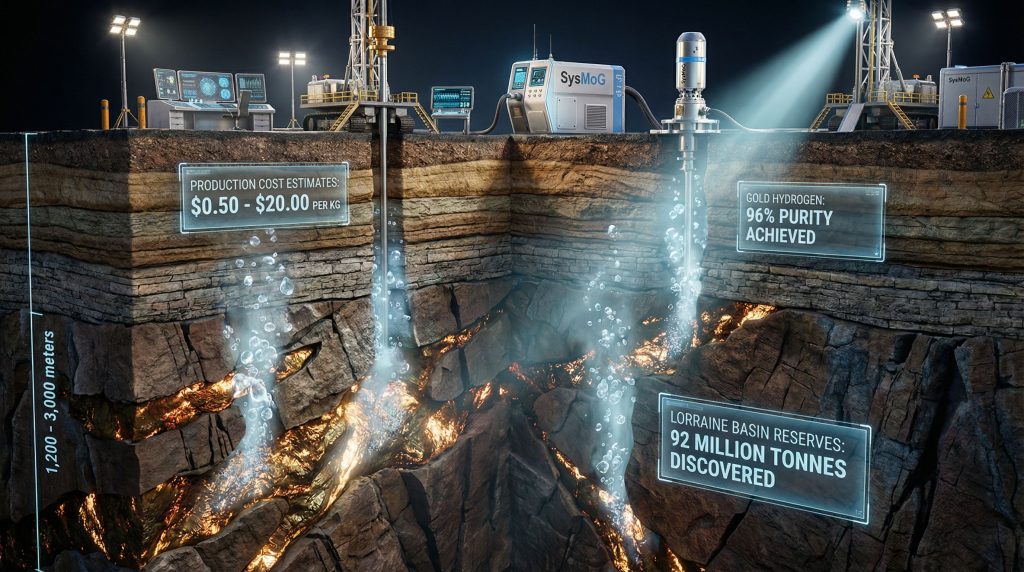
SysMoG probe systems represent cutting-edge French technology capable of sampling dissolved gases to depths of 1,200 metres with real-time hydrogen purity analysis through integrated spectrometer systems. Moreover, these detection capabilities range from surface-level concentrations around 14% to maximum depth concentrations approaching 90%.
Key technological specifications include:
• Real-time spectrometer integration for immediate hydrogen purity determination
• Multi-depth sampling capability providing vertical concentration profiles
• Dissolved gas detection measuring hydrogen in groundwater systems
• Precision monitoring tracking concentration variations over time
Large-Scale Geophysical Survey Implementation
2D seismic mapping enables comprehensive subsurface imaging across extensive areas. Gold Hydrogen's 650 km² seismic survey in South Australia demonstrates the scale required for effective white hydrogen exploration, mapping potential reservoir locations and structural controls.
Furthermore, 3D geological modelling enhances understanding through Mantle8's 4D geological imaging technology, which integrates multiple data sources to create comprehensive subsurface models:
• Geological data integration combining rock property information
• Geophysical survey information providing structural interpretation
• Geochemical sensor data measuring surface hydrogen signatures
• Advanced computational modelling generating dynamic Earth mantle imagery
The company secured €3.4 million in February 2024 funding to develop this technology, with exploratory drilling planned for southwestern France in 2028.
Multi-Point Surface Monitoring Networks
Continuous monitoring systems deployed across potential hydrogen seepage zones enable real-time tracking of:
• Hydrogen concentration variations indicating subsurface activity
• Temporal seepage patterns revealing production and migration cycles
• Subsurface pressure dynamics affecting hydrogen accumulation
• Gas composition fluctuations distinguishing hydrogen from other gases
Consequently, drilling results interpretation becomes crucial for Gold Hydrogen's Australian operations, which achieved 96% purity hydrogen extraction in 2025 test wells, demonstrating technical feasibility of high-purity natural hydrogen recovery and validating exploration technologies.
Economic Analysis and Production Cost Structures
White hydrogen exploration economics present both unprecedented opportunities and significant uncertainties, with production cost estimates ranging dramatically based on geological conditions, extraction depths, and technological requirements. However, current market dynamics suggest substantial potential for cost-competitive hydrogen production if technical challenges can be overcome.
Global hydrogen demand projections indicate market expansion from current 1 million tonnes per annum to nearly 200 million tonnes per annum by 2050, according to Wood Mackenzie research. This explosive growth creates substantial market opportunities for cost-effective white hydrogen production.
Comparative Production Cost Analysis
| Hydrogen Type | Production Method | Cost Range ($/kg) | Carbon Intensity | Market Maturity |
|---|---|---|---|---|
| White Hydrogen | Natural extraction | $0.50-$20.00 | 0.4-1.5 kg CO2e/kg | Early exploration |
| Green Hydrogen | Renewable electrolysis | $6.00-$12.00 | Near-zero emissions | Commercial deployment |
| Grey Hydrogen | Natural gas processing | <$2.00 | High emissions | Mature commercial |
| Blue Hydrogen | Gas + carbon capture | $3.00-$8.00 | Low emissions | Emerging commercial |
Cost variance explanations for white hydrogen exploration reflect uncertainty in extraction complexity. For instance, operational projects like Hydroma's Canadian operations achieve $0.50 per kilogram production costs, while exploratory ventures face significantly higher extraction expenses.
Economic Drivers and Investment Incentives
U.S. Inflation Reduction Act provisions offer tax credits up to $3.00 per kilogram for qualifying low-carbon hydrogen, creating substantial economic incentives for white hydrogen exploration development. These policy frameworks significantly improve project economics compared to unsubsidised alternatives.
French Lorraine/Moselle discoveries represent 92 million tonnes of reserves valued at approximately $92 billion, assuming $1 per kilogram average pricing. These discoveries demonstrate the scale of potential economic value contained in natural hydrogen deposits.
Investment Activity and Market Positioning
Early-stage investment activity indicates growing investor confidence in white hydrogen exploration potential:
• Oklahoma State University received $25,000 for state-wide natural hydrogen surveys through July 2026
• Mantle8 secured €3.4 million seed funding for 4D geological imaging technology
• Koloma reportedly raised substantial funding for Kansas and Nevada exploration
Infrastructure adaptation advantages position existing oil and gas regions favourably for white hydrogen exploration development. As Professor Bikkina notes regarding Oklahoma's status as the fifth-largest crude oil-producing state with adaptable infrastructure systems.
Global Industry Leaders and Pioneer Operations
White hydrogen exploration remains in nascent stages globally, with limited commercial operations and predominantly research-focused initiatives. However, emerging patterns indicate concentrated development in regions with favourable geology and existing energy infrastructure.
Eric Gaucher, French geochemist and International Energy Agency white hydrogen expert group co-lead, emphasises potential for commercially viable discoveries to catalyse exploration expansion comparable to historical oil development. Furthermore, Gaucher projects discovery timelines of three to four years for major commercial breakthroughs whilst advocating measured expectations regarding white hydrogen exploration's role in global energy transition.
Operational Projects and Proof-of-Concept Facilities
Bourakébougou field in Mali represents the only currently operational commercial white hydrogen exploration project globally, providing electricity to local village populations through natural hydrogen extraction and conversion. This facility demonstrates technical feasibility of white hydrogen utilisation at community scale, though production volumes remain limited.
Mali's operational success provides critical proof-of-concept validation that natural hydrogen extraction and utilisation achieves commercial viability when appropriately matched to local energy demands and infrastructure capabilities.
Advanced Exploration and Technology Development
Gold Hydrogen's Australian operations demonstrate significant technical progress through:
• 96% purity hydrogen extraction achieved in 2025 test wells
• 650 km² seismic mapping across South Australian prospects
• Multiple prospect identification through large-scale geophysical surveys
• Ramsay project development targeting commercial production timelines
In addition, Mantle8's technology development focuses on revolutionary 4D geological imaging systems integrating multidisciplinary data sources. The company's 2028 drilling timeline for southwestern France represents significant milestone for advanced exploration technologies.
Research Initiatives and Academic Partnerships
Oklahoma State University's research programme under Professor Bikkina's leadership emphasises Oklahoma's unique positioning for natural hydrogen development, leveraging existing petroleum infrastructure and subsurface geological knowledge. The $25,000 funding allocation supports state-wide deposit surveys through July 2026.
Regional exploration hotspots demonstrate global interest patterns:
• France's Lorraine basin with 92 million tonnes discovered reserves
• U.S. Mid-continental Rift systems targeting Oklahoma formations
• Australian basin systems through Gold Hydrogen's extensive surveys
• Mali's proven production providing operational benchmarks
Technical Challenges and Infrastructure Requirements
White hydrogen exploration faces substantial technical obstacles that differentiate it from conventional petroleum exploration, requiring specialised solutions for unique geological and engineering challenges. These complexities contribute significantly to cost uncertainties and development timelines.
Depth-related extraction complexity increases exponentially below 3,000 metres, where conventional drilling technologies encounter limitations in hydrogen-specific applications. Unlike oil and gas extraction, hydrogen's molecular properties create unique handling, storage, and transportation challenges requiring specialised infrastructure modifications.
Geological Access and Recovery Constraints
Hydrogen migration patterns through porous rock formations reduce recoverable volumes significantly compared to initial resource estimates. Similarly, natural hydrogen's tendency to seep upward through geological formations requires precise understanding of trap integrity and reservoir dynamics.
Critical technical challenges include:
• Molecular hydrogen properties requiring specialised containment systems
• Reservoir characterisation with limited understanding of accumulation mechanisms
• Extraction efficiency varying dramatically based on geological conditions
• Gas purity requirements necessitating complex separation and purification processes
Trap integrity assessment represents fundamental challenge as hydrogen molecules are significantly smaller than hydrocarbon molecules, potentially escaping through rock formations that effectively contain oil and gas. Consequently, this characteristic necessitates enhanced geological modelling and monitoring capabilities.
Infrastructure Adaptation and Safety Protocols
Flammability management requires comprehensive safety protocols for handling highly combustible gas extraction, transport, and storage. Hydrogen's wide flammability range and low ignition energy create unique safety considerations compared to conventional energy extraction operations.
Pipeline compatibility challenges existing oil and gas infrastructure, as hydrogen can cause embrittlement in steel pipelines and equipment. Infrastructure modifications include:
• Material compatibility ensuring hydrogen-resistant pipeline systems
• Compression technology adapted for hydrogen's physical properties
• Storage solutions preventing hydrogen loss and maintaining purity
• Safety systems addressing hydrogen's unique combustion characteristics
Environmental Monitoring and Regulatory Compliance
Subsurface disturbance prevention requires careful management of extraction processes to avoid environmental impacts. Unlike conventional fossil fuel extraction, white hydrogen exploration must maintain ecosystem integrity while demonstrating genuine environmental benefits.
Extraction byproduct management involves monitoring and controlling associated gases and geological disturbances resulting from hydrogen extraction processes.
Environmental Impact and Clean Energy Positioning
White hydrogen exploration presents unique environmental profile combining ultra-low carbon emissions with minimal processing requirements, positioning it favourably within clean energy transition strategies. However, comprehensive lifecycle assessments remain limited due to industry infancy.
Carbon intensity measurements for white hydrogen exploration range from 0.4-1.5 kg CO2e per kilogram hydrogen at 85% purity standards, representing significant environmental advantages over conventional hydrogen production methods while requiring minimal energy-intensive processing.
Lifecycle Environmental Assessment
Direct extraction advantages eliminate energy-intensive electrolysis processes required for green hydrogen production, reducing overall environmental footprint through simplified processing requirements. Furthermore, mining industry innovation in white hydrogen exploration operates through mechanical processes rather than energy conversion systems.
Land use efficiency provides substantial advantages over renewable energy installations required for green hydrogen production. Natural hydrogen extraction requires smaller surface footprints while potentially providing higher energy output per unit area compared to solar or wind installations.
Environmental benefits include:
• Minimal processing requirements reducing energy consumption
• No water consumption for production processes
• Reduced infrastructure compared to renewable energy systems
• Lower material intensity requiring fewer manufactured components
Industrial Application Potential and Market Integration
Steel production applications offer direct replacement opportunities for coking coal in metallurgical processes, potentially eliminating significant industrial carbon emissions. White hydrogen exploration's purity levels achieved in test operations support direct industrial utilisation without extensive purification.
Ammonia synthesis for fertiliser production represents major market opportunity, replacing natural gas inputs in agricultural chemical manufacturing. Current ammonia production accounts for substantial global hydrogen demand, creating established market pathways for white hydrogen exploration integration.
Sustainable aviation fuel production provides long-haul transportation decarbonisation opportunities through hydrogen-based fuel synthesis, addressing aviation sector's limited electrification options.
The next major ASX story will hit our subscribers first
Future Market Outlook and Investment Considerations
White hydrogen exploration stands at early development stages with substantial potential for market transformation if technical and economic challenges can be successfully addressed. Investment opportunities exist within high-risk, high-reward framework characteristic of emerging energy technologies.
Market timing considerations favour early entrants in white hydrogen exploration, with limited competition in emerging sector providing first-mover advantages. However, substantial technical uncertainties require careful risk assessment and diversified exploration portfolios.
Production Scaling Projections and Market Development
2050 production targets suggest potential 17 million tonnes per annum with supportive policy frameworks, representing significant portion of projected global hydrogen demand. These projections assume successful technology development and commercial discovery confirmation.
Technology maturation expectations indicate 3-4 year timeline for major commercial discoveries, according to industry expert projections. Nevertheless, scaling from discovery to commercial production requires additional development phases and infrastructure investment.
Market development factors include:
• International cooperation through cross-border research initiatives
• Technology sharing agreements accelerating development timelines
• Investment incentive programmes supporting early-stage exploration
• Regulatory framework adaptation from oil and gas to hydrogen applications
Investment Risk Assessment and Portfolio Strategies
Geological uncertainty represents primary investment risk, as subsurface hydrogen accumulations remain poorly understood compared to conventional petroleum resources. Successful exploration requires diversified portfolios across multiple geological formations and regions.
Technology development risks include uncertainty regarding extraction methodologies, cost optimisation, and commercial scalability. Investment strategies should account for extended development timelines and substantial capital requirements for technology advancement.
Risk mitigation approaches include:
• Diversified exploration portfolios across multiple geological basins
• Technology partnership strategies reducing development costs
• Government incentive utilisation improving project economics
• Market development timing aligning with hydrogen demand growth
Competitive advantages for white hydrogen exploration include potentially lower production costs than green hydrogen, established industrial applications, and policy support for low-carbon energy development. However, success depends on overcoming current technical limitations and proving commercial viability.
Investment consideration timing favours cautious optimism with measured expectations, as emphasised by leading researchers like Eric Gaucher. While potential exists for transformative discoveries, substantial research and development requirements precede commercial implementation.
Disclaimer: White hydrogen exploration involves significant technological and geological uncertainties. Projected production costs, reserve estimates, and development timelines should be considered speculative pending further research and commercial validation. Investment decisions should account for substantial technical risks and extended development timelines characteristic of emerging energy technologies.
Ready to Capitalise on White Hydrogen Exploration Opportunities?
Discovery Alert's proprietary Discovery IQ model delivers instant notifications on significant mineral and energy exploration developments across the ASX, empowering investors to identify emerging opportunities in sectors like white hydrogen exploration before they hit mainstream investor attention. Begin your 30-day free trial today and gain a market-leading edge by positioning yourself ahead of the next major discovery in Australia's evolving energy landscape.