
June 9, 2026
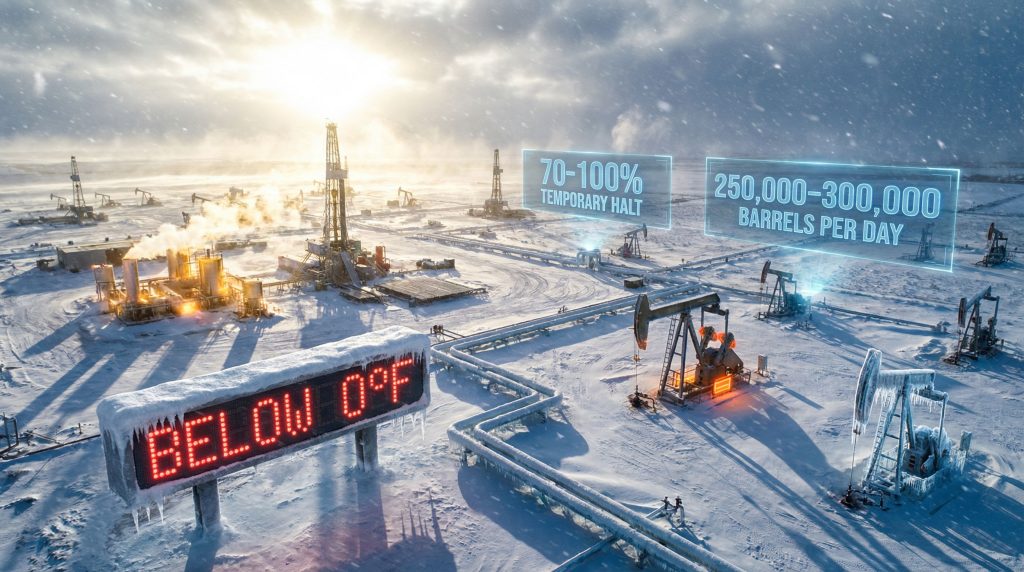
Winter storm impacts on US oil production have become increasingly significant as extreme weather events expose critical vulnerabilities in petroleum extraction infrastructure across the United States. These disruptions reveal how concentrated geographic production hubs, aging pipeline networks, and temperature-sensitive equipment create cascading supply chain risks that extend far beyond immediate drilling sites. Furthermore, the interconnected nature of modern energy systems means that localized disruptions can trigger widespread market effects.
The vulnerability landscape encompasses multiple failure points, from wellhead freeze-ups to compressor station malfunctions, each capable of triggering broader system-wide shutdowns. Understanding these interconnected risks requires examining both the technical limitations of extraction equipment and the economic calculations that drive operational decision-making during severe weather events.
Operational Temperature Thresholds and Equipment Failure Points
Modern petroleum extraction systems operate within specific temperature parameters that become critical during extreme cold events. When ambient temperatures drop below freezing, crude oil viscosity increases substantially, creating flow resistance throughout production networks. This physical transformation affects everything from downhole pumping systems to surface processing equipment.
Equipment manufacturers design most wellhead components for temperature ranges that rarely account for extreme weather scenarios. Standard valve assemblies, pressure sensors, and flow control mechanisms begin experiencing operational difficulties when temperatures fall below 20°F for extended periods. These failures often compound as operators implement emergency shutdown procedures to prevent costly equipment damage.
Critical Infrastructure Failure Temperatures:
- Valve systems: Begin experiencing freezing issues at 32°F
- Pressure monitoring equipment: Accuracy degrades below 15°F
- Flow meters: Electronic components fail below 0°F
- Wellhead assemblies: Mechanical failures increase exponentially below -10°F
The economic impact calculations reveal why operators increasingly favor proactive shutdowns over reactive emergency responses. Replacing frozen wellhead equipment can cost between $50,000 and $200,000 per site, while temporary production losses typically represent manageable short-term revenue impacts. This cost-benefit analysis drives the strategic thinking behind preemptive operational halts during severe weather forecasts.
When big ASX news breaks, our subscribers know first
Geographic Concentration Risks in Major Production Basins
The Permian Basin's dominance in American crude production creates systemic vulnerabilities when winter storms impact this concentrated geographic region. Recent disruptions demonstrated how approximately 250,000 barrels per day of crude production were temporarily lost due to Winter Storm Fern, according to JPMorgan analysts reporting in January 2026. This production loss occurred across multiple regions, including parts of Texas and other major producing areas.
North Dakota's Bakken Formation represents another critical vulnerability point, despite operators' extensive experience with harsh winter conditions. The region's production density means that localized weather events can affect numerous wells simultaneously. Consequently, remote locations complicate maintenance and repair efforts during severe weather periods, which directly correlates with broader oil price movements observed across global markets.
Production Basin Vulnerability Characteristics:
- High-volume horizontal drilling operations requiring continuous electrical power
- Extensive surface pipeline networks exposed to temperature extremes
- Centralized processing facilities serving multiple satellite drilling sites
- Limited redundancy in transportation infrastructure
- Concentrated workforce deployment affecting emergency response capabilities
The transportation dependency factor amplifies these regional risks significantly. When pipeline systems experience weather-related disruptions, entire production areas can face simultaneous takeaway capacity constraints, forcing operators to implement widespread production curtailments even at unaffected drilling sites.
Infrastructure Network Cascade Effects
Winter storm impacts on US oil production extend beyond individual wellheads through interconnected pipeline and processing systems. Compressor stations represent particularly vulnerable nodes in this network, requiring continuous operation to maintain pressure throughout regional transmission systems. When these facilities lose power or experience equipment failures during storms, the effects propagate across vast geographic areas.
Pipeline operators monitor dozens of critical measurement points where temperature-sensitive equipment must maintain accurate readings for safe operation. Metering facilities, valve stations, and pressure regulation points all contain electronic components susceptible to extreme cold conditions. The failure of any single monitoring point can trigger automatic safety shutdowns affecting entire pipeline segments.
Additionally, Australia faces similar challenges with its energy export challenges, though these primarily stem from different geographic and climate factors. The U.S. energy sector braces for winter storm impacts as crude and natural gas output continues to face pressure from extreme weather events.
Critical Infrastructure Dependencies:
- Compressor stations maintaining pressure across regional networks
- Valve stations enabling flow direction and volume control
- Metering facilities providing custody transfer measurements
- Pressure regulation systems preventing over-pressurization
- Communication networks coordinating system-wide operations
The Colonial Pipeline system and other major transportation networks implement extensive cold weather protocols, but extreme events can overwhelm these preparatory measures. Cushing, Oklahoma storage facilities play a crucial role during disruptions, as inventory drawdowns help compensate for temporary production losses while systems recover operational capacity.
Market Price Dynamics During Supply Disruptions
Commodity markets rapidly incorporate weather-related supply risks into crude oil pricing mechanisms. During Winter Storm Fern's impact in January 2026, both Brent and WTI crude benchmarks recorded weekly gains of 2.7%, reaching their highest levels since January 14, 2026, according to Reuters reporting. However, day-to-day price movements showed Brent at $65.81 per barrel and WTI at $61.01 per barrel, both declining 0.1% as immediate supply concerns moderated.
The market's response reflects sophisticated risk assessment incorporating multiple variables beyond immediate production losses. Geopolitical tensions, particularly regarding U.S. military positioning in the Middle East, added additional risk premiums to crude prices during the same period. These broader trade war impacts continue to influence global energy markets alongside weather-related disruptions.
As Senior Market Analyst Priyanka Sachdeva from Phillip Nova noted, oil prices were experiencing influences from production disruptions coupled with persistent geopolitical risks against broader oversupply concerns for 2026. This analysis demonstrates how multiple factors contribute to market volatility beyond weather events alone.
Market Response Mechanisms:
- Futures contract volatility increasing during weather events
- Trading volume spikes as participants adjust risk positions
- Risk premium calculations incorporating supply uncertainty duration
- Forward curve adjustments based on recovery timeline expectations
- Inventory data analysis influencing price discovery processes
Tony Sycamore from IG Markets observed that geopolitical developments, including statements about military deployments, had reignited supply disruption fears and added risk premiums to crude prices. This analysis highlights how weather-related production losses interact with broader market sentiment and geopolitical risk assessments.
Economic Quantification and Recovery Timelines
The economic implications of winter storm disruptions extend far beyond immediate production losses through multiple transmission channels. Regional gasoline and diesel markets experience supply tightness as refinery operations face feedstock delivery challenges and increased heating fuel demand competes for available crude supplies. Manufacturing sectors dependent on consistent energy supply may reduce operations, creating broader economic ripple effects.
Recovery patterns follow predictable phases, beginning with initial damage assessment within 24 hours of storm passage. Operators prioritise safety evaluations and equipment inspection before attempting any restoration activities. The second phase involves repair prioritisation and resource allocation, typically extending 24 to 72 hours as crews access remote locations and assess infrastructure damage severity.
Recovery Phase Characteristics:
- Initial Assessment (0-24 hours): Safety protocols, damage surveys, communication establishment
- Restoration Planning (1-3 days): Repair prioritisation, resource mobilisation, supply chain coordination
- Production Restart (3-7 days): Gradual system reactivation, quality verification, market supply normalisation
The production ramp-up phase requires careful coordination as systems gradually return to full operational capacity. Quality control procedures ensure that restarted production meets pipeline specifications, while transportation networks coordinate to manage increased throughput as supply normalises across affected regions.
What Are the Long-term Financial Impacts?
Long-term financial implications extend beyond immediate production losses to include infrastructure replacement costs, insurance premium adjustments, and strategic investment requirements. Companies increasingly factor extreme weather probabilities into capital allocation decisions, potentially leading to oil price stagnation if investment costs significantly increase operational expenses.
Strategic Resilience and Adaptation Measures
Energy companies increasingly implement technological solutions designed to enhance weather resilience across their operational networks. Heated wellhead systems prevent freezing at critical extraction points, while insulated pipeline networks maintain appropriate flow temperatures during extended cold periods. Remote monitoring capabilities enable rapid response to developing operational issues before they cascade into broader system failures.
The Strategic Petroleum Reserve provides a critical buffer during weather-related supply disruptions, though release decisions involve complex policy considerations balancing market stabilisation against reserve conservation objectives. Commercial inventory management strategies have evolved to maintain higher stock levels in regions prone to weather-related supply interruptions.
Resilience Enhancement Technologies:
- Automated heating systems for critical wellhead components
- Enhanced pipeline insulation and trace heating capabilities
- Remote monitoring networks enabling predictive maintenance
- Backup power systems for essential operational equipment
- Advanced weather forecasting integration for operational planning
Investment priorities increasingly focus on distributed production networks that reduce geographic concentration risks. This approach involves developing alternative transportation routes, implementing redundant processing capabilities, and establishing emergency response protocols that can rapidly mobilise resources across affected regions.
The next major ASX story will hit our subscribers first
Regulatory Framework and Emergency Response Protocols
Federal oversight mechanisms play crucial roles in managing weather-related energy disruptions through multiple agency coordination efforts. The Department of Energy monitors market conditions and manages Strategic Petroleum Reserve operations, while the Pipeline and Hazardous Materials Safety Administration oversees infrastructure safety compliance. The Federal Energy Regulatory Commission coordinates interstate pipeline operations during emergency conditions.
Government agencies maintain comprehensive emergency response capabilities designed to address supply disruptions while maintaining market stability. These protocols involve coordination between federal, state, and local authorities alongside private sector operators to ensure rapid restoration of critical energy infrastructure.
Moreover, energy stocks face increased volatility as major winter storms continue to impact production across the United States. This volatility reflects both immediate operational concerns and longer-term infrastructure resilience questions.
Federal Response Mechanisms:
- Department of Energy market monitoring and reserve management
- PHMSA infrastructure safety oversight and incident response
- FERC interstate pipeline coordination and emergency authorities
- State regulatory agency coordination for intrastate operations
- Emergency management agency logistics support and resource coordination
The regulatory approach balances immediate supply security concerns against long-term infrastructure resilience objectives. This framework requires continuous adaptation as climate patterns evolve and extreme weather events become more frequent or severe.
Future Infrastructure Investment and Climate Adaptation
Long-term resilience building requires substantial infrastructure investment focused on equipment upgrades and system redundancy development. Enhanced weatherisation programmes involve retrofitting existing facilities with cold-weather protection systems while ensuring new construction incorporates climate-adaptive design standards.
Advanced forecasting systems enable more sophisticated operational planning that can minimise weather-related disruptions through proactive management strategies. These capabilities combine meteorological data with operational modelling to optimise production scheduling and maintenance activities around anticipated weather patterns.
However, the cumulative effect of increased infrastructure costs and operational complexity could contribute to an oil price crash if global supply significantly exceeds demand despite higher production costs from weatherisation investments.
Investment Priority Areas:
- Backup power systems for critical operational facilities
- Enhanced communication networks enabling system-wide coordination
- Automated shutdown and restart capabilities reducing recovery timelines
- Distributed processing capacity reducing single-point failure risks
- Climate-adaptive infrastructure design incorporating extreme weather scenarios
The industry's adaptation strategies increasingly recognise that extreme weather events represent ongoing operational realities requiring systematic preparation rather than reactive responses. This perspective drives investment decisions favouring long-term resilience over short-term cost optimisation.
How Will Climate Change Affect Future Operations?
Climate change projections suggest more frequent and severe winter storms, requiring fundamental shifts in operational planning and infrastructure design. Companies must balance increased resilience investments against competitive cost pressures, particularly as winter storm impacts on US oil production become more predictable yet potentially more severe.
As Phillip Nova's Sachdeva noted regarding market fundamentals, traders increasingly weigh structural supply factors more heavily than episodic disruptions. This observation suggests that unless major production adjustments occur, the overall market outlook remains focused on fundamental supply-demand balances rather than temporary weather-related interruptions.
Disclaimer: This analysis contains forward-looking statements and market assessments that involve inherent uncertainties. Weather impact predictions, recovery timelines, and economic projections are subject to changing conditions and should not be considered as definitive forecasts. Readers should consult current market data and professional energy analysts for investment or operational decision-making purposes.
Want to Navigate Energy Market Volatility Successfully?
Discovery Alert's proprietary Discovery IQ model delivers real-time insights on significant ASX mineral discoveries, helping investors identify actionable opportunities across commodities markets including energy sectors affected by supply disruptions. Begin your 30-day free trial today to gain immediate market advantages through advanced AI-powered analysis that transforms complex market data into clear investment signals.