May 16, 2026
Understanding the Economic Architecture of Workforce Modernization
Resource-based economies face a fundamental challenge: how to transform natural endowments into sustainable competitive advantages while building indigenous capabilities that support long-term economic resilience. The Saudi Arabia skills framework mining industrial growth represents a strategic response to this challenge, creating structured pathways between educational outcomes, professional competencies, and industrial expansion objectives.
The Kingdom's comprehensive approach to workforce standardisation represents a systematic solution to this challenge, creating structured pathways between educational outcomes, professional competencies, and industrial expansion objectives. Through the development of detailed occupational frameworks, governments can reduce information asymmetries in labour markets while enabling rapid scaling of industrial capabilities.
Modern skills frameworks function as economic infrastructure, establishing common languages between educational providers, employers, and workers. These systems create standardised definitions for roles, competencies, and career progression pathways that reduce coordination costs across entire economic sectors.
Core Framework Elements Include:
- Occupational classification systems linking specific roles to broader economic development targets
- Competency mapping that bridges traditional skill sets with emerging technological requirements
- Certification pathways that support both career mobility and specialised expertise development
- Performance measurement criteria enabling data-driven workforce planning and optimisation
When big ASX news breaks, our subscribers know first
Strategic Resource Utilisation Through Human Capital Investment
Economic diversification initiatives in resource-rich nations require careful balance between leveraging existing natural advantages and developing new competitive capabilities. The most successful transformations occur when governments create systematic approaches to workforce development that align with expanded resource utilisation strategies.
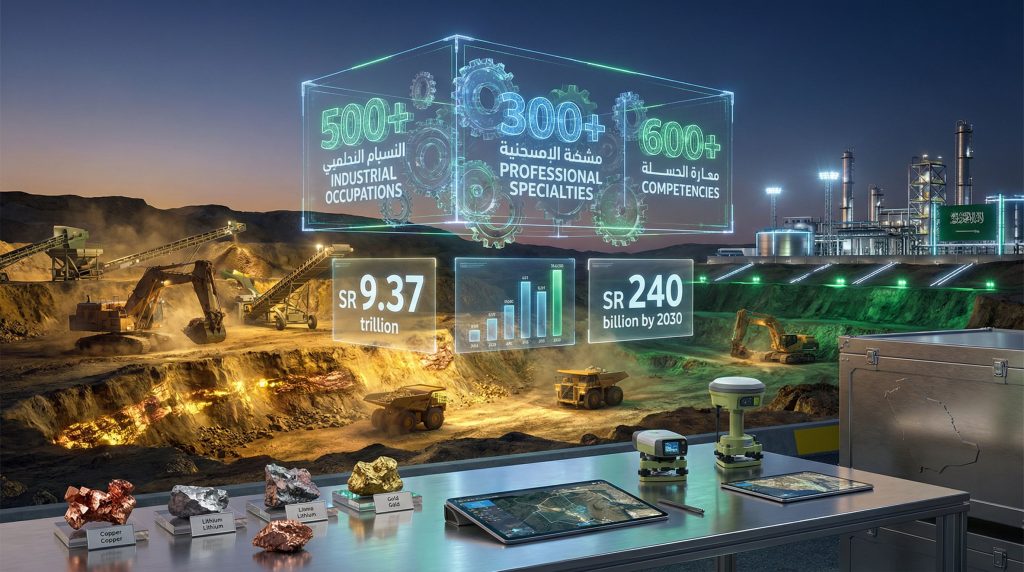
Recent geological assessments have revealed substantial increases in Saudi Arabia's mineral resource valuations, with estimates rising approximately 90% from previous SR 5 trillion to current SR 9.37 trillion ($2.5 trillion). These expanded resource assessments strengthen the economic case for systematic workforce development initiatives that can support accelerated extraction and processing capabilities.
Furthermore, the Saudi exploration licenses demonstrate how improved scientific assessment capabilities can unlock previously unrecognised economic potential. This creates demand-pull effects for workforce capabilities spanning exploration, extraction, processing, and value-added manufacturing.
Resource Valuation Growth Metrics:
| Assessment Period | Valuation | Change |
|---|---|---|
| 2016 Baseline | SR 5 trillion | – |
| Current Estimates | SR 9.37 trillion ($2.5 trillion) | +90% |
| Valuation Increase | SR 4.37 trillion | +87.6% |
Resource economies that successfully diversify typically implement workforce localisation strategies that reduce dependency on imported expertise while building sustainable domestic capabilities. These approaches create positive economic multipliers through knowledge retention, innovation capacity development, and enhanced regional employment generation.
Localisation Strategy Benefits:
- Cost Optimisation: Reduced long-term dependency on external technical expertise and associated premium labour costs
- Knowledge Retention: Development of institutional memory and domestic expertise that supports continuous improvement
- Innovation Capacity: Local research and development capabilities that drive technological advancement and process optimisation
- Economic Multipliers: Increased domestic spending and service sector growth supporting broader regional development
Systematic Skills Architecture for Industrial Expansion
The Kingdom's Industry & Mining Occupations & Skills Framework encompasses over 500 industrial occupations, 300 professional specialties, and 600 distinct competencies, creating comprehensive standardisation across mining and manufacturing sectors. This systematic approach enables rapid workforce scaling while maintaining operational standards and competitive positioning.
According to Minister of Industry and Mineral Resources Bandar Alkhorayef, "the framework serves as a tool that ensures clear definitions of occupations and their required skills, covering more than 500 job roles while detailing necessary skills, responsibilities, and titles." The initiative was announced during the Global Labour Market Conference 2026, emphasising its role in supporting informed decision-making across the industrial ecosystem.
Framework Technical Architecture:
| Component | Scale | Function |
|---|---|---|
| Industrial Occupations | 500+ roles | Core occupational definitions and standards |
| Professional Specialties | 300+ categories | Specialised role classifications and requirements |
| Skills Classifications | 600+ competencies | Technical and behavioural skill specifications |
| Certification Pathways | 900+ credentials | Accredited qualification and progression routes |
The framework's development involved collaboration with the General Authority for Statistics, government bodies, private sector organisations, and academic institutions, resulting in approximately 3,200 pages of detailed occupational profiles and competency standards.
What Components Define Each Occupational Profile?
Each role within the framework includes:
- Standardised occupational codes enabling data analytics and labour market tracking
- Multiple job title variants supporting organisational flexibility and career progression
- Detailed task specifications and performance criteria for role effectiveness measurement
- Educational qualification mapping connecting academic programmes to industry requirements
- Competency specifications covering both technical abilities and behavioural characteristics
This systematic approach reduces bottlenecks in recruitment, training quality assurance, and performance management while enabling coordination across educational institutions, training providers, and industry requirements through common competency definitions.
Economic Impact Assessment and Growth Projections
The 90% increase in mineral resource valuations creates substantial foundation for economic impact generation across multiple sectors. Enhanced geological understanding combined with systematic workforce development creates conditions for sustained industrial expansion and economic diversification.
The framework launch timing directly follows the release of updated Arabian Shield geological assessments, suggesting strategic alignment between resource availability recognition and labour market development initiatives. In addition, this coordination demonstrates government recognition that improved resource assessments create demand-pull effects for workforce capability building.
How Does Mining Sector Expansion Generate Economic Impact?
Mining sector expansion generates economic impacts through multiple channels:
- Direct Employment: Creation of specialised positions across extraction, processing, and support functions
- Infrastructure Development: Investment in transportation, utilities, and industrial facilities supporting operations
- Service Sector Growth: Demand for professional services, equipment suppliers, and specialised contractors
- Regional Development: Economic activity generation in areas with significant mineral resources
- Technology Transfer: Adoption of advanced extraction and processing technologies driving broader innovation
The systematic approach to workforce development enables capture of these economic impacts through domestic capability building rather than reliance on imported expertise and associated economic leakage.
Value Chain Integration Through Standardised Competencies
Modern mining and industrial operations require coordination across complex value chains spanning exploration through final product delivery. Standardised competency definitions enable this coordination by creating common performance languages across organisational boundaries and value chain stages.
The framework supports integration through:
- Upstream Coordination: Standardised geological assessment, exploration, and extraction role definitions
- Midstream Integration: Materials processing, quality control, and logistics competency specifications
- Downstream Connection: Manufacturing, export, and customer service capability standards
- Support Function Alignment: Engineering, environmental management, and regulatory compliance skills
How Do Technology Requirements Shape Framework Development?
Contemporary mining operations increasingly rely on sophisticated technologies including:
- Advanced geological surveying and mineral assessment technologies
- AI in mining operations for resource prospecting and extraction optimisation
- Automated systems for equipment operation and safety management
- Environmental monitoring and sustainability compliance technologies
- Quality control and materials testing systems
The framework's competency definitions must accommodate both traditional mining expertise and emerging technological capabilities, creating pathways for workforce adaptation to evolving operational requirements.
However, the rapid pace of technological change in the mining industry evolution requires continuous framework updates to remain relevant and effective.
Professional Development Pathways:
Standardised competency definitions enable clear career progression routes that support both individual advancement and organisational development:
- Entry Level: Basic operational roles with fundamental technical and safety competencies
- Specialist Positions: Advanced technical roles requiring specialised expertise in specific operational areas
- Management Functions: Supervisory and coordination roles combining technical knowledge with leadership capabilities
- Expert Positions: Senior technical and strategic roles requiring comprehensive sector knowledge and innovation capabilities
Strategic Advantages of Workforce Localisation
Indigenous workforce development creates sustainable competitive advantages that extend beyond immediate operational requirements. These advantages compound over time as domestic expertise deepens and institutional knowledge accumulates within the national economy.
What Are the Knowledge Retention Benefits?
Domestic workforce development creates institutional memory that supports continuous improvement and innovation. Unlike imported expertise, locally developed capabilities remain within the national economy, generating long-term competitive advantages and reducing dependency on external knowledge sources.
Local expertise development also enables adaptation of international best practices to specific domestic conditions, geological characteristics, and regulatory environments. This customisation capability often proves more valuable than direct technology transfer arrangements.
Consequently, the global mining landscape demonstrates that countries with strong indigenous capabilities maintain competitive advantages across commodity cycles.
Regional Economic Development Impact:
Mining sector expansion supported by systematic workforce development generates broader economic benefits through:
- Infrastructure Investment: Development of transportation networks, power systems, and industrial facilities
- Service Sector Growth: Creation of professional services, equipment supply, and specialised contractor industries
- Educational Institution Development: Enhancement of technical training and higher education capabilities
- Community Development: Improvement of healthcare, housing, and social infrastructure in mining regions
The next major ASX story will hit our subscribers first
Supporting Vision 2030 Economic Diversification Strategy
The mining sector represents the third pillar of Saudi Arabia's economic diversification strategy alongside traditional energy production and petrochemical manufacturing. This diversification approach reduces dependency on volatile commodity markets while building complementary industrial capabilities.
Furthermore, the Vision 2030 strategy emphasises the importance of developing domestic capabilities across multiple industrial sectors to achieve economic resilience and sustainability.
Sectoral Balance Framework:
- Energy Production: Traditional oil and gas extraction and refining capabilities
- Petrochemical Manufacturing: Value-added chemical processing and materials production
- Mining and Minerals: Expanded extraction and processing of non-hydrocarbon mineral resources
- Supporting Industries: Manufacturing, technology services, and logistics sectors
The systematic approach to workforce development supports this diversification by creating transferable competencies across industrial sectors. Skills developed for mining operations often apply to petrochemical processing, manufacturing, and other industrial activities, creating workforce flexibility and economic resilience.
Moreover, the Kingdom's energy transition strategy requires skilled workers capable of supporting both traditional industries and emerging green technologies.
How Does Standardised Workforce Enhance Investment Climate?
Standardised workforce capabilities signal market maturity and operational reliability to international investors. This reduces perceived risks associated with large-scale industrial projects and supports capital attraction for sector expansion.
International mining and processing companies evaluate workforce availability and quality as key factors in investment decisions. Systematic competency frameworks provide transparency and predictability that facilitate due diligence processes and project feasibility assessments.
Implementation Challenges and Strategic Management
Successful framework implementation requires careful coordination across multiple stakeholder groups with different priorities, timelines, and operational requirements. Government agencies, educational institutions, private sector organisations, and international partners must align their activities to achieve framework objectives.
Stakeholder Coordination Requirements:
- Government Bodies: Policy development, regulatory oversight, and strategic planning coordination
- Educational Institutions: Curriculum alignment, programme delivery, and assessment standardisation
- Private Sector: Industry input, employment opportunity creation, and on-the-job training provision
- International Partners: Technology transfer, best practices sharing, and certification recognition
What Strategies Address Skills Gap Management?
Rapid industrial expansion may generate workforce demand that exceeds immediate supply capabilities from domestic training programmes. Strategic approaches to managing this transition include:
- Phased Implementation: Prioritising framework adoption in sectors with existing workforce capacity
- International Recruitment: Strategic use of external expertise to bridge immediate gaps while building domestic capabilities
- Accelerated Training Programmes: Intensive skill development initiatives targeting high-priority competencies
- Technology Adoption: Leveraging automation and digital systems to reduce immediate workforce requirements
Long-term Strategic Implications
Saudi Arabia skills framework mining industrial growth represents strategic investment in human capital infrastructure that enables sustainable economic diversification and competitive positioning in global resource markets. By systematically developing indigenous expertise across 500+ occupational categories, the Kingdom creates foundational capabilities supporting long-term industrial growth.
This initiative demonstrates how systematic workforce development functions as economic infrastructure, comparable to transportation networks or power systems in its ability to enable rapid scaling of industrial capabilities while maintaining operational standards and competitive positioning.
For instance, countries that have successfully implemented comprehensive workforce frameworks demonstrate improved performance across multiple economic indicators including productivity growth, innovation capacity, and export competitiveness.
The framework's success will be measured not only by immediate employment generation and sector growth, but by its contribution to broader economic resilience, innovation capacity, and competitive sustainability in evolving global markets. Through strategic workforce development, resource-rich economies can transform natural endowments into lasting competitive advantages that support prosperity beyond commodity cycles.
Disclaimer: This analysis is based on publicly available information and should not be considered as investment advice. Economic projections and strategic assessments involve inherent uncertainties and assumptions that may not materialise as expected. Readers should conduct independent research and consult qualified professionals before making investment or business decisions related to Saudi Arabia's mining sector or workforce development initiatives.
Looking to Capitalise on Mining Sector Workforce Development?
Discovery Alert's proprietary Discovery IQ model delivers real-time alerts on significant ASX mining discoveries, helping subscribers identify actionable opportunities as advanced workforce frameworks drive global mining expansion. Begin your 14-day free trial today and secure your market-leading advantage as skilled workforce development accelerates mining sector growth worldwide.