July 21, 2026
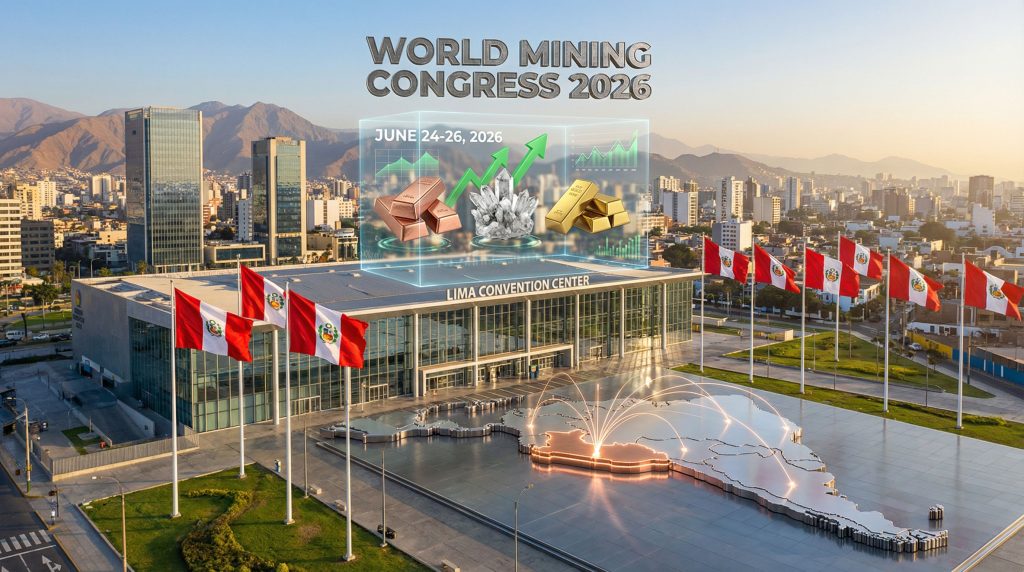
Global critical mineral supply chains face unprecedented vulnerability as demand for energy transition metals accelerates exponentially. The concentration of processing capabilities in limited geographic regions, combined with geopolitical tensions surrounding resource access, creates systemic risks that demand coordinated international response. Within this strategic context, mining industry convergence around supply chain resilience has become essential for maintaining global economic stability and achieving climate transition objectives.
What Makes the World Mining Congress 2026 a Pivotal Moment for Global Resource Strategy?
The World Mining Congress 2026 Peru emerges at a critical juncture when global lithium demand is projected to increase by approximately 40 times by 2050 compared to 2020 levels, driven by energy storage and electric vehicle adoption. This dramatic demand acceleration, combined with copper requirements expected to double by 2050 under climate mitigation scenarios, positions the Lima congress as a strategic forum for addressing supply chain transformation imperatives.
Furthermore, the event coincides with increasing awareness of critical raw materials facility development needs across global supply chains. Industry leaders recognise that this gathering represents an opportunity to address vulnerabilities while fostering international cooperation.
Critical Mineral Supply Chain Vulnerabilities Driving Industry Convergence
Supply chain concentration presents immediate strategic risks across multiple critical mineral categories. Cobalt production remains 60-65% concentrated in the Democratic Republic of Congo, while nickel processing shows 40% concentration in Indonesia. Most critically, Chinese rare earth element processing capacity represents 70% of global capacity, creating single-point-of-failure vulnerabilities in technology supply chains.
The International Energy Agency estimated that critical mineral production would need to increase four-fold by 2040 to meet energy transition targets. This expansion requirement necessitates coordinated efforts across producer nations, technology developers, and end-users to establish diversification strategies and responsible sourcing frameworks.
Industry analysis reveals that addressing these vulnerabilities requires substantial capital investment, with lithium project development timelines ranging from 6-10 years from exploration to production. Processing infrastructure development for rare earth elements represents significant technological barriers, as only limited regions possess the refining capacity and expertise necessary for advanced mineral processing.
In addition, ongoing US–China trade war impacts continue to reshape global supply chains, making diversification strategies increasingly critical for maintaining operational resilience.
Peru's Strategic Positioning in the Latin American Mining Corridor
Peru's position as the world's second-largest copper producer, accounting for approximately 10-11% of global copper production, establishes the nation as a critical player in supply chain diversification initiatives. The country ranks second globally in silver production at approximately 3,900 tonnes annually and maintains similar positioning in zinc production at approximately 1.3 million tonnes annually.
Additionally, Peru produces approximately 130,000 tonnes of lithium carbonate equivalent annually, positioning the nation as a significant contributor to Latin American lithium market development. This production capacity, combined with substantial undeveloped mineral resources, provides strategic leverage for international supply chain partnerships.
The Andean copper belt spans approximately 1,200 kilometres north-south through Peru, encompassing some of the world's largest copper reserves. This geological endowment, combined with established mining infrastructure and technical expertise, creates opportunities for rapid production expansion to support global supply chain resilience objectives.
Technology Transfer Implications for Emerging Mining Nations
The congress facilitates knowledge transfer regarding operational best practices, environmental compliance frameworks, and technological solutions between established mining nations and emerging mining economies. This transfer encompasses formal presentations, technical workshops, informal networking interactions, and documented supply chain partnerships.
Technology adoption barriers in emerging mining regions include limited access to advanced equipment, insufficient technical training infrastructure, and capital constraints for implementing AI-driven systems. The World Mining Congress 2026 Peru addresses these challenges by connecting emerging mining nations with technology providers, financing institutions, and operational expertise.
Processing capability development represents a critical component of technology transfer initiatives. Currently, most critical mineral processing occurs in established industrial centres, creating transportation costs and supply chain complexity. Developing local processing capabilities requires technology transfer, workforce training, and substantial infrastructure investment.
When big ASX news breaks, our subscribers know first
How Will Lima's Geographic Advantage Reshape Mining Investment Patterns?
Lima's strategic position at latitude 12.05°S, longitude 77.04°W places the city approximately 480 kilometres from major Peruvian mining regions in the Andes, creating exceptional accessibility for international mining executives and technical personnel. This proximity enables efficient site visits and operational assessments as part of conference participation.
Andean Copper Belt Access and Infrastructure Synergies
The Central Railway (Ferrocarril Central Andino) connects Lima to mining regions at 4,781 metres elevation, demonstrating existing infrastructure capacity for transporting mineral concentrates to port facilities. This rail infrastructure, combined with road connectivity via the Pan-American Highway, provides overland route access to mining regions across southern Peru and neighbouring countries.
Mining infrastructure synergies extend beyond transportation to include technical service availability, equipment supply chains, and skilled workforce access. Lima's concentration of mining service companies, consulting firms, and technical specialists creates operational efficiencies for international mining companies evaluating regional opportunities.
The Port of Callao, adjacent to Lima, handles approximately 60% of Peru's mineral exports and has undergone modernisation to increase container and breakbulk capacity for mineral products. This port infrastructure provides direct access to Pacific shipping routes serving Asian markets, which account for approximately 50% of global mineral demand.
Pacific Rim Trade Route Optimisation for Critical Minerals
Asia-Pacific region consumption patterns demonstrate the strategic importance of Pacific shipping routes. China, Japan, and South Korea collectively represent 35% of global refined copper consumption, while the broader Asian market drives demand for lithium, nickel, and rare earth elements essential for technology manufacturing.
Container ship throughput in Pacific ports supporting mineral export represents over 600 million TEU annually across major Pacific gateways. Lima's position provides access to these trade routes with minimal inland transportation requirements, reducing logistics costs and delivery timeframes for mineral products.
South America accounts for approximately 37% of global copper production, with the Latin American region producing approximately 65% of global lithium supply. Lima's central position within this production corridor creates natural hub advantages for coordinating regional mining activities and international market access.
Regional Hub Development for South American Mining Operations
Geographic centrality provides advantages for consolidating technology transfer, knowledge exchange, and supply chain coordination across Peru, Bolivia, Argentina, and Chile. These regions collectively represent significant global mineral production and substantial undeveloped resources essential for energy transition security objectives.
Jorge Chávez International Airport provides direct connections to major global financial centres, facilitating executive and technical personnel mobility essential for international mining investment evaluation and operational management. Air connectivity enables rapid response to operational requirements and efficient international business coordination.
| Factor | Advantage | Impact Score (1-10) |
|---|---|---|
| Geographic Location | Central to major mining regions | 9 |
| Infrastructure | Modern convention facilities | 8 |
| Cultural Integration | Inti Raymi timing enhances appeal | 7 |
| Political Stability | Favourable mining policy environment | 8 |
Which Technology Themes Will Define Mining's Next Decade?
Technology integration across mining operations represents the most significant operational transformation since mechanisation began in the 1950s-1970s. Current adoption cycles fundamentally restructure mining operations through artificial intelligence, autonomous systems, and environmental monitoring technologies that improve safety, efficiency, and environmental performance.
Artificial Intelligence Integration in Resource Extraction
Global mining companies report that approximately 45% of organisations have implemented AI/ML applications, with increased focus on predictive maintenance and geological modelling. Neural networks process multidimensional geological data to improve ore body modelling accuracy, enabling better resource estimation and mine planning optimisation.
Predictive maintenance enabled by AI reduces unplanned downtime by 20-50% and reduces maintenance costs by 10-25%, according to industry case studies from major equipment manufacturers. Machine learning algorithms identify equipment degradation patterns before failure occurs, enabling planned maintenance interventions that minimise production disruptions.
Process optimisation represents another critical AI application area. Advanced algorithms optimise flotation, leaching, and other concentration processes in real-time based on ore characteristics and equipment performance. These systems adapt processing parameters continuously, improving recovery rates by 3-8% while reducing energy consumption and reagent usage.
However, the AI transformation in mining extends beyond operational efficiency to encompass safety improvements and environmental monitoring capabilities.
Autonomous Operations and Remote Mining Capabilities
Autonomous haul trucks are deployed in approximately 50+ mining operations globally, reducing operational costs by 15-20% and improving safety metrics by removing personnel from hazardous environments. GPS/GNSS accuracy requirements of ±10-30 centimetres enable precise autonomous navigation in open pit mining environments.
Remote operations centres enable control of equipment from thousands of kilometres away, with latency requirements of 50-200 milliseconds for safe autonomous operation. Multiple LiDAR, radar, and camera systems provide layered safety verification, while encrypted communications protocols protect autonomous fleet systems from cybersecurity threats.
Edge computing processes sensor data locally, with only actionable insights transmitted to central monitoring systems, reducing bandwidth requirements while enabling real-time decision-making. This distributed computing architecture supports 24/7 autonomous operations across multiple time zones and geographic regions.
Environmental Monitoring Through Advanced Sensor Networks
IoT sensor networks in mining operations reduce water consumption by 10-20% through real-time monitoring and optimisation of processing circuits. Multi-parameter sensors measure water quality, air quality, vibration, radiation, and thermal characteristics across mine sites, providing comprehensive environmental oversight.
Advanced spectroscopy and hyperspectral imaging enable real-time ore grade assessment, reducing dilution and improving recovery rates. These systems analyse mineral composition continuously, optimising extraction processes and minimising waste generation throughout mining operations.
Cybersecurity infrastructure becomes increasingly critical as mining operations integrate connected systems. Isolated network architectures and redundant safety systems protect against remote interference while maintaining operational efficiency and worker safety standards.
Consequently, the convergence of these technologies supports broader sustainable mining transformation initiatives that address environmental and social concerns alongside operational efficiency.
The convergence of AI, automation, and environmental stewardship represents the most significant operational transformation in mining since mechanisation began, fundamentally restructuring how minerals are extracted, processed, and delivered to global markets.
What Economic Impact Will the Congress Generate for Peru's Mining Sector?
Mining-related foreign direct investment in Peru totalled approximately $2.8 billion in 2022, with international mining conferences demonstrably influencing capital allocation patterns. Studies of mining industry conferences show increased FDI flow correlations in host nations within 6-18 months following major conference hosting, suggesting direct economic benefits from international exposure.
Foreign Direct Investment Attraction Through International Exposure
Conference hosting generates direct spending of approximately $3,000-$6,000 per attendee for multi-day international conferences, with industry analyses suggesting attendance ranging from 3,000-8,000 participants for major international mining congresses. Economic impact multipliers range from 2.5x-4.0x direct spending when including secondary effects.
Investor due diligence increasingly incorporates assessment of local technical capacity, regulatory environment, and community relations frameworks. The World Mining Congress 2026 Peru enables the country to showcase regulatory reforms, infrastructure investments, and community engagement successes to international investment decision-makers.
Direct corporate meetings facilitated by conference participation structure negotiations for technology partnerships, equipment supply arrangements, and capital investment commitments. These relationships often translate into substantial investment flows within 12-24 months following initial conference connections.
Knowledge Transfer Benefits for Local Mining Engineering Capacity
Peru's mining sector employs approximately 150,000-200,000 workers directly, with indirect employment multipliers of 3-5x estimated across supply chain and service sectors. Technology transfer initiatives enhance local technical capabilities, improving operational efficiency and competitive positioning in global markets.
Technical workshops and formal presentations provide exposure to operational best practices, environmental compliance frameworks, and technological solutions. This knowledge transfer includes documented supply chain partnerships and informal networking interactions that facilitate ongoing technology adoption.
Workforce development initiatives benefit from international exposure to training methodologies, safety protocols, and technical certification programmes. These improvements enhance Peru's competitive position for attracting international mining investment and developing domestic technical expertise.
Long-term Competitiveness Enhancement Through Global Networking
Industry relationship development provides dual benefits: direct exposure to technological solutions and operational methodologies, plus relationship development with international investors, equipment suppliers, and technical service providers. These connections create ongoing channels for technology transfer and investment opportunities.
Peru's mining sector accounts for approximately 10-12% of GDP and approximately 60% of export revenues, making international competitiveness enhancement critical for national economic performance. Conference participation strengthens Peru's position in global mineral supply chains essential for energy transition technologies.
Regional mining hub development creates spillover effects across neighbouring countries, positioning Lima as a coordination centre for South American mining activities. This regional leadership role attracts additional international attention and investment consideration beyond direct conference impacts.
How Does the June 2026 Timing Align with Global Mining Cycles?
The June 24-26, 2026 timing aligns strategically with global mining industry planning cycles and commodity market forecasting periods. Major mining companies conduct strategic planning aligned with fiscal quarters, with Q2 representing a critical window for H2 implementation and annual reforecasting activities.
Mid-Year Strategic Planning Windows for Major Mining Companies
Mining industry budget allocation processes typically update mid-year, with June representing a key decision point for capital expenditure commitments and project development timelines. Technology investment decisions often align with these planning cycles, making conference timing optimal for introducing new solutions and partnership opportunities.
Annual strategic reviews conducted by major mining companies evaluate operational performance, market conditions, and investment priorities. The World Mining Congress 2026 Peru timing enables companies to incorporate conference insights into strategic planning processes for the following fiscal year.
International mining conferences influence corporate planning cycles by providing market intelligence, technology exposure, and partnership opportunities. Companies often schedule major investment decisions and project announcements to align with conference participation and industry visibility objectives.
Commodity Price Forecasting and Market Analysis Timing
Commodity price forecasting cycles typically receive updates mid-year, with June representing a critical point for major financial institutions to publish 6-month and full-year price guidance revisions. Conference participation provides access to market analysis and demand forecasting essential for strategic planning.
Electric vehicle sales demonstrate seasonal patterns, with Q2-Q3 typically representing peak order flow for battery materials and downstream mineral demand. Energy infrastructure projects align with mid-year budget allocation cycles in developed economies, creating natural timing alignment for critical mineral demand assessment.
Market analysis presentations at the congress provide insights into demand projections, supply chain developments, and pricing trends that influence investment decisions across the global mining industry. This market intelligence becomes particularly valuable during mid-year planning cycles.
Cultural Calendar Integration with Inti Raymi Celebrations
The congress opening ceremony alignment with Inti Raymi celebrations (Quechua cultural celebration occurring around June 20-24 annually) provides unique cultural integration opportunities. This timing showcases Peru's cultural heritage while hosting international mining industry leadership.
Cultural event integration enhances conference appeal and provides distinctive positioning versus other international mining conferences. The Andean winter solstice celebration creates memorable experiences that strengthen relationship building and cultural understanding among international participants.
June timing in the Southern Hemisphere provides favourable weather conditions for site visits and operational assessments. Mining executives can efficiently combine conference participation with facility tours and investment evaluation activities across Peru's mining regions.
What Role Will Critical Mineral Security Play in Congress Discussions?
Critical mineral security emerges as the central theme connecting supply chain resilience, geopolitical stability, and energy transition objectives. The congress addresses these challenges through three primary frameworks: supply chain diversification, demand forecasting for energy transition metals, and regional processing capability development across Latin America.
Lithium Supply Chain Diversification Strategies
The Latin American region produces approximately 65% of global lithium supply, with significant concentration in the Lithium Triangle encompassing Argentina, Bolivia, and Chile. Peru's emergence as a lithium producer provides additional diversification opportunities within this established regional supply base.
Lithium project development timelines ranging from 6-10 years from exploration to production create substantial lead time requirements for supply chain planning. Conference discussions focus on accelerating development timelines through technology transfer, financing mechanisms, and regulatory streamlining initiatives.
Processing infrastructure development represents critical bottlenecks in lithium supply chains. Most lithium processing occurs in established industrial centres, creating transportation costs and supply chain complexity that regional processing facilities could address through coordinated development initiatives.
Copper Demand Projections for Energy Transition Infrastructure
Copper demand is expected to double by 2050 under climate mitigation scenarios, with cumulative demand between 2021-2050 estimated at 1 billion tonnes. This demand acceleration requires substantial production capacity expansion and infrastructure development across major copper-producing regions.
Peru's position as the world's second-largest copper producer provides strategic leverage in global supply discussions. The country's Andean copper belt contains substantial undeveloped resources that could support global demand growth through coordinated development initiatives.
Energy infrastructure projects, including grid modernisation and renewable energy installations, drive copper demand patterns that align with energy transition timelines. Conference discussions address coordination between infrastructure development and mineral supply capacity expansion.
Rare Earth Element Processing Capabilities in Latin America
Chinese rare earth element processing capacity representing 70% of global capacity creates strategic vulnerabilities that alternative processing centres could address. Latin American countries possess rare earth resources but lack processing infrastructure and technical expertise.
Technology transfer initiatives could establish regional processing capabilities, reducing dependence on single-source processing while creating economic opportunities across Latin American mining regions. These initiatives require coordinated investment, technology sharing, and workforce development programmes.
Processing facility development requires substantial capital investment and technical expertise that international partnerships could provide. Conference discussions focus on structuring these partnerships to balance technology transfer, investment returns, and strategic security objectives.
| Region | Expected Delegation Size | Key Focus Areas |
|---|---|---|
| South America | 40% | Copper, lithium, gold production |
| Asia-Pacific | 25% | Technology adoption, demand forecasting |
| North America | 20% | Innovation, sustainability standards |
| Europe | 15% | Regulatory frameworks, ESG compliance |
The next major ASX story will hit our subscribers first
Why Are Industry Leaders Prioritising Sustainable Mining Practices?
Environmental, social, and governance (ESG) compliance requirements drive fundamental operational changes across the global mining industry. Investor pressure, regulatory mandates, and community expectations create coordinated demands for sustainable mining practices that affect project financing, operational licensing, and market access.
ESG Compliance Requirements Driving Operational Changes
Major mining companies face increasing pressure from institutional investors requiring ESG compliance verification before committing capital. Investment decision frameworks increasingly incorporate environmental impact assessments, social licence evaluations, and governance structure analysis as mandatory criteria.
Carbon footprint reduction targets require operational modifications including renewable energy adoption, equipment electrification, and process optimisation to reduce greenhouse gas emissions. Many major mining companies have committed to net-zero emissions targets by 2040-2050, requiring substantial technology investments.
Water management systems receive enhanced scrutiny from regulatory agencies and community stakeholders. Advanced monitoring systems and treatment technologies enable mining operations to reduce water consumption while maintaining environmental protection standards and community access to clean water resources.
Community Engagement Models for Social Licence Maintenance
Social licence to operate depends increasingly on demonstrable community benefits including local employment, infrastructure development, and revenue sharing arrangements. Mining companies develop comprehensive community engagement programmes to maintain operational permissions and expand development opportunities.
Indigenous community consultation requirements vary across jurisdictions but generally require free, prior, and informed consent processes before project development. These consultations often include benefit-sharing agreements, environmental protection commitments, and cultural preservation measures.
Local procurement initiatives prioritise regional suppliers and service providers to maximise community economic benefits. These programmes require substantial coordination but create lasting relationships that support long-term operational stability and community acceptance.
Carbon Footprint Reduction Technologies in Mineral Extraction
Equipment electrification reduces direct emissions from diesel-powered mining equipment, with electric haul trucks, shovels, and processing equipment becoming increasingly cost-competitive. Battery technology advances enable extended operation periods and improved performance in demanding mining environments.
Renewable energy integration reduces operational costs while meeting emissions reduction targets. Solar and wind installations at mine sites provide reliable power generation, particularly in remote locations where grid connectivity is limited or expensive.
Process optimisation through AI and machine learning reduces energy consumption across mineral processing operations. These systems optimise equipment performance, reduce reagent usage, and improve recovery rates while minimising environmental impact throughout extraction and processing activities.
Which Global Mining Powers Will Shape the Congress Agenda?
International representation at the World Mining Congress 2026 Peru reflects global mineral demand patterns, technology leadership, and regulatory influence across major mining regions. Asian markets drive demand forecasting discussions, North American companies lead technology innovation presentations, and European regulatory frameworks establish global operational standards.
Asian Market Demand Influencing Production Strategies
China, Japan, and South Korea collectively represent 35% of global refined copper consumption, making Asian market demand projections critical for production planning across global mining operations. Electric vehicle adoption rates, infrastructure development projects, and technology manufacturing growth drive regional mineral demand patterns.
Chinese companies increasingly invest in overseas mining operations to secure mineral supply chains for domestic manufacturing requirements. These investments create partnership opportunities with Latin American mining companies while raising strategic considerations for other international investors.
Technology manufacturing concentration in Asian markets creates downstream demand for lithium, cobalt, nickel, and rare earth elements essential for electronics, batteries, and renewable energy equipment. This demand concentration influences global production priorities and investment allocation decisions.
North American Technology Companies Driving Innovation
North American mining equipment manufacturers and technology companies lead development of autonomous systems, AI applications, and environmental monitoring solutions adopted globally. These companies often use international conferences to showcase new technologies and establish partnership agreements.
Venture capital investment in mining technology concentrates heavily in North American markets, creating innovation hubs for equipment development, software solutions, and operational optimisation technologies. These investments often target scalable solutions applicable across multiple mining regions.
Regulatory compliance technologies developed for North American markets often establish global standards for environmental monitoring, safety systems, and operational reporting. International adoption of these technologies creates opportunities for technology transfer and partnership development.
European Regulatory Standards Setting Global Benchmarks
European Union regulations on critical mineral sourcing, environmental standards, and supply chain transparency increasingly influence global mining practices. Companies seeking European market access must comply with these standards regardless of production location.
Due diligence requirements for conflict minerals and environmental impact assessments developed in European markets become de facto global standards as multinational companies implement consistent policies across all operations. These standards affect operational practices and investment decisions worldwide.
Sustainability reporting frameworks and ESG compliance requirements originating in European financial markets influence investor expectations globally. Mining companies adopt these standards to access international capital markets and meet institutional investor requirements.
How Will the Lima Convention Center Facilitate Global Mining Collaboration?
The Lima Convention Center provides comprehensive infrastructure for hosting international mining conferences with modern facilities designed to support technical presentations, equipment exhibitions, and networking activities essential for industry collaboration and knowledge exchange.
Technical Session Organisation for Maximum Knowledge Exchange
Conference organisation prioritises technical session quality through expert speaker recruitment, interactive presentation formats, and structured networking opportunities. Technical workshops enable hands-on demonstration of new technologies, operational methodologies, and regulatory compliance strategies.
Simultaneous translation services and digital presentation technologies enable international participation regardless of language barriers. These capabilities ensure technical content accessibility for global audiences while maintaining presentation quality and audience engagement.
Panel discussion formats encourage interactive dialogue between industry experts, regulatory officials, and academic researchers. These discussions often generate actionable insights and collaborative initiatives that extend beyond conference participation.
Exhibition Space Allocation for Equipment and Technology Showcase
Equipment exhibition areas provide opportunities for mining technology companies to demonstrate advanced systems including autonomous equipment, AI software platforms, and environmental monitoring solutions. Live demonstrations enable attendees to evaluate technology capabilities and operational benefits.
Technology showcase areas feature emerging solutions for critical mineral processing, sustainable mining practices, and supply chain optimisation. These exhibitions connect technology developers with potential customers and partnership opportunities across global markets.
Service provider exhibitions enable mining companies to identify specialised expertise for project development, operational optimisation, and regulatory compliance. These connections often result in ongoing business relationships and technology transfer initiatives.
Networking Infrastructure Supporting International Deal-Making
Structured networking sessions facilitate connections between international investors, mining company executives, and technology providers. These interactions often result in investment commitments, partnership agreements, and technology licensing arrangements announced during or shortly after conference participation.
Digital networking platforms enable participants to schedule meetings, share contact information, and continue discussions beyond conference timeframes. These platforms often generate more business connections than traditional networking approaches while maintaining relationship quality.
Cultural event integration provides informal networking opportunities that strengthen business relationships and facilitate partnership development. Evening events and cultural presentations create memorable experiences that support long-term collaboration initiatives.
For more information about the World Mining Congress 2026 and its technical programme, interested parties can access detailed information through official channels. Furthermore, industry professionals can explore mining engineering research that will be presented during the congress.
What Long-term Strategic Outcomes Should the Industry Expect?
The World Mining Congress 2026 Peru creates lasting impacts through enhanced international partnerships, accelerated technology adoption across Latin American mining operations, and strengthened supply chain resilience for critical minerals essential to global energy transition objectives.
Enhanced Peru-Global Mining Partnership Development
International exposure through conference hosting strengthens Peru's position in global mining investment considerations. Foreign mining companies gain direct access to Peruvian government officials, regulatory frameworks, and investment opportunities that facilitate partnership development and capital allocation decisions.
Technology transfer agreements negotiated during conference participation often result in long-term operational improvements and capacity building initiatives. These partnerships provide Peru with access to advanced mining technologies while offering international companies local expertise and market access.
Investment pipeline development benefits from international relationship building and project exposure during conference participation. Many international mining investments trace origins to initial connections made during industry conferences and subsequent relationship development activities.
Accelerated Technology Adoption Across Latin American Operations
Regional technology transfer initiatives facilitate adoption of advanced mining technologies across multiple Latin American countries. Conference participation enables technology companies to identify regional partners and establish distribution networks that support widespread technology implementation.
Workforce development programmes benefit from international knowledge exchange and training methodology sharing. Technical expertise gained through conference participation often translates into improved operational capabilities and enhanced competitive positioning across regional mining operations.
Equipment standardisation initiatives enable regional economies of scale for technology adoption, maintenance services, and workforce training. Coordinated technology adoption reduces implementation costs while improving operational efficiency across multiple mining operations.
Strengthened Supply Chain Resilience for Critical Minerals
Supply chain diversification initiatives developed through conference collaboration reduce dependence on single-source mineral supplies while creating redundancy for critical mineral security. These initiatives often involve coordinated investment and development planning across multiple producer nations.
Processing capability development within Latin America reduces transportation costs and supply chain complexity while creating economic opportunities for regional development. International partnerships facilitate technology transfer and capital investment required for establishing regional processing centres.
Strategic mineral reserves and emergency supply protocols developed through international cooperation enhance global supply chain stability during disruption events. These initiatives require coordinated planning and investment commitments that conference participation often facilitates.
Disclaimer: This analysis incorporates projections and forecasts that involve inherent uncertainties. Actual outcomes may vary significantly from projected scenarios due to changing market conditions, technological developments, regulatory modifications, and geopolitical factors. Investment decisions should incorporate comprehensive due diligence and professional advice appropriate to specific circumstances.
Ready to Position Yourself Ahead of Critical Mineral Market Movements?
Discovery Alert's proprietary Discovery IQ model delivers real-time alerts on significant ASX mineral discoveries, instantly empowering subscribers to identify actionable opportunities ahead of the broader market. Understand why major mineral discoveries can lead to substantial market returns by exploring Discovery Alert's discoveries page and begin your 30-day free trial today to secure your market-leading advantage.