June 24, 2026
Why Latin America Is Becoming the Centre of Gravity for Global Mining Dialogue
The global mining industry does not shift its centre of gravity quickly. For decades, the dominant conversations around resource extraction, investment frameworks, and operational innovation were concentrated in North American and European venues, reflecting where capital historically flowed. That geography of influence is now changing. The rise of critical minerals demand as a strategic priority, combined with Latin America's extraordinary geological endowment, is redirecting the world's mining attention southward, and no event better captures this shift than the World Mining Congress in Lima.
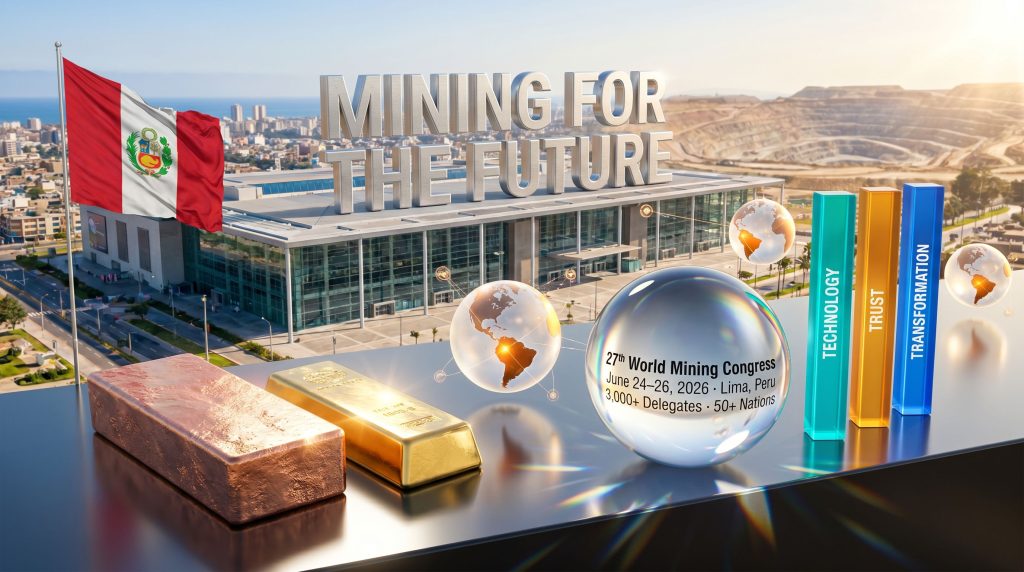
From June 24 to 26, 2026, Lima becomes the undisputed focal point of the global mining industry as it hosts the 27th edition of the World Mining Congress (WMC 2026). Organised by the Instituto de Ingenieros de Minas del Perú (IIMP), the congress is one of the most technically rigorous and geopolitically significant gatherings in the international mining calendar. With more than 3,000 registered delegates representing over 50 nations converging on the Lima Convention Center in San Borja, the scale and ambition of this edition signal something larger than a conventional industry event.
When big ASX news breaks, our subscribers know first
Event Snapshot: The Core Facts About WMC 2026
Before examining what makes this congress strategically important, it helps to have the foundational details clearly mapped.
| Detail | Information |
|---|---|
| Event Name | World Mining Congress 2026 (WMC 2026) |
| Edition | 27th World Mining Congress |
| Dates | June 24 to 26, 2026 |
| Location | Lima Convention Center, San Borja, Lima, Peru |
| Organiser | Institute of Mining Engineers of Peru (IIMP) |
| Theme | Mining for the Future |
| Registered Participants | 3,000+ delegates |
| Countries Represented | 50+ nations |
| Official Website | wmc2026.org |
The congress has been declared of interest by Peru's Ministry of Energy and Mines (Minem), reflecting its perceived significance to the country's economic and industrial agenda. The Lima Convention Center in San Borja provides the logistical infrastructure to handle this scale, offering exhibition halls, plenary theatres, and breakout spaces capable of supporting a genuinely international programme across three intensive days.
Peru's Mining Identity and Why Lima Is the Right Host
Venue selection for a congress of this calibre is never arbitrary. Lima's selection as host city reflects Peru's standing as one of the world's most consequential mining jurisdictions, and the numbers substantiate that claim comprehensively.
Peru consistently ranks among the top five global producers of several critical and precious metals simultaneously, including:
- Copper (second largest global producer)
- Zinc (second largest global producer)
- Lead (third largest global producer)
- Gold (sixth largest global producer)
- Silver (second largest global producer)
This breadth of production across multiple commodity classes is relatively uncommon and positions Peru as a multi-mineral jurisdiction rather than a single-commodity dependent economy. For a congress centred on critical minerals and the energy transition, hosting in Lima creates an immediate and authentic connection between the venue and the subject matter. Delegates are not simply attending a conference in an interesting country; they are operating within one of the world's most consequential mineral landscapes.
Beyond the geology, Peru's mining sector contributes roughly 10% of GDP and accounts for approximately 60% of the country's total export revenues, according to figures from Peru's Ministry of Energy and Mines. These economic dependencies make the governance and future of mining a genuinely live policy question, not an academic one, for the Peruvian state.
The Three-T Framework: Technology, Trust, and Transformation
Every edition of the World Mining Congress is anchored to a central theme, and the 2026 edition has adopted Mining for the Future as its intellectual organising principle. What gives this theme structural coherence is a three-dimensional framework built around Technology, Trust, and Transformation, which shapes the programme architecture across all plenary sessions, technical tracks, and policy roundtables.
Technology
The technology dimension of WMC 2026 encompasses artificial intelligence, automation, machine learning, and digital twin applications in resource extraction. This is not forward-looking speculation; it reflects operational realities already unfolding across major mining operations globally.
Industry analysis has suggested that AI integration across mining operations could unlock productivity improvements of up to 40%, though realising those gains depends heavily on governance frameworks, data infrastructure, and workforce capability. At WMC 2026, technical sessions are expected to examine specific applications ranging from predictive maintenance systems to autonomous haulage networks and real-time geological modelling.
Trust
The trust dimension addresses what the mining industry refers to as social licence to operate, the informal but essential permission that communities, regulators, and civil society grant to mining projects. Without it, even the most technically sound and economically viable projects face delays, protests, and legal challenges that can erode returns entirely.
In Latin America specifically, this issue carries acute weight. The region has seen numerous mining projects delayed or suspended due to community opposition, and Peru itself has experienced significant social conflict around mining operations in regions including Cajamarca and Apurímac. The IIMP has been vocal about the need to accelerate formal mining expansion while simultaneously combating illegal and informal extraction, which undermines both environmental standards and community trust.
Transformation
The transformation pillar situates mining within the broader energy transition narrative. Furthermore, mining electrification and decarbonisation of the global economy requires enormous volumes of copper, lithium, cobalt, nickel, and rare earth elements, and mining is the origin point for all of them. This creates a structural paradox: achieving a cleaner energy future requires significantly expanding the environmental footprint of resource extraction, at least in the near to medium term.
WMC 2026 is expected to engage this paradox directly, examining decarbonisation pathways for mining operations themselves, including electrification of fleets, green hydrogen applications in processing, and renewable-powered mine sites.
Programme Structure: What Delegates Can Expect
The three-day programme at WMC 2026 is designed to serve multiple professional audiences simultaneously, from senior executives and government ministers to engineers, researchers, and early-career mining professionals.
| Session Type | Focus Area |
|---|---|
| Plenary Conferences | Global policy, energy transition, critical minerals |
| Technical Sessions | Engineering, safety, operational efficiency |
| Innovation Showcases | AI, automation, clean technology |
| Networking Events | Cross-sector partnership development |
| Commercial Exhibition | Equipment, services, and technology providers |
| Academic Day | Student and researcher engagement |
Among the confirmed programme highlights is a keynote session on June 25 featuring Rohitesh Dhawan, President and CEO of the International Council on Mining and Metals (ICMM), one of the mining industry's most influential global governance bodies. The ICMM represents the world's largest mining and metals companies by market capitalisation, and Dhawan's participation signals the congress's relevance to the industry's highest level of strategic leadership.
The Academic and Student Programme: Investing in the Talent Pipeline
One of the less-discussed but strategically significant elements of WMC 2026 is its dedicated Academic Day, which creates a structured pathway for students, researchers, and academic institutions to engage with the congress programme. This initiative reflects a broader recognition within the mining sector that the industry faces a genuine talent pipeline challenge.
Technical abstract submissions for the peer-reviewed programme closed on August 31, 2025, with accepted papers forming the backbone of the academic technical sessions. The rigour of this process, involving external review and selection, distinguishes WMC from purely commercial industry events and reinforces its credibility as a venue for knowledge generation, not just knowledge consumption.
The integration of academic programming into WMC 2026 serves a dual purpose: it exposes the next generation of mining professionals to the sector's most pressing challenges, and it channels emerging research into conversations where it can influence operational and policy decisions.
The next major ASX story will hit our subscribers first
Economic and Tourism Impact: Beyond the Conference Floor
The arrival of 3,000 international delegates over three days generates economic ripple effects well beyond the conference centre. Sectors including hospitality, gastronomy, transport, and professional services all benefit from the concentrated spending of an international professional cohort, many of whom extend their visits before or after the congress.
The post-congress programme includes a technical visit to the Cerro Verde copper mine in Arequipa, one of the largest copper operations in the world, operated by Freeport-McMoRan. This visit provides delegates with direct operational exposure to a world-class open-pit copper mine and situates Peru's mining credentials in a tangible, observable context rather than an abstract one.
The congress also benefits from a rare calendrical coincidence. The opening day of WMC 2026 falls on June 24, the same date as Inti Raymi, the Festival of the Sun, an ancient Incan ceremony celebrated most spectacularly in Cusco. This alignment creates an unusual dual draw for international visitors, combining professional engagement with access to one of South America's most distinctive cultural experiences. Official tourism itineraries covering Lima, Cusco, and Arequipa have been prepared for delegates and accompanying guests.
Addressing Illegal Mining: The Governance Challenge Behind the Theme
Any honest accounting of Peru's mining sector must confront the issue of illegal and informal extraction, which represents one of the most significant structural challenges facing the country's industry. Illegal gold mining in particular has caused severe environmental damage across regions including Madre de Dios, with satellite imagery documenting the destruction of hundreds of thousands of hectares of Amazon rainforest.
The IIMP has publicly argued that accelerating the formalisation of mining activity and strengthening enforcement against illegal operators is essential for Peru to realise the full economic and reputational value of its mineral endowment. At WMC 2026, this dimension of the trust framework is expected to feature prominently in regulatory discussions, with international perspectives offering comparative frameworks from jurisdictions that have navigated similar formalisation challenges.
How WMC Compares to Other Major Mining Events
Understanding where WMC fits in the global mining event landscape helps clarify what it uniquely offers and why Lima's edition matters strategically. For instance, PDAC conference insights demonstrate how different events serve distinct purposes within the broader industry calendar.
| Event | Location | Frequency | Primary Focus | Typical Attendance |
|---|---|---|---|---|
| World Mining Congress | Rotating (Lima 2026) | Biennial | Technical + Policy + Innovation | 3,000+ |
| PDAC | Toronto, Canada | Annual | Exploration + Investment | 25,000+ |
| Mining Indaba | Cape Town, South Africa | Annual | African Mining + Investment | 6,000+ |
| Mines and Money | London / Global | Annual | Mining Finance + Investment | 2,000+ |
WMC's biennial cadence is itself strategically distinctive. Rather than producing an annual gathering that can become routine, the two-year cycle creates space for meaningful shifts in industry consensus to develop between editions. Each congress therefore carries a weight of accumulated change, making the proceedings more substantive and the outputs more durable as reference points for policy and practice.
The rotating host city model also ensures that WMC does not calcify around any single geographic or institutional perspective. Hosting in Lima in 2026 brings Latin American realities, from social licence challenges to artisanal mining governance to the specific geology of the Andes copper belt, into the centre of a conversation that has historically been shaped by Northern Hemisphere institutional frameworks.
Geopolitical Signalling: Latin America's Ascent in the Minerals Order
Hosting the World Mining Congress in Lima carries geopolitical meaning that extends well beyond Peru's borders. The broader Latin American region holds extraordinary concentrations of the minerals most critical to the energy transition: Chile and Peru together account for roughly 40% of global copper reserves, while Bolivia, Chile, and Argentina collectively hold the vast majority of the world's identified lithium resources in the so-called Lithium Triangle.
This concentration of strategic minerals in a single region creates both opportunity and complexity. International capital is increasingly attentive to Latin American mining jurisdictions, as evidenced by the growing number of copper partnerships between major producers and junior explorers. However, so are geopolitical actors seeking to secure supply chains. The shifting mining geopolitics of the region means WMC 2026 arrives at a moment when these competing interests are converging, and Lima provides a neutral but authoritative venue where governments, companies, and civil society can engage those tensions through structured dialogue rather than bilateral deal-making alone.
For neighbouring mining economies including Chile, Colombia, Bolivia, and Brazil, WMC 2026 also generates indirect visibility, reinforcing the region's collective identity as a critical minerals powerhouse at a moment when that identity carries genuine strategic value.
Frequently Asked Questions About the World Mining Congress in Lima
When and where is the World Mining Congress 2026?
WMC 2026 runs from June 24 to 26, 2026, at the Lima Convention Center in San Borja, Lima, Peru.
Who organises the World Mining Congress?
The 2026 edition is organised by the Instituto de Ingenieros de Minas del Perú (IIMP), with the event declared of interest by Peru's Ministry of Energy and Mines.
What is the theme of WMC 2026?
The central theme is Mining for the Future, structured around the Technology, Trust, and Transformation framework.
How many delegates are expected at WMC 2026?
More than 3,000 participants from over 50 countries are registered for the event.
Can students and academics attend WMC 2026?
Yes. A dedicated Academic Day is integrated into the programme, and a peer-reviewed technical paper process was open for submissions until August 31, 2025.
What is the Cerro Verde technical visit?
A post-congress excursion to the Cerro Verde copper mine in Arequipa, one of the world's largest open-pit copper operations, has been organised for interested delegates.
Where can I find official information about WMC 2026?
The official WMC 2026 portal contains full details on session schedules, speaker announcements, and registration.
What Industry Stakeholders Should Watch Coming Out of Lima
The outcomes of WMC 2026 will be worth tracking carefully across several dimensions. First, any consensus positions emerging from the plenary sessions on critical minerals governance and social licence frameworks will likely influence how multilateral bodies and national governments frame mining policy over the following two to three years.
Second, the commercial exhibition and networking activity will provide signals about where private capital is concentrating its attention within the sector, whether that is automation technology, processing innovation, or specific commodity classes. Third, the academic programme outputs will eventually feed into peer-reviewed literature that shapes engineering and operational practice across the industry's next generation of practitioners.
Lima's hosting of the World Mining Congress in Lima is not simply a logistical achievement for Peru. It is, consequently, a reflection of a reordering in global mining influence, one that places Latin America's geological realities, governance challenges, and transformation potential at the centre of the industry's most important conversations precisely when those conversations matter most.
Readers seeking further information on session schedules, speaker announcements, and registration details can visit the official event portal. For broader context on the congress's place within the global mining events landscape, the Global Mining Review provides additional coverage of WMC 2026 and its significance to the international industry.
Want to Capitalise on the Next Major Mineral Discovery Emerging From Latin America's Critical Minerals Boom?
As global mining dialogue shifts to Latin America's extraordinary copper and lithium endowment, Discovery Alert's proprietary Discovery IQ model delivers real-time ASX mineral discovery alerts, instantly transforming complex geological announcements into actionable investment insights — explore historic discoveries and their returns to understand the opportunity, then begin your 14-day free trial to position yourself ahead of the market.