August 14, 2026
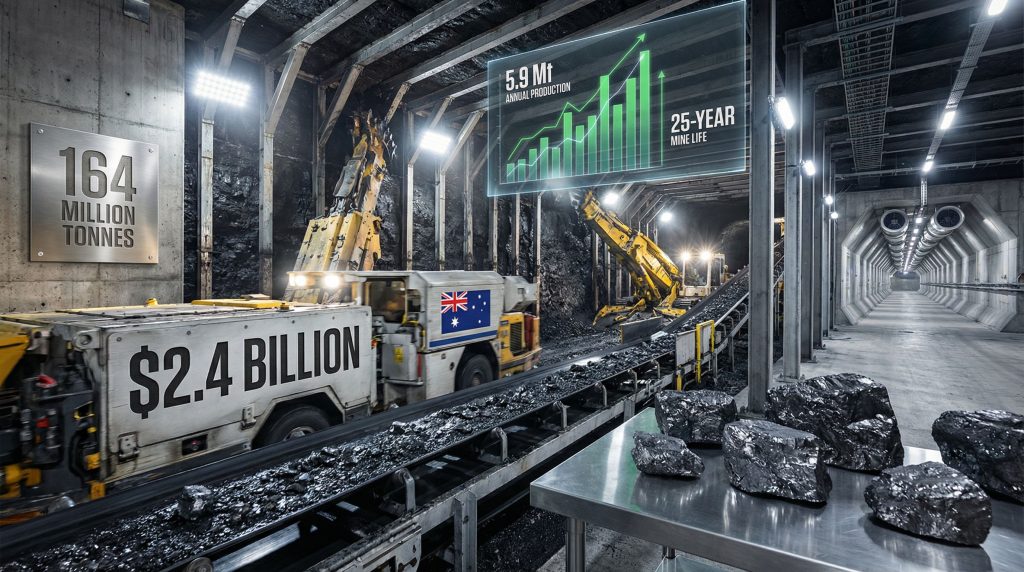
The Australian coal sector is witnessing significant consolidation as companies pursue strategic acquisitions to enhance their metallurgical coal portfolios. This Yancoal Kestrel Coal Mine acquisition, valued at US$2.4 billion, represents one of the largest coal sector transactions in recent years. The deal reflects broader mining consolidation trends where scale advantages and geographic positioning determine competitive sustainability in volatile commodity markets.
The transaction occurs amid challenging market conditions for Australian resource exports challenges, particularly as traditional thermal coal demand faces headwinds. However, metallurgical coal maintains strong fundamentals linked to global steel production requirements. Companies with diversified portfolios are repositioning their assets to capture premium pricing opportunities, particularly those serving Japanese, Korean, and Southeast Asian steelmaking industries.
Strategic Forces Driving Major Coal Consolidation in 2026
Asian Steel Demand Fundamentals Creating Premium Asset Competition
Metallurgical coal markets demonstrate fundamentally different supply-demand dynamics compared to thermal coal segments. Asian steelmakers, particularly in Japan, Korea, India, and Southeast Asia, require consistent access to high-quality coking coal for blast furnace operations. This creates sustained demand even as energy transition policies target thermal coal consumption.
Underground metallurgical coal operations command significant pricing premiums due to superior coal quality specifications. These include lower ash content, optimal volatile matter levels, and enhanced coking properties essential for steel production. The strategic positioning for long-term steelmaking contracts has intensified as Asian buyers prioritise supply chain security over spot market transactions.
Japanese and Korean steel mills, facing domestic resource constraints, increasingly seek multi-year off-take agreements with reliable Australian producers. This shift toward contracted supply arrangements reduces price volatility exposure for producers whilst providing volume certainty that supports capital-intensive underground mining operations.
Critical market dynamics include:
- Asian steel production capacity utilisation rates remaining elevated despite global economic uncertainties
- Premium pricing differentials for metallurgical coal reaching multi-year highs
- Supply chain security considerations driving longer-term contractual arrangements
- Underground coking coal reserves becoming increasingly scarce globally
Capital Allocation Patterns Among ASX-Listed Resource Giants
Australian resource companies have demonstrated renewed confidence in coal sector fundamentals through substantial capital deployment in strategic acquisitions. The Yancoal Kestrel Coal Mine acquisition, valued at US$2.4 billion, exemplifies this trend toward premium asset consolidation. This transaction represents one of the largest coal sector deals in recent years, signalling institutional investor confidence in medium-term coal demand outlooks.
Yancoal's share price performance, climbing 48% over the preceding 12 months compared to 15% growth for the S&P/ASX 200 Index, reflects broader market recognition of strategic coal asset scarcity. This outperformance suggests investors view coal consolidation strategies as value-enhancing, particularly when transactions improve metallurgical coal exposure and operational scale advantages.
Moreover, companies are increasingly adopting sophisticated investment strategy components in their decision-making process. Furthermore, many are utilising various capital raising methods to fund these strategic acquisitions.
The capital allocation decision-making process increasingly emphasises:
- Risk-adjusted returns analysis through diversified payment structures combining upfront consideration and performance-linked contingent payments
- Operational synergy identification focusing on geographic clustering and shared infrastructure utilisation
- Reserve quality assessment prioritising long-life, high-grade metallurgical coal assets
- Market positioning enhancement through scale advantages in customer negotiations
When big ASX news breaks, our subscribers know first
Kestrel Transaction's Operational Profile Transformation
Production Portfolio Rebalancing: From Thermal to Metallurgical Focus
The Yancoal Kestrel Coal Mine acquisition fundamentally reshapes Yancoal's production composition, increasing pro-forma metallurgical coal exposure to 22% of total output. This rebalancing represents a strategic pivot away from thermal coal commodity markets toward premium metallurgical coal segments serving Asian steelmakers.
| Production Metrics | Pre-Acquisition | Post-Kestrel Addition |
|---|---|---|
| Metallurgical Coal % | ~15% | 22% |
| Annual Production Addition | – | 5.9 Mt (100% basis) |
| Geographic Concentration | Multiple regions | Enhanced Bowen Basin presence |
| Mine Life Extension | – | 25-year asset addition |
Kestrel's 5.9 million tonnes annual production capacity on a 100% basis provides substantial incremental output. Yancoal is acquiring an 80% interest yielding approximately 4.7 million tonnes of attributable annual production. This addition enhances Yancoal's ability to serve multiple Asian customers simultaneously, reducing customer concentration risk whilst improving negotiation leverage with major steelmakers.
Operational Synergies and Integration Economics
Geographic proximity advantages represent a cornerstone of the transaction's strategic rationale. Kestrel's location within Queensland's Bowen Basin positions it adjacent to Yancoal's existing Middlemount and Yarrabee operations. This enables consolidated management structures and shared infrastructure utilisation.
Key synergy opportunities include:
- Rail infrastructure optimisation through consolidated transportation arrangements and improved loading facility utilisation
- Port access coordination leveraging existing agreements and reducing logistics costs per tonne shipped
- Management consolidation eliminating duplicative administrative and operational oversight functions
- Technical expertise sharing applying underground mining best practices across the expanded portfolio
These operational efficiencies generate measurable cost reduction opportunities, particularly in logistics and administrative expenses. Shared rail and port infrastructure access reduces per-unit transportation costs. Additionally, consolidated management structures eliminate redundant personnel and systems expenses.
Reserve Base Extension and Mine Life Economics
Kestrel contributes 164 million tonnes of marketable coal reserves supporting a 25-year mine life. This provides exceptional production visibility extending to approximately 2051. Consequently, this extended operational horizon offers significant advantages for long-term financial planning, customer relationship management, and stakeholder value creation.
The reserve quality specifications meet premium metallurgical coal standards required by Asian steelmakers, including:
- Low ash content optimising blast furnace efficiency and reducing steelmaking costs
- Appropriate volatile matter levels ensuring optimal coking properties for steel production
- Minimal sulphur content meeting environmental specifications for steel mill operations
- Consistent quality characteristics supporting long-term off-take contract requirements
Financial Engineering Underpinning the $2.4 Billion Structure
Deal Architecture: Upfront vs. Contingent Payment Analysis
The transaction employs sophisticated financial structuring combining immediate cash consideration with performance-linked contingent payments. This bifurcated approach allows Yancoal to defer approximately 23% of total consideration ($550 million ÷ $2.4 billion) based on future operational outcomes.
Payment Structure Breakdown:
| Component | Amount (US$ millions) | % of Total | Payment Timing |
|---|---|---|---|
| Upfront Cash | $1,850 | 77% | Transaction completion |
| Contingent Payments | $550 | 23% | Over 5 years |
| Total Consideration | $2,400 | 100% | Mixed timeline |
This structure provides risk mitigation through several mechanisms:
- Performance validation ensuring asset operational metrics meet projections before full payment
- Seller incentive alignment maintaining operational focus during transition periods
- Cash flow management spreading payment obligations across multiple years
- Financing flexibility reducing immediate debt facility requirements
Funding Strategy and Capital Structure Implications
Yancoal's funding approach combines internal cash reserves with external debt facilities, optimising capital costs whilst maintaining balance sheet flexibility. The US$1.2 billion syndicated acquisition facility represents approximately 50% of total transaction value, indicating balanced leverage deployment.
Funding Sources:
- US$1.2 billion syndicated acquisition loan facility providing primary transaction funding
- US$200 million working capital facility supporting operational requirements and integration costs
- Available cash reserves covering remaining upfront consideration requirements
- Future cash flows from existing operations supporting contingent payment obligations over five years
The syndicated facility structure distributes refinancing risk across multiple lending institutions. Furthermore, it potentially secures favourable interest rates through competitive bidding processes. Working capital facilities provide operational flexibility during integration periods when cash flow patterns may experience temporary disruption.
Return on Investment Projections and Payback Analysis
Investment returns depend critically on metallurgical coal price assumptions and operational execution capabilities. With 5.9 million tonnes annual production capacity and premium pricing for high-quality coking coal, cash flow generation potential appears substantial under favourable commodity price scenarios.
Key return drivers include:
- Metallurgical coal price premiums over thermal coal maintaining historical spreads
- Production volume optimisation achieving full capacity utilisation across the 25-year mine life
- Cost synergy realisation through shared infrastructure and consolidated management
- Asian market access securing long-term off-take agreements with premium pricing
Break-even analysis suggests the transaction requires metallurgical coal prices to maintain levels supporting positive free cash flow generation after debt service obligations. Given the extended mine life and substantial reserve base, sensitivity to short-term price volatility is reduced compared to shorter-duration mining assets.
Impact on Australia's Coal Export Competitiveness
Market Share Consolidation Among Australian Coal Producers
The Yancoal Kestrel Coal Mine acquisition positions Yancoal as one of Australia's largest underground metallurgical coal producers. This enhances competitive positioning relative to global mining majors. Furthermore, this consolidation creates a more concentrated supply structure within Australian coal exports, potentially improving pricing power and customer negotiation leverage.
Market concentration effects include:
- Enhanced negotiation leverage with Asian steelmakers through increased production scale
- Operational efficiency improvements via shared infrastructure and consolidated management
- Customer diversification opportunities serving multiple Asian markets from consolidated operations
- Supply reliability enhancement providing backup capacity during operational disruptions at other mines
Asian Buyer Relationship Dynamics and Contract Negotiations
Asian steelmakers increasingly prioritise supply chain security and production reliability over purely price-driven procurement strategies. Yancoal's expanded metallurgical coal capacity enables the company to serve as a primary supplier to multiple Japanese, Korean, Indian, and Southeast Asian buyers simultaneously.
Strategic relationship advantages:
- Long-term contract capability offering multi-year supply agreements with volume certainty
- Quality consistency providing reliable specifications meeting steelmaking requirements
- Logistical reliability utilising established rail and port infrastructure for predictable delivery schedules
- Technical support offering metallurgical expertise and coal blending optimisation services
Competitive positioning against Canadian and US metallurgical coal exports benefits from geographic proximity to Asian markets. This reduces transportation costs and delivery times. Additionally, Australian coal quality specifications typically meet or exceed international alternatives, supporting premium pricing structures.
Regulatory and ESG Considerations Shaping the Transaction
Approval Timeline and Regulatory Risk Assessment
Transaction completion targets end of Q3 2026, requiring regulatory approval processes to conclude within approximately six months. This timeline suggests confidence in obtaining necessary approvals, though several regulatory hurdles must be navigated successfully.
Key approval requirements include:
- Competition review by the Australian Competition and Consumer Commission (ACCC) assessing market concentration effects
- Foreign investment approval considering Yancoal's Chinese ownership structure and strategic asset implications
- Queensland state mining lease transfers ensuring operational permits transition smoothly to new ownership
- Environmental compliance verification confirming ongoing rehabilitation obligations and environmental management systems
Environmental and Social Governance Integration Challenges
Underground metallurgical coal mining presents distinct environmental management challenges compared to surface thermal coal operations. Integration requires harmonising environmental management systems, community engagement protocols, and carbon emissions reporting across expanded operations.
The industry is increasingly focused on mining sustainability transformation initiatives. However, integration of ESG considerations remains complex, particularly for coal sector acquisitions.
ESG integration priorities:
- Environmental footprint management optimising water usage, waste management, and rehabilitation planning
- Community engagement enhancement maintaining positive relationships with local communities in the Bowen Basin region
- Scope 3 emissions reporting incorporating downstream steel production emissions into corporate sustainability frameworks
- Safety system integration ensuring consistent safety protocols across consolidated underground operations
Future M&A Activity Implications for Australian Resources
Valuation Benchmarks and Asset Pricing Trends
The US$2.4 billion Kestrel acquisition establishes significant valuation benchmarks for future Australian coal asset transactions. At approximately US$14.60 per tonne of marketable reserves ($2.4 billion ÷ 164 million tonnes), this transaction indicates premium pricing for high-quality, long-life metallurgical coal assets.
| Valuation Metrics | Kestrel Transaction | Industry Benchmark Range |
|---|---|---|
| Price per Reserve Tonne | US$14.60 | US$8-16 |
| EV/Annual Production | US$407 million | US$200-450 million |
| Mine Life Multiple | 25 years | 15-30 years |
| Premium to Thermal Assets | ~40-60% | 30-50% |
Strategic Asset Scarcity and Competition Intensification
Limited availability of large-scale, long-life metallurgical coal assets intensifies competition among strategic buyers and private equity investors. Quality underground mining assets with substantial reserves, established infrastructure, and proven operational track records command significant premiums in competitive auction processes.
Market dynamics driving asset scarcity:
- Regulatory constraints on new mining lease approvals limiting pipeline of new developments
- Capital intensity of underground mining development requiring substantial upfront investment
- Technical expertise requirements for successful underground operations limiting qualified operators
- Environmental approval complexity extending development timelines for new projects
This scarcity creates opportunities for smaller coal producers holding strategic assets. Furthermore, it intensifies consolidation pressures as larger operators seek to acquire remaining quality assets before competitors.
The next major ASX story will hit our subscribers first
What Does This Mean for Australian Coal Sector Investors?
Investment Thesis Validation for Long-Term Coal Demand
The Yancoal Kestrel Coal Mine acquisition validates investment themes supporting medium-term metallurgical coal demand sustainability. Asian industrialisation trends, particularly in India and Southeast Asia, continue driving steel consumption growth despite energy transition policies affecting thermal coal markets.
Demand sustainability factors:
- Infrastructure development requirements across emerging Asian economies necessitating substantial steel production
- Energy transition steel intensity as renewable energy infrastructure requires significant steel inputs for wind turbines, solar installations, and electrical grid expansion
- Industrial capacity expansion in developing economies supporting continued metallurgical coal consumption growth
- Steel recycling limitations maintaining primary steelmaking demand for coking coal inputs
Portfolio Optimisation Lessons for Resource Sector Investors
Strategic asset acquisition demonstrates key principles applicable across resource sector investment decisions. Quality asset scarcity drives premium valuations, whilst operational scale advantages provide sustainable competitive positioning in global commodity markets.
Investment strategy implications:
- Quality premium recognition justifying higher valuations for long-life, high-grade resource assets
- Geographic concentration benefits through operational synergies and shared infrastructure utilisation
- Product mix optimisation focusing on premium segments with sustained demand fundamentals
- Balance sheet flexibility maintenance enabling opportunistic acquisitions during market dislocations
Resource sector investors should prioritise companies with strategic asset portfolios, operational excellence capabilities, and balance sheet strength enabling value-accretive consolidation opportunities. According to recent Reuters reporting on the deal, the Australian coal sector consolidation wave likely continues as remaining quality assets attract competitive bidding from strategic buyers seeking scale advantages and premium product exposure.
For instance, ASX announcements regarding the transaction highlight the detailed financial and operational considerations underlying this strategic move. These demonstrate the complexity and thoroughness required for successful resource sector consolidation.
Investment in resource sector companies involves substantial risks including commodity price volatility, operational hazards, regulatory changes, and environmental liabilities. Past performance does not guarantee future results. Investors should conduct thorough due diligence and consider professional financial advice before making investment decisions.
Ready to Spot the Next Major Resource Consolidation Deal?
Discovery Alert's proprietary Discovery IQ model delivers real-time alerts on significant ASX mineral discoveries and strategic developments, instantly empowering subscribers to identify actionable opportunities ahead of the broader market. Begin your 14-day free trial today and secure your market-leading advantage in the rapidly consolidating Australian resources sector.