July 16, 2026
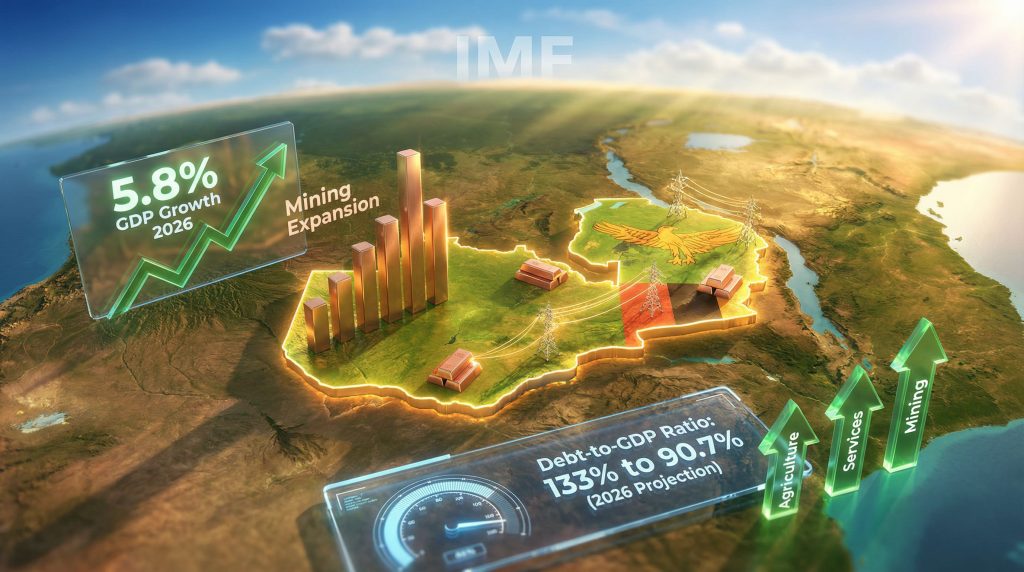
Zambia's economic landscape demonstrates significant potential as the IMF forecasts Zambia growth in 2026 at 5.8% real GDP expansion, reflecting substantial improvements across multiple sectors. This anticipated acceleration from the estimated 5.2% growth in 2025 signals strengthening fundamentals rather than temporary cyclical gains, positioning the nation for sustained development momentum.
Economic Foundation Assessment Driving Growth Momentum
The International Monetary Fund's projection of 5.8% real GDP expansion for Zambia in 2026 reflects underlying structural improvements across multiple economic sectors. This anticipated acceleration from the estimated 5.2% growth in 2025 signals strengthening fundamentals rather than temporary cyclical gains.
Power sector rehabilitation serves as the primary catalyst for this economic transformation. Electricity generation capacity restoration enables manufacturing facilities to operate at optimal levels while supporting mining operations that require consistent energy supply. The cascading effects extend throughout the economy as reliable power infrastructure attracts investment and reduces operational costs across industries.
Mining output expansion complements power sector recovery through enhanced production capabilities. Copper extraction operations benefit significantly from stable electricity supply, enabling processing facilities to maintain continuous operations. This synergy between energy availability and mineral production creates multiplicative effects on export earnings and government revenues.
Service sector strengthening represents the third pillar supporting growth acceleration. Financial services, telecommunications, and retail trade expand when underlying infrastructure improves. Urban centres particularly benefit from enhanced economic activity as employment opportunities increase across multiple sectors.
When big ASX news breaks, our subscribers know first
Sectoral Growth Engine Analysis
Power Generation Recovery as Economic Catalyst
Industrial capacity utilisation rates improve dramatically when electricity supply stabilises. Manufacturing enterprises that previously operated on reduced schedules due to power constraints can now plan continuous production cycles. This operational predictability reduces unit costs while improving product quality and delivery timelines.
The mining sector's optimisation through consistent power supply extends beyond immediate production gains. Processing facilities can maintain temperature-controlled environments essential for certain mineral extraction processes. Additionally, consistent power enables mining companies to implement advanced technologies that require stable energy inputs.
Service sector expansion accelerates when businesses can rely on uninterrupted electricity. Banking operations, telecommunications networks, and retail establishments require consistent power for digital systems and customer service delivery. This reliability attracts both domestic and foreign investment in service industries.
Mining Sector Performance Indicators
Copper production capacity reaches optimal levels through coordinated infrastructure improvements and technological upgrades. Furthermore, the copper production forecast indicates strong global demand that supports Zambia's expansion plans. Modern extraction equipment requires significant electrical input, making power sector recovery essential for mining efficiency gains.
Investment inflows support extraction technology upgrades that improve both production volumes and environmental compliance. International mining companies invest in advanced equipment when infrastructure constraints are resolved. These capital investments create employment opportunities while enhancing operational efficiency.
Export revenue generation strengthens foreign exchange reserves through increased mineral sales volumes and improved pricing negotiations. Consistent production schedules enable mining companies to fulfil long-term supply contracts, building reputation and market share in global commodity markets.
Employment creation in mining-dependent regions provides economic opportunities for local communities. Direct mining employment increases alongside indirect opportunities in transportation, equipment maintenance, and support services. This employment growth contributes to regional economic development and poverty reduction.
Debt Restructuring Impact on Economic Growth Prospects
Zambia's debt sustainability trajectory shows significant improvement through coordinated restructuring efforts and fiscal discipline measures. The projected decline from 133% debt-to-GDP ratio in 2023 to 90.7% in 2025 demonstrates substantial progress in debt management while maintaining economic growth momentum.
However, concerns about a broader sovereign debt crisis across emerging markets require careful monitoring. Zambia's restructuring success provides valuable lessons for other nations facing similar challenges.
| Debt Sustainability Metrics | 2023 | 2025 (Projected) | Trend Direction |
|---|---|---|---|
| Debt-to-GDP Ratio | 133% | 90.7% | ↓ Declining |
| Public Debt Classification | High Risk | Sustainable but High Risk | ↔ Stable |
| IMF Program Financing | $1.5B | $1.7B | ↑ Increasing |
| External Debt Service Coverage | Limited | Improving | ↑ Strengthening |
Budget consolidation measures focus on reducing government deficit while protecting growth-enhancing expenditures. Revenue mobilisation strategies improve tax collection efficiency without stifling private sector development. Public expenditure optimisation prioritises infrastructure investments that generate long-term economic returns.
Debt service management maintains creditor confidence through transparent communication and consistent payment schedules. International creditors respond positively to demonstrated fiscal discipline and structural reform implementation. This credibility enables access to additional financing when needed for development projects.
The restructuring process creates fiscal space for productive government spending while reducing debt service burdens. Lower debt service payments free resources for infrastructure development, education, and healthcare investments. This reallocation supports long-term growth while addressing social development needs.
IMF Extended Credit Facility Role in Economic Transformation
The 38-month Extended Credit Facility completion demonstrates sustained policy commitment and institutional capacity building. The program's $1.7 billion total value since August 2022 provided crucial support during economic transition periods while establishing frameworks for continued stability.
Program performance evaluation reveals mixed but generally satisfactory implementation across multiple reform areas. Quantitative performance criteria achievement shows strong fiscal discipline and macroeconomic management capabilities. However, some structural benchmarks experienced implementation delays that require continued attention.
Achieved Program Targets
- Fiscal deficit reduction within agreed parameters demonstrates government commitment to budget discipline
- Inflation control measures show positive trajectory toward target ranges
- Government expenditure management maintains spending discipline while protecting essential services
- Revenue collection improvements enhance fiscal sustainability without excessive tax burden increases
Implementation Challenges Requiring Attention
- Net international reserves falling short of targets indicate continued balance of payments pressures
- Payment arrears clearance experiencing delays in implementation across various government departments
- Private sector participation needing acceleration to achieve sustainable growth objectives
- Structural benchmark implementation showing uneven progress across different reform areas
The $190 million final disbursement supports continued macroeconomic stability while providing resources for growth-enhancing investments. These funds enable infrastructure development and institutional capacity building essential for sustained economic transformation.
Regional Economic Factors Influencing Growth Outlook
Southern African economic integration creates opportunities for trade expansion and value chain development. Regional partnerships enable Zambia to diversify export markets while accessing larger consumer bases. Cross-border investment flows support capital formation and technology transfer across multiple sectors.
Trade corridor development enhances export competitiveness through improved transportation infrastructure and reduced logistics costs. Rail and road connections to regional ports enable mining companies to access global markets more efficiently. These infrastructure improvements benefit agricultural exporters and manufacturers seeking regional market access.
Currency stability mechanisms reduce exchange rate volatility that historically constrained trade relationships. Regional monetary cooperation provides frameworks for managing external shocks and maintaining competitive exchange rates. This stability encourages cross-border investment and long-term business planning.
Global commodity market positioning affects export earnings through price volatility and demand fluctuations. Copper price trends significantly influence government revenues and foreign exchange availability. Mining industry evolution shows how technological advancement creates new opportunities for extraction processes.
Green transition demand creates new market opportunities for copper and other minerals essential for renewable energy technologies. Electric vehicle production and renewable energy infrastructure require significant copper inputs, potentially supporting long-term demand growth. This transition could provide sustained market support for Zambian mineral exports.
Key Risk Factors Threatening Growth Targets
Climate-Related Economic Vulnerabilities
Hydroelectric power dependency creates significant exposure to rainfall pattern variability. Drought conditions can severely impact electricity generation capacity, affecting industrial production and economic growth. The 2023-2024 drought demonstrated how climate events can disrupt economic activity across multiple sectors.
Agricultural sector risks extend beyond food security to include export earnings and rural employment. Weather-dependent crop yields influence domestic food prices and foreign exchange earnings from agricultural exports. Rural income volatility affects domestic demand patterns and urban migration flows.
Energy diversification needs become increasingly urgent as climate change intensifies weather pattern uncertainty. Solar and wind power development could reduce hydroelectric dependency while creating new investment opportunities. However, energy transition requires significant capital investment and technical expertise.
Infrastructure resilience building protects economic assets from climate-related damage while supporting continued production capabilities. Transportation networks, power generation facilities, and communication systems require climate adaptation measures. These investments enhance long-term economic stability while creating short-term employment opportunities.
Structural Economic Challenges
Mining sector concentration limits economic diversification while creating vulnerability to commodity price shocks. Over-reliance on copper exports exposes the economy to global mining disruptions and demand fluctuations. Diversification efforts require sustained investment in alternative industries and value-added processing capabilities.
Private sector development gaps constrain job creation and innovation capacity. Small and medium enterprise development requires improved access to credit, technical assistance, and market opportunities. Financial sector deepening enables broader access to capital while supporting entrepreneurship and business expansion.
Skills development needs must align with changing labour market demands as the economy diversifies. Technical and vocational training programmes require updating to match modern industrial requirements. Higher education institutions need resources to develop programmes supporting emerging industries and technologies.
The next major ASX story will hit our subscribers first
Poverty Reduction Alignment with Growth Projections
World Bank poverty trajectory analysis projects annual poverty reduction of one percentage point through 2027, indicating that economic growth translates into measurable social development gains. This reduction rate suggests that growth benefits reach lower-income populations through employment creation and improved service delivery.
Structural transformation efforts focus on moving rural populations beyond subsistence agriculture into more productive economic activities. Agricultural modernisation provides higher incomes for farmers while creating opportunities in agribusiness and food processing. These transitions require coordinated support including credit access, technical training, and market development.
Urban labour market improvements create employment opportunities for both rural migrants and existing urban residents. Manufacturing expansion and service sector growth provide formal employment with better wages and working conditions. These opportunities particularly benefit youth entering the labour market.
Social Development Integration
Human capital development through education system strengthening supports long-term economic transformation while providing immediate employment in education services. Teacher training programmes and infrastructure development create jobs while building capacity for future economic growth.
Healthcare access expansion improves labour productivity through better health outcomes while creating employment in medical services. Investment in healthcare infrastructure and training programmes generates immediate employment opportunities while supporting long-term economic development.
Social protection programmes provide economic stability for vulnerable populations while supporting domestic demand. Cash transfer programmes enable poor households to invest in education and small businesses. These programmes create multiplier effects as recipients spend money in local markets.
Gender equality initiatives maximise workforce participation by removing barriers to women's economic engagement. Female entrepreneurship support programmes create businesses and employment while improving household incomes. These efforts contribute significantly to overall economic growth and poverty reduction.
Medium-Term Economic Scenarios Beyond 2026
Optimistic Growth Pathway
Mining investment acceleration could drive industrial expansion beyond current projections if global demand for copper and other minerals continues growing. Advanced extraction technologies and processing capabilities would create higher-value exports while generating more local employment. This scenario assumes continued infrastructure development and political stability.
Agricultural modernisation reduces rural poverty through increased productivity and value-added processing. Irrigation infrastructure development and improved seed varieties increase crop yields while reducing climate vulnerability. Food processing industries create employment while adding value to agricultural products.
Energy sector diversification ensures power security while creating new industries around renewable energy technologies. Solar panel manufacturing and wind turbine assembly could develop domestic capabilities while serving regional markets. Energy exports to neighbouring countries provide additional revenue sources.
Baseline Scenario Assumptions
Sustained fiscal discipline maintains macroeconomic stability while providing resources for essential infrastructure development. Government spending priorities focus on growth-enhancing investments rather than consumption expenditures. This approach requires continued political commitment to reform programmes.
Gradual economic diversification reduces commodity dependence through manufacturing development and service sector expansion. This transformation occurs over multiple years as infrastructure improves and skills development programmes produce qualified workers. Progress depends on consistent policy implementation and private sector engagement.
Infrastructure development continuation supports productivity growth across all economic sectors. Transportation, communication, and power infrastructure improvements enable businesses to operate more efficiently while reducing costs. These investments require sustained financing and technical expertise.
Risk Scenario Considerations
Global economic slowdown could reduce export demand and commodity prices, significantly affecting government revenues and foreign exchange availability. Economic diversification efforts become more critical under this scenario as mining sector vulnerability increases. Domestic demand support becomes essential for maintaining growth momentum.
Climate change acceleration increases adaptation costs while potentially disrupting agricultural production and hydroelectric power generation. More frequent droughts and extreme weather events require increased investment in climate-resilient infrastructure. These costs could constrain resources available for other development priorities.
Regional instability spillovers affect trade relationships and investment flows essential for economic development. Political conflicts in neighbouring countries disrupt transportation routes and market access. The South Africa mining decline could impact regional supply chains and trade patterns, requiring careful attention.
International Development Partner Support for Growth Strategy
Multilateral Institution Engagement
World Bank project portfolios concentrate on infrastructure development and governance improvements that support long-term economic transformation. Transportation infrastructure projects improve market access while governance programmes enhance institutional capacity. These interventions address fundamental constraints to economic development.
African Development Bank initiatives support regional integration through cross-border infrastructure and trade facilitation programmes. Regional power pooling projects and transportation corridors benefit multiple countries while improving Zambia's connectivity. These partnerships leverage resources more effectively than individual country projects.
European Union partnership programmes enhance trade relationships through technical assistance and market access support. Trade facilitation programmes help Zambian businesses meet international standards while accessing European markets. These relationships provide alternatives to traditional commodity export dependence.
United Nations sustainable development alignment ensures that economic growth supports broader social and environmental objectives. Programme coordination across multiple UN agencies provides comprehensive support for development challenges. This approach addresses poverty, education, health, and environmental concerns simultaneously.
Private Sector Investment Facilitation
Foreign direct investment promotion targets manufacturing and value-added processing industries that create employment while generating export revenues. Investment promotion agencies work to attract companies seeking to establish regional production bases. These efforts focus on industries that can benefit from Zambia's location and resources.
Public-private partnership development leverages private capital for infrastructure projects while sharing risks and expertise. Power generation projects and transportation infrastructure benefit from private sector efficiency while maintaining public oversight. These partnerships enable larger infrastructure investments than government resources alone could support.
Small and medium enterprise support fosters entrepreneurship and innovation while creating employment opportunities. Business incubation programmes and microfinance initiatives help local entrepreneurs establish and grow businesses. These programmes contribute to economic diversification while building domestic business capacity.
Financial sector development improves credit access for businesses and individuals while supporting economic expansion. Banking system strengthening and capital market development provide financing options for investment and consumption. Mobile banking and digital financial services expand access to financial services in rural areas.
Furthermore, as Nkwazi Magazine reports on economic projections, the IMF forecasts Zambia growth in 2026 at 6.4%, suggesting even stronger momentum than previously anticipated. This optimistic outlook reflects sustained recovery efforts across multiple sectors.
This analysis reflects current economic conditions and policy frameworks as of early 2026. Economic projections involve uncertainties related to global market conditions, climate factors, and policy implementation effectiveness. Readers should consider these factors when evaluating investment or policy decisions based on this information.
Ready to Capitalise on Africa's Rising Mining Opportunities?
As Zambia's economy accelerates with projected 5.8% growth in 2026, Discovery Alert's proprietary Discovery IQ model delivers instant alerts on significant ASX mineral discoveries, helping investors identify actionable opportunities across global mining markets. Explore how major mineral discoveries can generate substantial returns and begin your 14-day free trial today to position yourself ahead of the market.