August 1, 2026
Understanding the Economic Context of Zambia's Mining Renaissance
The global copper supply landscape stands at a critical juncture where established mining regions face production constraints while emerging markets present both opportunities and complexities. This dynamic has intensified focus on Africa's Copperbelt region, where decades-old infrastructure meets modern extraction technologies in a delicate balance of economic revival and technical challenges. Furthermore, Zambia's Luanshya copper mine restart represents one of the most significant brownfield developments in recent African mining history.
The Strategic Importance of Africa's Copper Belt Revival
Zambia's Copperbelt Province has historically served as a cornerstone of global copper production, contributing significantly to the international supply chain that powers everything from electrical infrastructure to renewable energy systems. The region's geological advantages include high-grade ore deposits that have sustained mining operations for over a century, creating deep institutional knowledge and established transportation networks.
The economic multiplier effects of major mining operations extend far beyond immediate employment. When large-scale operations resume, they typically generate:
• Secondary employment in transportation, maintenance, and supply services
• Infrastructure upgrades including power grid improvements and road networks
• Regional business development through increased local purchasing power
• Technology transfer opportunities that enhance local technical capabilities
Zambia's Position in the Global Copper Supply Matrix
As Africa's second-largest copper producer, Zambia currently contributes approximately 800,000 metric tons annually to global copper markets. The country's ambitious scaling target aims to reach 3 million tons by 2031, representing nearly a fourfold increase that would significantly alter the global copper supply forecast.
| Major Copper Producers | Annual Production (2025) | Global Market Share |
|---|---|---|
| Chile | 5.6 million tons | 27% |
| Peru | 2.8 million tons | 14% |
| China | 2.1 million tons | 10% |
| Democratic Republic of Congo | 1.9 million tons | 9% |
| Zambia | 0.8 million tons | 4% |
When big ASX news breaks, our subscribers know first
How Does Chinese Investment Shape African Mining Operations?
The China Nonferrous Mining Corporation (CNMC) Model
China Nonferrous Mining Corporation's approach to African resource development represents a comprehensive investment strategy that extends beyond traditional extraction models. Their portfolio across the continent demonstrates systematic long-term planning rather than opportunistic asset acquisition, particularly evident in the Zijin Mining expansion across multiple African territories.
| CNMC African Operations | Investment Amount | Timeline | Production Capacity |
|---|---|---|---|
| Luanshya (Zambia) | $710 million | 2009-2030 | 100,000 tons/year |
| Chambishi (Zambia) | $350 million | 2003-ongoing | 150,000 tons/year |
| Sino Congo (DRC) | $820 million | 2007-ongoing | 40,000 tons/year |
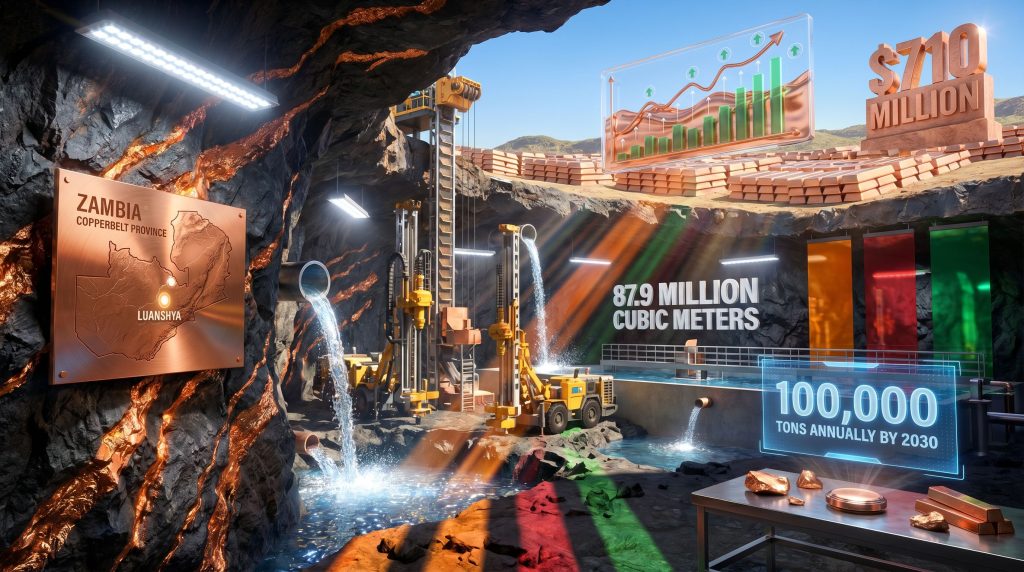
The $710 million redevelopment investment in Zambia's Luanshya copper mine restart represents one of the most ambitious brownfield mining projects in recent African history. This investment encompasses sophisticated dewatering systems, modern processing facilities, and comprehensive infrastructure rehabilitation.
Joint Venture Structures in Resource Development
The 80% foreign ownership versus 20% state participation structure reflects a carefully calibrated balance between international expertise and local stakeholder interests. This ownership arrangement provides several strategic advantages:
- Risk distribution between international capital and local institutional knowledge
- Technology transfer through mandatory local partnership requirements
- Revenue retention ensuring significant economic benefits remain within Zambia
- Operational flexibility allowing international management while maintaining local oversight
What Are the Technical Challenges of Restarting a Flooded Mine?
Dewatering Operations: Engineering at Scale
The removal of 87.9 million cubic meters of water from Luanshya represents one of the largest dewatering operations undertaken in African mining. To contextualise this scale, this volume equals approximately 35,000 Olympic-sized swimming pools or the annual water consumption of a city with 200,000 residents.
The technical complexity of this undertaking involves multiple interconnected systems. According to Mining Weekly, the engineering challenges are particularly demanding:
• Primary pumping stations capable of moving millions of litres per hour
• Water treatment facilities to manage contaminated outflow
• Structural integrity assessments of flooded infrastructure
• Progressive access restoration as water levels decrease
Investment Breakdown and Infrastructure Requirements
Investment Allocation Framework:
New shaft systems require advanced vertical transportation infrastructure capable of handling both personnel and heavy equipment at depths exceeding 1,000 meters. Modern concentrator plants incorporate automated ore processing capabilities that can achieve recovery rates above 90%. Supporting infrastructure encompasses power distribution networks, transportation logistics, and comprehensive safety systems.
The timeline from dewatering completion to production readiness typically spans 24-36 months for operations of this magnitude. This period encompasses equipment installation, safety system testing, workforce training, and gradual production ramp-up phases.
Phased Production Strategy Analysis
The strategic decision to pursue phased production reflects industry best practices for large-scale mine restarts. Upper mine operations targeting August 2026 focus on more accessible ore bodies that require minimal additional infrastructure development. Lower mine development scheduled for 2029 involves deeper extraction requiring the complete 28 Shaft redevelopment.
How Will 100,000 Annual Tons Impact Regional Economics?
Production Capacity in Global Context
What is Zambia's Luanshya mine expected to produce annually?
The Luanshya copper mine is projected to produce approximately 100,000 metric tons of copper annually by 2030 once fully operational, representing roughly 0.4% of global copper production. However, this production level positions Luanshya as a mid-tier operation within global copper markets, sufficient to supply the annual copper requirements for renewable energy projects totalling approximately 20 gigawatts of installed capacity.
Economic Multiplier Effects of Large-Scale Mining
Large-scale mining operations typically generate employment ratios of 1:4 to 1:6, meaning each direct mining job supports four to six indirect positions throughout the regional economy. For Luanshya's anticipated workforce of 3,000-4,000 direct employees, this translates to total regional employment impact affecting 15,000-20,000 individuals.
Regional business development manifests through several channels:
• Local procurement preferences for supplies, equipment, and services
• Transportation service demand for concentrate movement and supply delivery
• Financial services expansion including banking and insurance facilities
• Housing and commercial development to support expanded workforce
What Does This Mean for Global Copper Markets?
Supply Chain Security Considerations
Diversification away from concentrated copper production sources represents a critical strategic priority for manufacturing industries dependent on stable copper supplies. Zambia's Luanshya copper mine restart contributes to this diversification by reducing reliance on South American producers, who currently control approximately 41% of global supply.
| Copper Demand by Sector (2025) | Annual Consumption | Growth Rate |
|---|---|---|
| Construction & Infrastructure | 12.8 million tons | 3.2% annually |
| Electrical & Electronics | 4.6 million tons | 5.1% annually |
| Transportation (including EVs) | 2.9 million tons | 8.7% annually |
| Renewable Energy Systems | 1.4 million tons | 12.3% annually |
Investment Implications for Resource Sector Stakeholders
The timing of the restart coincides with projected copper supply deficits emerging in the late 2020s. Industry analysts anticipate global copper demand reaching 32-35 million tons annually by 2030, whilst new mine development struggles to keep pace with consumption growth. Consequently, effective copper investment strategies must account for these supply-demand imbalances.
Risk assessment for copper-dependent industries must consider several factors:
- Geopolitical stability in key producing regions
- Infrastructure resilience affecting transportation and processing
- Environmental regulations potentially constraining future production
- Energy costs impacting extraction economics
How Do Mining Restarts Compare to Greenfield Developments?
Cost-Benefit Analysis of Brownfield Projects
Restarting existing mining operations typically requires 60-70% of the capital needed for equivalent greenfield developments. This cost advantage stems from existing infrastructure including access roads, power connections, and established geological knowledge. Time-to-production advantages are equally significant, with brownfield projects averaging 3-5 years from investment decision to commercial production compared to 7-10 years for new mine development.
Case Study: Successful Mine Restart Models
Historical analysis of major mine restart projects reveals several critical success factors. Furthermore, modern mining industry evolution has refined these approaches:
• Comprehensive geological re-evaluation using modern exploration techniques
• Infrastructure condition assessments addressing two decades of deterioration
• Community relationship rebuilding engaging local stakeholders early in the process
• Environmental remediation addressing legacy contamination issues
The Luanshya restart model incorporates lessons learned from successful operations including Australia's Olympic Dam expansion and Chile's Chuquicamata underground transition.
The next major ASX story will hit our subscribers first
What Are the Broader Implications for Zambia's Mining Sector?
National Economic Development Strategy
Mining sector contribution to Zambia's GDP currently represents approximately 12% of total economic output, with copper exports accounting for over 70% of foreign exchange earnings. The successful restart of major operations like Luanshya supports broader economic diversification goals by generating tax revenues and foreign currency reserves that fund infrastructure development and social programmes.
Technology transfer opportunities embedded within Chinese investment partnerships include:
• Advanced extraction techniques improving ore recovery rates
• Environmental management systems meeting international standards
• Digital mining technologies enhancing operational efficiency
• Skills development programmes creating technical expertise for future projects
Regional Development and Community Impact
Local procurement policies typically mandate 15-25% of operational spending through regional suppliers, creating sustainable business opportunities beyond the mining operation's lifespan. Community development fund allocations, usually 2-3% of gross revenues, support education, healthcare, and infrastructure improvements in surrounding areas. In addition, these developments complement growing interest in copper and uranium investments across multiple African markets.
Future Outlook: What's Next for Zambian Copper Production?
Production Scaling Scenarios
Key Milestones for Zambia's Luanshya Copper Mine Restart:
- August 2026: Upper mine production commencement targeting initial output of 40,000 tons annually
- 2029: Lower mine operations begin, requiring completed 28 Shaft infrastructure
- 2030: Full capacity achievement of 100,000 tons annually
- 2031: Contribution to Zambia's national target of 3 million tons total production
Investment Climate and Expansion Opportunities
Additional exploration potential in surrounding areas suggests possible production expansion beyond initial 100,000 tons annually. Reuters reports that ZCCM-IH collaboration prospects for regional development include evaluation of adjacent mineral rights and shared infrastructure utilisation for smaller-scale operations.
Technology upgrades and operational efficiency improvements could potentially increase production capacity by 15-20% above design specifications through advanced processing techniques and extended operating hours.
Market Positioning and Competitive Advantages
Luanshya copper concentrate quality specifications typically achieve 28-32% copper content, positioning the product competitively within international markets. Transportation logistics to global markets benefit from established rail connections to ports in Tanzania and South Africa, providing multiple export route options that enhance supply chain resilience.
Long-term supply agreement potential with major consumers reflects growing demand for copper from sources with established environmental and social governance standards. The restart represents not just industrial revival, but strategic positioning within evolving global supply chain requirements.
This analysis is provided for educational purposes and should not be considered as investment advice. Copper market dynamics involve significant risks including commodity price volatility, geopolitical factors, and operational challenges that may affect actual production outcomes and investment returns.
Ready to Capitalise on the Next Major Mineral Discovery?
Discovery Alert instantly alerts investors to significant ASX mineral discoveries using its proprietary Discovery IQ model, turning complex mineral data into actionable insights. Understand why historic discoveries can generate substantial returns and begin your 14-day free trial today to position yourself ahead of the market.