June 14, 2026
Southern Africa's Economic Renaissance: How Zimbabwe's 8.5% Growth Ambition Redefines Regional Development
Zimbabwe's recent announcement of an 8.5% GDP expansion target for 2026 exemplifies a broader transformation across Southern Africa, where the Zimbabwe 2026 economic growth forecast positions the nation as a potential growth engine within the Southern African Development Community. This shift represents more than cyclical recovery; it signals fundamental structural changes that could reshape continental growth patterns for decades.
The magnitude of this projection becomes clear when contextualised against regional economic performance. While neighbouring economies face structural constraints and commodity dependencies, Zimbabwe's multi-sector recovery approach suggests a different development pathway. This growth target, if achieved, would represent the nation's strongest economic expansion since 2012 and fundamentally alter Southern Africa's economic landscape.
When big ASX news breaks, our subscribers know first
The Foundation of Zimbabwe's Economic Transformation
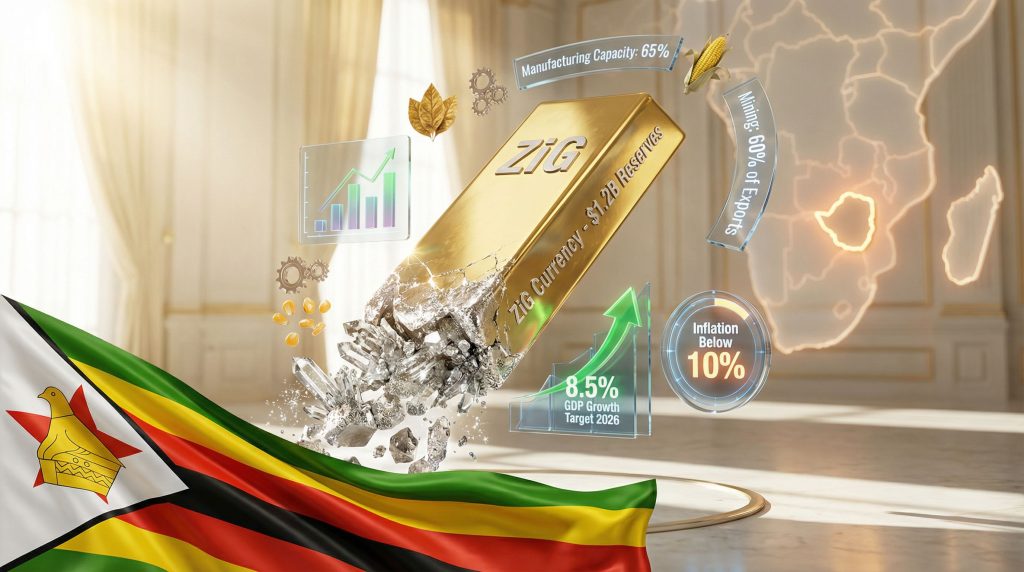
Zimbabwe's bold economic projection rests on substantial monetary and fiscal reforms that address the root causes of previous economic instability. The introduction of the Zimbabwe Gold (ZiG) currency has established unprecedented monetary stability, with foreign exchange reserves exceeding $1.2 billion for the first time since 2008. This gold-backed monetary system provides critical anchoring against the monetary debasement that historically triggered hyperinflationary episodes.
The significance of this achievement extends beyond absolute figures. Zimbabwe's current foreign exchange reserves represent an 18-year high, demonstrating sustained institutional commitment to monetary discipline. This stability foundation enables longer-term planning and investment decisions that were previously impossible during periods of currency volatility, particularly when considering gold market trends.
Key Monetary Stability Indicators:
- Foreign exchange reserves: $1.2+ billion (highest since 2008)
- Inflation rate: Below 10% (first sub-10% reading since 1997)
- Currency backing: Gold reserves supporting ZiG stability
- Policy coordination: Fiscal-monetary alignment preventing previous conflicts
The inflation control achievement represents a 29-year milestone, with rates falling below 10% for the first time since 1997. This dramatic improvement reflects coordinated policy implementation between fiscal authorities and the central bank, moving away from the uncoordinated monetary financing that caused the 2008-2009 hyperinflation crisis. Furthermore, this approach demonstrates the effectiveness of gold as an inflation hedge in modern monetary systems.
Sectoral Drivers of Zimbabwe's Growth Renaissance
Mining Sector Leadership
Zimbabwe's extractive industries have reached record production levels across multiple commodities, with mining operations contributing approximately 60% of export earnings. This sector anchors the nation's growth strategy through platinum, gold, and lithium production that has achieved unprecedented output volumes.
The mining sector's role extends beyond production volumes to foreign exchange generation critical for currency stability. Zimbabwe's position as a globally significant platinum producer, particularly through Great Dyke reserves, provides sustained hard currency inflows that support the ZiG's gold backing mechanism. In addition, comprehensive mineral exploration insights reveal significant untapped potential across the nation's geological formations.
Critical Mining Production Achievements:
- Platinum production at record levels from Great Dyke operations
- Gold output increases supporting currency reserves
- Lithium production expansion meeting global battery metal demand
- Export earnings providing 60% of foreign exchange requirements
Agricultural Recovery Dynamics
Zimbabwe's agricultural sector has achieved remarkable recovery, with output returning to pre-2000 levels in key regions. This restoration represents institutional progress following decades of production decline after land reform disruptions in the late 1990s.
The agricultural turnaround combines improved rainfall patterns with land productivity reforms that have enhanced farm-level efficiency. Tobacco, maize, and soybean production increases directly support both domestic food security and export revenue diversification beyond mining dependency.
Critical Context: The return to pre-2000 agricultural output levels reverses the production collapse that accompanied land expropriation policies, restoring Zimbabwe's historical position as a regional agricultural exporter.
Manufacturing Capacity Expansion
Industrial capacity utilisation has surged from 35% in 2020 to over 65% in 2025, representing a 30+ percentage point increase driven by improved electricity supply and foreign exchange availability for raw material imports.
This manufacturing recovery indicates broader economic rehabilitation beyond primary sector growth. The improved capacity utilisation suggests that Zimbabwe's industrial base, while diminished from historical levels, retained sufficient infrastructure to respond rapidly to improved operating conditions. Consequently, this transformation aligns with broader mining industry evolution patterns across Africa.
Regional Growth Context and Comparative Analysis
Zimbabwe's 8.5% growth projection significantly exceeds the Southern African Development Community average of 3.2% for 2026, positioning the nation among Africa's fastest-growing economies. This growth rate represents a remarkable shift that positions the Zimbabwe 2026 economic growth forecast as a regional standout.
Regional Growth Comparison Table:
| Country | 2026 Growth Projection | Primary Driver |
|---|---|---|
| Zimbabwe | 8.5% | Multi-sector recovery |
| Mozambique | 6.1% | LNG development |
| Zambia | 5.2% | Copper price recovery |
| Botswana | 4.1% | Diamond exports |
| South Africa | 2.8% | Structural constraints |
This growth differential suggests Zimbabwe would become a regional economic engine, reversing its previous status as a growth laggard. The nation's projected expansion rate would substantially outpace even South Africa's more advanced industrial economy, indicating significant catch-up growth potential.
The International Monetary Fund's more conservative 4.6% projection for Zimbabwe highlights different assumptions about reform implementation speed and external conditions. However, according to recent reports, Zimbabwe is forecasted to experience its fastest growth in 14 years, which supports the optimistic outlook. This variance between domestic government projections and international assessments reflects uncertainty around execution capabilities and external risk factors.
International Monetary Fund Engagement Framework
The IMF's staff-monitored programme provides crucial institutional credibility without immediate financial disbursement. This arrangement establishes clear reform benchmarks while building toward potential future financing eligibility.
Staff-Monitored Programme Components:
- Fiscal discipline enforcement mechanisms
- Exchange rate policy coordination
- Governance reform implementation
- Debt restructuring pathway development
The programme addresses Zimbabwe's $13 billion in arrears across multilateral institutions, providing a structured approach to debt resolution. This comprehensive debt restructuring requirement includes clearance of arrears to the World Bank, African Development Bank, European Investment Bank, and Paris Club countries.
Strategic Importance: The IMF engagement represents Zimbabwe's first formal international institutional support mechanism since the economic crisis, providing external validation of reform progress.
Investment Opportunities and Infrastructure Development
Zimbabwe's growth trajectory creates substantial infrastructure investment requirements across multiple sectors. The nation's development priorities reflect both immediate capacity constraints and longer-term competitiveness objectives.
Infrastructure Investment Priorities:
- Energy sector expansion: $2.3 billion electricity generation projects
- Transport network modernisation: $1.8 billion road and rail upgrades
- Digital infrastructure development: $950 million telecommunications advancement
- Water resource management: $1.2 billion irrigation and urban supply systems
Foreign direct investment inflows are projected to reach $1.5 billion in 2026, targeting mining concessions, agricultural processing facilities, and manufacturing operations. This investment scale represents a substantial increase from historical levels and reflects improved investor confidence in institutional stability. Moreover, successful implementation of these projects requires sophisticated gold investment strategies to maximise returns from the nation's precious metal resources.
The next major ASX story will hit our subscribers first
Risk Assessment and Vulnerability Analysis
Despite positive momentum, Zimbabwe's growth projections face significant vulnerability factors that could derail economic expansion. External risks include global commodity price volatility that could affect mining revenues critical to foreign exchange generation.
Primary Risk Factors:
- Commodity price volatility: Platinum, gold, and lithium price fluctuations affecting export revenues
- Climate change impacts: Agricultural production vulnerability to rainfall variations
- Regional political instability: Southern African security concerns affecting trade routes
- International sanctions persistence: Continued restrictions limiting access to global capital markets
Internal structural constraints include limited access to international capital markets, infrastructure capacity bottlenecks, and skills shortages in key sectors. These factors could limit the economy's ability to sustain high growth rates over extended periods.
Regional Economic Integration Implications
Zimbabwe's economic recovery strengthens critical trade corridors connecting landlocked Southern African nations to regional ports. The North-South Corridor benefits from improved Zimbabwean economic stability, enhancing trade facilitation across the SADC region.
The ZiG currency's stability could influence broader Southern African monetary coordination discussions, particularly as regional economies seek alternatives to rand-denominated transactions. This monetary innovation may provide a template for other nations seeking commodity-backed currency stability.
Regional Integration Benefits:
- Enhanced trade corridor functionality
- Improved cross-border investment flows
- Strengthened regional supply chain resilience
- Potential monetary cooperation frameworks
Furthermore, successful achievement of the Zimbabwe 2026 economic growth forecast would demonstrate the viability of alternative development models for post-crisis African economies.
Economic Transformation Sustainability
Zimbabwe's ability to sustain high growth rates depends on continued institutional reform implementation and external risk management. The nation's economic transformation differs from previous boom-bust cycles through institutional safeguards designed to prevent monetary policy reversals.
Constitutional fiscal responsibility frameworks and independent monetary policy coordination provide structural protections against the political pressures that historically drove inflationary financing. These institutional innovations represent learning from past economic crises.
The diversified export base development reduces dependency on single commodity price cycles that affected previous growth episodes. Agriculture, mining, and manufacturing sector coordination creates multiple growth engines supporting sustained expansion.
Future Outlook and Strategic Considerations
Zimbabwe's 2026 economic growth forecast of 8.5% represents both opportunity and challenge for Southern African development. If achieved, this growth rate would position Zimbabwe as a regional economic leader and demonstrate the potential for post-crisis economic transformation.
The sustainability of this growth trajectory depends on continued reform implementation, external risk mitigation, and regional integration advancement. Success would provide a development model for other African nations recovering from economic instability. Recent analysis indicates that Zimbabwe is set to outpace global economic growth, reinforcing the ambitious nature of these projections.
International investors and regional partners will closely monitor Zimbabwe's performance as an indicator of broader Southern African economic potential. The nation's ability to achieve its ambitious growth targets could reshape investment flows and development strategies across the continent. Consequently, the Zimbabwe 2026 economic growth forecast serves as a critical benchmark for evaluating post-crisis recovery models across emerging markets.
This analysis is based on government projections and international assessments that involve inherent uncertainties. Actual economic performance may vary significantly from forecasted levels due to external factors beyond government control. Readers should consider multiple sources when evaluating investment or policy decisions related to Zimbabwe's economic development.
Looking for Mining Investment Opportunities in Zimbabwe's Economic Renaissance?
Zimbabwe's ambitious 8.5% GDP growth target for 2026, driven by record-breaking mining production and substantial foreign exchange reserves, presents compelling opportunities for investors seeking exposure to Southern Africa's mineral wealth. Discovery Alert's proprietary Discovery IQ model delivers instant notifications on significant ASX mineral discoveries, empowering subscribers to identify actionable opportunities in companies with operations across Africa's resource-rich regions before broader market recognition occurs. Begin your 14-day free trial today to position yourself ahead of the market and discover why major mineral discoveries can lead to substantial returns.