
August 25, 2026
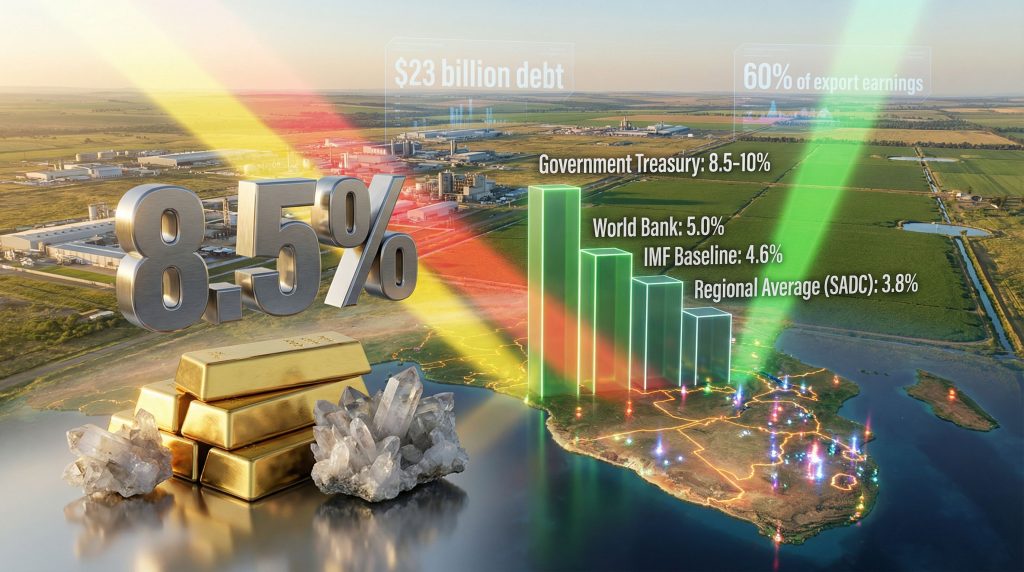
Zimbabwe's ambitious Zimbabwe economic growth outlook reflects broader trends reshaping Southern Africa's development trajectory. The nation's target of 8.5% GDP expansion for 2026 represents a significant departure from historical performance patterns and positions it as a potential outlier within regional economic dynamics. This acceleration stems from fundamental shifts in commodity market positioning, agricultural productivity recovery, and institutional reform implementation that align with broader mining industry evolution patterns.
Economic Fundamentals Driving Regional Growth Acceleration
Zimbabwe's ambitious economic projections reflect broader trends reshaping Southern Africa's growth trajectory. The nation's target of 8.5% GDP expansion for 2026 represents a significant departure from historical performance patterns and positions it as a potential outlier within regional economic dynamics. This acceleration stems from fundamental shifts in commodity market positioning, agricultural productivity recovery, and institutional reform implementation.
Regional Growth Comparison Framework
| Economy | 2026 Projection | Primary Growth Drivers | Risk Factors |
|---|---|---|---|
| Zimbabwe Target | 8.5% | Mining expansion, agricultural recovery | Exchange rate stability, debt sustainability |
| SADC Average | 3.8% | Commodity exports, infrastructure investment | Global demand volatility, climate risks |
| IMF Zimbabwe Baseline | 4.6% | Structural reforms, fiscal consolidation | Policy implementation consistency |
| World Bank Assessment | 5.0% | Agricultural normalisation, mining investment | Institutional capacity constraints |
The substantial variance between official projections and multilateral institution forecasts reflects fundamentally different assumptions about Zimbabwe's capacity for sustained transformation. Government optimism centres on the successful implementation of a staff-monitored programme with the International Monetary Fund, specifically designed to address the country's substantial debt burden and restore fiscal credibility.
This programmatic approach establishes quarterly benchmarks for monetary policy coordination between the Reserve Bank of Zimbabwe and the Treasury, public sector wage containment, and state enterprise financial discipline. Furthermore, the framework incorporates lessons learned from regional experiences with global mining royalties implementation.
The 4.6% baseline projection from the IMF incorporates historical patterns of policy implementation gaps and structural vulnerabilities that have constrained growth in previous cycles. This conservative approach reflects concerns about exchange rate pressures, debt sustainability challenges, and the consistency of reform execution across multiple government institutions.
When big ASX news breaks, our subscribers know first
Sectoral Drivers of Economic Transformation
Mining Sector Strategic Positioning
Zimbabwe's mineral endowment creates distinctive competitive advantages within global commodity supply chains. The extractive sector generates approximately 60% of export earnings, with production concentrated across multiple high-value minerals that reduce single-commodity dependence risks common among regional peers.
Key Mineral Production Breakdown:
- Gold operations: Contributing 40% of total mineral output with sustained price support above $2,000 per ounce
- Platinum Group Metals: Leveraging the Great Dyke geological formation's world-class resource concentration
- Lithium extraction: Emerging as a strategic supplier for global battery mineral demand growth
- Chrome and nickel: Supporting industrial metal requirements across multiple end-use markets
The Great Dyke geological formation represents one of the world's premier platinum group metals deposits, creating specific operational advantages through resource concentration and mining geometry. This geological endowment positions Zimbabwe within critical supply chains for automotive catalysts, industrial applications, and emerging hydrogen economy technologies.
Moreover, current platinum investment opportunities demonstrate the strategic importance of these resources in global markets. Lithium market dynamics present particularly compelling growth opportunities, with global demand expanding at 15-20% annually driven by electric vehicle adoption and energy storage system deployment.
Zimbabwe's lithium resources enter this market during a period of supply constraint and elevated pricing, creating favourable conditions for production expansion and capital investment. Additionally, developments in lithium industry innovations across other regions provide valuable benchmarks for technological advancement.
Investment Capital Requirements:
- Exploration and development: $2-3 billion over 2026-2028 period
- Processing infrastructure: Advanced beneficiation facilities for value addition
- Transportation logistics: Rail and road connectivity to regional ports
- Power generation: Industrial electricity supply for mining operations
Agricultural Recovery and Rural Income Effects
Zimbabwe's agricultural sector demonstrates extreme sensitivity to climatic conditions, with rainfall variability creating significant GDP volatility through rural income transmission mechanisms. The 2026 outlook incorporates improved precipitation patterns supporting substantial production increases across major crop categories.
Agricultural Production Projections:
- Maize harvest: 2.8 million tonnes representing a 40% increase from drought-affected 2024 levels
- Tobacco output: 250 million kg maintaining Zimbabwe's position in global markets
- Soybean expansion: 120,000 tonnes supporting import substitution strategies
Rural income improvements from agricultural recovery generate economy-wide multiplier effects through increased consumer spending, supporting retail trade, manufacturing sectors, and agro-processing activities. This transmission mechanism broadens growth beyond mining and creates employment opportunities across multiple economic sectors.
Climate risk assessment indicates Southern Africa's exposure to El Niño and La Niña weather patterns creates multi-year agricultural cycles affecting not only crop production but also hydroelectric power generation capacity. Improved precipitation forecasts for 2026 support both agricultural output and energy security, reducing constraints on manufacturing competitiveness.
Agricultural Value Chain Development:
- Primary processing: Grain milling, tobacco curing, oilseed crushing
- Export logistics: Quality standards, certification, transportation
- Financial services: Crop insurance, commodity financing, forward contracting
- Input supply: Fertiliser distribution, seed production, mechanisation
Institutional Assessment and Reform Implementation
International Monetary Fund Evaluation Framework
The IMF's staff-monitored programme establishes comprehensive benchmarks for macroeconomic stabilisation and structural reform implementation. This non-lending arrangement creates policy anchors for fiscal consolidation, monetary stability, and institutional capacity building without direct financial assistance.
Programme Implementation Benchmarks:
- Fiscal targets: Budget deficit reduction to 0.2% of GDP through revenue enhancement and expenditure control
- Monetary coordination: Alignment between central bank operations and treasury financing requirements
- Exchange rate management: ZiG currency stability through commodity backing and market confidence
- Debt sustainability: Arrears clearance strategies and creditor engagement processes
The 0.2% of GDP fiscal deficit target represents movement from historically elevated deficits toward near-balance, requiring substantial improvements in tax collection efficiency and public expenditure discipline. Revenue administration reforms focus on customs modernisation, income tax compliance, and mining sector fiscal transparency.
Exchange rate policy centres on the ZiG (Zimbabwe Gold) currency's credibility through commodity backing and consistent implementation of conversion mechanisms. Market confidence depends on maintaining sufficient gold and foreign currency reserves whilst reducing parallel market premiums that undermine official exchange rate stability.
According to the Zimbabwe Economic Outlook report from the African Development Bank, these structural reforms represent critical steps toward sustainable economic transformation.
World Bank Institutional Capacity Analysis
The World Bank's 5.0% growth projection reflects intermediate positioning between government optimism and IMF caution, incorporating specific concerns about institutional capacity and policy consistency. This assessment acknowledges reform progress whilst recognising implementation challenges across government agencies.
Institutional Capacity Constraints:
- Regulatory framework: Contract enforcement, property rights protection
- Administrative efficiency: Public service delivery, business registration processes
- Financial system: Banking sector stability, capital market development
- Infrastructure quality: Transportation networks, telecommunications, power generation
World Bank Risk Factors:
Government projections assume sustained policy implementation across multiple institutions with historically variable performance records. The intermediate growth scenario incorporates risks related to regulatory consistency, contract enforcement capabilities, and macroeconomic management coordination between fiscal and monetary authorities.
Regional Competitive Dynamics and Capital Allocation
Southern Africa Resource Economy Context
Zimbabwe's Zimbabwe economic growth outlook occurs within broader regional competition for international capital allocation among resource-rich economies. Comparative advantages include superior mineral diversity relative to single-commodity exporters, strategic geographic positioning between major Indian Ocean ports, and human capital assets despite emigration challenges.
Competitive Positioning Analysis:
- Geological endowment: Multi-commodity resource base reducing price volatility exposure
- Geographic location: Landlocked but strategically positioned for regional trade integration
- Human capital: Educational foundation despite skills migration to regional economies
- Infrastructure potential: Rehabilitation opportunities in transport, energy, telecommunications
Regional growth patterns show SADC economies expanding at an average 3.8% annually, driven primarily by commodity exports and infrastructure investment. Zimbabwe's targeted 8.5% growth would create a substantial performance differential, potentially attracting foreign direct investment and improving regional economic integration prospects.
International mining investment decisions increasingly incorporate geopolitical risk assessment alongside resource quality evaluation. Zimbabwe competes with established mining jurisdictions in Australia, Canada, and emerging opportunities in Southeast Asia for capital allocation within global portfolio strategies.
Asia-Pacific and Gulf Region Capital Competition
Southern Africa competes for extractive industry investment with resource-rich economies across Asia-Pacific and Gulf regions, requiring competitive positioning on multiple evaluation criteria beyond geological endowment alone.
Investment Decision Framework:
- Resource quality: Grade, tonnage, extraction complexity, processing requirements
- Regulatory stability: Mining codes, taxation frameworks, contract enforcement
- Infrastructure access: Transportation, power, water, telecommunications
- Political risk: Government stability, policy continuity, nationalisation risks
Capital flow patterns indicate increased Asian investment interest in African mining assets, particularly from Chinese, Indian, and Gulf Cooperation Council entities seeking strategic mineral supply security. Zimbabwe's diversified mineral base appeals to investors requiring multiple commodity exposure within single investment vehicles.
Monetary Stability and Exchange Rate Management
ZiG Currency Performance Assessment
The introduction of the ZiG (Zimbabwe Gold) currency represents a commodity-backed monetary system designed to anchor exchange rate stability through physical asset backing. Success depends on maintaining market confidence through consistent implementation of conversion mechanisms and adequate reserve management.
Currency Stability Requirements:
- Reserve adequacy: Gold and foreign currency backing sufficient for conversion demand
- Market confidence: Reducing parallel market premiums through policy credibility
- Implementation consistency: Uniform application of exchange rate rules across transactions
Historical precedent from Zimbabwe's hyperinflation experience (2007-2009) creates market scepticism requiring sustained demonstration of monetary discipline. The commodity backing approach attempts to address credibility deficits through tangible asset support rather than institutional promises alone.
Inflation Targeting Framework:
- Single-digit target: Inflation reduction to below 10% by end-2026
- Price stability: Coordination between fiscal and monetary authorities
- Expectations anchoring: Market confidence in sustainable policy implementation
The inflation targeting approach requires coordination between fiscal deficit reduction and monetary policy implementation, particularly regarding government financing requirements and central bank independence maintenance. Additionally, the current gold price forecast suggests favourable conditions for commodity-backed currency stability.
External Risk Factors and Scenario Analysis
Global Commodity Price Cycle Exposure
Zimbabwe's growth trajectory remains vulnerable to external price shocks affecting key export commodities, requiring scenario analysis incorporating multiple price pathway assumptions.
Commodity Price Scenarios:
- Upside case: Sustained gold prices above $2,000/oz with continued lithium demand growth
- Base case: Moderate commodity price stability with gradual demand recovery
- Downside case: Global recession reducing industrial metal demand and pricing pressure
Gold price stability above $2,000 per ounce provides crucial export revenue support, whilst lithium market dynamics depend on electric vehicle adoption rates and battery technology evolution. Platinum group metals pricing correlates with automotive production cycles and emerging hydrogen economy development.
Risk Mitigation Strategies:
- Commodity diversification: Multiple mineral production reducing single-price exposure
- Value addition: Processing capacity development for higher-margin products
- Financial hedging: Forward sales contracts and price risk management tools
- Market diversification: Multiple export destinations reducing buyer concentration risk
Climate Variability and Agricultural Volatility
Southern Africa's exposure to El Niño and La Niña weather patterns creates agricultural output uncertainty affecting both crop production and hydroelectric power generation capacity. Climate risk assessment indicates multi-year cycles requiring adaptation strategies.
Climate Impact Assessment:
- Rainfall patterns: El Niño conditions typically reduce regional precipitation by 15-25%
- Temperature variations: Heat stress affecting crop yields and livestock productivity
- Hydrological effects: River flow impacts on hydroelectric generation and irrigation
- Adaptation requirements: Drought-resistant crops, water storage, alternative energy
Agricultural volatility transmission mechanisms extend beyond rural income effects to manufacturing sector competitiveness through power generation reliability and input cost stability. Hydroelectric capacity depends on consistent rainfall patterns supporting both agricultural and industrial electricity requirements.
The next major ASX story will hit our subscribers first
Investment Implications and Capital Allocation Strategies
Sectoral Investment Prioritisation
Investment opportunities align with growth drivers across multiple time horizons, requiring strategic capital allocation considering risk-return profiles and development timeline requirements.
Near-term Investment Focus (2026-2027):
- Mining equipment: Extraction technology, processing machinery, transportation vehicles
- Agricultural inputs: Fertiliser distribution, irrigation systems, storage facilities
- Infrastructure rehabilitation: Road maintenance, railway upgrades, power transmission
Medium-term Development (2028-2030):
- Manufacturing capacity: Value-added processing, industrial production, export facilities
- Renewable energy: Solar power generation, grid integration, energy storage systems
- Financial services: Banking infrastructure, capital markets, insurance products
Long-term Transformation (2030+):
- Technology transfer: Advanced manufacturing, research and development, skills training
- Education infrastructure: Technical colleges, university expansion, vocational training
- Regional integration: Trade facilitation, transport corridors, customs harmonisation
Risk-Return Assessment Framework
Zimbabwe's investment profile reflects elevated potential returns offset by significant political and macroeconomic risks requiring comprehensive due diligence and risk management strategies.
Investment Risk Categories:
- Regulatory stability: Mining codes, taxation policies, contract enforcement mechanisms
- Currency convertibility: Foreign exchange availability, repatriation rights, transfer restrictions
- Political transition: Government continuity, policy consistency, nationalisation risks
- Macroeconomic management: Inflation control, fiscal discipline, debt sustainability
Return Enhancement Opportunities:
- First-mover advantages: Early entry into emerging sectors with limited competition
- Resource access: Proximity to high-grade mineral deposits and agricultural potential
- Regional positioning: Strategic location for Southern African market access
- Cost advantages: Competitive labour costs and infrastructure rehabilitation opportunities
Furthermore, recent analysis from Zimbabwe Economic Outlook insights suggests that sustained policy implementation will be crucial for achieving these ambitious targets.
The 8.5% growth target represents an ambitious but potentially achievable objective contingent on successful reform implementation, favourable external conditions, and sustained political commitment to macroeconomic stability. Achievement of this target would significantly influence Southern Africa's overall economic trajectory and enhance regional integration prospects through increased trade and investment flows.
Whether Zimbabwe's optimistic Zimbabwe economic growth outlook materialises will depend on maintaining policy consistency across multiple government institutions, sustaining international commodity price support, and successfully managing the complex transition from post-crisis recovery to sustained economic transformation. The outcome will establish important precedents for resource-dependent economies throughout Southern Africa seeking accelerated development pathways.
Want to Track Africa's Mining Investment Surge?
Zimbabwe's ambitious 8.5% growth target, heavily dependent on its diversified mineral sector, highlights the immense opportunities emerging across Southern African mining markets. Discovery Alert's proprietary Discovery IQ model delivers instant alerts on significant ASX mineral discoveries, empowering investors to identify actionable opportunities in resource sectors that mirror Zimbabwe's mining-led growth story. Begin your 14-day free trial today to position yourself ahead of the market and discover why major mineral discoveries continue generating substantial returns.