
July 31, 2026
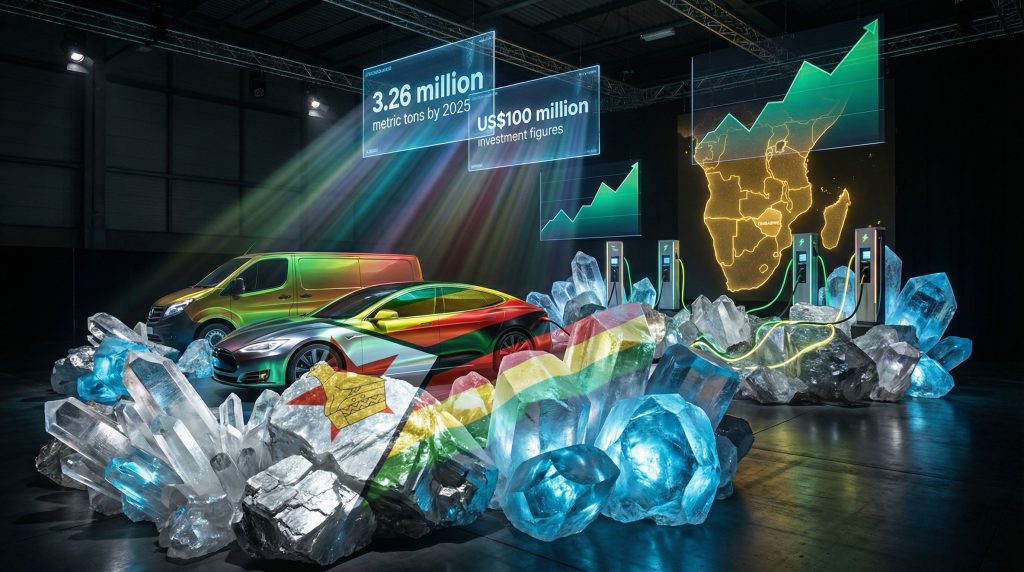
Zimbabwe's mineral wealth presents exceptional opportunities for strategic industrial development as the Zimbabwe electric vehicle market expansion becomes increasingly relevant to economic diversification strategies. Countries possessing substantial lithium reserves face unique opportunities to leverage natural resource advantages for industrial diversification beyond traditional extraction models. This phenomenon represents a fundamental shift from commodity dependence toward integrated value creation across manufacturing sectors.
The convergence of mineral wealth, regional trade dynamics, and global electrification trends creates scenarios where resource-abundant nations can potentially accelerate their participation in emerging mobility ecosystems. Understanding these strategic pathways requires examining how geological advantages translate into economic positioning within rapidly evolving supply chains.
Economic Forces Driving Zimbabwe Electric Vehicle Market Expansion
Mineral Resource Leverage in Transportation Electrification
Zimbabwe's positioning within the global lithium supply chain presents distinct advantages for the Zimbabwe electric vehicle market expansion strategy. The country's substantial lithium deposits provide structural benefits that differentiate it from markets dependent on imported battery materials. Unlike traditional automotive sectors requiring extensive mineral imports, Zimbabwe can potentially integrate upstream processing capabilities with downstream mobility applications.
Furthermore, the growing demand for lithium industry innovations demonstrates the strategic value of these mineral resources in the global transition to sustainable transportation. The economic fundamentals supporting this transformation include expanding production capabilities and policy adjustments reducing barriers to electric vehicle adoption.
Government initiatives have modified import duty structures, creating more favourable conditions for electric vehicle market development. Foreign investment flows into mineral processing infrastructure indicate growing international confidence in Zimbabwe's strategic positioning.
Value Chain Integration Pathways
Three distinct development scenarios emerge for Zimbabwe electric vehicle market expansion:
Raw Material Export Focus: Traditional extraction with limited domestic value addition
• Emphasis on lithium concentrate production for export markets
• Minimal local manufacturing or assembly operations
• Primary revenue generation through commodity sales
Processing Hub Development: Intermediate chemical processing for regional battery manufacturers
• Lithium hydroxide and carbonate production facilities
• Technology transfer partnerships with international processors
• Regional supply chain integration across Southern Africa
Integrated Mobility Ecosystem: Comprehensive local battery assembly supporting domestic adoption
• Battery component manufacturing capabilities
• Local electric vehicle assembly operations
• Complete supply chain from mineral extraction to finished vehicles
Industry analysis suggests the processing hub model offers the most balanced approach, combining achievable technical requirements with meaningful value addition. This pathway enables Zimbabwe to capture greater economic benefits whilst building capabilities for potential future expansion into complete manufacturing operations.
When big ASX news breaks, our subscribers know first
Regional Trade Dynamics and SADC Market Integration
Southern African Development Community Framework Advantages
The Southern African Development Community framework creates strategic opportunities beyond individual country mineral endowments. Regional market integration enables economies of scale that benefit smaller markets through harmonised standards and cross-border supply chain development. This integration particularly advantages the Zimbabwe electric vehicle market expansion by connecting domestic capabilities with broader regional demand.
In addition, the mining industry evolution across the continent demonstrates how traditional extractive industries are adapting to support emerging technologies and sustainable transportation solutions.
Key regional market characteristics include:
• South Africa's established automotive manufacturing infrastructure
• Botswana and Namibia's renewable energy development programmes
• Zambia and Democratic Republic of Congo's complementary mineral resources
• Coordinated trade policies reducing cross-border transaction costs
International Manufacturing Investment Patterns
Asian manufacturers, particularly Chinese companies, evaluate Southern Africa as an integrated market rather than individual country opportunities. This perspective creates scale economies benefiting the Zimbabwe electric vehicle market expansion through shared infrastructure development and technology transfer programmes.
BYD's regional market entry strategy exemplifies this integrated approach, viewing Zimbabwe as part of a broader Southern African mobility ecosystem. The company's investment decisions reflect confidence in regional market development potential and policy stability across multiple countries.
Infrastructure Development Challenges and Solutions
Electrical Grid Reliability and Charging Infrastructure
Zimbabwe Electricity Supply Authority continues addressing power supply consistency issues affecting electric vehicle charging infrastructure development. Current limitations present both challenges and opportunities for Zimbabwe electric vehicle market expansion strategy.
Grid Development Challenges:
| Infrastructure Category | Urban Areas | Rural Regions |
|---|---|---|
| Charging Station Density | Limited Networks | Minimal Coverage |
| Power Supply Consistency | Moderate Issues | Significant Challenges |
| Grid Modernization Needs | High Priority | Critical Requirements |
| Investment Requirements | Substantial | Very High |
Urban charging infrastructure concentrates in major cities including Harare, Bulawayo, and Mutare, while rural electricity access remains limited. Power supply interruptions can extend for significant periods in some regions, requiring innovative solutions for reliable charging infrastructure.
Technology Adoption and Market Penetration Barriers
Consumer acceptance factors vary significantly between urban and rural markets. Urban consumers demonstrate greater familiarity with electric vehicle technology and charging requirements, while rural markets face additional challenges including maintenance network access and cost sensitivity considerations.
Moreover, the implementation of electric vehicles in mining operations demonstrates practical applications that could drive broader market acceptance and infrastructure development.
The Zimbabwe electric vehicle market expansion must address these diverse market conditions through targeted approaches:
• Urban focus on convenience and charging network density
• Rural emphasis on reliability and service accessibility
• Commercial fleet applications leveraging predictable usage patterns
• Public transportation integration for broader market exposure
Global Supply Chain Integration and Critical Mineral Security
Battery Manufacturing Proximity Considerations
Global battery production concentration in Asian markets creates both opportunities and dependencies for Zimbabwe's strategic positioning. The country's lithium resources provide leverage in supply chain negotiations while transportation costs and processing proximity influence optimal value chain development.
Critical mineral security concerns have elevated Zimbabwe's strategic importance in international discussions. However, global supply chain diversification trends favour resource-rich countries implementing value addition policies, aligning with Zimbabwe's beneficiation emphasis.
The development of a battery-grade lithium refinery in other emerging markets demonstrates the viability of local processing capabilities that Zimbabwe could potentially replicate.
Strategic Supply Chain Considerations:
• Technology transfer requirements balancing foreign investment attraction with capability development
• Local content mandates in government procurement supporting domestic industry growth
• Export controls on unprocessed materials encouraging domestic processing investment
• Regional integration initiatives reducing trade barriers and transaction costs
International Investment and Technology Transfer
Foreign direct investment patterns indicate growing international recognition of Zimbabwe's strategic positioning within global battery supply chains. Asian manufacturers particularly view the country as offering competitive advantages through mineral resource access combined with relatively developed infrastructure compared to other African markets.
Technology transfer arrangements increasingly emphasise local capability development rather than purely extractive relationships. This shift reflects both government policy priorities and international investor recognition of long-term market development potential.
Policy Framework Development and Industrial Strategy
Government Industrial Policy Alignment
The Ministry of Mines and Mining Development has implemented policies prioritising value addition through comprehensive industrial strategy initiatives. These policies aim to transform Zimbabwe from a raw material exporter into an integrated participant in global battery and electric vehicle supply chains.
Key policy initiatives include:
• Export licensing requirements encouraging domestic processing before export
• Investment incentive programmes for battery component manufacturing facilities
• Skills development partnerships with technical education institutions
• Infrastructure investment coordination across government agencies
Regulatory Harmonisation and Regional Standards
Regional regulatory coordination offers opportunities for Zimbabwe electric vehicle market expansion through standardised technical requirements and certification processes. Consequently, SADC protocols provide frameworks for harmonised automotive standards, potentially reducing compliance costs for manufacturers operating across multiple regional markets.
The recent battery recycling breakthrough technologies also present opportunities for sustainable circular economy development within Zimbabwe's emerging electric vehicle ecosystem.
Policy Integration Analysis: Zimbabwe's success in electric vehicle market development depends significantly on policy consistency across government transitions and effective coordination between mineral resource management and industrial development objectives.
Investment Scenarios and Market Development Strategies
Public-Private Partnership Models
Successful electric vehicle ecosystem development requires coordination between government infrastructure investment and private sector technology adoption. Zimbabwe electric vehicle market expansion benefits from integrated approaches combining public charging infrastructure development with private fleet adoption initiatives.
Segmented Market Development Approach:
Commercial Fleet Electrification: Mining companies and logistics operators represent early adoption opportunities due to predictable usage patterns and fleet management capabilities.
Urban Consumer Markets: Middle-income professionals in major cities offer growing market potential as charging infrastructure expands and vehicle costs decline.
Rural Mobility Solutions: Electric motorcycles and small commercial vehicles address transportation needs in areas with limited conventional fuel distribution.
Public Transportation Integration: Electric bus systems for urban areas provide public exposure to electric vehicle technology whilst addressing municipal transportation needs.
Market Penetration Timeline and Metrics
Strategic market development requires phased implementation with clear performance indicators. Zimbabwe electric vehicle market expansion can leverage mineral resource advantages whilst building technological capabilities and market infrastructure.
Development Phase Projections:
| Indicator Category | 2025 Targets | 2030 Projections |
|---|---|---|
| Market Share (%) | 2-4 | 10-18 |
| Charging Infrastructure | 60-100 stations | 400-700 stations |
| Local Content Integration (%) | 12-25 | 40-60 |
| Employment Generation | 2,500-4,000 | 10,000-15,000 |
The next major ASX story will hit our subscribers first
Regional Competition Analysis and Market Positioning
Competitive Differentiation Strategies
Zimbabwe's competitive positioning within Southern African electric vehicle markets depends on leveraging mineral resource advantages whilst addressing infrastructure and market development challenges. Comparison with regional competitors reveals distinct strategic approaches and market opportunities.
Regional Competitive Analysis:
• Versus South Africa: Mineral resource advantage offsetting smaller initial market size
• Versus Botswana: Similar mineral wealth with comparable infrastructure development needs
• Versus Zambia: Complementary mineral resources creating partnership opportunities rather than direct competition
Zimbabwe electric vehicle market expansion strategy emphasises collaboration over competition through regional supply chain integration and technology sharing agreements.
Long-term Strategic Market Outlook
Market development success depends on multiple coordinated factors including policy consistency, infrastructure investment sustainability, and effective technology transfer implementation. Regional integration progress particularly influences long-term market expansion potential.
For instance, the broader African EV market expansion demonstrates the significant growth potential across the continent, positioning Zimbabwe favourably within this emerging sector.
Strategic positioning advantages emerge through:
• Consistent policy implementation across political transitions
• Infrastructure development aligned with market growth trajectories
• Technology transfer effectiveness supporting local capability development
• Regional partnership development reducing market entry barriers
Future Market Evolution and Development Scenarios
Market Maturation Pathways (2025-2030)
Zimbabwe electric vehicle market expansion faces multiple potential development trajectories based on policy implementation effectiveness and infrastructure investment outcomes.
Optimistic Development Scenario: Integrated value chain development featuring local battery component production supporting domestic electric vehicle adoption exceeding 15% of new vehicle sales by 2030.
Conservative Growth Scenario: Gradual market development concentrated in commercial applications and urban centres, achieving 6-10% of new vehicle sales penetration through steady infrastructure expansion.
Transformational Hub Scenario: Regional processing and assembly centre development with Zimbabwe serving multiple SADC markets through mineral processing and component manufacturing operations.
Success Indicators and Performance Metrics
Market development success requires monitoring multiple performance categories reflecting both economic and technological advancement objectives. Zimbabwe electric vehicle market expansion benefits from comprehensive measurement approaches tracking progress across various development dimensions.
Critical Success Factors:
• Policy consistency maintaining investor confidence across government transitions
• Infrastructure investment keeping pace with market development requirements
• Technology transfer effectiveness building local technical capabilities
• Regional integration progress expanding market access opportunities
• Skills development outcomes supporting industrial capability advancement
Zimbabwe's electric vehicle market development represents more than automotive sector expansion. It exemplifies how resource-rich economies can leverage natural advantages for comprehensive industrial diversification and technological capability development. Success depends on coordinated policy implementation, strategic infrastructure investment, and effective regional integration supporting sustainable market growth.
Disclaimer: This analysis is based on publicly available information and industry trends. Market projections involve inherent uncertainties, and actual outcomes may vary significantly from presented scenarios. Investment decisions should consider comprehensive risk assessments and professional financial advice.
Ready to Capitalise on Zimbabwe's Electric Vehicle Market Opportunities?
Zimbabwe's electric vehicle market expansion highlights how resource-rich nations can leverage mineral advantages for strategic industrial development, creating significant investment opportunities in the process. Discovery Alert's proprietary Discovery IQ model delivers real-time alerts on significant lithium and critical mineral discoveries across the ASX, helping investors identify actionable opportunities in companies positioned to benefit from the global EV transition before the broader market recognises their potential. Begin your 14-day free trial today to position yourself ahead of emerging market trends.