August 20, 2026
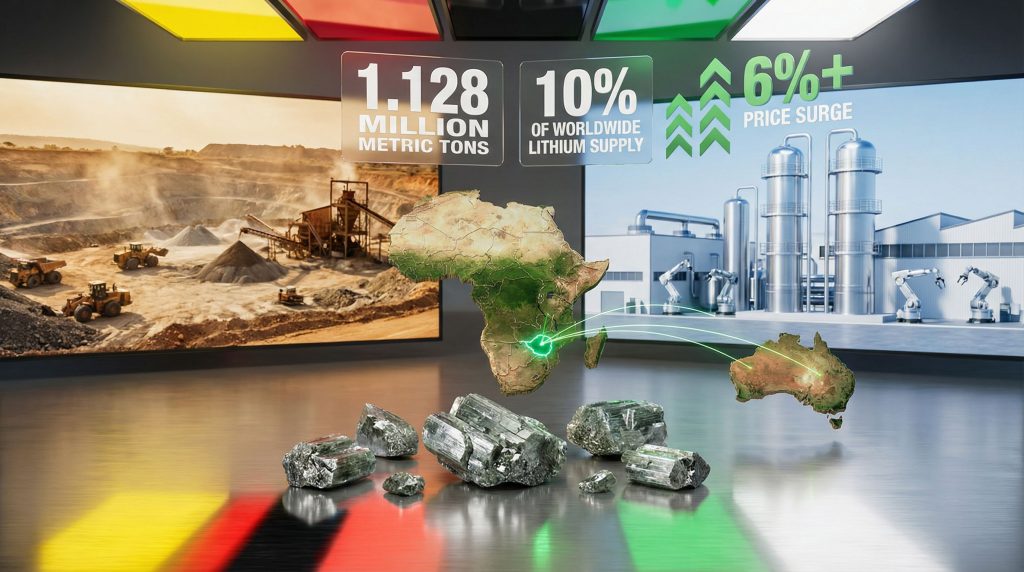
Zimbabwe's recent decision to impose a comprehensive Zimbabwe lithium export ban represents a watershed moment in global critical mineral markets, highlighting the growing influence of resource nationalism on international supply chains. This policy shift reflects a broader trend where mineral-rich nations prioritise domestic value creation over raw material exports, fundamentally altering the dynamics of battery metal markets worldwide.
The implications extend far beyond individual countries, creating ripple effects throughout international supply chains that power everything from electric vehicles to renewable energy infrastructure. When nations with significant mineral deposits implement export restrictions, the resulting market dynamics can permanently alter pricing structures, investment flows, and strategic planning across entire industries.
Zimbabwe's recent decision to suspend mineral exports represents a particularly striking example of this phenomenon. The Southern African nation, which supplied approximately 10% of global lithium in 2024, has effectively shut off access to its battery metal resources, forcing international buyers to scramble for alternative sources whilst domestic processing capacity remains largely underdeveloped.
The Architecture of Zimbabwe's Mineral Export Suspension
Policy Evolution and Implementation Timeline
Zimbabwe's path toward complete mineral export suspension evolved over several years, beginning with targeted restrictions on lithium concentrates in late 2022. The government's rationale centred on capturing greater value from the country's substantial mineral wealth through domestic beneficiation requirements.
The escalation to a comprehensive export ban reflects deeper concerns about revenue optimisation and industrial development. Government officials cited significant revenue leakages and compliance issues with existing export arrangements as primary motivations for the policy shift.
Regulatory Framework Changes
The new framework fundamentally alters how Zimbabwe's mineral sector operates, introducing stringent verification protocols through the Zimbabwe Revenue Authority (ZIMRA) and the Minerals Marketing Corporation of Zimbabwe (MMCZ). These agencies now control which entities can export processed materials, effectively eliminating third-party traders from the equation.
Key regulatory changes include:
• Mandatory local processing requirements for all mineral exports
• Enhanced due diligence protocols for approved exporters
• Elimination of raw ore export permits
• Technology transfer requirements for foreign investors
• Environmental compliance standards for processing facilities
The policy represents a calculated bet that Zimbabwe can build sufficient domestic processing capacity to replace its current export model. However, the timeline for this transition remains uncertain, creating significant market uncertainty for international buyers who previously relied on Zimbabwean supply.
When big ASX news breaks, our subscribers know first
Global Supply Chain Disruption Analysis
Quantifying Market Impact
Zimbabwe's position as a significant lithium supplier means its export suspension creates immediate supply tightness in global markets. The country produced approximately 1.128 million metric tons of spodumene concentrate in 2025, representing a substantial portion of available supply for lithium processing facilities worldwide.
Zimbabwe's Lithium Market Position
| Metric | 2025 Baseline | Projected 2030 |
|---|---|---|
| Spodumene Production (MT) | 1.128M | Suspended |
| Lithium Carbonate Equivalent | 45,000 tonnes | 160,000 tonnes |
| Processing Facilities | 2 operational | 6+ planned |
| Revenue Impact | $890M | $2.4B+ potential |
The immediate market response has been swift and pronounced. Lithium carbonate futures climbed over 6% within 24 hours of the Zimbabwe lithium export ban announcement, bringing one-year returns to 113%. This price volatility reflects the market's assessment of supply risk and the time required to develop alternative sources.
Supply Chain Recalibration Challenges
The suspension forces a fundamental recalibration of global lithium supply chains, particularly affecting Chinese processing facilities that historically received the majority of Zimbabwean concentrates. Chinese companies had invested substantially in Zimbabwe's lithium sector, creating a complex web of relationships that the export ban directly challenges.
Major lithium consumers now face several critical adjustments:
• Inventory management shifts: Strategic stockpiling to buffer against supply disruptions
• Contract renegotiation pressures: Force majeure clauses being triggered in long-term agreements
• Alternative sourcing arrangements: Accelerated negotiations with other producing regions
• Price discovery mechanisms: New benchmarking methodologies emerging to reflect supply realities
Furthermore, the ripple effects extend beyond immediate buyers to battery manufacturers, electric vehicle producers, and renewable energy companies that depend on stable lithium supplies for their operations. This disruption demonstrates the interconnected nature of modern energy transition security strategies.
Australian Lithium Sector Market Response
Share Price Performance and Market Capitalisation
Australian lithium producers experienced immediate valuation benefits following Zimbabwe's export suspension announcement. The market recognised that reduced global supply would likely translate into higher prices and improved margins for existing producers in stable jurisdictions.
ASX Lithium Producer Performance (February 26, 2026)
| Company | ASX Code | Share Price | Daily Movement |
|---|---|---|---|
| Pilbara Minerals | PLS | $5.19 | +6.5% |
| Mineral Resources | MIN | $60.80 | Positive |
| IGO Limited | IGO | $9.04 | Positive |
| Core Lithium | CXO | 26.3¢ | +7.0% |
Pilbara Minerals' surge to near-record levels of $5.19 per share particularly highlights market sentiment, approaching its all-time high of $5.42. This performance reflects investor recognition that Australian producers benefit from both supply tightness and jurisdictional stability premiums.
Competitive Positioning Advantages
Australian lithium producers gain several structural advantages from Zimbabwe's export restrictions. In addition to benefiting from the Australian lithium innovations that support their competitive position, these companies enjoy enhanced market positioning.
Operational benefits:
• Higher capacity utilisation rates at existing facilities
• Improved pricing power in contract negotiations
• Accelerated development timelines for expansion projects
• Enhanced access to project financing due to stronger margins
Strategic positioning:
• Regulatory stability compared to emerging market alternatives
• Established infrastructure and logistics networks
• Proven technical expertise in lithium processing
• Strong relationships with battery manufacturers and end users
The Greenbushes operation, partially owned by IGO Limited, represents the world's largest hard-rock lithium mine and stands to benefit significantly from reduced global competition. Similarly, Core Lithium's Finniss project in the Northern Territory gains strategic importance as buyers seek alternatives to Zimbabwean supply.
Geopolitical Supply Chain Vulnerabilities
China's Strategic Dilemma
Zimbabwe's export suspension creates a particularly complex situation for Chinese companies that had invested heavily in the country's lithium sector. These companies now face difficult choices between complying with Zimbabwean beneficiation requirements or potentially losing their investments entirely.
The concentration of Zimbabwean lithium exports to China amplifies the geopolitical implications. According to Reuters, Chinese processing facilities that relied on Zimbabwean concentrates must now either relocate operations, invest in domestic Zimbabwean processing capacity, or source alternatives from other regions.
Resource Nationalism Contagion Risks
Zimbabwe's policy represents part of a broader trend toward resource nationalism across Africa and other developing regions. This pattern raises concerns about policy contagion, where other mineral-rich nations might implement similar export restrictions to capture greater value from their natural resources.
Potential contagion scenarios:
• Other African lithium producers adopting beneficiation requirements
• Extension to additional critical minerals beyond lithium
• Increased sovereign control over mining operations and exports
• Higher political risk premiums for international mining investments
The implications extend beyond immediate supply disruptions to fundamental questions about global trade architecture and the stability of international commodity markets. This trend aligns with broader shifts in critical minerals policy that prioritise national security over global efficiency.
Long-Term Market Structure Evolution
Zimbabwe's Domestic Processing Ambitions
Zimbabwe's strategy centres on developing domestic lithium processing capacity to replace raw ore exports. The country plans to construct Africa's first lithium sulphate plant, with projected annual production scaling to 200,000 ounces by 2030.
However, significant challenges remain in implementing this transition. These challenges mirror those faced by other nations developing their own battery-grade lithium refinery capabilities.
Technical requirements:
• Advanced processing technology acquisition and installation
• Skilled workforce development for complex chemical processes
• Environmental management systems for processing facilities
• Quality control systems to meet international standards
Infrastructure needs:
• Reliable electricity supply for energy-intensive processing
• Water access for chemical processing operations
• Transportation networks for refined product exports
• Maintenance and spare parts supply chains
The timeline for developing this capacity remains uncertain, creating a potential supply gap between the cessation of raw ore exports and the commencement of processed material shipments.
Global Market Rebalancing Scenarios
The Zimbabwe lithium export ban accelerates several longer-term trends in global lithium markets. These developments are particularly relevant when considering insights from lithium brine market insights that highlight alternative supply sources.
Supply diversification imperatives:
• Reduced dependence on single-country sources
• Geographic risk distribution across stable jurisdictions
• Strategic reserve policies by consuming nations
• Alternative battery chemistry development to reduce lithium dependence
Market structure changes:
• New price discovery mechanisms reflecting supply realities
• Enhanced transparency requirements for supply chain participants
• Vertical integration strategies among major players
• Technology sharing agreements to ensure supply security
Investment Strategy Implications for Resource Investors
Risk-Adjusted Return Calculations
Zimbabwe's export suspension fundamentally alters risk-return calculations for lithium investments. Jurisdictional stability now commands significant valuation premiums, with Australian and Canadian operations benefiting from perceived regulatory reliability.
Investment considerations:
• Jurisdictional risk assessment: Political stability weighing heavily in project valuations
• Operational flexibility: Integrated producers versus single-asset exposure
• Contract structure: Fixed-price versus index-linked pricing mechanisms
• ESG compliance: Environmental and social governance as competitive differentiation
Portfolio Diversification Strategies
Resource investors must now balance exposure across multiple dimensions:
Geographic diversification:
• Stable mining jurisdictions (Australia, Canada, Chile) versus higher-risk, higher-reward emerging markets
• Currency exposure management across USD, AUD, and local denominations
• Political risk insurance considerations for emerging market investments
Value chain positioning:
• Upstream mining exposure versus downstream processing investments
• Technology hedge strategies through next-generation battery material companies
• Strategic metal diversification beyond lithium to reduce concentration risk
The market is increasingly rewarding companies with diversified asset portfolios and strong balance sheets capable of weathering supply chain disruptions.
The next major ASX story will hit our subscribers first
Regulatory and Policy Response Framework
International Trade Implications
Zimbabwe's export restrictions raise important questions about international trade law compliance and the balance between sovereign resource rights and global commerce obligations. The policy potentially conflicts with World Trade Organization principles regarding export restrictions and discriminatory trade practices.
Trade law considerations:
• WTO compliance regarding export restrictions and domestic development policies
• Bilateral trade agreement impacts on existing commercial relationships
• Investment protection treaty applications by affected foreign companies
• Potential sanctions or trade responses from importing nations
Industry Self-Regulation Evolution
The disruption accelerates industry efforts toward greater transparency and supply chain resilience:
Emerging standards:
• Supply chain traceability requirements from mine to battery
• Sustainability certification programmes for critical minerals
• Enhanced corporate due diligence protocols for political risk assessment
• Conflict mineral designation considerations for unstable regions
These developments reflect growing recognition that supply chain security requires proactive risk management and industry cooperation.
Market Outlook and Strategic Implications
Short-Term Price Dynamics (2026-2027)
The immediate aftermath of Zimbabwe's export suspension creates several distinct market scenarios:
Supply deficit probability: Temporary tightness driving premium pricing for available material
Demand elasticity testing: Electric vehicle adoption rates responding to input cost increases
Inventory utilisation: Strategic stockpile drawdowns by major consumers to maintain operations
Substitution acceleration: Research and development investment in lithium alternatives gaining urgency
Market participants expect elevated volatility as supply chains adjust to the new reality. Price discovery mechanisms may require months to establish new equilibrium levels reflecting the reduced supply base.
Medium-Term Structural Adjustments (2027-2030)
Beyond immediate price impacts, Zimbabwe's policy catalyses fundamental market structure changes:
New supply development: Previously marginal deposits becoming economically viable due to higher prices
Processing capacity expansion: Global refining infrastructure scaling to accommodate new supply sources
Technology breakthrough potential: Accelerated innovation in extraction and processing methods
Market consolidation trends: Vertical integration strategies among major industry players
Critical Insight: Zimbabwe's export ban signals more than temporary supply disruption – it represents a permanent shift toward resource nationalism that forces global lithium markets to fundamentally restructure around supply security rather than cost optimisation alone.
The successful navigation of this transition will likely determine which companies emerge as long-term winners in the evolving battery materials landscape.
What Does This Mean for Future Mining Investments?
The Zimbabwe lithium export ban fundamentally alters the investment landscape for critical mineral projects globally. Bloomberg reports that investors are now prioritising jurisdictional stability over pure resource endowment when evaluating opportunities.
Key investment criteria evolution:
• Political risk assessment becoming primary valuation driver
• Processing capability requirements increasing across the value chain
• ESG compliance standards tightening to meet supply chain transparency demands
• Technology transfer considerations influencing project development strategies
Furthermore, the policy shift demonstrates that successful long-term investments in the critical minerals space require sophisticated understanding of not just geological potential, but also the complex interplay between sovereign resource policies and global supply chain dynamics.
Conclusion: Adapting to the New Resource Landscape
Zimbabwe's mineral export suspension marks a defining moment in global lithium markets, accelerating trends toward supply diversification and jurisdictional risk assessment that will shape investment decisions for years to come. Whilst short-term price volatility creates opportunities for existing producers in stable regions, the broader implications extend far beyond immediate market movements.
Australian lithium producers emerge as clear beneficiaries, with their regulatory stability and established infrastructure commanding premium valuations in an increasingly uncertain global supply environment. However, the trend toward resource nationalism suggests all emerging market commodity investments require enhanced risk assessment frameworks.
The path forward demands sophisticated investment strategies that balance growth opportunities in developing regions against the security offered by established mining jurisdictions. As Zimbabwe attempts its challenging transition from raw material exporter to value-added processor, global lithium markets will likely emerge more resilient but initially less efficient.
For investors, the Zimbabwe situation reinforces that sustainable returns in the resource sector increasingly depend on understanding not just geological potential, but also the complex interplay of geopolitics, supply chain security, and sovereign risk management that now defines modern commodity investing.
Ready to Discover the Next Major Mineral Opportunity?
Discovery Alert's proprietary Discovery IQ model delivers real-time alerts on significant ASX mineral discoveries, instantly empowering subscribers to identify actionable opportunities ahead of the broader market. Understand why major mineral discoveries can lead to substantial market returns by exploring Discovery Alert's dedicated discoveries page, showcasing historic examples of exceptional outcomes, and begin your 14-day free trial today to position yourself ahead of the market.