
May 9, 2026
Understanding Zimbabwe's Regulatory Framework Evolution
Zimbabwe's implementation of Zimbabwe lithium export quotas represents a sophisticated policy intervention designed to restructure the country's mineral export paradigm. The regulatory framework emerged following a temporary suspension of lithium concentrate exports on February 26, 2026, with authorities citing concerns over operational malpractices and revenue leakages within the sector.
Furthermore, the subsequent policy announcement on April 2, 2026, established a comprehensive quota system that fundamentally alters market access conditions for lithium producers. Under this framework, export allocations will be communicated individually to each producer, creating a discretionary approval mechanism that positions the government as the primary gatekeeper for international market access.
Key Regulatory Components
• Individual quota determinations based on undisclosed assessment criteria
• Mandatory financial transparency through annual statement publication
• Enhanced operational standards covering labour, safety, and environmental compliance
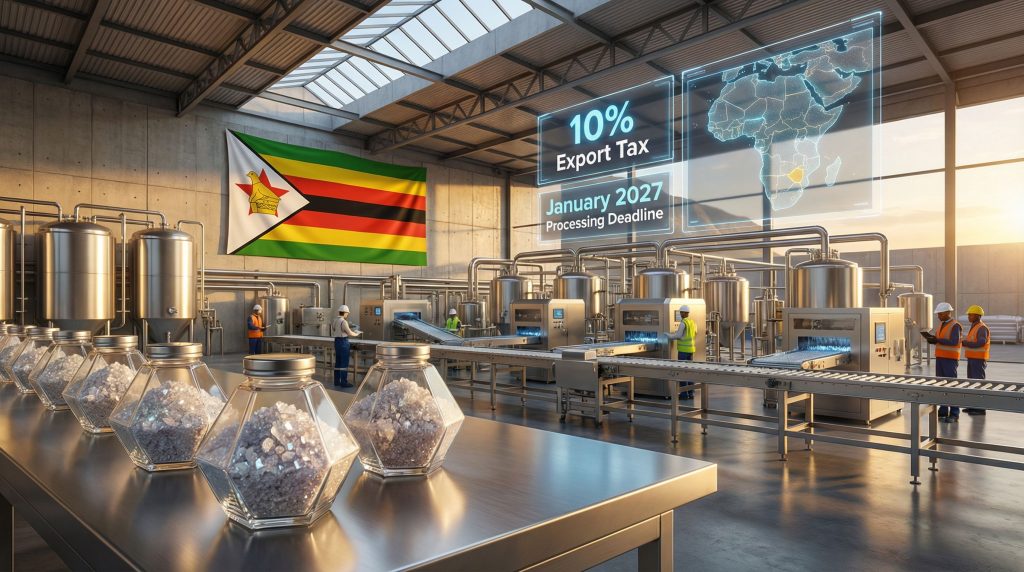
• Processing facility commitments requiring lithium sulfate plant establishment by January 1, 2027
Zimbabwe's position as Africa's leading lithium producer amplifies the global significance of these policy changes. In 2025, the country exported 1.128 million metric tons of lithium-bearing spodumene concentrate, representing approximately 15% of China's total lithium concentrate imports for the year. This substantial market share provides Zimbabwe with considerable leverage to implement domestic processing requirements without losing strategic relevance in global supply chains.
When big ASX news breaks, our subscribers know first
Compliance Architecture and Operational Impact
The regulatory compliance framework creates a multi-layered administrative burden that varies significantly across different operational scales. Large-scale mining operations with existing capital resources can more readily adapt to infrastructure investment requirements, while smaller producers face substantial challenges in meeting processing facility mandates within compressed timelines.
Financial transparency requirements mandate annual publication of mining companies' financial statements, creating unprecedented visibility into sector profitability and revenue flows. This provision enables enhanced government oversight while potentially exposing competitive information that companies previously considered confidential.
Compliance Timeline Pressures
| Requirement | Deadline | Enforcement Mechanism |
|---|---|---|
| Annual financial statement publication | Ongoing | Quota allocation dependency |
| Labour/safety/environmental standards | Immediate | Export permit conditions |
| Lithium sulfate plant commitment | January 1, 2027 | Export ban implementation |
| Processing facility operation | January 1, 2027 | Complete concentrate export prohibition |
The January 1, 2027 deadline for lithium sulfate plant establishment creates intense pressure on mining companies to accelerate infrastructure development timelines. Consequently, this compressed schedule particularly challenges medium-scale operations that lack the immediate capital resources or technical expertise required for rapid processing facility construction.
Environmental and safety standard enforcement introduces operational oversight mechanisms that could significantly impact production costs and regulatory compliance expenses. Companies must now demonstrate adherence to enhanced standards while simultaneously investing in processing infrastructure, creating dual financial pressures during the transition period.
Economic Strategy Through Export Taxation
Zimbabwe's implementation of a 10% export tax on lithium concentrate shipments reveals a sophisticated revenue optimisation strategy that operates parallel to the quota system. This tax framework functions as a bridge mechanism, generating government income during the transition period while creating financial incentives for accelerated domestic processing investments.
The export tax continues until the complete concentrate export ban takes effect in January 2027, providing approximately eight months of revenue collection opportunities. Based on Zimbabwe's 2025 export volume of 1.128 million metric tons, this tax represents a substantial revenue stream that helps fund government initiatives while encouraging mining companies to prioritise processing facility development.
Revenue Generation vs. Industry Incentives
The dual function of the export tax creates interesting market dynamics where mining companies must evaluate whether continued tax payments justify delayed processing investments, or whether accelerated infrastructure development offers superior long-term economics. Companies like Zhejiang Huayou Cobalt, which invested $400 million in lithium sulfate plant construction, demonstrate the capital commitment scale required to avoid ongoing tax obligations.
This economic calculus becomes particularly complex for smaller mining operations that may lack the financial capacity for immediate processing facility investments. These companies face ongoing tax burdens that erode profitability while simultaneously needing to secure tolling agreements or partnership arrangements with larger processors to maintain market access beyond 2027.
Value Chain Transformation Through Processing Mandates
The requirement for lithium sulfate plant establishment by January 2027 represents a fundamental shift in Zimbabwe's position within the global battery materials supply chain. Rather than exporting raw spodumene concentrate for processing in Chinese facilities, Zimbabwe aims to capture intermediate processing value domestically before material export.
Lithium sulfate serves as a critical intermediate product that can be further refined into battery-grade lithium hydroxide or lithium carbonate, both commanding premium pricing in international markets. By mandating this processing step within Zimbabwe, the policy captures significant value addition that previously occurred in Chinese refineries.
Investment Patterns and Infrastructure Development
Major Chinese operators have responded to processing requirements through substantial capital commitments:
• Zhejiang Huayou Cobalt: Completed $400 million lithium sulfate plant
• Sinomine: Announced lithium sulfate plant development at Zimbabwe operations
• Yahua: Committed to processing facility construction at existing mines
• Chengxin Lithium Group: Evaluating processing infrastructure investments
These investment announcements indicate broad industry acceptance of Zimbabwe's processing mandates, suggesting that major operators view domestic value addition as economically viable despite increased capital requirements. The $400 million investment scale established by Huayou provides a reference point for the financial commitment necessary to achieve regulatory compliance.
Technology transfer implications embedded within processing facility requirements could generate substantial knowledge spillovers for Zimbabwe's industrial development. The establishment of lithium sulfate production capabilities creates opportunities for local workforce development, technical expertise acquisition, and potential expansion into higher-value battery material processing.
Geopolitical Dynamics and Supply Chain Security
Zimbabwe's quota system implementation occurs within a broader context of Chinese dominance across the country's lithium mining sector. Chinese firms including Zhejiang Huayou Cobalt, Sinomine, Chengxin Lithium Group, Yahua, and Tsingshan Holding Group maintain controlling positions across major lithium operations, creating integrated supply chain relationships between Zimbabwean extraction and Chinese battery manufacturing.
This concentration of Chinese operational control generates complex dynamics where Zimbabwe's resource nationalism policies directly impact Chinese strategic interests in battery materials supply security. Moreover, the requirement for domestic processing infrastructure could enhance Chinese supply chain resilience by creating intermediate processing capabilities closer to extraction points, reducing transportation costs and logistics complexity.
Strategic Supply Chain Implications
Zimbabwe's 15% share of China's lithium concentrate imports represents significant but not monopolistic influence within global battery material flows. This market position provides sufficient leverage for policy implementation while avoiding complete supply chain disruption that could trigger aggressive countermeasures from Chinese manufacturers.
The geographic concentration of processing infrastructure within Zimbabwe could create new supply chain vulnerabilities, however, as political instability, infrastructure challenges, or regulatory changes could impact multiple processing facilities simultaneously. This concentration risk contrasts with the current distributed processing model where Zimbabwean concentrate feeds multiple Chinese refineries across different regions.
Alternative sourcing strategies for international battery manufacturers may accelerate as a result of Zimbabwe's policy changes, potentially reducing long-term demand for Zimbabwean lithium despite successful value addition initiatives. Countries like Chile maintain substantial lithium reserves through their chile lithium strategy, while Australia pursues australian lithium tax innovations to strengthen competitiveness.
Operational Pathways for Different Mining Scales
The Zimbabwe lithium export quotas create differentiated compliance pathways that vary significantly based on operational scale and financial resources. Large-scale operators with substantial capital access can pursue direct processing facility investment, while smaller operations must rely on alternative arrangements to maintain market access.
Tolling Agreement Frameworks
Tolling arrangements emerge as the primary mechanism for smaller mining operations to maintain export eligibility under the new regulatory framework. These agreements enable junior miners to contract processing services from established lithium sulfate facilities, sharing revenue while avoiding direct infrastructure investment obligations.
Tolling mechanics typically involve:
• Processing fee negotiations between mining companies and facility operators
• Quality control responsibilities shared between concentrate suppliers and processors
• Revenue sharing structures that balance processing costs against final product values
• Supply volume commitments ensuring consistent facility utilisation
Operational Scale Analysis
| Operation Size | Compliance Strategy | Capital Requirements | Market Access Method |
|—|—|—|
| Large-scale (>100,000 tons/year) | Direct processing investment | $400 million+ | Independent export permits |
| Medium-scale (50,000-100,000 tons/year) | Joint venture partnerships | $100-200 million | Shared processing facilities |
| Small-scale (<50,000 tons/year) | Tolling agreements | Minimal upfront investment | Contract processing services |
The tolling pathway preserves operational viability for smaller miners while ensuring all Zimbabwean lithium concentrate receives domestic processing value addition. This framework prevents market consolidation that could eliminate smaller operators entirely while maintaining policy objectives for enhanced domestic value capture.
The next major ASX story will hit our subscribers first
Investment Response Patterns and Market Adaptation
Mining companies operating in Zimbabwe have responded to quota implementation through accelerated infrastructure development timelines and modified investment strategies. The compressed January 2027 deadline creates urgency around processing facility construction that influences capital allocation decisions across the sector.
Foreign direct investment patterns reflect adaptation to enhanced regulatory requirements, with Chinese operators maintaining their strategic positions through substantial processing infrastructure commitments. The willingness to invest hundreds of millions of dollars in Zimbabwean processing facilities indicates confidence in long-term operational viability despite increased regulatory complexity.
Risk Assessment Evolution
International investors must now incorporate regulatory compliance costs and infrastructure investment obligations into Zimbabwe lithium project evaluations. The mandatory processing requirements add significant capital intensity to mining operations while extending payback periods through increased upfront investments.
Joint venture structures may become increasingly prevalent as smaller companies seek partnerships with larger operators possessing processing capabilities. These arrangements can distribute regulatory compliance costs while providing market access pathways for operations unable to meet individual processing facility requirements.
Due diligence requirements have expanded to include assessment of:
• Processing facility construction feasibility within regulatory timelines
• Tolling agreement availability and commercial terms
• Technology transfer implications and local partnership requirements
• Long-term regulatory stability and enforcement consistency
Comparative Analysis with Global Resource Policies
Zimbabwe's approach to lithium export restrictions follows patterns established by other resource-rich nations seeking to capture greater value from mineral endowments. Indonesia's successful implementation of nickel export bans, coupled with domestic processing requirements, provides a precedent for Zimbabwe's policy framework.
Indonesia's nickel model demonstrated that export restrictions combined with processing mandates can successfully attract downstream investment while enhancing domestic value addition. The policy resulted in substantial foreign investment in Indonesian nickel processing facilities, creating employment and technology transfer opportunities. Similarly, argentine lithium market insights reveal how South American producers are balancing resource control with market access requirements.
Policy Effectiveness Benchmarks
| Country | Mineral | Policy Tool | Investment Response | Value Addition Result |
|---|---|---|---|---|
| Indonesia | Nickel | Export ban + processing mandates | $15+ billion FDI in refineries | Major stainless steel hub development |
| Chile | Lithium | Nationalisation initiatives | Mixed private-state partnerships | Enhanced government revenue capture |
| DRC | Cobalt | Local processing requirements | Limited compliance success | Minimal value addition achieved |
| Zimbabwe | Lithium | Quotas + processing mandates | $400+ million processing investments | Early-stage implementation |
Botswana's diamond beneficiation model offers additional insights into successful value addition policies. The country's requirement for domestic cutting and polishing created substantial employment while capturing premium pricing for finished diamond products. However, diamonds possess different market characteristics than lithium, limiting direct policy transferability.
In addition, the Democratic Republic of Congo's cobalt processing requirements achieved limited success due to infrastructure constraints and political instability, highlighting implementation challenges that Zimbabwe must address to ensure policy effectiveness. These lessons are particularly relevant as Australia develops green metals leadership strategies and implements critical minerals strategy frameworks.
Market Restructuring and Price Impact Analysis
Zimbabwe's quota system implementation creates potential supply chain restructuring effects that could influence global lithium pricing dynamics and market concentration patterns. The transition from raw concentrate exports to domestic processing introduces new variables into international lithium market calculations.
Processing capacity redistribution from Chinese refineries to Zimbabwean facilities could affect global supply chain efficiency and transportation economics. Lithium sulfate produced in Zimbabwe may command different pricing than equivalent materials processed in established Chinese facilities, depending on quality specifications and logistics considerations.
Supply Security Implications
International battery manufacturers must evaluate supply security implications of increased processing concentration within Zimbabwe. While domestic processing may enhance supply chain efficiency through reduced transportation requirements, geographic concentration introduces political and operational risks that distributed processing models avoid.
Quality standardisation challenges may emerge as Zimbabwean processing facilities establish production capabilities and quality control systems. Battery manufacturers require consistent lithium sulfate specifications, creating pressure on new Zimbabwean facilities to meet international standards while scaling production rapidly.
Alternative source development acceleration represents a potential unintended consequence of Zimbabwe's policy implementation. Battery manufacturers seeking supply diversification may accelerate investments in Australian, Chilean, or Argentine lithium projects to reduce dependence on Zimbabwean material, potentially limiting long-term demand growth.
Implementation Challenges and Success Factors
The success of Zimbabwe lithium export quotas depends significantly on execution capabilities and enforcement consistency. The January 2027 deadline for processing facility establishment creates implementation pressure that could reveal infrastructure and regulatory capacity constraints.
Enforcement mechanisms for quota compliance and processing facility requirements remain partially undefined, creating uncertainty around penalty structures for non-compliance. Clear enforcement frameworks with predictable consequences would enhance investor confidence and compliance planning capabilities.
Administrative capacity for quota allocation decisions, processing facility approval, and ongoing compliance monitoring requires substantial government resources and technical expertise. Zimbabwe's ability to manage these regulatory responsibilities effectively will influence overall policy success.
Critical Success Factors
• Infrastructure development capability within compressed timelines
• Regulatory consistency across different operational scales
• Technical expertise for processing facility oversight
• Market access preservation during transition periods
• Investment incentive balance between compliance costs and operational viability
The policy's ultimate effectiveness will be measured through domestic value addition achievement, employment generation in processing sectors, government revenue enhancement, and technology transfer outcomes. These metrics will determine whether Zimbabwe's resource nationalism approach successfully captures greater economic benefits from its lithium endowments while maintaining competitive positioning in global battery material markets.
For more detailed analysis of Zimbabwe's evolving lithium export framework, the mining.com assessment provides comprehensive insights into market implications, while africa business insider's coverage explores the broader African context of resource nationalism policies.
Disclaimer: This analysis contains forward-looking assessments based on current policy frameworks and market conditions. Actual outcomes may vary significantly due to implementation challenges, market dynamics, and regulatory modifications. Investment decisions should consider comprehensive risk assessments and professional consultation.
Looking to Capitalise on Emerging Mining Policy Changes?
Discovery Alert's proprietary Discovery IQ model delivers instant notifications on significant ASX mineral discoveries, helping subscribers identify actionable opportunities as resource nationalism policies reshape global supply chains. Explore how historic discoveries have generated exceptional returns by visiting Discovery Alert's discoveries page, then begin your 14-day free trial to gain a market-leading edge in mineral investment opportunities.