June 26, 2026
The Mineral Economy Nobody Is Talking About
Commodity supercycles have a habit of narrowing investor attention to a single narrative. In the early 2000s, it was iron ore. In the 2010s, copper dominated the conversation. Today, lithium has claimed the spotlight, and nowhere has this played out more visibly than in Zimbabwe, where a wave of battery-metal investment has generated headlines far in excess of the country's broader mineral story. This is precisely why Zimbabwe mining investment beyond lithium deserves far more analytical attention than it currently receives.
The problem with a single-commodity narrative is not that it is wrong. It is that it is incomplete. Zimbabwe's mining sector is structurally far more complex, far more diverse, and arguably far more valuable than any lithium-only framing can capture. Investors who have arrived in Zimbabwe chasing spodumene may be sitting on top of one of Africa's most compelling multi-commodity platforms without fully realising it.
When big ASX news breaks, our subscribers know first
Zimbabwe's Mining Fundamentals: What the Numbers Actually Show
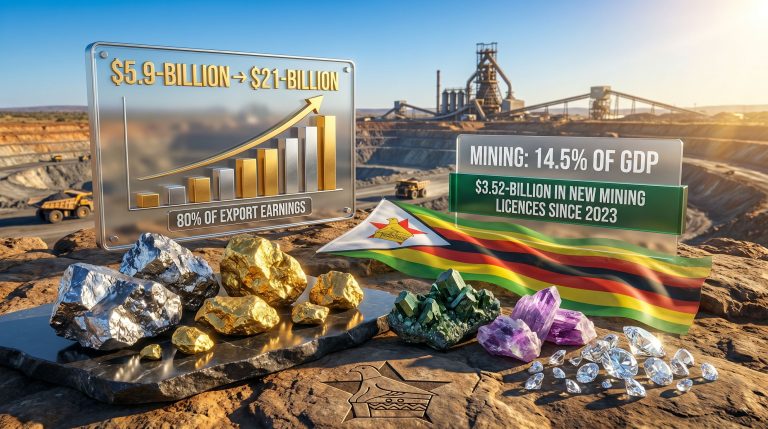
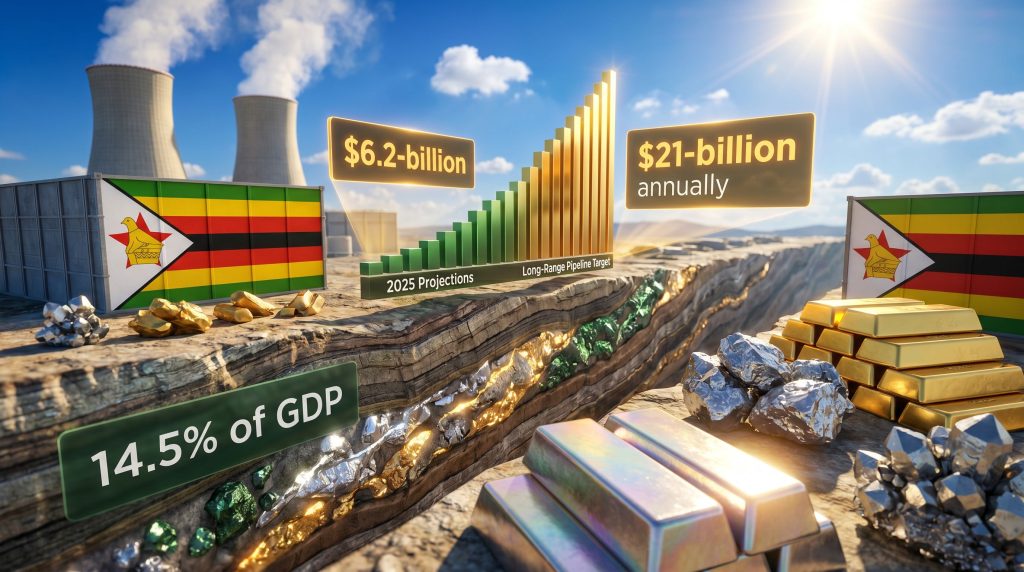
Zimbabwe holds more than 60 confirmed mineral types, spanning precious metals, base metals, industrial minerals, and rare-earth elements. The mining sector currently accounts for 14.5% of GDP, generates approximately 80% of total export earnings, and contributes close to 19% of government revenue. These are not frontier-economy statistics. They represent a mature extractive sector with deep institutional history and demonstrated capacity to attract foreign capital at scale.
Mineral export revenues are estimated to have grown from $5.9-billion in 2024 to $6.2-billion in 2025, with long-range projections targeting $21-billion annually if the full pipeline of active projects reaches completion. Sector growth reached 7% in 2025, with 10% expansion forecast for 2026, underpinned by elevated gold, platinum group metal (PGM), and lithium prices simultaneously. Understanding critical minerals demand is essential context for interpreting these growth figures.
The mining sector's Q1 2026 growth was explicitly anchored by strong commodity price performance across multiple mineral categories, not lithium alone. According to Gift Mugano, an economics professor and executive director of Africa Economic Development Strategies, a Harare-based think-tank, the sector continued to anchor Zimbabwe's broader economic growth in the opening quarter of 2026.
Since 2023, the Zimbabwe Investment and Development Centre has issued new mining licences with a combined declared value of $3.52-billion. Administrative reforms have reduced mining licence processing times from 21 days to just 7 days, a structural efficiency gain that analysts identify as a meaningful confidence signal for prospective investors.
Gold and PGMs: The Established Revenue Engines
Gold's Dual-Track Structure and Downstream Gap
Gold consistently ranks as one of Zimbabwe's top two export commodities by value alongside PGMs. The sector encompasses both large-scale commercial operations and an extensive artisanal and small-scale mining (ASM) community, which creates a dual-track production profile that is unusual among peer jurisdictions.
Elevated global gold prices through 2025 and into 2026 have materially improved project economics across both formal and informal operations. What remains structurally underdeveloped, however, is the downstream value chain. Zimbabwe currently exports a significant proportion of gold in semi-processed or doré form, capturing only a fraction of terminal value. Gold refining and jewellery manufacturing have been formally identified as priority downstream investment opportunities under Zimbabwe's national beneficiation strategy.
Investor Consideration: Gold processing and refining represent an underserved midstream opportunity. The policy environment explicitly supports this investment category, though energy reliability and logistics infrastructure must be factored into any project feasibility assessment.
Zimbabwe's PGM Sector: Scale, Geology, and Active Capital
Zimbabwe hosts one of the world's largest known platinum group metal reserves, concentrated along the Great Dyke geological formation, a roughly 550-kilometre-long layered igneous intrusion running through the centre of the country. This geological structure is analogous to South Africa's Bushveld Igneous Complex in terms of PGM endowment, though it remains comparatively underdeveloped relative to its resource scale.
PGMs including platinum, palladium, rhodium, and iridium are critical inputs for automotive catalytic converters, hydrogen fuel cell technology, and a range of industrial chemical processes. The sector is a primary contributor to Zimbabwe's fiscal revenue and foreign exchange earnings.
Active capital deployment across the PGM sector:
- Zimplats (subsidiary of South Africa's Impala Platinum) has deployed more than $750-million across expansion, beneficiation, and energy infrastructure projects
- Mimosa (South African-owned) is executing a capital programme exceeding $200-million
- Karo Mining (subsidiary of JSE- and London Stock Exchange-listed Tharisa plc) has committed $241-million to date toward developing the Karo platinum mine, located approximately 85 km south-west of Harare
Senior Tharisa executives have indicated that capital intensity per ounce of production is tracking within expectations, noting that the majority of infrastructure must be built during the initial ten-year phase, but that the project carries an operational life of at least 60 years, meaning infrastructure costs are amortised over a very long production horizon. Tharisa has also benchmarked Zimbabwe's technical skills base and development executability as comparable to South Africa, a meaningful endorsement given the company's operational experience across both jurisdictions.
Tharisa's strategic intent extends beyond extraction. The company plans to pursue downstream value-chain integration in Zimbabwe, replicating its approach at its South African operations where beneficiation has been incrementally developed over time. This positions Karo not merely as a mine, but as a potential platform for a more integrated PGM business in Zimbabwe.
Comparative Framework: Zimbabwe's PGM sector offers a longer-duration, lower-discovery-risk investment profile compared to frontier exploration plays elsewhere in Africa. The combination of proven geology, existing operator experience, and a government-endorsed downstream agenda makes PGMs a structurally compelling opportunity independent of the lithium narrative.
The Lithium Layer: Real But Contextualised
It would be analytically incomplete to discuss Zimbabwe mining investment beyond lithium without first acknowledging that lithium has genuinely transformed capital flows into the country. Zimbabwe's lithium output currently accounts for approximately 9% of global supply, according to London-based research and market analysis firm Benchmark Mineral Intelligence, positioning it as a significant producer within the global battery supply chain.
Chinese companies have dominated new lithium-sector investment. Zhejiang Huayou Cobalt has been the largest spender, committing a combined total exceeding $1.1-billion across the acquisition of the Arcadia lithium project, a 400,000 tonne per year lithium concentrate plant, and a subsequent $400-million investment in a 50,000 tonne per year lithium sulphate facility completed in 2025. Sinomine Resources Group, Chengxin Lithium Group, Canmax Technologies, and Yahua have all deployed substantial capital across other Zimbabwean lithium assets.
However, the lithium investment story carries a more nuanced risk profile than headline figures suggest. Benchmark Mineral Intelligence's lithium product director, Cameron Perks, has noted that opaque royalty and tax structures alongside policy unpredictability represent material concerns for investors modelling project returns. Furthermore, he has raised a pointed question about the economic logic of forcing lithium chemical processing onshore when lithium processing economics favour lower-cost production environments. Australia, he notes, continues to generate substantial economic benefit from lithium concentrate exports without mandating in-country chemical production.
This tension between beneficiation policy ambition and commercial reality is one of the more underappreciated dimensions of Zimbabwe's lithium narrative. It does not invalidate the investment case, but it does complicate it in ways that a raw capital-flow headline does not convey. For further independent analysis, Boston University's assessment of Zimbabwe's lithium pivot provides a rigorous examination of the promises and structural pitfalls involved.
Chrome, Nickel, and the Expanding Beneficiation Mandate
Statutory Instrument 5 of 2023: A Policy Shift With Broad Implications
Zimbabwe's export restriction and beneficiation framework was initially associated primarily with lithium. Statutory Instrument 5 of 2023 materially broadened this framework, extending export restrictions to chrome, nickel, and other base minerals. This signals that the government's value-addition agenda applies across the full mineral portfolio, not just battery metals.
This policy shift creates both constraints and opportunities. Raw mineral exports face restriction, but in-country processing investment across multiple commodity categories is explicitly incentivised.
| Mineral | Current Export Status | Downstream Opportunity | Key Constraint |
|---|---|---|---|
| Chrome | Semi-processed exports | Ferrochrome production | Energy cost and reliability |
| Nickel | Largely unprocessed | Battery precursor chemicals, nickel sulphide | Processing infrastructure gap |
| Gold | Doré and semi-refined | Refining, jewellery manufacturing | Refinery capacity, energy |
| PGMs | Concentrate and semi-refined | Platinum refining, fuel cell components | Capital intensity, skills |
| Lithium | Concentrate and lithium sulphate | Lithium hydroxide, carbonate | Policy consistency, energy |
| Diamonds | Raw extraction | Cutting, polishing, jewellery | Governance and transparency |
Chrome and Ferrochrome: An Established Pathway
Chrome is an established Zimbabwean export with existing mining and concentration infrastructure. The ferrochrome production pathway — converting chrome ore into a higher-value alloy used in stainless steel manufacturing — has been explicitly identified as a priority industrialisation opportunity. Ferrochrome production is highly energy-intensive, however, making reliable, cost-competitive electricity a non-negotiable prerequisite for commercial viability.
Nickel: The Underutilised Battery Metals Play
Nickel is a critical input in lithium-ion battery cathode chemistry, particularly NMC (nickel manganese cobalt) and NCA (nickel cobalt aluminium) formulations, as well as stainless steel production and a range of industrial alloys. The role of nickel in battery supply chains has grown considerably as global electric vehicle production scales. Zimbabwe's nickel endowment is acknowledged in government strategic planning as an underutilised asset, and the proposed Mines-to-Energy Park includes a dedicated nickel sulphide production facility, signalling intent to develop this value chain domestically.
The Mines-to-Energy Park: Infrastructure as the Enabling Layer
What the Framework Encompasses
The Zimbabwean government has promoted the Mines-to-Energy Park as a flagship initiative to convert mineral extraction into integrated industrial production. The project framework includes:
- Two 300 MW power stations to address chronic electricity deficits constraining mining and processing operations
- A lithium salt plant with planned production capacity of 130,000 tonnes per year
- Graphite processing facilities
- A nickel sulphide production facility
- An alloy smelting facility serving multiple mineral streams
Why Energy Is the Critical Bottleneck
Without reliable, competitively priced electricity, no beneficiation, smelting, or chemical processing facility can operate at commercially viable cost structures. Data from the State of the Mining Sector Survey cited by Mugano shows that electricity demand across the mining sector rose approximately 20% in 2024 due to expansion activity, while diesel consumption surged 35% as operators compensated for grid instability.
Most mining executives operating in Zimbabwe expect power shortages to worsen as new projects come online simultaneously. Diesel-based generation is an expensive and operationally inefficient substitute that structurally erodes project economics, particularly for energy-intensive processing operations like ferrochrome smelting and lithium chemical production. Consequently, the broader mining energy infrastructure challenge has become a defining constraint for the sector's downstream ambitions.
Strategic Implication: The Mines-to-Energy Park is not merely a mining project. It is the foundational infrastructure layer that determines whether Zimbabwe's downstream beneficiation ambitions across all mineral categories are commercially executable. The 600 MW of planned new generation capacity embedded in the framework is arguably the single most important variable in the entire investment thesis.
The next major ASX story will hit our subscribers first
Regional Benchmarking: How Zimbabwe Stacks Up
| Jurisdiction | Mineral Diversity | Policy Stability | Infrastructure Quality | Investment Ease |
|---|---|---|---|---|
| Zimbabwe | Very High | Moderate (improving) | Low to Moderate | Moderate |
| South Africa | High | Moderate | Moderate | Moderate |
| Namibia | Moderate | High | Moderate | High |
| Botswana | Moderate | High | Moderate to High | High |
| DRC | Very High | Low | Low | Low to Moderate |
| Zambia | High | Moderate | Moderate | Moderate |
Analysts with operational experience across African mining jurisdictions generally position Zimbabwe above the continental average for mineral investment environments, while acknowledging that South Africa and Namibia currently offer more predictable regulatory frameworks for risk-averse capital. Zimbabwe's risk-return profile is most suitable for investors with experience in complex emerging market environments and a long-duration investment horizon.
Five Structural Risks That Require Stress-Testing
Any credible investment analysis of Zimbabwe mining investment beyond lithium must address the following risk categories directly:
1. Energy Infrastructure Failure
Mining sector electricity demand grew approximately 20% in 2024 and is projected to accelerate further. Without the 600 MW of new generation capacity planned under the Mines-to-Energy Park, processing and beneficiation projects face prohibitive operating cost structures.
2. Policy Reversal and Unpredictability
The abrupt introduction of lithium export restrictions and royalty increases without extended consultation has already affected investor confidence in that sector. Cameron Perks of Benchmark Mineral Intelligence has specifically flagged opaque royalty and tax structures as a material concern for project modelling. Similar policy shifts applied to gold, PGMs, or chrome could materially alter economics across the broader investment portfolio.
3. Skills Gaps in Advanced Processing
Zimbabwe retains a strong foundation in conventional mining skills, a factor that Tharisa executives have explicitly acknowledged as a competitive advantage. However, lithium chemical processing, advanced metallurgy, and battery precursor manufacturing require specialised technical expertise not yet available at scale domestically.
4. Logistics and Transport Bottlenecks
The absence of a functioning national rail network forces reliance on road transport, increasing costs and reducing competitiveness of bulk mineral exports. This constraint is particularly acute for high-volume, lower-value commodities such as chrome ore.
5. Governance and Transparency Concerns
Ongoing political uncertainty, including constitutional debates around presidential and parliamentary term extensions beyond their 2028 constitutional end dates, creates reputational risk for international investors subject to ESG and governance screening requirements. Al Jazeera's investigation into Zimbabwe's lithium boom raises pointed questions about who ultimately benefits, and artisanal and small-scale mining activity in gold and lithium also raises concerns about illegal extraction and state revenue leakage.
The Industrialisation Threshold: Success Versus Disappointment
Gift Mugano has articulated a clear framework for measuring genuine success in Zimbabwe's mining sector. A successful outcome is not simply more export revenue. It is a structural transformation of the economy, defined by:
- Mineral export revenue exceeding $21-billion annually, more than three times the 2025 estimate of $6.2-billion
- Creation of 100,000 direct mining jobs and many more in linked manufacturing and service sectors within five years
- GDP contribution materially above the current 12% to 14.5% range
- A stronger fiscal revenue contribution reducing government dependence on commodity price cycles
- Local procurement by mining companies rising above the current 15% of total input spend
- Mining becoming the foundation of industrialisation rather than simply an export sector
The international comparators are instructive. Botswana leveraged diamond beneficiation requirements to build a domestic cutting and polishing industry. Chile developed world-class copper processing capacity alongside raw copper exports. Indonesia implemented nickel export restrictions to force domestic processing investment, successfully attracting battery precursor manufacturing facilities. Each of these cases demonstrates that export restriction policies can catalyse downstream investment when paired with adequate infrastructure, skills development, and policy consistency.
The mineral endowment in Zimbabwe is not the limiting variable. The enabling environment for value addition remains the decisive factor.
A disappointing outcome, in Mugano's framing, would be one where Zimbabwe continues exporting primarily raw minerals while importing the higher-value manufactured products that those minerals could have produced domestically.
Disclaimer: This article contains forward-looking projections, including mineral revenue targets and production forecasts, that are subject to significant uncertainty. Figures attributed to specific analysts, academic experts, and industry participants reflect their stated views and should not be construed as investment advice. Investors should conduct independent due diligence before making any investment decisions related to Zimbabwe's mining sector or any specific companies operating within it.
Ready to Identify the Next Major Multi-Commodity Discovery Before the Market Does?
Discovery Alert's proprietary Discovery IQ model delivers real-time alerts on significant ASX mineral discoveries — spanning gold, PGMs, lithium, and beyond — turning complex geological data into actionable investment insights the moment they hit the exchange. Explore historic discoveries and their extraordinary returns to understand the opportunity, then begin your 14-day free trial to position yourself ahead of the broader market.