May 13, 2026
The global base metals processing industry operates through intricate economic relationships between concentrate suppliers and smelting facilities, where zinc concentrate treatment charges determine the viability of converting raw ore into refined metal products. These processing arrangements, particularly in zinc markets, reflect sophisticated supply-demand dynamics that extend far beyond simple commodity pricing models.
Modern smelting economics depend heavily on treatment charge structures that compensate processing facilities for transforming mineral concentrates into market-ready metals. Furthermore, the complexity of these arrangements has evolved significantly as byproduct recovery becomes increasingly valuable, creating multi-layered pricing mechanisms that require deep technical understanding to navigate effectively.
Understanding Zinc Concentrate Processing Economics
Zinc concentrate treatment charges represent compensation paid to smelting facilities for converting raw zinc sulfide concentrates into refined zinc metal through sequential processing stages. These fees, typically denominated in US dollars per dry metric tonne, reflect the technical complexity and operational costs associated with transforming concentrates containing 50-55% zinc content into 99.995% pure refined metal.
The processing methodology involves four critical stages that determine operational efficiency and cost structures:
- Roasting: Thermal oxidation of zinc sulfides at temperatures exceeding 900°C
- Leaching: Dissolution of roasted material in sulfuric acid solutions
- Purification: Removal of impurities including iron, cadmium, and cobalt
- Electrowinning: Electrolytic refining to achieve final metal specifications
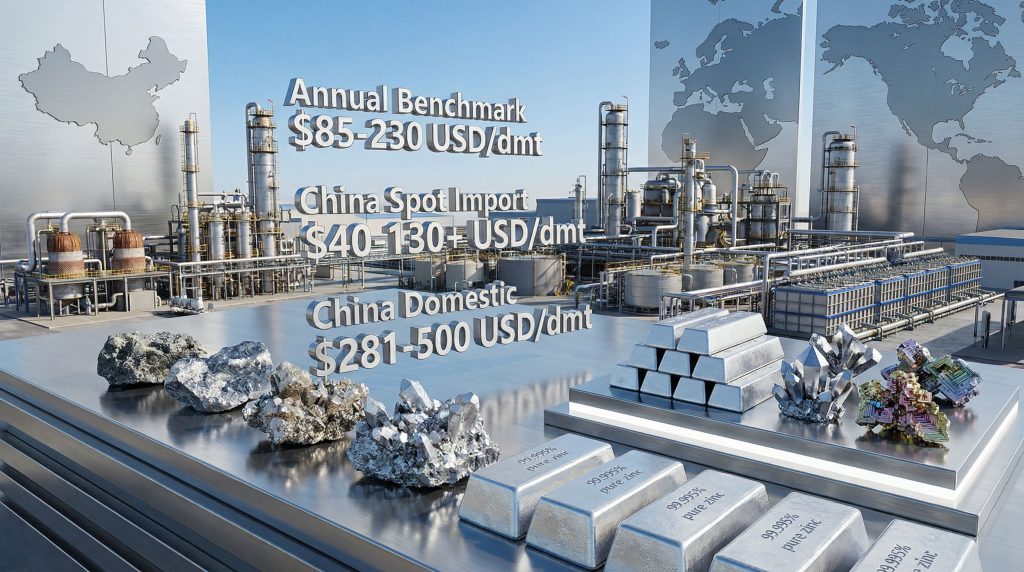
Recent market developments have demonstrated how these technical processes interact with global supply dynamics. The 2026 benchmark settlement between Teck Resources and Korea Zinc established treatment charges at $85 per dry metric tonne, representing a modest $5 increase from 2025's historic low of $80 per tonne. However, this headline figure masks underlying complexity in byproduct payable arrangements that significantly impact actual processing economics.
Byproduct Recovery Integration
Modern zinc concentrate processing generates substantial revenue streams from specialty metals recovery, fundamentally altering traditional treatment charge calculations. In addition, germanium, silver, bismuth, and antimony extraction capabilities now represent critical competitive advantages for processing facilities, creating quality premiums that extend beyond standard concentrate specifications.
Market participants have observed that germanium payables now apply in benchmark negotiations, unlike previous arrangements where this strategic metal was excluded from formal payable structures. This shift reflects growing demand from semiconductor manufacturing and fiber optic applications, where germanium commands premium pricing despite limited global production capacity. For instance, the development of strategic antimony insights has further emphasised the importance of byproduct recovery strategies.
The integration of byproduct credits creates complex optimisation challenges for smelting operations:
- Silver recovery operations require specialised equipment modifications
- Germanium extraction demands precise temperature control systems
- Bismuth separation involves sophisticated chemical processing techniques, as detailed in bismuth market strategy analyses
- Antimony capture requires advanced filtration and purification methods
When big ASX news breaks, our subscribers know first
Regional Market Differentiation in Treatment Charges
Global zinc concentrate treatment charges exhibit significant regional variations reflecting local processing capacities, energy costs, and regulatory environments. Chinese smelting facilities, representing the world's largest processing hub, demonstrate markedly different pricing dynamics compared to European and North American operations.
Chinese Market Dominance
China's zinc processing sector operates under unique economic conditions that create substantial treatment charge differentials. Recent spot market assessments for zinc concentrates delivered to China ranged from $10-50 per tonne in February 2026, with some transactions achieving negative treatment charges for premium materials.
The emergence of negative treatment charges reflects intense competition among Chinese smelters for quality concentrate supplies. Antamina material, renowned for its high zinc content and valuable byproduct profile, has recently attracted negative processing fees as smelters compete for access to premium feed materials.
Several factors contribute to Chinese market dynamics:
- Smelter capacity expansion programmes creating overcapacity conditions
- Energy cost structures favouring large-scale processing operations
- Environmental regulations requiring advanced pollution control systems
- Currency hedging mechanisms affecting dollar-denominated transactions
European Processing Economics
European zinc smelting operations face distinct economic pressures that influence treatment charge negotiations. Carbon pricing mechanisms, stringent environmental standards, and elevated energy costs create processing premiums that differentiate European facilities from Asian competitors.
The expansion of European smelting capacity, referenced in recent market analysis, reflects strategic positioning for regional supply security rather than pure cost optimisation. Consequently, these facilities typically command higher treatment charges due to superior environmental performance and proximity to automotive and construction end-markets.
Treatment Charge Volatility Drivers
Zinc concentrate treatment charges exhibit significant volatility driven by supply-demand imbalances, quality variations, and broader commodity market cycles. Understanding these volatility sources provides critical insight into market timing and contract negotiation strategies, particularly as mining industry innovation continues to reshape operational approaches.
Supply-Side Constraints
Mine production disruptions create immediate impacts on treatment charge levels as smelters compete for available concentrate supplies. Recent examples include operational challenges at major zinc mines that reduced global concentrate availability, driving treatment charges toward zero or negative levels.
Quality variations in concentrate supplies significantly affect processing economics through several mechanisms:
- Zinc content variations directly impact metal recovery rates
- Impurity levels influence processing complexity and costs
- Moisture content affects transportation and storage economics
- Byproduct concentrations determine additional revenue potential
Precious Metals Market Integration
The rally in precious metals prices during 2026 fundamentally altered zinc concentrate demand dynamics by increasing the value of byproduct recovery operations. This price appreciation strengthened mining companies' negotiating positions while pressuring smelter margins through reduced treatment charge collections. However, broader silver market squeeze conditions have created additional complexity in processing arrangements.
Silver price increases particularly impacted treatment charge negotiations, as many zinc concentrates contain economically recoverable silver quantities. The enhanced value of silver recovery operations allowed mining companies to demand lower zinc concentrate treatment charges while maintaining smelter profitability through byproduct credits.
Modern Contract Structures and Negotiation Dynamics
Contemporary zinc concentrate treatment charge negotiations involve sophisticated multi-variable agreements that extend far beyond simple per-tonne processing fees. The evolution toward byproduct-inclusive contracts reflects the growing complexity of modern smelting operations and their revenue optimisation strategies.
Benchmark Contract Evolution
The annual benchmark negotiation process between major producers and processors establishes industry-wide pricing references that influence spot market transactions throughout the year. The Teck Resources-Korea Zinc agreement for 2026 exemplifies this process, involving months of detailed discussions covering multiple revenue and cost components.
Key elements of modern benchmark agreements include:
- Base treatment charge establishment for standard concentrate specifications
- Quality adjustment mechanisms for variations in zinc content and impurities
- Byproduct payable structures covering silver, germanium, and specialty metals
- Currency hedging arrangements for international transactions
- Force majeure provisions addressing supply disruption scenarios
Market participants note that headline treatment charge figures increasingly mask the true economic terms of processing arrangements. One industry source observed that "current negotiations require detailed analysis of byproduct payables to determine actual processing economics, as traditional treatment charge comparisons no longer provide adequate transparency."
Spot Market Complexity
Spot zinc concentrate transactions demonstrate extreme price volatility as smelters compete for immediate material availability. Recent spot assessments ranging from negative charges to $50 per tonne reflect tight market conditions and quality-adjusted pricing mechanisms.
The quality adjustment process involves detailed technical analysis of individual concentrate shipments:
- Chemical composition verification through independent laboratory testing
- Moisture content measurement affecting actual metal content calculations
- Byproduct quantification determining additional revenue potential
- Impurity assessment impacting processing cost requirements
Investment Implications and Market Psychology
Zinc concentrate treatment charges provide valuable insights into broader base metals market dynamics and investment opportunities across the processing value chain. The compression of treatment charges toward historic lows signals fundamental shifts in supply-demand relationships that extend beyond simple price movements.
Smelter Profitability Analysis
Low treatment charge environments create significant margin pressure for zinc processing operations, particularly those lacking sophisticated byproduct recovery capabilities. The $85 per tonne benchmark for 2026, while representing a modest increase from 2025's historic low, remains below levels required for attractive processing returns without substantial byproduct revenue contributions.
Furthermore, commodity price impacts continue to influence smelter investment strategies, which increasingly focus on:
- Advanced byproduct recovery systems maximising specialty metal extraction
- Energy efficiency improvements reducing operational cost structures
- Automation technologies minimising labour-intensive processing steps
- Environmental compliance upgrades ensuring long-term operational viability
Mining Sector Advantages
The sustained period of low treatment charges strengthens mining companies' negotiating positions and cash flow generation capabilities. Quality concentrate producers with significant byproduct content command particular advantages in current market conditions.
Strategic positioning opportunities for mining operations include:
- Direct-to-consumer processing arrangements bypassing traditional treatment charge structures
- Byproduct extraction investments capturing specialty metal value directly
- Geographic diversification accessing multiple regional processing markets
- Quality enhancement programmes improving concentrate specifications and market acceptance
Technology and Processing Innovation Impacts
Technological advancement in zinc processing operations continues reshaping treatment charge economics through improved operational efficiency and enhanced byproduct recovery capabilities. These innovations create competitive advantages that influence contract negotiation outcomes and long-term industry structure.
Processing Efficiency Enhancements
Modern zinc smelting facilities incorporate advanced process control systems that optimise metal recovery rates while minimising energy consumption and environmental emissions. These technological improvements enable processors to maintain profitability despite compressed treatment charge environments.
Key technological developments include:
- Automated roasting systems providing precise temperature control
- Advanced leaching technologies improving dissolution efficiency
- Electrowinning optimisation reducing energy consumption per tonne
- Waste heat recovery systems improving overall energy efficiency
Specialty Metal Recovery Systems
The integration of germanium, bismuth, and antimony recovery systems represents a fundamental shift in smelting economics, transforming these materials from waste products into significant revenue sources. Facilities equipped with advanced byproduct recovery capabilities demonstrate superior profitability despite challenging treatment charge conditions.
Investment requirements for specialty metal recovery include substantial capital expenditures for:
- Germanium distillation equipment requiring precise temperature control
- Bismuth crystallisation systems involving complex chemical processes
- Silver electrorefining capabilities producing high-purity precious metals
- Antimony separation technologies extracting strategic materials
The next major ASX story will hit our subscribers first
Future Market Structure Evolution
The zinc concentrate treatment charge landscape continues evolving toward increased complexity and sophistication as market participants adapt to changing supply-demand fundamentals and technological capabilities. Several structural trends appear likely to influence future market development.
Consolidation and Integration Trends
Industry consolidation among both mining and smelting operations may reduce treatment charge volatility through long-term supply agreements and vertical integration arrangements. Large-scale operations demonstrate enhanced ability to optimise across multiple revenue streams, including base metal production and specialty material recovery.
Potential consolidation benefits include:
- Operational synergies through shared processing infrastructure
- Supply chain optimisation reducing transportation and logistics costs
- Technology sharing accelerating innovation implementation
- Risk diversification across multiple processing locations and markets
Environmental and Regulatory Considerations
Increasing environmental regulations and carbon pricing mechanisms will likely influence treatment charge structures through differential compliance costs across processing facilities. Operations with superior environmental performance may command treatment charge premiums reflecting their reduced regulatory risk profiles.
Regulatory trends affecting zinc processing include:
- Carbon emission limitations requiring investment in clean technology
- Waste disposal regulations increasing environmental compliance costs
- Air quality standards demanding advanced pollution control systems
- Worker safety requirements necessitating operational procedure modifications
The complex interplay between supply-demand fundamentals, technological advancement, and regulatory evolution continues reshaping zinc concentrate treatment charge dynamics. Market participants must navigate this complexity while positioning for long-term success in an increasingly sophisticated processing environment.
Understanding these multifaceted relationships provides essential insight for investment decision-making and strategic planning across the zinc value chain, from mining operations through refined metal production and end-user applications. For comprehensive analysis of market trends, fastmarkets research provides valuable insights into Chinese market dynamics, whilst commodities trading data offers real-time pricing perspectives on global zinc markets.
Looking to Capitalise on Base Metals Processing Opportunities?
Discovery Alert's proprietary Discovery IQ model delivers instant notifications on significant base metals discoveries across the ASX, empowering subscribers to identify actionable zinc, copper, and specialty metals opportunities ahead of the broader market. Begin your 14-day free trial today and secure your competitive advantage in this complex but rewarding sector.