
August 14, 2026
Understanding Zinc's Critical Role in Modern Economics
Industrial economies rely on zinc as a cornerstone metal, with 13.86 million tons of global refined zinc consumed in 2025 according to the International Lead and Zinc Study Group. This represents a 1.9% increase year-over-year, demonstrating zinc's essential position across multiple economic sectors despite the persistent global zinc market deficit and ongoing supply challenges.
The metal's strategic importance extends far beyond simple industrial applications. Zinc serves as the backbone of infrastructure development through galvanization processes, where it provides corrosion protection for steel components in bridges, buildings, and transportation networks. The growing emphasis on climate-resilient construction has amplified zinc demand, as galvanized steel offers superior longevity in extreme weather conditions.
Furthermore, battery production represents another critical demand driver, with zinc-based energy storage systems gaining traction in grid-scale applications and electric vehicle components. The energy transition strategies have created additional consumption pressures, as solar panel mounting systems, wind turbine components, and electrical infrastructure require substantial zinc inputs for corrosion protection and electrical conductivity.
Chemical compound applications in pharmaceuticals and agricultural additives further diversify zinc's economic significance. These sectors demonstrate relatively inelastic demand patterns, maintaining consumption levels regardless of price volatility. The pharmaceutical industry particularly relies on zinc compounds for nutritional supplements and medical applications, creating a stable demand foundation that supports overall market fundamentals.
Regional consumption patterns reveal the metal's global economic integration. China, India, the United States, Saudi Arabia, Thailand, and Europe all recorded positive consumption growth in 2025, offsetting declines in Brazil, South Korea, Peru, and South Africa. This geographical distribution demonstrates zinc's correlation with economic development cycles and industrial activity levels.
When big ASX news breaks, our subscribers know first
What Factors Are Creating the Persistent Global Zinc Market Deficit?
Demand-Side Pressures Outpacing Supply Response
The global zinc market deficit reached 33,000 metric tons in 2025, representing a 52% improvement from the previous year's 69,000-ton shortfall. However, this persistent deficit reveals structural imbalances between consumption requirements and production capacity, despite apparent supply chain improvements.
Infrastructure development in emerging economies continues driving zinc consumption beyond supply capabilities. The metal's indispensable role in galvanization makes it essential for construction projects, transportation networks, and industrial facilities. As developing nations accelerate infrastructure investments, zinc demand maintains upward pressure that outpaces new production capacity additions.
In addition, manufacturing sector recovery post-pandemic has created additional consumption pressures. Electronics production requires zinc for circuit board plating and component manufacturing, while automotive assembly operations utilise zinc in alloy production and protective coatings. The reshoring of manufacturing capacity to Western markets has intensified regional demand patterns, particularly in North America and Europe.
Electric vehicle adoption represents a newer demand driver, with battery production requiring zinc compounds and galvanised steel for structural components. As global EV production scales rapidly, zinc consumption from this sector continues growing beyond initial market projections. The automotive industry's transition toward lighter, more corrosion-resistant materials has increased zinc content per vehicle across multiple component categories.
Supply Chain Vulnerabilities and Production Constraints
While zinc mine production increased 5.4% globally in 2025, refined zinc production only grew 2.1%, revealing critical processing bottlenecks. This disparity indicates that ore availability is not the primary constraint limiting market supply, but rather smelting and refining capacity limitations.
China's refined zinc production increased 6.1%, providing the majority of global production growth, while non-China refined zinc production declined 1.6%. This geographical concentration creates supply chain vulnerabilities, as global market balance increasingly depends on Chinese smelting operations and policy decisions.
Significant smelter closures have reduced global processing capacity. Toho Zinc's Annaka smelter closure in Japan and temporary suspension at Korea's Seokpo plant eliminated substantial refining capability. Additional production declines in Brazil, Kazakhstan, and Mexico further constrained global refined zinc output, despite adequate concentrate availability.
Environmental regulations increasingly limit expansion opportunities for existing facilities and create higher compliance costs for new projects. Smelting operations face stricter emissions standards, water usage restrictions, and community relations challenges that extend project development timelines. These regulatory pressures particularly affect Western markets, where environmental compliance requirements are most stringent.
Lead times for new smelting capacity development typically span 3-7 years from initial planning to operational startup. This extended timeline means current market tightness cannot be quickly resolved through new capacity additions, creating sustained supply-demand imbalances during high-demand periods.
How Are Regional Markets Responding to Zinc Scarcity?
Asia-Pacific Consumption Dynamics
China's strategic response to zinc scarcity demonstrates sophisticated supply chain management. Net imports of zinc concentrates jumped 29.8% to 2.58 million tons in 2025, while refined zinc imports halved to 210,000 tons. This shift indicates China is leveraging domestic smelting capacity to process imported raw materials rather than relying on finished metal imports.
This concentrate-focused import strategy provides several advantages. Domestic processing offers greater supply security, price control, and employment benefits compared to finished metal imports. The strategy also allows China to capture value-added processing margins while securing long-term relationships with concentrate producers globally.
India's inclusion among positive consumption growth regions reflects its accelerating infrastructure development and manufacturing expansion. The country's steel industry requires substantial galvanising capacity for construction projects, while electronics manufacturing growth creates additional zinc demand for component production. India's renewable energy targets, including solar panel installation goals, further amplify zinc requirements for mounting systems and electrical infrastructure.
Southeast Asian manufacturing growth has created competitive dynamics for zinc supply access. Countries including Thailand (specifically mentioned in demand growth regions) face increasing competition from Chinese buyers for concentrate supplies. Electronics assembly operations, automotive component manufacturing, and construction activity across the region maintain steady zinc consumption despite supply constraints.
Australia's dual role as both major producer and regional supplier creates strategic positioning advantages. Mine production increases in Australia during 2025 provided both export revenue and domestic supply security. The country's mining sector benefits from proximity to Asian demand centres while maintaining technological advantages in extraction and processing operations.
Western Markets Adaptation Strategies
European markets demonstrated resilience despite global supply constraints, with the region recording positive demand growth in 2025. The restart of Ireland's Tara mine contributed to regional supply diversification efforts, reducing dependence on imports from more distant suppliers. This mine restart represents broader European Union strategic mineral security initiatives aimed at supply chain resilience.
North American consumption growth, including the United States among positive demand regions, reflects successful reshoring initiatives and infrastructure investment programmes. Domestic manufacturing expansion increases regional zinc requirements while reducing reliance on imported finished goods. Construction activity, driven by infrastructure spending programmes, maintains galvanisation demand at elevated levels.
Strategic stockpiling considerations have become more prominent as supply constraints persist. Major Western economies are evaluating critical mineral reserve requirements, recognising zinc's essential role in economic security and infrastructure resilience. These evaluations influence procurement strategies and international trade relationships.
Trade policy adaptations include diversification initiatives to reduce supply concentration risks. European and North American buyers are developing relationships with multiple supplier regions to avoid over-reliance on single sources. These efforts include long-term contracts, joint venture investments, and development finance for new production projects.
What Do Current Inventory Levels Reveal About Market Fundamentals?
Global Inventory Analysis Framework
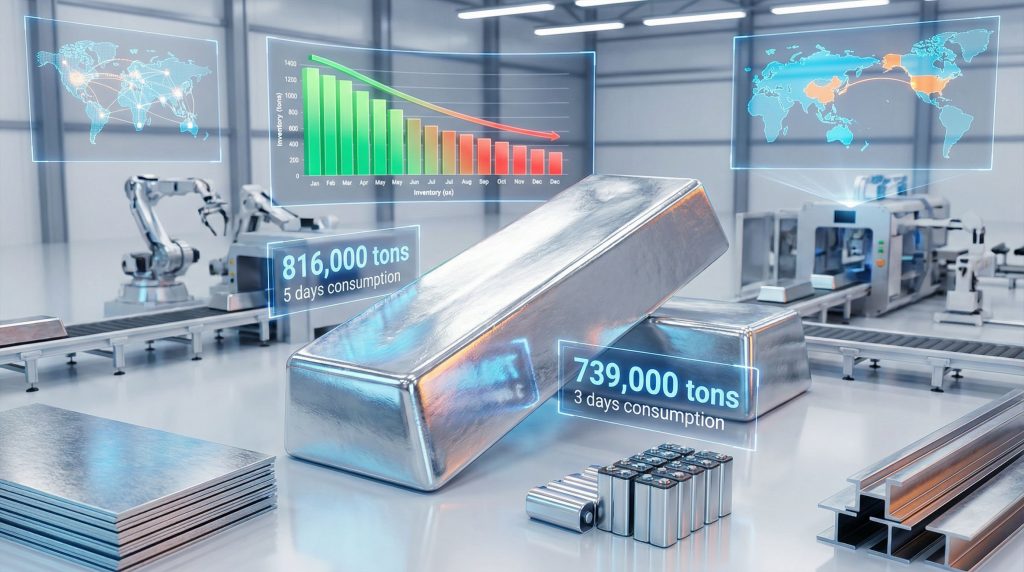
Total reported zinc inventories fell by 77,000 tons to 739,000 tons by the end of 2025, representing a 9.4% year-over-year decline. This inventory depletion occurs across multiple categories, including London Metal Exchange warehouses, Shanghai Futures Exchange facilities, and producer, consumer, and merchant holdings.
| Inventory Category | 2025 Status | Market Impact | Strategic Significance |
|---|---|---|---|
| LME Warehouse Stocks | Declining trend | Price volatility increase | Global price discovery affected |
| Shanghai Exchange Holdings | Critical levels | Regional supply stress | Asian market tightness indicator |
| Producer Inventories | Reduced buffer | Production flexibility limited | Supply chain vulnerability |
| Consumer Stockpiles | Below optimal | Procurement urgency | Demand-side price pressure |
The 739,000-ton total inventory level represents approximately 19 days of global consumption based on the 13.86 million ton annual demand figure. This coverage period falls significantly below historical comfort levels and indicates structural supply inadequacy relative to consumption patterns.
Warning Signals from Inventory Depletion
Historical precedent from previous zinc market cycles suggests inventory levels below 20 days of consumption typically precede significant price volatility. The late 1990s zinc shortage demonstrated how rapidly declining inventories can create supply chain disruptions across multiple industrial sectors.
Critical shortage development becomes evident when inventories cannot buffer short-term supply disruptions or demand surges. Current levels provide minimal protection against smelter outages, transportation delays, or unexpected consumption increases, creating vulnerability throughout the global supply chain.
The concentration of remaining inventories in specific geographical locations further amplifies supply risks. If significant portions of the 739,000-ton global stock are located in China or other single regions, accessibility for global consumers becomes constrained during supply chain disruptions.
Exchange inventory levels specifically affect price discovery mechanisms and market liquidity. When LME and Shanghai Exchange stocks decline to minimal levels, price volatility typically increases as market participants have reduced flexibility for immediate delivery requirements.
Which Production Disruptions Are Most Impacting Global Supply?
Climate-Related Production Challenges
Extreme weather events increasingly affect zinc mining and processing operations globally. Water scarcity particularly impacts smelting operations, which require substantial water inputs for cooling, ore processing, and environmental compliance systems. Drought conditions in key production regions can force temporary capacity reductions or complete operational suspensions.
Environmental compliance costs continue rising as emission standards tighten globally. Smelting operations face expensive upgrades to meet air quality requirements, while mining operations must invest in water treatment, tailings management, and habitat restoration systems. These compliance investments often reduce short-term production capacity while facilities undergo modernisation.
Community relations challenges affect operational continuity across multiple production regions. Local opposition to mining expansion, environmental concerns, and revenue sharing disputes can delay or prevent capacity increases. These social licence issues particularly impact greenfield development projects and brownfield expansion initiatives.
Geopolitical Supply Chain Risks
Regional conflicts continue disrupting logistics networks essential for zinc concentrate and refined metal transportation. Maritime shipping delays, border crossing restrictions, and port capacity limitations create supply chain bottlenecks that affect global material flows. These disruptions coincide with broader US-China trade dynamics that influence metal trading patterns.
Trade restrictions and currency volatility impact production economics across different regions. Exchange rate fluctuations affect the competitiveness of various production centres, while tariffs and export restrictions can redirect material flows and create regional supply imbalances.
Resource nationalism in various producing countries affects foreign investment in new capacity development. Policies favouring domestic processing, export restrictions on concentrates, and ownership requirements for mining operations can limit global supply expansion initiatives.
How Are Mining Companies Responding to Market Tightness?
Strategic Production Expansion Initiatives
The Democratic Republic of Congo's Kipushi mine began operations in mid-2024, contributing to the 5.4% global mine production increase. This new capacity addition demonstrates the potential for mothballed operations to restart when market conditions justify the required capital investments.
Brownfield expansion projects offer faster capacity additions compared to greenfield developments, typically requiring 2-4 years from planning to production increases. Existing operations can leverage established infrastructure, environmental permits, and community relationships to accelerate expansion timelines.
Technology adoption for efficiency improvements helps maximise output from existing facilities. Advanced ore processing techniques, automated mining equipment, and improved metallurgical processes can increase production without requiring entirely new operations. The broader mining industry evolution reflects these technological adaptations across various minerals.
Financial Market Implications for Zinc Producers
Mining companies with established zinc operations experience unprecedented pricing power as market fundamentals tighten. The persistent deficit creates favourable conditions for long-term contract negotiations and premium pricing arrangements with major consumers. However, zinc's deep market tightness presents both opportunities and challenges for industry participants.
Investment analysts note that zinc producers with integrated mining and smelting operations benefit from both concentrate sales and processing margins, providing enhanced profitability during supply-constrained periods.
New market entrants face substantial capital requirements and regulatory hurdles that limit competitive pressure on established producers. Greenfield development costs, environmental impact assessments, and permitting timelines create significant barriers to entry that protect existing capacity providers.
Sustainability compliance in new operations requires additional capital investment in environmental management systems, community development programmes, and regulatory reporting capabilities. These requirements increase project development costs but also create competitive advantages for companies with proven environmental, social, and governance capabilities.
The next major ASX story will hit our subscribers first
What Does the Future Hold for Global Zinc Market Balance?
2026-2027 Supply Outlook Scenarios
New mine production projects scheduled for completion in 2026-2027 include several significant capacity additions. However, the timeline from project approval to operational production typically extends 5-10 years for major greenfield developments, limiting near-term supply relief opportunities.
Smelting capacity expansion projects face shorter development timelines but require substantial capital investment and environmental approval processes. The 1.6% decline in non-China refined production indicates that capacity additions outside China are essential for global supply chain resilience and critical raw materials supply security.
Furthermore, recycling technology advancement offers potential supply augmentation from secondary sources. Improved collection systems, processing efficiency, and alloy recovery techniques can increase the contribution of recycled zinc to overall supply. However, recycling typically provides 10-20% of total zinc supply and cannot fully offset primary production constraints.
Demand Trajectory Modelling
Infrastructure investment cycles in major economies will continue driving zinc consumption through 2027. Government spending programmes, climate adaptation projects, and renewable energy installations all require substantial galvanised steel inputs that maintain demand pressure.
Green transition zinc requirements may exceed current market projections as electric vehicle adoption accelerates and renewable energy installations expand. Battery storage systems, charging infrastructure, and grid modernisation projects all contribute to growing zinc consumption beyond traditional applications.
Economic recession risks could temporarily reduce zinc demand if industrial production and construction activity decline significantly. However, infrastructure investment programmes and renewable energy transitions often continue during economic downturns, providing demand floor support.
How Should Industries Prepare for Continued Zinc Scarcity?
Strategic Procurement Recommendations
Long-term contract negotiations should prioritise supply security over short-term cost optimisation. With inventories at 739,000 tons and declining, consumers cannot rely on spot market availability during supply disruptions or demand surges.
Supply chain diversification requires developing relationships with multiple suppliers across different geographical regions. Over-reliance on single sources creates vulnerability to operational disruptions, geopolitical events, or policy changes that affect material availability.
Inventory management optimisation involves balancing carrying costs against supply security benefits. Given current market tightness, higher safety stock levels may justify increased storage expenses to ensure production continuity.
Alternative material evaluation frameworks should assess substitution possibilities for non-critical applications. While zinc remains irreplaceable for galvanisation and many alloy applications, some uses may accommodate alternative materials during supply-constrained periods.
Investment Implications Across Sectors
Construction industry cost planning must account for continued zinc price volatility and potential availability constraints. Galvanised steel price forecasting should incorporate supply-demand fundamentals rather than relying on historical pricing patterns. The construction sector must also consider how tariffs and market impact might influence material costs.
Manufacturing sector supply security measures include strategic partnerships with zinc producers, long-term supply agreements, and potential upstream investment in mining or smelting operations. Vertical integration consideration becomes more attractive during supply-constrained periods.
Renewable energy project material budgeting should anticipate zinc cost increases for mounting systems, electrical infrastructure, and energy storage components. Project economics may require adjustment to accommodate higher material costs.
Automotive industry strategic sourcing decisions must balance cost management with supply security for galvanised steel components and zinc-based alloys. Electric vehicle production scaling requires particular attention to battery component supply chains and zinc availability for structural applications.
Navigating the Structural Zinc Deficit Era
Market Rebalancing Timeline Expectations
Short-term deficit persistence appears likely through 2026-2027 based on current supply-demand fundamentals. The 33,000-ton deficit in 2025, while improved from 2024's 69,000-ton shortfall, indicates ongoing structural imbalance that new capacity additions cannot immediately resolve.
Medium-term supply response adequacy depends on successful development of planned mining and smelting projects. The 5.4% mine production growth demonstrates ore availability, but the 2.1% refined production growth reveals processing constraints that require substantial investment to address.
Long-term demand sustainability questions centre on alternative material development and recycling technology advancement. As zinc prices remain elevated due to supply constraints, research and development efforts for substitutes may accelerate across various applications.
Price volatility management strategies become essential for all market participants as inventory buffers remain minimal. Financial hedging, supply contract structuring, and operational flexibility planning all contribute to managing price risk during supply-constrained periods.
Economic Policy Considerations
Strategic mineral security frameworks require government attention as critical materials face supply constraints. Zinc's essential role in infrastructure, renewable energy, and manufacturing makes supply security a national economic priority for major consuming regions.
International cooperation mechanisms could address global supply chain vulnerabilities through coordinated investment in new capacity, technology sharing, and emergency supply arrangements. Multilateral approaches may prove more effective than individual national strategies.
Trade policy optimisation for supply chains involves balancing domestic production support with international cooperation requirements. Protectionist measures may provide short-term benefits but could reduce global supply efficiency and increase overall costs.
Innovation incentives for efficiency improvements can help address supply constraints through productivity gains rather than capacity additions alone. Research and development support for mining technology, processing efficiency, and recycling advancement offers multiple pathways for supply augmentation.
The zinc market analysis outlook suggests that supply-demand fundamentals will continue influencing price dynamics throughout 2025 and beyond.
Disclaimer: This analysis is based on publicly available market data and industry reports. Commodity markets involve significant risks, and past performance does not guarantee future results. Readers should conduct independent research and consult qualified professionals before making investment or procurement decisions.
Want to Capitalise on Critical Mineral Market Movements?
Discovery Alert's proprietary Discovery IQ model delivers real-time alerts on significant zinc and critical mineral discoveries, empowering investors to identify actionable opportunities ahead of the market during periods of supply constraint and rising demand. Begin your 14-day free trial today to position yourself strategically as global commodity markets navigate persistent supply-demand imbalances.