August 6, 2026
Market Fundamentals in the Global Zinc Industry
The zinc market operates within a complex ecosystem of metallurgical processes, concentrate flows, and industrial demand cycles that extends far beyond simple supply-demand mechanics. Understanding the intricate relationships between mine production, smelting capacity, treatment charges, and downstream consumption requires analysing multiple interconnected variables that shape pricing dynamics and investment opportunities across the value chain. Furthermore, the zinc production forecast for 2026-2028 reflects sophisticated planning methodologies that consider both operational constraints and market positioning strategies.
Treatment charges serve as a critical barometer of market tightness, with rates below US$80 per tonne of concentrate typically indicating supply constraints. The relationship between concentrate availability and smelting capacity creates ongoing tensions that ripple through global mining landscape markets, particularly affecting regions dependent on imported raw materials for their refining operations.
When big ASX news breaks, our subscribers know first
Regional Production Dynamics Shaping 2026 Forecasts
Latin American Production Leadership
Brazil emerges as a central driver of zinc production expansion through 2028, with integrated mining operations demonstrating resilience across multiple jurisdictions. Nexa Resources exemplifies this regional strength, achieving 316,000 tonnes of zinc production from its Aripuanã, Cerro Lindo, and Atacocha operations in 2025, with results reaching the upper limits of annual projection ranges.
The company's strategic approach to mine sequencing reveals sophisticated long-term planning methodologies. Production forecasts anticipate 6% consolidated zinc production growth in 2026 compared to 2025 baseline levels, driven primarily by increased output from Aripuanã, Atacocha, and Vazante operations. This growth trajectory continues with an additional 8% expansion projected for 2027, before stabilising in 2028 as higher-grade zones are balanced against operational continuity requirements.
Operational excellence metrics underscore the competitive advantages of established producers. Nexa achieved C1 mining costs approximately 48% below annual projection ranges in 2025, while raw mining costs increased by only 1% year-over-year. These achievements reflect efficiency improvements, effective cost management, disciplined execution, and enhanced by-product credit optimisation strategies that align with broader mining industry evolution trends.
Multi-Metal Integration Strategies
Polymetallic operations provide revenue diversification benefits that become particularly valuable during periods of zinc price volatility. Nexa's 2025 portfolio generated:
- Copper production: 33,000 tonnes (midpoint of forecast)
- Lead production: 63,000 tonnes (upper limit of forecast)
- Silver production: 11 million ounces (midpoint of forecast)
- Total metal sales: 567,000 tonnes across integrated operations
However, mine sequencing decisions create varying trajectories for different metals. Copper production is projected to decline approximately 17% in 2026 due to planned exploitation of lower-grade zones at Cerro Lindo, with continued decreases through 2027-2028 driven by grade reductions. Lead production expectations show greater stability, remaining largely unchanged in 2026 before growing approximately 9% in 2027 and declining 5% in 2028.
Geographic Risk Distribution
The benefits of geographic diversification became evident in 2025 when Nexa's Cajamarquilla refinery in Peru achieved record annual production levels, compensating for operational instabilities in Brazilian smelting operations. This performance demonstrates how integrated producers can leverage cross-regional operational hedges to maintain consistent output despite localised challenges.
Strategic mine planning across multiple jurisdictions allows companies to optimise production schedules based on varying regulatory environments, labour markets, and infrastructure capabilities. The ability to shift concentrate flows between refining facilities provides operational flexibility that standalone operations cannot match, particularly in the context of industry consolidation trends.
Treatment Charge Dynamics and Market Structure
Understanding Treatment Charge Mechanisms
Treatment charges represent the fees paid by mining companies to smelters for processing zinc concentrate into refined metal. These charges function as a market equilibrium mechanism, rising when concentrate supply is abundant and falling when smelters compete for limited raw material feedstock.
The 2025 treatment charge environment, with rates below US$80 per tonne of concentrate, indicated relatively tight concentrate markets. However, 2026 forecasts anticipate treatment charges increasing above the US$80 threshold level, suggesting improved concentrate availability relative to smelting capacity. This shift reflects broader supply dynamics that influence the zinc production forecast across global markets.
Concentrate Import Market Constraints
Global concentrate flows face increasing complexity as producing regions seek to capture more value through downstream processing. Import-dependent smelting regions experience particular vulnerability to supply disruptions and treatment charge volatility, creating strategic advantages for integrated producer-processors.
The concentration of zinc refining capacity in specific geographic regions creates structural imbalances that influence long-term contracting strategies. Smelters with limited access to captive concentrate supplies must navigate spot markets and shorter-term agreements, potentially facing higher costs during supply-constrained periods. This dynamic has prompted many analysts to reassess zinc's potential as commodity markets evolve.
Technology Trends Driving Operational Excellence
Cost Management Innovation
Advanced cost management strategies combine multiple technological and operational improvements to achieve significant efficiency gains. Nexa's achievement of smelting conversion costs below annual projection ranges demonstrates the potential for technological optimisation in refining operations.
Strategic optimisation initiatives successfully reduced operational expenses while enabling continuous investment in long-term growth projects. This balanced approach allows companies to maintain competitiveness in the current market while building capacity for future expansion opportunities, aligning with modern mineral exploration insights.
Mine Sequencing Technology
Sophisticated mine planning software enables companies to optimise grade management across multi-year production horizons. The strategic approach to balancing higher-grade zones with operational continuity requires integrated geological modelling, metallurgical testing, and economic optimisation algorithms.
Modern mine sequencing anticipates slightly lower grades during specific periods while maintaining overall resource utilisation efficiency. This approach contrasts with historical mining practices that often prioritised short-term grade maximisation over long-term operational sustainability.
Supply-Demand Equilibrium Analysis
Market Balance Projections
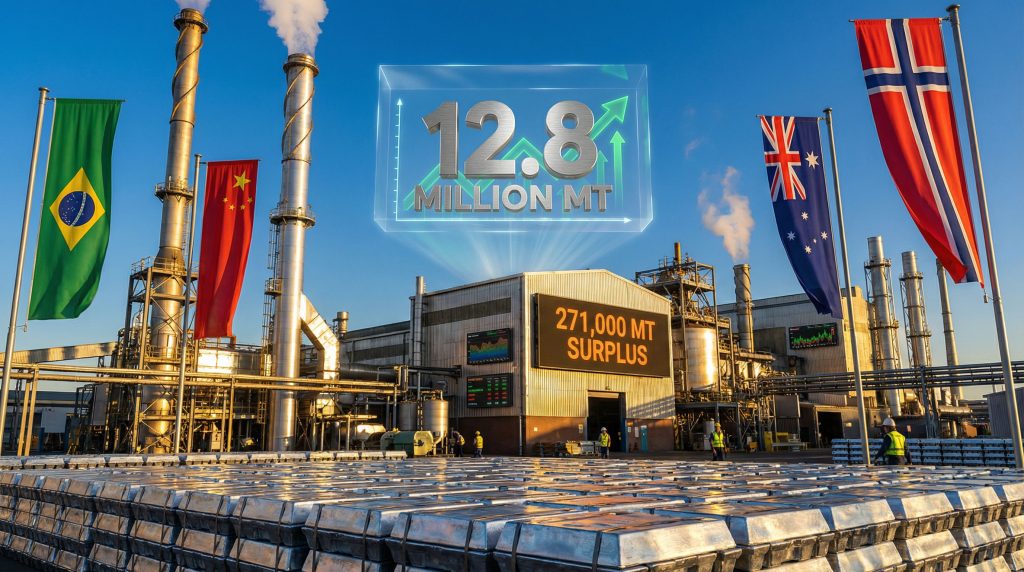
The zinc market is projected to transition from deficit conditions in 2025 to a 271,000 MT surplus in 2026, representing a significant structural shift. This reversal reflects the timing of capacity additions relative to demand growth patterns across major consuming sectors.
| Metric | 2025E | 2026F | Change |
|---|---|---|---|
| Refined Production | 13.8 MT | 14.13 MT | +2.4% |
| Global Demand | 13.86 MT | 13.86 MT | +1.0% |
| Market Balance | Deficit | 271,000 MT Surplus | Reversal |
Demand Composition Challenges
Chinese demand constraints, particularly from the real estate sector, continue to limit consumption growth despite infrastructure spending in other regions. The structural shift in Chinese construction activity creates ongoing uncertainty about medium-term demand trajectories for galvanising applications.
Industrial demand patterns across automotive, construction, and consumer goods sectors show varying resilience to economic uncertainties. Die-casting applications for automotive components maintain relatively stable demand, whilst construction-related galvanising markets face greater volatility tied to broader economic cycles. These patterns significantly influence the global copper supply forecast and related base metal markets.
Investment Implications and Strategic Considerations
Capacity Expansion Timing
The transition to surplus market conditions creates both opportunities and challenges for expansion-focused mining companies. Projects with strong cost positions and integrated value chains are better positioned to maintain profitability during periods of increased competition.
New capacity additions in Brazil, Canada, Norway, and China reflect long-term confidence in zinc fundamentals despite near-term surplus projections. The timing of these additions relative to demand recovery patterns will significantly influence project economics and returns on invested capital. Moreover, current zinc price forecasts suggest considerable volatility ahead.
Risk Management Frameworks
Operational risk factors extend beyond traditional mining hazards to include treatment charge volatility, concentrate availability constraints, and transportation cost pressures. Companies with diversified geographic footprints and flexible concentrate marketing arrangements maintain superior risk-adjusted return profiles.
Strategic Alert: Brazilian smelting operations faced operational instabilities in 2025, highlighting the importance of geographic diversification and operational hedging strategies for integrated zinc producers.
The concentrate market tightness, despite overall market surplus projections, creates specific risks for import-dependent smelting operations. Treatment charge negotiations become increasingly complex as supply-demand imbalances vary by region and contract duration.
The next major ASX story will hit our subscribers first
Long-Term Market Structure Evolution
Integrated Producer Advantages
Companies with captive concentrate supplies and refining capacity maintain structural advantages during volatile market periods. The ability to optimise internal transfer pricing, adjust production schedules across operations, and hedge commodity price exposure through operational decisions provides significant competitive benefits.
Multi-metal operations enable revenue diversification that reduces dependence on single-commodity price cycles. The integrated approach to by-product credit optimisation, demonstrated by higher silver, lead, and copper revenues offsetting zinc price volatility, represents a sophisticated approach to portfolio management.
Market Positioning for 2026-2028
The zinc production forecast through 2028 indicates continued expansion in established mining regions, with particular strength in Latin American operations. However, the pace of growth deceleration from 4.6% in 2025 to 2.4% in 2026 suggests maturing supply additions and increasing focus on operational optimisation rather than capacity expansion.
Strategic positioning requires balancing growth investments with operational efficiency improvements as markets transition toward surplus conditions. Companies maintaining cost leadership positions whilst investing in technology adoption and process optimisation are likely to outperform during the projected surplus period. Consequently, the evolving market structure demands comprehensive understanding of both operational excellence and strategic risk management.
The evolving zinc market landscape through 2026-2028 reflects a complex interplay of regional production dynamics, technological advancement, and changing demand patterns. Success in this environment requires sophisticated understanding of market mechanisms, strategic geographic positioning, and operational excellence across the integrated value chain. Furthermore, the zinc production forecast indicates that companies must balance immediate operational demands with long-term strategic positioning to maintain competitive advantages in an increasingly complex global marketplace.
Looking to capitalise on zinc market dynamics?
Discovery Alert's proprietary Discovery IQ model delivers instant notifications on significant ASX mineral discoveries, including zinc and other base metal opportunities that could benefit from evolving market conditions. With the zinc market transitioning to surplus and treatment charges signalling supply changes, stay ahead of emerging discovery opportunities by receiving real-time alerts that transform complex market data into actionable investment insights for both short-term traders and long-term investors.