July 9, 2026
The Hidden Vulnerability in Global Zinc Supply Chains
When industrial accidents strike commodity markets, the price response often reveals more about underlying supply tightness than the incident itself. A fire that burns for one hour, causes no casualties, and affects a single processing unit at one facility should, in theory, produce a modest market ripple. When it instead drives a 3.4% intraday price surge on the London Metal Exchange, that reaction is a diagnostic signal, not an overreaction. It tells observers exactly how little buffer exists in global zinc supply infrastructure.
The Young Poong Seokpo zinc smelter fire on July 9, 2026 was one such signal. Understanding what it reveals requires looking beyond the fire itself and into the structural realities of zinc processing, the evolving economics of sulphuric acid, and the compounding regulatory history of one of Northeast Asia's most consequential smelting facilities.
When big ASX news breaks, our subscribers know first
South Korea's Position in the Global Zinc Processing Hierarchy
South Korea occupies a disproportionately important position in global zinc refining relative to its geographic footprint. The country hosts two of the largest zinc smelting operations in the world, and its integrated industrial base makes it a critical node in the Northeast Asian metals supply network.
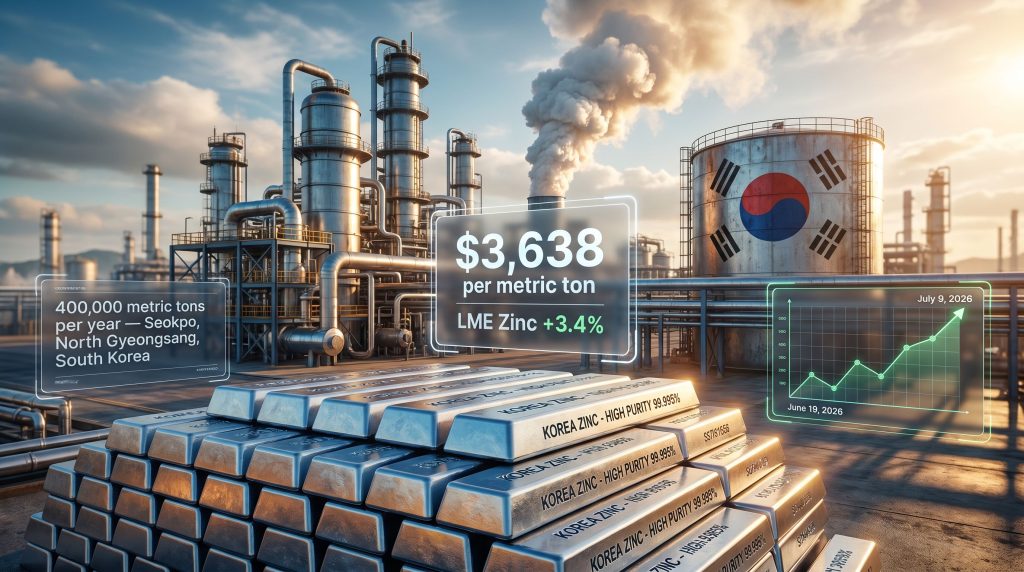
Young Poong established the Seokpo facility in North Gyeongsang province in 1970, making it South Korea's first zinc smelting operation. Over five decades, it evolved from a foundational industrial asset into a facility with nameplate capacity of 400,000 metric tons of zinc ingots per year, according to its website. That single figure places Seokpo among the most significant zinc processing operations anywhere in Asia.
Zinc's industrial importance is frequently underestimated in mainstream financial commentary. Its primary commercial application is galvanising steel, a process that applies a protective zinc coating to prevent corrosion. This makes zinc demand structurally tied to construction activity, automotive manufacturing, and infrastructure investment globally. When zinc supply is disrupted, the downstream consequences eventually reach steel fabricators, bridge builders, and vehicle manufacturers. Furthermore, these global zinc production shifts have amplified the strategic significance of any major smelting disruption.
Global Zinc Smelting Capacity: A Concentrated Landscape
The global zinc smelting industry is geographically concentrated in ways that amplify the market impact of individual facility events. The table below illustrates the scale of major operations:
| Facility | Country | Annual Zinc Capacity |
|---|---|---|
| Korea Zinc Onsan | South Korea | ~550,000 mt |
| Hindustan Zinc Chanderia | India | ~425,000 mt |
| Young Poong Seokpo | South Korea | ~400,000 mt |
| Nyrstar Budel | Netherlands | ~315,000 mt |
This concentration means that when a single large facility faces an unplanned disruption, there is limited short-term substitution capacity available. Unlike industries with distributed production models, zinc smelting requires specialised infrastructure and cannot be easily redirected or ramped up at alternative sites on short notice.
What Actually Happened at Seokpo on July 9, 2026
The fire at the Young Poong Seokpo zinc smelter ignited at 12:36 local time (03:36 GMT) on Thursday, July 9, 2026, according to a report by the Maeil Business newspaper. The affected unit was the facility's sulphuric acid production plant, a byproduct processing system that operates in direct connection with the core zinc smelting workflow.
The fire was extinguished within approximately one hour of ignition. Authorities confirmed no casualties occurred and no toxic gas leaks were detected. A Level 1 emergency response was activated, bringing local evacuation protocols and on-site government inspections into effect. Young Poong was not immediately available for comment outside regular business hours at the time of initial reporting.
How a Zinc Smelter Produces Sulphuric Acid: A Technical Walkthrough
The sulphuric acid plant is not peripheral infrastructure at a zinc smelter. It sits at the centre of the facility's environmental and commercial operating model. Understanding why requires tracing the metallurgical process:
-
Zinc concentrate roasting: Raw zinc sulphide concentrate is fed into a roasting furnace and heated at temperatures exceeding 900 degrees Celsius, converting zinc sulphide into zinc oxide while releasing large quantities of sulphur dioxide (SO₂) gas as a direct byproduct.
-
SO₂ capture: Rather than venting this highly toxic gas to the atmosphere, modern zinc smelters route it through gas cleaning systems designed to capture and purify the SO₂ stream.
-
Contact process conversion: The cleaned SO₂ gas passes through a catalytic converter using vanadium pentoxide as a catalyst, producing sulphur trioxide (SO₃), which is then absorbed into water to yield sulphuric acid (H₂SO₄).
-
Commercial sale: The resulting acid is a commercially valuable commodity, sold in bulk to copper refiners, nickel processors, and phosphate fertiliser manufacturers.
-
Dual disruption risk: A fire in the acid plant therefore threatens both the continuity of zinc ingot production and the commercial acid supply stream simultaneously.
Technical Note: Zinc smelters are legally required in most jurisdictions to capture SO₂ rather than emit it. The acid plant is therefore both an environmental compliance mechanism and a revenue-generating asset. Its disruption is never purely operational; it carries regulatory, financial, and downstream supply implications at the same time.
The LME Zinc Price Reaction: Reading the Market Signal
LME zinc prices rose by as much as 3.4% intraday on July 9, 2026, reaching $3,638 per metric ton, the highest level recorded since June 19, 2026, and within striking distance of a four-year price peak. This reaction occurred before any confirmed production shutdown had been announced.
Why Commodity Markets Price Uncertainty, Not Just Confirmed Losses
Commodity markets are forward-pricing mechanisms. Traders do not wait for confirmed output losses before repositioning. Instead, they price the probability-weighted range of potential outcomes the moment a supply risk event becomes public. Several dynamics compounded the price sensitivity on July 9:
- The facility's recent production status was unconfirmed even before the fire, according to reporting at the time, suggesting Seokpo may have already been operating below nameplate capacity
- The facility's documented history of court-ordered suspensions introduced a non-trivial probability that the fire could trigger further regulatory action
- Global zinc inventories on the LME have remained structurally low, reducing the buffer against supply shocks
- The acid plant fire arrived against a backdrop of already-elevated zinc prices near multi-year highs, concentrating speculative attention on any incremental supply risk
Zinc Price Context at the Time of the Incident
| Reference Point | LME Zinc Price (USD/t) | Context |
|---|---|---|
| Previous recent high | ~$3,638 | June 19, 2026 |
| July 9, 2026 intraday peak | $3,638 | Seokpo fire reaction |
| Four-year peak proximity | Near multi-year high | Market at structural inflection |
Market Psychology Insight: The speed and magnitude of the zinc price move on July 9 reflects a market that had already internalised supply tightness. In structurally balanced markets, a one-hour contained fire with no confirmed output loss would generate minimal price response. The 3.4% spike is the market communicating that it perceives virtually no available slack in global zinc supply.
Sulphuric Acid: The Commodity Nobody Talks About Until It Disappears
One of the most underappreciated dimensions of the Seokpo incident is its potential impact on global sulphuric acid supply. For most of the 20th century, sulphuric acid was treated as an unavoidable byproduct of base metals smelting, sold cheaply into downstream markets and barely tracked as a commodity in its own right.
That characterisation has changed materially. Sulphuric acid has become a highly sought-after commodity in recent months, driven by tightening supply conditions linked to Middle East conflict dynamics that have restricted global sulphur feedstock availability, according to reporting by Reuters. The structural shift in acid market economics means a fire at a major smelter's acid plant now carries implications well beyond the smelter's fence line.
The Three Industrial Pillars of Sulphuric Acid Demand
-
Copper refining: Hydrometallurgical copper operations including heap leach and solvent extraction/electrowinning (SX-EW) processes are major acid consumers. Reduced acid availability directly raises copper production costs and can constrain output at operations that lack alternative reagent supplies. In this context, the ongoing copper supply crunch makes any acid disruption particularly consequential.
-
Nickel processing: Battery-grade nickel production, particularly the high-pressure acid leach (HPAL) processing pathway that is central to Indonesian nickel expansion, depends heavily on continuous sulphuric acid supply. Disruptions ripple directly into battery precursor chemical economics.
-
Phosphate fertiliser production: Phosphoric acid, the key input to phosphate fertilisers, is manufactured from phosphate rock using sulphuric acid. Any tightening of acid supply therefore transmits into global food production input costs.
Supply Chain Warning: In a market where sulphuric acid supply is already constrained by geopolitical factors restricting sulphur availability, any reduction in smelter-sourced acid output, even if temporary, can generate cascading cost pressures across copper, nickel, and agricultural supply chains. The interconnected nature of these industries means a zinc smelter fire is never purely a zinc market event.
Young Poong Seokpo: A Facility With a Complex Regulatory Record
The July 2026 fire did not occur at a facility with a clean safety history. The Seokpo smelter has accumulated a documented series of regulatory actions, safety incidents, and legal proceedings that add important context to how markets and regulators are likely to respond to any further enforcement decisions.
Regulatory Timeline: Young Poong Seokpo Smelter
| Period | Incident or Action | Outcome |
|---|---|---|
| December 2023 | Arsine gas exposure event | 1 fatality, 3 hospitalisations |
| August 2024 | CEO and director arrested | Charged under the Serious Disaster Punishment Act |
| November 2024 | Supreme Court of Korea ruling | Two-month operational suspension ordered |
| July 9, 2026 | Sulphuric acid plant fire | Level 1 emergency response activated |
The December 2023 arsine gas incident resulted in the death of one subcontractor and the hospitalisation of three others. Arsine, a highly toxic gas formed from arsenic contamination in zinc concentrates under acidic conditions, represents one of the more dangerous occupational hazards in zinc processing environments.
Following the 2023 fatality, South Korea's Serious Disaster Punishment Act became the basis for the August 2024 arrests of Young Poong's CEO and a director. This legislation was specifically enacted to impose direct criminal liability on corporate leadership when workplace fatalities occur due to systemic, preventable safety failures. The Seokpo prosecutions followed an earlier precedent set by the Hwaseong battery plant fire, which became the first case to result in a managerial arrest under the same legislation.
The Supreme Court of Korea subsequently upheld the suspension order in November 2024, mandating a two-month operational suspension of the Seokpo smelter, based on violations of the Water Environment Conservation Act, specifically the discharge of wastewater containing cadmium and other heavy metals at levels exceeding permissible limits.
What South Korea's Industrial Safety Enforcement Trajectory Means for Operators
South Korea's regulatory posture toward major industrial operators has hardened significantly over recent years. The Serious Disaster Punishment Act represents a structural shift from institutional fines toward personal criminal accountability for executives. For facility operators, this changes the risk calculus fundamentally: regulatory violations are no longer purely financial liabilities absorbed at the corporate level, they now carry potential imprisonment for individuals at the top of the management structure.
For Seokpo specifically, the accumulation of a fatal gas incident, executive arrests, an environmental suspension, and now a major fire creates a regulatory overhang that any government inspection triggered by the July 2026 incident will need to evaluate in full historical context. In addition, broader global supply chain pressures are compounding the sensitivity of markets to any further enforcement action at a facility of this scale.
The next major ASX story will hit our subscribers first
Scenario Analysis: What Happens Next for Zinc Markets
The range of potential outcomes from the Seokpo fire spans from benign to materially disruptive. The following scenario framework reflects the key variables: inspection findings, pre-existing production status, and regulatory response.
| Scenario | Assessment | Zinc Price Implication |
|---|---|---|
| Fire contained, full operations resume within days | Moderate-High probability if damage is isolated | Price retracement toward pre-fire levels |
| Partial shutdown for safety inspection lasting weeks | Moderate probability given regulatory history | Sustained price support above $3,500/t |
| Regulatory-triggered extended suspension | Lower but non-trivial given prior court orders | Potential test of four-year price highs |
| Compounding acid supply disruption to downstream markets | Conditional on scenarios 2-3 | Cross-commodity cost pressure on copper and nickel |
Short-term market factors to monitor include:
- Official statements from Young Poong Corp. on production continuity
- Government inspection outcomes and any enforcement notices issued
- LME zinc inventory data in the weeks following the incident
- Sulphuric acid spot price movements in Asian markets
Longer-term structural considerations include:
- Whether the facility's unconfirmed pre-fire production status reflects a deeper operational constraint
- How South Korean regulators apply the Serious Disaster Punishment Act to a facility with this level of accumulated incident history
- Whether the global zinc market's demonstrated sensitivity to single-facility disruptions will attract speculative positioning ahead of any formal regulatory announcements
Frequently Asked Questions: Young Poong Seokpo Zinc Smelter Fire
What caused the fire at the Young Poong Seokpo smelter?
The fire broke out in the sulphuric acid production unit of the Seokpo zinc smelter in North Gyeongsang province, South Korea. The precise ignition cause had not been publicly confirmed at the time of initial reporting.
Was anyone injured in the Seokpo smelter fire?
Authorities confirmed no casualties occurred and no toxic gas leaks were detected following the July 9, 2026 incident. A Level 1 emergency response was activated as a precautionary safety measure.
How large is the Young Poong Seokpo zinc smelter?
According to the facility's website, the Seokpo plant has a nameplate production capacity of 400,000 metric tons of zinc ingots per year, making it one of the largest zinc smelting operations in South Korea and Northeast Asia.
Why did zinc prices rise after the Seokpo fire?
LME zinc prices rose by up to 3.4% to $3,638 per metric ton on the day of the fire, as markets priced in potential supply disruption risk. The reaction also reflected structural supply tightness in the zinc market and uncertainty about the facility's pre-fire production status.
What is sulphuric acid's role in zinc smelting?
Sulphuric acid is a primary byproduct of the zinc concentrate roasting process. It is commercially sold to copper refiners, nickel processors, and fertiliser manufacturers. Disruptions to acid plant operations therefore carry downstream implications well beyond zinc supply alone. Furthermore, the broader critical minerals demand driven by the energy transition has elevated the strategic importance of these interconnected supply streams.
Has the Young Poong Seokpo facility faced safety issues before?
Yes. The facility has a documented history of safety and environmental incidents, including a fatal arsine gas exposure in December 2023, executive arrests under South Korea's Serious Disaster Punishment Act in August 2024, and a court-ordered suspension upheld by the Supreme Court of Korea in November 2024.
Key Observations for Investors and Industry Watchers
The Young Poong Seokpo zinc smelter fire is simultaneously a facility-specific event and a window into broader structural vulnerabilities in global base metals supply chains. Several takeaways stand out:
-
Zinc market tightness is structural, not cyclical. A one-hour, zero-casualty fire at a single facility generating a 3.4% LME price move is not normal market behaviour. It reflects a market with minimal inventory cushion and high sensitivity to any incremental supply risk.
-
Sulphuric acid has graduated to strategic commodity status. Tightening acid supply driven by geopolitical sulphur feedstock constraints means acid plant disruptions at major smelters now transmit cost pressure across copper, nickel, and agricultural industries simultaneously.
-
Young Poong's regulatory trajectory creates sustained uncertainty. The accumulation of fatal incidents, executive criminal charges, court-ordered suspensions, and now a major fire at Seokpo creates an environment where further enforcement action is a credible, non-trivial risk.
-
South Korea's industrial safety enforcement is intensifying. The Serious Disaster Punishment Act fundamentally changes executive risk at industrial facilities, making regulatory response to safety incidents faster, more personal, and more consequential for operational continuity.
-
Watch the inspection, not just the fire. The government inspections triggered by the Level 1 emergency response may prove more consequential for production continuity than the physical damage from the fire itself, particularly given the facility's prior enforcement history.
Want to Stay Ahead of the Next Major Mineral Discovery Before the Market Moves?
Discovery Alert's proprietary Discovery IQ model delivers real-time alerts on significant ASX mineral discoveries, instantly converting complex geological and commodity data into actionable investment insights — explore historic discoveries and their returns to understand the scale of opportunity, then begin your 14-day free trial at Discovery Alert to position yourself ahead of the market.