August 25, 2026
Canada's approach to Canada regulatory approval spent fuel repository demonstrates a sophisticated regulatory architecture that integrates federal oversight, provincial coordination, and Indigenous sovereignty. The intersection of geological science, regulatory frameworks, and public acceptance creates a complex matrix that determines whether nuclear power can achieve its potential as a reliable baseload energy source. Understanding how different countries navigate these challenges reveals broader patterns in energy policy, environmental governance, and technological deployment.
Multi-Jurisdictional Framework Sets New Precedents
Canada's approach to spent fuel repository approval demonstrates a sophisticated regulatory architecture that integrates federal oversight, provincial coordination, and Indigenous sovereignty. According to the American Nuclear Society's Nuclear Newswire, Canada began its Canada regulatory approval spent fuel repository process in January 2026, marking the start of what experts anticipate will be a comprehensive multi-year assessment.
The regulatory framework operates through coordinated assessment mechanisms that streamline what could otherwise be conflicting jurisdictional requirements. The Impact Assessment Agency of Canada (IAAC) works alongside the Canadian Nuclear Safety Commission (CNSC) to provide comprehensive project evaluation under what officials describe as an integrated review methodology.
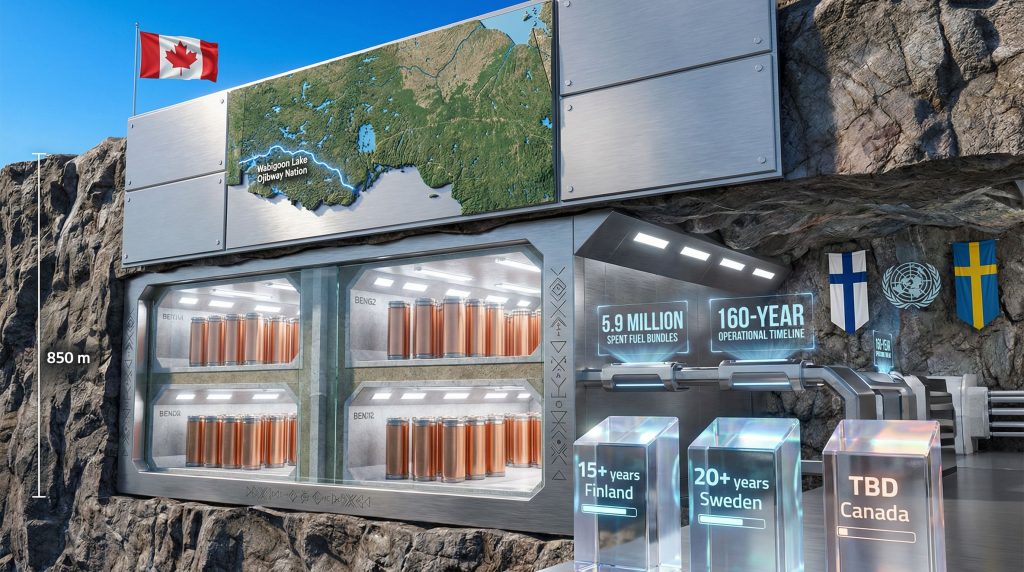
This coordination extends beyond federal agencies to include meaningful Indigenous governance participation. The Wabigoon Lake Ojibway Nation has established independent assessment authority for the proposed repository, creating precedents for Indigenous-led regulatory pathways that could influence resource development across Canada. Furthermore, the integration of mining claims framework requirements ensures that thousands of years of geological and environmental observation inform technical decision-making processes.
The regulatory structure addresses a fundamental challenge in nuclear waste management: balancing rigorous safety standards with decision-making efficiency. By consolidating multiple approval streams into coordinated timelines, Canada attempts to avoid the regulatory fragmentation that has delayed similar projects in other jurisdictions.
When big ASX news breaks, our subscribers know first
Strategic Importance for Nuclear Industry Expansion
Deep geological repositories serve as enabling infrastructure for nuclear power growth, addressing one of the industry's most persistent challenges: long-term waste storage. Current spent fuel storage systems rely on temporary solutions that create operational constraints and public acceptance barriers for new reactor construction.
The connection between waste management solutions and nuclear industry expansion becomes evident when examining global deployment patterns. Countries with established waste management strategies, including Finland with its operational Onkalo repository, demonstrate greater success in maintaining public support for nuclear energy programs. Finland's experience provides valuable operational data showing that deep geological disposal can transition from theoretical concept to practical reality.
Financial market confidence also correlates with waste management certainty. However, uranium market volatility reached $82.00 per pound in January 2026, according to Trading Economics data cited by the American Nuclear Society Nuclear Newswire. This price level, representing the highest value in more than two months, reflects renewed industry optimism partly driven by progress in waste management solutions and regulatory approvals.
International best practices emerging from Finland's Onkalo facility demonstrate the technical feasibility of deep geological disposal. The facility's successful transition to operational status provides proof-of-concept for multi-barrier containment systems and long-term geological stability. This operational experience reduces technical risk perceptions for subsequent repositories and establishes engineering standards for the global nuclear industry.
Supply chain implications extend beyond immediate project requirements to encompass domestic fuel cycle completion. Countries with comprehensive waste management capabilities gain strategic energy security advantages by reducing dependence on international waste services and maintaining full control over their nuclear fuel lifecycle.
International Timeline Analysis Reveals Regulatory Complexity
Comparative analysis of deep geological repository development reveals significant variation in regulatory timelines and approval processes across different countries. Finland's path to operational status at Onkalo required more than 15 years of regulatory review, while Sweden's repository project at Forsmark has undergone more than 20 years of assessment and remains under construction.
| Country | Repository Status | Primary Regulatory Bodies | Key Approval Phases |
|---|---|---|---|
| Finland | Operational | STUK, Government | Site selection, construction licence, operational licence |
| Sweden | Under Construction | SSM, Government | Environmental assessment, government approval, construction permit |
| Canada | Assessment Phase | IAAC, CNSC, WLON | Impact assessment, federal review, Indigenous consultation |
The extended timelines reflect the comprehensive nature of deep geological repository assessment rather than regulatory inefficiency. Each country must demonstrate long-term safety across geological timescales spanning hundreds of thousands of years, requiring extensive scientific analysis and public consultation.
Canada's assessment phase structure includes initial project description review periods, impact statement development requirements, and coordinated federal-provincial approval mechanisms. In addition, the integration of Indigenous governance adds additional consultation dimensions that may extend timeline requirements but strengthens long-term project sustainability through enhanced community acceptance.
Technical complexity contributes significantly to regulatory duration. Each repository site requires detailed geological characterisation, groundwater modelling, and safety case development specific to local conditions. The scientific rigour demanded by nuclear safety regulators necessitates extensive data collection and analysis periods that cannot be compressed without compromising safety validation.
International coordination also influences approval timelines. Repositories must demonstrate compliance with International Atomic Energy Agency (IAEA) safety standards and address transboundary environmental considerations, particularly for sites near international borders or shared water systems.
Engineering Specifications Drive Safety Requirements
Technical specifications for Canada regulatory approval spent fuel repository reflect decades of international research and operational experience from facilities worldwide. Deep geological repositories typically operate at depths between 400-800 metres in stable geological formations, with Canada's proposed facility targeting crystalline rock formations at depths providing long-term isolation from surface environmental systems.
Multi-barrier containment systems represent the fundamental safety philosophy underlying deep geological disposal. These systems combine engineered barriers, including specialised containers and backfill materials, with natural geological barriers to provide redundant protection across extended timeframes. Each barrier system must demonstrate independent capability to contain radioactive materials, ensuring that failure of any single component does not compromise overall safety.
Capacity requirements for Canada's repository reflect projected spent fuel inventory from the country's nuclear power program. The facility must accommodate decades of reactor operation while maintaining flexibility for future nuclear energy expansion. Operational timeline projections spanning 160 years encompass both active disposal operations and extended monitoring phases to verify long-term performance.
Safety case requirements demand comprehensive demonstration of repository performance across multiple scenarios and timeframes. These assessments must address normal operating conditions, potential disruption events, and long-term evolution of the repository system. Consequently, geological logging codes and groundwater protection protocols receive particular attention given the potential for radionuclide migration through hydrogeological pathways.
What Makes Deep Geological Repositories Engineering Marvels?
Modern underground engineering marvels showcase the sophisticated technology required for deep geological facilities. Geological stability assessments examine potential changes to repository environments over timeframes far exceeding typical engineering projects. Climate change impacts, including potential permafrost changes and evolving groundwater patterns, require analysis and mitigation planning.
Seismic activity, although generally minimal in Canadian Shield regions, must be characterised and incorporated into facility design parameters. These engineering challenges demand innovative solutions that combine traditional mining expertise with nuclear safety requirements.
Indigenous Governance Establishes Policy Innovation
The Wabigoon Lake Ojibway Nation's role in Canada's repository approval process represents a significant evolution in Indigenous governance and resource development. This partnership establishes community-driven approval processes that recognise Indigenous sovereignty while addressing traditional knowledge and environmental stewardship principles.
Independent regulatory assessment authority granted to WLON creates unprecedented Indigenous participation in nuclear facility licensing. This governance model extends beyond consultation requirements to encompass decision-making authority in key approval phases. The approach recognises constitutional rights and treaty obligations while establishing practical frameworks for co-management of major infrastructure projects.
Traditional knowledge integration requirements ensure that Indigenous environmental observations and geological understanding inform technical assessments. This knowledge, accumulated over thousands of years of land stewardship, provides unique insights into long-term environmental patterns and ecological relationships that complement scientific analysis.
Revenue-sharing and benefit agreement structures create economic incentives for community participation while addressing historical inequities in resource development. These agreements typically encompass employment opportunities, training programmes, and long-term economic benefits that extend throughout project lifecycles. Such arrangements establish precedents for equitable benefit distribution in major infrastructure projects.
The governance model addresses broader questions of Indigenous sovereignty in resource development across Canada. Success in nuclear waste repository approval could influence approaches to mining projects, pipeline developments, and other major infrastructure requiring Indigenous consultation and consent. Federal recognition of Indigenous regulatory authority represents a significant policy evolution with implications extending far beyond nuclear waste management.
Economic Drivers Shape Development Viability
Economic factors underlying deep geological repository development encompass both direct project costs and broader nuclear industry implications. Capital expenditure requirements for repository construction represent significant public investments that must be justified through long-term energy policy objectives and waste management necessity.
International cost comparisons provide benchmarks for Canadian project planning. Finland's Onkalo repository required total investments exceeding €3.5 billion across site development, construction, and operational phases. Sweden's Forsmark project involves similar cost magnitudes, reflecting the specialised engineering and extended development timelines required for deep geological facilities.
Regional economic impact assessments for northwestern Ontario examine employment creation, supply chain development, and community economic benefits. Repository construction and operation require specialised technical expertise, creating high-value employment opportunities in regions often dependent on resource extraction industries. These economic benefits must be balanced against potential impacts on existing industries, including tourism and traditional land use activities.
Nuclear industry growth dependencies on waste management solutions create economic incentives extending beyond direct repository costs. Spent fuel storage capacity constraints limit reactor operational flexibility and create long-term liability concerns for nuclear utilities. Resolution of these constraints through permanent disposal enables reactor life extensions and new facility construction that generate broader economic benefits.
International waste management service opportunities represent potential revenue streams for countries with operational deep geological repositories. Technical expertise developed through domestic repository programmes creates export opportunities for engineering services, regulatory consulting, and facility development support in countries pursuing their own waste management solutions.
Technology export potential extends to Canadian nuclear engineering firms that develop specialised capabilities through repository construction. These capabilities, including geological assessment methodologies, multi-barrier system design, and long-term monitoring technologies, have applications in international markets as more countries pursue deep geological disposal solutions.
The next major ASX story will hit our subscribers first
Environmental Assessment Frameworks Enable Comprehensive Review
Environmental assessment requirements for Canada regulatory approval spent fuel repository reflect integrated evaluation methodologies that combine radiological safety analysis with broader ecological impact assessment. The Canadian Impact Assessment Act provides frameworks for comprehensive project evaluation that address both immediate construction impacts and long-term operational considerations.
Climate change impact considerations represent a significant evolution in environmental assessment practices for long-term infrastructure projects. Repositories must demonstrate resilience across changing environmental conditions, including temperature variations, precipitation patterns, and potential extreme weather events. These assessments require sophisticated modelling techniques that project environmental conditions across extended timeframes.
Cumulative effects assessment requirements examine interactions between repository development and existing industrial activities in northwestern Ontario. The region's mining history and ongoing resource extraction activities create complex environmental baselines that must be characterised and incorporated into impact assessments. These analyses ensure that repository development does not exacerbate existing environmental pressures or create unacceptable cumulative impacts.
For instance, mine reclamation innovation provides valuable lessons for environmental restoration following repository construction. International environmental standards provide benchmarks for Canadian assessment requirements. European Union waste directive compliance models and IAEA safety standards establish minimum requirements for environmental protection that influence domestic regulatory approaches.
How Do Biodiversity Protocols Affect Repository Development?
Biodiversity protection protocols examine potential impacts on ecosystems and species populations in repository regions. These assessments must address both direct habitat impacts from facility construction and indirect effects from changed land use patterns. Long-term monitoring requirements ensure that environmental impacts can be detected and addressed throughout operational phases.
Transboundary environmental impact protocols address potential cross-border implications, particularly relevant for facilities near international borders or shared water systems. These protocols require coordination with neighbouring jurisdictions and may involve international consultation processes.
Regulatory Milestones Define Development Pathway
The approval pathway for Canada's spent fuel repository encompasses multiple regulatory phases with specific milestones and decision points. Initial assessment phases require comprehensive project descriptions that detail technical specifications, environmental impacts, and safety analyses. Public consultation periods provide opportunities for community input and stakeholder engagement in regulatory decision-making.
Impact statement preparation represents a critical regulatory milestone that consolidates technical analyses, environmental assessments, and stakeholder feedback into comprehensive documentation for regulatory review. These statements must address all significant project impacts and demonstrate mitigation measures for identified concerns.
Construction licence application phases require detailed engineering specifications, safety case presentations, and operational planning documentation. Regulatory review of these applications involves extensive technical analysis by specialised staff and independent expert panels to verify safety claims and regulatory compliance.
Community agreement finalisation encompasses benefit-sharing negotiations, environmental monitoring protocols, and long-term relationship frameworks between project proponents and affected communities. These agreements often represent prerequisites for regulatory approval and require careful negotiation to address community concerns while maintaining project viability.
Medium-term licensing pathways extend across multiple years and involve iterative review processes as technical analyses are refined and regulatory requirements are addressed. International experience suggests that these phases require sustained engagement between project proponents, regulatory agencies, and affected communities to achieve successful outcomes.
Global Influence on Nuclear Waste Strategies
Canada's repository development contributes to evolving international approaches to nuclear waste management and influences global nuclear energy deployment strategies. Technical innovations and regulatory frameworks developed through Canadian experience provide models for adaptation in other countries pursuing deep geological disposal solutions.
Geological assessment methodology sharing enables international cooperation in repository site characterisation and safety analysis techniques. Canadian expertise in crystalline rock formations complements experience from other countries with different geological conditions, building comprehensive international knowledge bases for repository development.
Regulatory framework model adoption potential extends to countries developing their own nuclear waste management programmes. Canada's integration of Indigenous governance, federal-provincial coordination, and comprehensive environmental assessment provides alternative approaches to traditional centralised regulatory models.
Supply chain security implications encompass domestic nuclear fuel cycle completion and reduced dependency on international waste services. Countries with comprehensive waste management capabilities gain strategic advantages in nuclear energy planning and can offer greater energy security through complete fuel cycle control.
International collaboration opportunities emerge through technical expertise sharing, regulatory harmonisation initiatives, and joint research programmes addressing common waste management challenges. These collaborations can reduce development costs and accelerate technical progress through shared knowledge and resources.
Enhanced energy security through waste management certainty enables more aggressive nuclear deployment strategies and strengthens public confidence in nuclear energy programmes. Countries demonstrating successful waste management solutions provide models for public acceptance strategies and regulatory approaches in nations considering nuclear energy expansion.
Challenges and Risk Factors Require Careful Management
Technical risk factors in deep geological repository development encompass geological characterisation uncertainties, long-term safety demonstration requirements, and technology validation challenges. Geological formations must be characterised across extended spatial and temporal scales, requiring sophisticated investigation techniques and long-term monitoring programmes to verify predicted performance.
Long-term safety demonstration presents unique challenges given the extended timeframes involved in radioactive decay processes. Safety cases must demonstrate repository performance across periods spanning hundreds of thousands of years, requiring modelling techniques that address uncertainties in geological evolution, climate change, and technological development.
Technology validation timelines reflect the conservative approach required for nuclear safety systems. New technologies and engineering approaches require extensive testing and validation before regulatory acceptance, potentially extending development schedules and increasing costs. International cooperation can help accelerate validation processes through shared research and development programmes.
Stakeholder engagement complexities arise from the need to address diverse community concerns, regulatory requirements, and technical specifications simultaneously. Multi-community consultation requirements demand sustained engagement across extended timeframes, requiring significant resources and careful management to maintain productive relationships.
Federal-provincial coordination challenges reflect Canada's complex governance structures and the need to align different regulatory frameworks and policy objectives. These coordination requirements can create delays if jurisdictional disputes arise or if regulatory requirements conflict between different levels of government.
However, international oversight expectations add additional complexity to domestic approval processes. International agreements and IAEA safety standards create requirements that must be addressed alongside domestic regulatory frameworks, potentially creating conflicting or duplicative requirements that extend approval timelines.
Disclaimer: This analysis includes forward-looking statements regarding regulatory timelines, economic impacts, and technical specifications that involve inherent uncertainties. Actual project development may differ significantly from projections due to regulatory changes, technical challenges, or stakeholder concerns. Readers should consult official regulatory documents and project updates for the most current information on Canada's spent fuel repository development.
Ready to Capitalise on Nuclear Energy Investment Opportunities?
Discovery Alert's proprietary Discovery IQ model delivers real-time alerts on significant mineral discoveries across the ASX, including uranium and critical energy metals that power the global nuclear renaissance. With uranium prices reaching $82.00 per pound and nuclear infrastructure projects accelerating worldwide, subscribers gain immediate insights into actionable trading and investment opportunities ahead of the broader market, positioning themselves to benefit from the expanding nuclear energy sector.