May 21, 2026
Chilean regulator fines Antofagasta's Centinela copper mine for non-compliance has highlighted the critical importance of water resource management in mining operations. Mining companies operating in water-scarce regions face increasingly complex regulatory frameworks designed to safeguard precious water resources. These compliance systems represent more than bureaucratic oversight; they serve as critical mechanisms for balancing industrial development with environmental protection in regions where water scarcity poses existential challenges to both communities and ecosystems.
Understanding Chile's Environmental Regulatory Framework for Mining Operations
Chile's environmental oversight system centres on the Superintendence of the Environment (SMA), which functions as the primary enforcement agency for environmental compliance across industrial sectors. The SMA operates under clear statutory authority to investigate, monitor, and penalise violations of environmental regulations established through project-specific Environmental Impact Studies and supplementary monitoring plans.
The Role of SMA in Mining Sector Oversight
The regulatory framework requires mining operations to maintain comprehensive documentation of water resource utilisation and environmental impact mitigation measures. Furthermore, understanding mining permitting basics becomes essential for companies navigating Chile's complex approval processes. These requirements extend beyond initial project approvals to encompass ongoing operational compliance throughout a mine's productive life.
Key enforcement mechanisms include:
- Systematic inspection programs conducted over multi-year periods
- Documentation review processes for environmental monitoring compliance
- Graduated penalty structures based on violation severity
- Clear timelines for remediation and payment obligations
The recent enforcement action against Antofagasta's Centinela operation demonstrates how regulatory oversight functions in practice, with investigations spanning 2019-2020 ultimately resulting in a $775,000 fine announced in January 2026.
Environmental Impact Study Compliance Requirements
Mining projects must establish and maintain monitoring protocols that align with approved Environmental Impact Studies. These protocols require continuous documentation of water resource management activities, including groundwater monitoring through dedicated wells and surface water flow measurements at specified locations.
The Centinela case illustrates typical compliance requirements, where the operation was obligated to maintain records for exploration well LE-1 and conduct regular flow measurements at La Cascada spring. Additionally, definitive feasibility studies play a crucial role in establishing these environmental monitoring frameworks. The absence of documentation for the exploration well and insufficient monitoring frequency at the spring constituted the basis for regulatory enforcement.
When big ASX news breaks, our subscribers know first
How Do Water Management Violations Impact Mining Operations?
Environmental violations in Chilean mining operate within a structured classification system that determines both penalty amounts and potential operational consequences. The SMA employs a graduated approach where violation severity directly correlates with financial penalties and regulatory responses.
Classification System for Environmental Non-Compliance
The regulatory framework categorises violations into distinct tiers, though specific threshold amounts for each category require verification from official SMA documentation. The Centinela violation was classified as "minor" with a corresponding $775,000 penalty, suggesting this represents the lower end of the enforcement spectrum.
Critical compliance elements include:
- Payment timelines: Fines must be settled within 10 business days of notification
- Documentation standards: Complete record-keeping for all monitoring activities
- Remediation requirements: Companies must address underlying compliance deficiencies
- Ongoing oversight: Enhanced monitoring may be required following violations
Financial and Operational Consequences Beyond Fines
While the immediate financial impact of environmental penalties may appear manageable for major copper producers, the broader operational implications extend far beyond monetary settlements. Regulatory violations can trigger enhanced scrutiny for future project approvals, expanded monitoring requirements, and potential delays in operational expansions.
The enforcement timeline in the Centinela case, spanning from 2019-2020 inspections to 2026 resolution, demonstrates the extended nature of regulatory processes and the importance of proactive compliance management. However, modern data-driven operations can significantly improve compliance tracking and reduce violation risks.
What Specific Monitoring Failures Triggered the Centinela Penalty?
The SMA's enforcement action against Centinela focused on two distinct water monitoring deficiencies that violated established Environmental Impact Study requirements and supplementary monitoring protocols.
Well Documentation and Record-Keeping Deficiencies
The first violation involved exploration well LE-1, where Centinela failed to maintain any documentation of monitoring activities. This represents a fundamental breach of environmental oversight requirements, as groundwater monitoring wells serve as critical data collection points for assessing mining operations' impact on subsurface water resources.
Proper well documentation typically requires:
- Regular water level measurements
- Water quality sampling and analysis
- Equipment maintenance records
- Environmental parameter tracking
Spring Flow Measurement Non-Compliance
The second violation concerned La Cascada spring, where Centinela failed to conduct water flow measurements at required frequencies. Spring monitoring serves as an essential component of surface water resource management, particularly in arid regions where natural water sources require careful protection.
Flow measurement protocols typically involve:
- Scheduled measurement intervals based on seasonal variations
- Calibrated equipment for accurate data collection
- Documentation of measurement results and environmental conditions
- Integration with broader water resource management systems
How Does This Case Fit Within Chile's Broader Copper Sector Compliance Trends?
The Chilean regulator fines Antofagasta's Centinela copper mine for non-compliance enforcement action provides insight into Chile's regulatory approach toward major copper producers, though comprehensive analysis of industry-wide compliance patterns requires broader data collection across multiple enforcement actions.
Recent Regulatory Enforcement Context
The multi-year investigation timeline from 2019-2020 inspections to 2026 resolution suggests that Chilean environmental regulators employ thorough investigative processes that allow companies time for remediation discussions before formal penalties are imposed. Furthermore, Chile's environmental regulatory framework continues evolving to address growing environmental concerns.
Key enforcement characteristics observed:
- Extended investigation periods allowing for regulatory engagement
- Clear violation categorisation and penalty assessment
- Defined payment timelines and procedural requirements
- Corporate cooperation emphasised in enforcement communications
Industry Response to Enhanced Environmental Oversight
Antofagasta's response to the enforcement action emphasised "active and transparent collaboration with authorities" and commitment to "environmental compliance and sustainable development." This positioning suggests that industry leaders view regulatory cooperation as preferable to adversarial approaches.
The company's statement indicates a strategic approach that prioritises:
- Proactive engagement with regulatory authorities
- Transparency in compliance discussions
- Integration of environmental stewardship with operational objectives
- Sustainable development as a core business principle
What Are the Strategic Implications for Antofagasta and Centinela Operations?
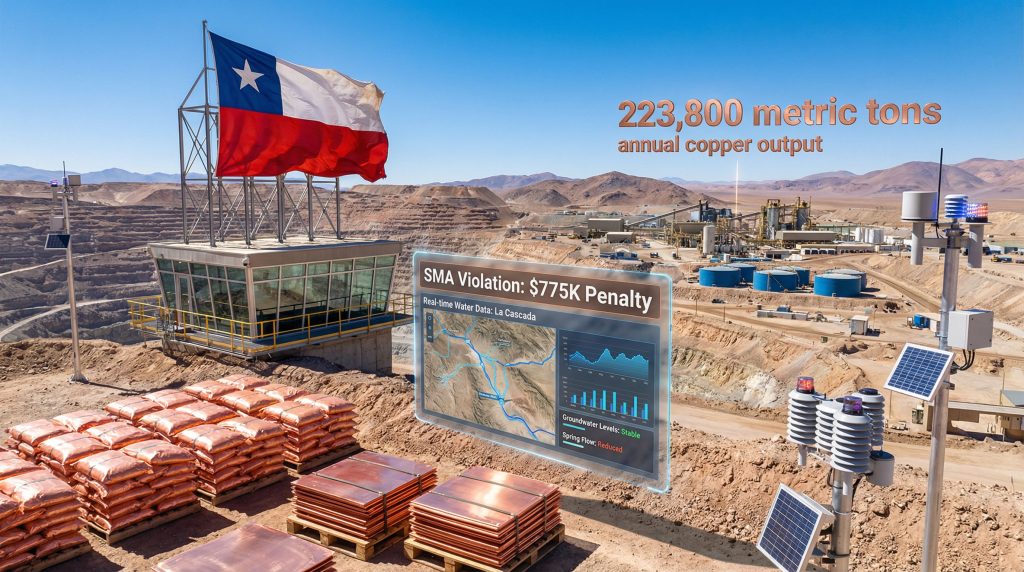
Centinela represents a significant copper production asset within Antofagasta's portfolio, with 223,800 metric tons of annual copper output in 2024. The mine integrates the Esperanza and El Tesoro projects under unified operational management, making water resource compliance critical for sustained production.
Production Context and Operational Scale
The scale of Centinela's operations underscores the strategic importance of maintaining regulatory compliance for continued production stability. Copper mining requires substantial water resources for processing activities, making water management monitoring essential for operational continuity.
Operational integration factors:
- Combined Esperanza and El Tesoro project coordination
- Unified water resource management across integrated operations
- Environmental monitoring requirements spanning multiple project components
- Production volume of 223,800 metric tons annually dependent on sustained operations
Moreover, exploring alternative extraction methods such as in-situ leaching benefits could potentially reduce water consumption and environmental impact.
Corporate Response and Remediation Strategy
Antofagasta's collaborative approach with regulatory authorities reflects industry best practices for environmental compliance engagement. The company's emphasis on transparency and sustainable development demonstrates alignment with evolving ESG investment criteria and stakeholder expectations.
The 10-business-day payment timeline requires immediate corporate attention, while longer-term compliance enhancement represents ongoing strategic priorities for operational sustainability.
What Does This Mean for Chile's Mining Investment Climate?
The Centinela enforcement action provides investors and industry participants with insight into Chile's regulatory predictability and enforcement approach for major mining operations.
Regulatory Predictability and Investment Confidence
The structured nature of the enforcement process, with clear violation categories, defined penalties, and specified timelines, suggests that Chile's regulatory framework provides operational certainty for mining companies. This predictability supports investment planning and compliance budget allocation.
Investment climate factors:
- Transparent enforcement procedures and penalty structures
- Extended investigation timelines allowing for remediation planning
- Clear communication of regulatory expectations and requirements
- Collaborative enforcement approach reducing adversarial dynamics
Environmental Compliance as Competitive Advantage
ESG investment criteria increasingly prioritise environmental stewardship and water resource management in mining sector evaluations. Companies demonstrating proactive compliance and transparent regulatory engagement may benefit from enhanced investor confidence and access to ESG-focused capital.
Technology integration in environmental monitoring systems represents an opportunity for operational excellence differentiation, with automated monitoring capabilities potentially reducing compliance risks and enhancing data quality for regulatory reporting.
The next major ASX story will hit our subscribers first
Looking Forward: Water Governance Evolution in Chilean Mining
The regulatory landscape for water resource management in Chilean mining continues evolving as climate change impacts and water scarcity concerns intensify across the region. Consequently, the Chilean regulator fines Antofagasta's Centinela copper mine for non-compliance case represents just one example of stricter enforcement trends.
Technology Integration Trends
Advanced monitoring technologies offer opportunities for enhanced compliance management and operational efficiency in water resource oversight. These systems can provide continuous data collection, automated reporting capabilities, and early warning systems for potential compliance issues.
Emerging technology applications:
- IoT sensor networks for real-time water monitoring
- Automated data logging and regulatory reporting systems
- Predictive analytics for water resource management
- Digital documentation platforms for compliance tracking
Policy Development Trajectory
Chilean environmental policy continues adapting to address evolving water scarcity challenges and climate change impacts on water resource availability. Mining companies must anticipate enhanced requirements for water conservation, community impact mitigation, and climate adaptation planning.
Future regulatory developments may include:
- Enhanced water recycling and conservation requirements
- Expanded community consultation processes for water resource utilisation
- Climate change adaptation requirements in environmental planning
- Integration of indigenous water rights considerations in permitting processes
Additionally, companies must consider long-term responsibilities, including mine reclamation evolution as environmental expectations continue rising.
Conclusion
The Chilean regulator fines Antofagasta's Centinela copper mine for non-compliance case demonstrates that environmental compliance represents both operational necessity and strategic opportunity for mining companies operating in Chile's evolving regulatory environment. Success requires proactive engagement, technology adoption, and alignment with sustainable development principles that balance industrial productivity with environmental protection.
According to Mining Weekly, this enforcement action reflects broader trends in Chilean mining oversight. Furthermore, Reuters reported that the fine represents the SMA's commitment to environmental protection in mining operations.
Disclaimer: This analysis is based on publicly available information regarding regulatory enforcement actions. Investment decisions should consider comprehensive due diligence and professional advisory services. Regulatory requirements and enforcement practices may evolve, and specific compliance obligations should be verified with relevant authorities.
Ready to Stay Ahead of Mining Sector Compliance and Investment Opportunities?
Discovery Alert's proprietary Discovery IQ model delivers instant notifications on significant ASX mineral discoveries and regulatory developments, helping investors identify actionable opportunities before market movements occur. Begin your 30-day free trial today and gain the market-leading advantage needed to navigate Chile's evolving mining investment landscape with confidence.