July 27, 2026
Mali Secures 51% Control in Revolutionary Mining Supply Chain Partnership
Mali secures 51% control in China-backed explosives venture through a groundbreaking joint venture that positions the West African nation at the forefront of regional supply chain transformation. The FARATCHI-CO SA partnership with Beijing Auxin Chemical Technology represents a strategic pivot toward domestic industrial capacity while maintaining access to Chinese technical expertise and financing mechanisms.
When big ASX news breaks, our subscribers know first
How Resource-Rich Nations Are Reshaping Critical Supply Chain Dependencies
The Strategic Importance of Explosives Manufacturing in Mining Economies
Civil explosives function as the industrial backbone of modern mining operations, serving as essential inputs for ore extraction, quarrying, and mineral processing across multiple sectors. These specialised chemical compounds enable controlled blasting operations that access underground deposits, fragment rock formations for processing, and maintain production schedules across gold, lithium, and base metal operations.
Mining economies that rely heavily on imported explosives face significant supply chain vulnerabilities during periods of regional instability or international sanctions. Transportation disruptions, border closures, and import restrictions can halt production at multi-billion dollar mining facilities, creating cascading economic impacts across entire national economies. The economic multiplier effects of establishing domestic explosives manufacturing extend beyond direct job creation to include technical skills development, chemical industry capacity building, and enhanced bargaining power with international mining companies.
Import dependency creates particularly acute risks in regions experiencing security challenges, where supply routes may be compromised by militant activity or political instability. Mining operations requiring consistent explosives supplies to maintain production schedules face operational shutdowns when external suppliers cannot guarantee delivery reliability, leading to substantial revenue losses and reduced investor confidence.
Mali's Mining Sector: Production Capacity and Infrastructure Gaps
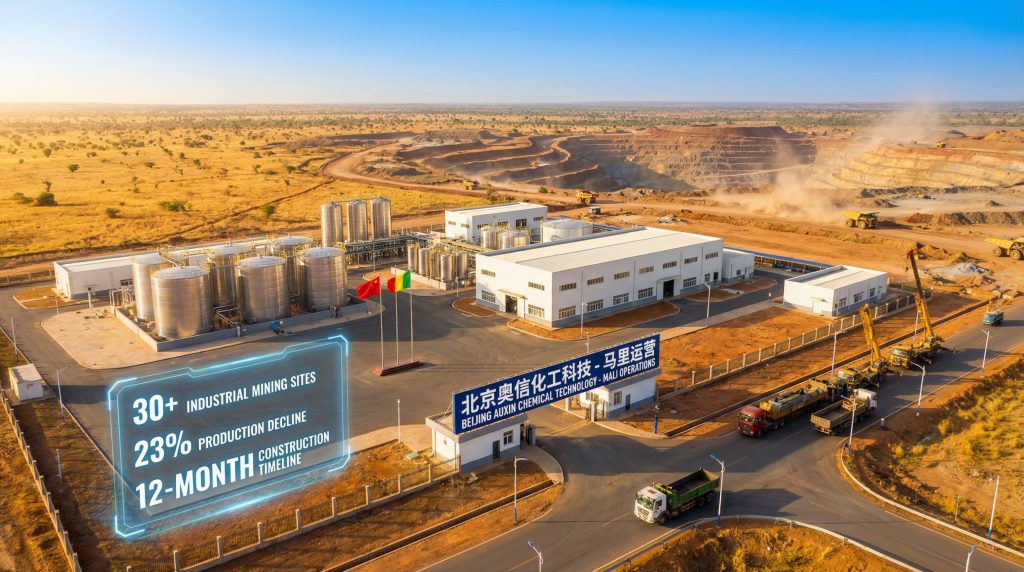
Mali's extractive industry encompasses 30 industrial mining operations, including 15 major gold mines and 2 lithium projects, positioning the nation as a significant regional mining hub despite facing substantial operational challenges. However, the sector experienced a dramatic 23% decline in gold production during the previous year, reflecting the combined impact of regulatory reforms and persistent regional security threats.
Key infrastructure gaps persist across Mali's mining landscape:
- Limited domestic refining capacity for gold concentrate processing
- Inadequate transportation networks connecting remote mining sites to export facilities
- Insufficient technical training programmes for specialised mining equipment operation
- Dependence on imported explosives, chemicals, and heavy machinery components
The country's mining code reforms implemented in 2023 introduced mandatory state equity requirements and strengthened local content mandates, reflecting government efforts to capture greater economic value from natural resource extraction. These regulatory changes, whilst aimed at improving state revenue capture, contributed to production disruptions as companies adjusted operational structures to comply with new ownership requirements.
Regional security challenges have compounded operational difficulties, with mining facilities implementing costly security protocols to protect personnel and infrastructure from potential militant attacks. The presence of Al-Qaeda and Islamic State affiliates in northern Mali creates ongoing risks for mining operations, particularly those located in remote areas with limited government security presence.
What Does China's Industrial Partnership Strategy Mean for African Mining?
Beijing Auxin Chemical Technology's African Expansion Model
China's industrial engagement in African mining extends far beyond traditional resource extraction partnerships to encompass critical supply chain infrastructure development. Beijing Auxin Chemical Technology exemplifies this comprehensive approach through its six-country explosives supply network across the African continent, leveraging the extensive capabilities of its parent company, NORINCO Group.
NORINCO Group represents one of China's largest defence and industrial conglomerates, providing Auxin with access to advanced chemical manufacturing technologies, financing mechanisms, and technical expertise that few Western competitors can match. This corporate structure enables Auxin to offer integrated solutions combining equipment supply, technical training, and operational support throughout project development cycles.
Furthermore, the company's African expansion strategy focuses on establishing local joint venture partnerships that comply with national ownership requirements while maintaining operational control through technical expertise and financial arrangements. The China expansion strategy allows Chinese partners to:
- Secure long-term supply contracts with major mining operations
- Transfer proven manufacturing technologies adapted to African operating conditions
- Develop local technical capabilities through training and knowledge exchange programmes
- Establish strategic footholds in critical mineral supply chains
Auxin's 49% ownership stake in the Mali joint venture reflects Chinese adaptation to evolving African regulatory frameworks that prioritise state control over strategic industries while maintaining access to Chinese capital and expertise.
Comparative Analysis: Chinese vs. Western Industrial Partnerships
Mali's 2023 mining code fundamentally altered the investment landscape by mandating increased state equity participation in mining projects and strengthening local content requirements. These reforms created distinct differences between Chinese and Western partnership approaches, particularly regarding ownership structures and technology transfer mechanisms.
Chinese Partnership Characteristics:
| Element | Chinese Approach | Western Approach |
|---|---|---|
| Ownership Structure | Accept minority stakes with operational influence | Historically preferred majority control |
| Financing Mechanisms | State-backed concessional loans and grants | Market-rate financing through development banks |
| Technology Transfer | Integrated expertise provision | Limited technical support post-construction |
| Local Content Compliance | Structured training programmes | Procurement-focused local sourcing |
Western mining companies traditionally operated under different assumptions about ownership and control, often seeking majority stakes to ensure operational decision-making authority. The shift toward mandatory state majority ownership has created challenges for Western investors accustomed to different risk management frameworks and corporate governance structures.
Chinese state-backed financing enables more flexible partnership structures, as companies like Auxin can access concessional funding that supports minority equity positions while maintaining technical influence through expertise provision and supply agreements. This financial flexibility provides significant competitive advantages in regulatory environments prioritising state control.
Strategic Ownership Models: Why 51% Control Matters in Resource Security
State Majority Stakes in Critical Infrastructure
Mali's decision to secure 51% controlling interest in the FARATCHI-CO SA joint venture reflects broader strategic thinking about national security and supply chain resilience. Government authorities position this ownership structure as essential for maintaining oversight of sensitive materials that directly impact mining operations and, by extension, national economic stability.
State majority control enables several critical capabilities:
Supply Chain Prioritisation: Government ownership allows authorities to prioritise domestic mining operations during supply shortages or regional disruptions, ensuring critical projects maintain operational continuity.
Security Oversight: Civil explosives require sophisticated handling and storage protocols due to their dual-use potential. State control facilitates enhanced security monitoring and prevents unauthorised access or diversion.
Strategic Planning Integration: Majority ownership aligns explosives production with broader national development priorities, including infrastructure projects, mineral processing expansion, and regional cooperation initiatives.
Revenue Optimisation: State control enables authorities to coordinate explosives pricing with mining taxation policies, potentially improving overall government revenue capture from extractive industries.
The 12-month construction timeline for facility completion represents an ambitious development schedule requiring sustained coordination between Malian government entities and Chinese technical specialists, highlighting the importance of effective governance structures for joint venture success.
Joint Venture Risk Assessment Framework
The partnership structure creates complex interdependencies between Malian state control and Chinese technical expertise, requiring sophisticated risk management approaches to address potential operational challenges. In addition, the joint venture dynamics present both opportunities and risks that must be carefully managed.
Critical Risk Factors:
- Technical Dependency: Mali's long-term operational independence depends on successful knowledge transfer during the construction and initial operational phases
- Political Stability: Changes in government leadership or policy priorities could affect partnership stability and operational continuity
- Security Environment: Regional instability may impact facility operations, supply chain logistics, and personnel safety
- Market Dynamics: Fluctuations in mining sector demand could affect facility utilisation and financial viability
The joint venture model requires careful balance between state oversight and operational efficiency, particularly regarding technical decision-making, quality control, and supply chain management. Success depends on establishing clear governance protocols that preserve state authority while enabling effective day-to-day operations.
Chinese partners bring proven experience in similar African partnerships, but each project faces unique regulatory, security, and operational challenges requiring adaptive management approaches. The 49% Chinese stake must generate adequate returns while supporting broader strategic objectives related to regional market expansion and technology demonstration.
Regional Security Dynamics: Mining Operations Under Pressure
Sahel Security Environment Impact on Resource Extraction
The deteriorating security situation across the Sahel region creates unprecedented challenges for mining operations, with militant groups increasingly targeting economic infrastructure to disrupt government revenue sources and demonstrate operational capability against state authorities.
Al-Qaeda affiliates and Islamic State-linked organisations operate throughout northern Mali, conducting attacks against military installations, civilian targets, and economic infrastructure. Mining facilities represent particularly attractive targets due to their:
- High economic value and symbolic importance for government legitimacy
- Remote locations with limited security force presence
- Valuable equipment and materials that can be seized or destroyed
- International personnel who may be targeted for kidnapping or intimidation
Security costs now represent significant portions of mining operational budgets, with companies implementing comprehensive protection measures including:
- Private security contractors for facility and personnel protection
- Enhanced perimeter defences including surveillance systems and access controls
- Evacuation protocols for emergency personnel removal during security incidents
- Intelligence cooperation with government security services for threat assessment
The 23% production decline experienced across Mali's mining sector reflects the cumulative impact of security disruptions, regulatory uncertainty, and operational challenges created by the deteriorating regional environment.
Geopolitical Realignment: China-Russia vs. Western Influence
Mali's strategic pivot toward closer cooperation with China and Russia represents a fundamental shift in regional geopolitical dynamics, with significant implications for mining sector investment patterns and operational frameworks. Consequently, the geopolitical mining landscape continues to evolve rapidly across Africa.
The Alliance of Sahel States (AES), comprising Mali, Burkina Faso, and Niger, reflects coordinated efforts to reduce dependence on Western security assistance and economic partnerships while developing alternative relationships with non-Western powers.
Chinese Engagement Expansion:
- Gold refining facility development projects
- Uranium processing infrastructure investments
- Security-related technology and equipment provision
- Technical training programmes for government personnel
Russian Involvement Areas:
- Military training and equipment provision through private security companies
- Mineral extraction joint ventures in gold and uranium sectors
- Energy infrastructure development projects
- Diplomatic support for government legitimacy in international forums
Western investor confidence has deteriorated significantly due to concerns about:
- Regulatory unpredictability as governments implement nationalist resource policies
- Security risks affecting personnel safety and operational continuity
- Political instability that could affect contract enforcement and asset protection
- Sanctions exposure related to government cooperation with Russian entities
This geopolitical realignment creates opportunities for Chinese companies like Auxin to expand market presence whilst Western competitors face increasing barriers to entry and operation.
Economic Impact Analysis: Local Production vs. Import Dependencies
Import Substitution Economics in Explosives Manufacturing
Establishing domestic explosives manufacturing capacity represents a strategic economic decision with implications extending far beyond immediate cost savings. Import substitution in critical industrial inputs can generate substantial economic benefits whilst reducing external vulnerabilities.
Economic Benefits of Local Production:
Cost Reduction: Elimination of international shipping, customs duties, and import financing costs can reduce explosives procurement expenses by 20-30% for mining operations.
Employment Generation: Manufacturing facilities create direct employment opportunities for chemical engineers, production technicians, quality control specialists, and administrative personnel, with indirect employment effects in supporting industries.
Foreign Exchange Conservation: Reduced imports improve balance of payments whilst freeing foreign currency reserves for other priority investments.
Supply Chain Reliability: Local production eliminates shipping delays, customs clearance bottlenecks, and international supply chain disruptions that can halt mining operations.
Technology Transfer Benefits: Manufacturing operations create opportunities for technical skills development and industrial knowledge transfer that can support broader economic diversification efforts.
The FARATCHI-CO SA facility targets production capacity sufficient to serve Mali's 30 industrial mining operations, potentially eliminating import requirements for civil explosives whilst creating export opportunities to neighbouring countries experiencing similar supply chain challenges.
Mining Sector Revenue Optimisation Strategies
Mali's government views local explosives manufacturing as part of comprehensive efforts to maximise economic benefits from natural resource endowments whilst reducing dependence on volatile commodity export revenues. This approach aligns with broader mining innovation trends across the continent.
Integrated Value Chain Development:
- Upstream Integration: Control of critical mining inputs reduces operational costs and improves profit margins
- Downstream Processing: Enhanced gold refining capabilities increase value-added exports
- Regional Export Hub: Explosives production for neighbouring countries generates additional revenue streams
- Technical Services: Manufacturing expertise enables consulting and maintenance service exports
The facility's 12-month construction schedule aligns with government priorities for rapid economic impact generation, particularly important given the 23% decline in gold production and resulting fiscal pressures.
Revenue optimisation extends beyond direct facility operations to include:
- Enhanced state revenue capture through majority ownership of profitable industrial operations
- Improved mining sector productivity through reliable explosives supply
- Reduced operational costs for existing mining companies, improving their profitability and tax contributions
- Export diversification beyond raw mineral commodities
The next major ASX story will hit our subscribers first
Investment Climate Transformation: Regulatory and Operational Changes
2023 Mining Code Implementation Effects
Mali secures 51% control in China-backed explosives venture whilst implementing comprehensive mining code reforms that represent one of the most significant regulatory transformations in recent African mining history, fundamentally altering the relationship between the state and extractive industry operators.
Key Regulatory Changes:
State Equity Requirements: Mining projects must now provide government entities with increased ownership stakes, typically ranging from 20-35% depending on project scale and strategic importance.
Local Content Mandates: Companies face strengthened requirements for domestic procurement, employment, and service utilisation, with specific percentage targets for different operational categories.
Technology Transfer Obligations: Foreign investors must demonstrate concrete plans for technical knowledge sharing, skills development, and industrial capacity building.
Revenue Sharing Adjustments: Modified taxation and royalty structures aim to capture greater state revenue from mining operations whilst maintaining investment attractiveness.
The regulatory transformation contributed to the 23% production decline as companies adjusted operational structures, renegotiated contracts, and implemented compliance measures. However, authorities argue that short-term production impacts are acceptable given long-term benefits of enhanced state control and revenue capture.
Implementation challenges include:
- Compliance cost increases for existing operators
- Negotiation complexities for contract modifications
- Technical capacity gaps in government oversight mechanisms
- International investor uncertainty about future regulatory stability
Infrastructure Development Priorities
Mali's industrial development strategy prioritises critical infrastructure projects that enhance value-added processing capabilities whilst reducing dependence on raw material exports. The approach mirrors Australia's critical minerals reserve strategy in terms of strategic resource management.
Priority Development Areas:
Gold Refining Expansion: Enhanced domestic processing capacity to capture greater value from gold production before export, reducing dependence on international refining services.
Uranium Processing Development: Technical capabilities for uranium concentrate production to support both domestic energy objectives and export diversification.
Transportation Network Improvements: Road, rail, and logistics infrastructure to reduce transportation costs and improve market access for mining operations.
Technical Training Centres: Educational facilities for developing specialised skills in mining engineering, chemical processing, and industrial maintenance.
The explosives manufacturing facility represents a pilot project for broader industrial development initiatives, demonstrating government capability to execute complex joint venture arrangements whilst maintaining strategic control over critical supply chains.
Success factors for infrastructure development include:
- Sustained political commitment across electoral cycles
- Technical expertise acquisition through international partnerships
- Financing mechanisms that balance development objectives with fiscal sustainability
- Regional cooperation to create economies of scale for industrial projects
Future Scenarios: Supply Chain Resilience and Market Positioning
Production Capacity Projections and Market Dynamics
The FARATCHI-CO SA facility's operational timeline and capacity targets reflect broader regional market dynamics and Mali's strategic positioning within West African mining supply chains.
Market Demand Factors:
Regional Mining Expansion: Gold exploration and lithium development projects across the Sahel create expanding demand for industrial explosives, with Mali positioned to serve multiple national markets.
Infrastructure Development: Government infrastructure projects, including road construction and urban development, require civil explosives for quarrying and construction activities.
Security Considerations: Regional instability creates premium pricing opportunities for reliable local suppliers who can maintain consistent delivery schedules.
Import Substitution Trends: Neighbouring countries face similar supply chain vulnerabilities, creating export opportunities for Mali's domestic production capacity.
The 12-month construction timeline positions the facility to capitalise on regional demand growth whilst competing against established international suppliers who face increasing logistical challenges and cost pressures.
Competitive Advantages:
- Proximity to major mining operations reduces transportation costs and delivery times
- Government backing provides stability and preferential access to domestic markets
- Chinese technical expertise ensures product quality and manufacturing efficiency
- Regional security partnerships enable continued operations during instability periods
Strategic Risk Mitigation Through Industrial Diversification
Mali secures 51% control in China-backed explosives venture as part of its comprehensive industrial diversification strategy designed to reduce external dependencies across multiple sectors.
Diversification Elements:
Chemical Industry Development: Explosives manufacturing provides foundation expertise for broader chemical processing capabilities, including fertilisers, pharmaceuticals, and industrial chemicals.
Technical Capacity Building: Joint venture arrangements create opportunities for systematic technology transfer and skills development that benefit multiple industrial sectors.
Regional Integration: Cross-border supply relationships strengthen economic ties with neighbouring countries whilst creating alternative revenue streams.
Strategic Partnerships: Cooperation with Chinese and Russian entities provides alternatives to traditional Western development models, enabling greater negotiating flexibility.
Long-term sustainability depends on several critical factors:
- Security stabilisation enabling consistent facility operations and supply chain management
- Technical independence through successful knowledge transfer and local capacity development
- Market expansion beyond domestic demand to include regional export opportunities
- Financial viability through competitive pricing and operational efficiency
The partnership model demonstrates potential frameworks for future industrial development projects, balancing state control objectives with international technical expertise and financing capabilities.
Frequently Asked Questions
What Makes This Partnership Different from Previous Mining Deals?
The FARATCHI-CO SA joint venture represents a fundamental departure from traditional foreign investment models in African mining, prioritising state control over foreign equity maximisation whilst leveraging Chinese technical capabilities and financing mechanisms.
Unlike conventional mining partnerships where foreign companies typically seek majority ownership to ensure operational control, this arrangement positions the Malian government as the controlling stakeholder with 51% ownership whilst Chinese partners provide technical expertise and financing through their 49% stake.
The dual-use nature of explosives manufacturing adds significant national security dimensions absent from typical mining investments. State control enables authorities to monitor sensitive materials handling and prevent unauthorised access whilst maintaining oversight of production and distribution networks.
Integration with Mali's broader Sahel regional strategy creates opportunities for cross-border cooperation and alternative partnership models that reduce dependence on Western development frameworks. This approach reflects evolving African preferences for partnerships that prioritise sovereignty and local control whilst accessing international expertise and capital.
How Will This Affect Mining Costs and Operations?
Local explosives production should generate substantial cost reductions for Mali's mining operations through elimination of import-related expenses, including international shipping, customs duties, and currency exchange costs.
Operational Improvements:
Supply Reliability: Domestic production eliminates shipping delays, customs clearance bottlenecks, and international supply chain disruptions that previously caused operational interruptions.
Cost Predictability: Local pricing structures provide greater cost certainty for mining companies, enabling improved financial planning and operational budgeting.
Quality Control: Proximity to manufacturing facilities enables better quality assurance and technical support for specialised explosives requirements.
Emergency Response: Local production capacity ensures continued supply availability during regional security incidents or international trade disruptions.
The 12-month facility completion timeline means cost benefits should begin materialising relatively quickly, providing immediate relief for mining operations facing supply chain challenges and cost pressures from the 23% production decline.
However, initial operations may face higher costs as production processes are optimised and economies of scale are achieved. Long-term cost advantages depend on successful technology transfer, operational efficiency improvements, and stable security conditions.
What Are the Long-term Implications for West African Mining?
The Mali partnership establishes a precedent for state-controlled industrial development that other Sahel nations may replicate, potentially reshaping regional mining supply chains and investment patterns. The implications extend beyond Mali as West African supply chains continue evolving.
Regional Transformation Trends:
Industrial Capacity Building: Success in Mali could encourage similar projects across West Africa, creating regional manufacturing hubs for critical mining inputs and reducing collective dependence on external suppliers.
Chinese Industrial Expansion: Auxin's model demonstrates Chinese capabilities for adapting to African regulatory requirements whilst maintaining strategic influence through technical expertise and financing mechanisms.
Western Investment Recalibration: Traditional mining companies and development finance institutions must adapt strategies to accommodate increased state equity requirements and local control preferences.
Security-Economic Integration: The partnership demonstrates how economic development projects can serve dual purposes of industrial capacity building and national security enhancement.
Long-term success will influence investor confidence, regulatory frameworks, and partnership models across the broader African mining sector. Furthermore, failure could reinforce scepticism about state-led industrial development whilst success may accelerate similar initiatives throughout the region. According to recent engineering analysis, these partnerships represent significant shifts in African mining governance models.
Disclaimer: This analysis is based on publicly available information and should not be construed as investment advice. Mining sector investments involve substantial risks including political instability, security threats, regulatory changes, and market volatility. Readers should conduct independent research and consult professional advisors before making investment decisions.
Looking to Capitalise on African Mining Sector Developments?
Discovery Alert's proprietary Discovery IQ model delivers real-time alerts on significant ASX mineral discoveries with African exposure, helping investors identify companies positioned to benefit from evolving West African supply chains and strategic partnerships. Begin your 30-day free trial today and gain immediate access to actionable insights that could position you ahead of major market movements.