July 17, 2026
The Strategic Significance of Persian Gulf Island Control in Global Energy Markets
Maritime chokepoints have historically determined the fate of empires, trade routes, and economic stability. In today's interconnected energy markets, control over strategic waterways represents far more than territorial advantage – it constitutes leverage over the global economic system itself. When examining the intricate web of geopolitical tensions surrounding energy security, certain geographic positions emerge as disproportionately influential relative to their modest physical dimensions, particularly the Abu Musa energy chokepoint.
The concentration of global energy flows through narrow maritime passages creates vulnerabilities that extend far beyond regional conflicts. These chokepoints become focal points where local disputes can trigger worldwide economic disruption, making their control a matter of international strategic importance rather than merely territorial sovereignty.
When big ASX news breaks, our subscribers know first
Understanding Critical Energy Transit Vulnerabilities
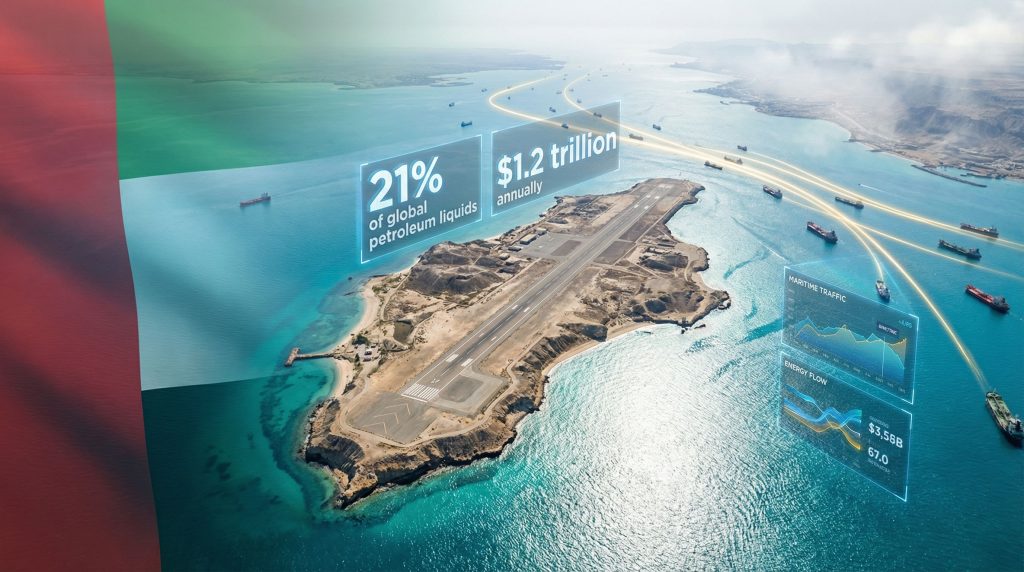
The global energy system's dependence on specific maritime routes creates cascading vulnerabilities throughout international markets. According to the U.S. Energy Information Administration, approximately 20-21% of globally traded crude oil transits through the Strait of Hormuz annually, representing roughly 20-21 million barrels per day of petroleum products.
This concentration creates what strategic analysts term "single point of failure" scenarios, where disruption at one location can trigger:
- Immediate price volatility across global commodity markets
- Supply chain disruptions affecting multiple industrial sectors
- Strategic petroleum reserve activations by importing nations
- Alternative route premium pricing as markets seek backup options
Geographic Positioning and Strategic Value
Small island territories positioned near major shipping lanes possess strategic value far exceeding their physical size. Abu Musa energy chokepoint positioning exemplifies this dynamic, sitting approximately 43.5 miles northwest of Sharjah in a location that provides comprehensive surveillance capabilities over Persian Gulf shipping traffic.
The island's strategic assets include:
| Strategic Feature | Operational Capability | Strategic Impact |
|---|---|---|
| Single runway facility | Heavy aircraft operations | Air superiority projection |
| Radar positioning | Maritime traffic monitoring | Intelligence gathering hub |
| Geographic location | Shipping lane oversight | Transit control capability |
| Defensive positioning | Area denial operations | Chokepoint manipulation |
This positioning enables comprehensive monitoring and potential interdiction of energy shipments valued at over $1 trillion annually, creating leverage that extends far beyond the immediate region.
Regional Power Dynamics and Energy Security
Iran's Strategic Maritime Doctrine
Iran's current control over key island positions creates what military strategists term a "defensive triad" – a coordinated network of positions capable of area denial operations across critical shipping lanes. This strategic positioning enables:
Maritime Surveillance Networks:
- Advanced radar installations monitoring vessel movements
- Integrated coastal defense systems targeting commercial traffic
- Fast-attack craft deployment for rapid interdiction
- Submarine operations threatening tanker security
Economic Leverage Mechanisms:
- Insurance rate manipulation through perceived threat levels
- Shipping delay tactics increasing transportation costs
- Alternative route forcing to drive up energy prices
- Strategic commodity withholding during market stress
Intelligence assessments indicate Iran has weaponised geographic advantages to influence global energy markets, though specific intelligence details remain classified across multiple government sources. Furthermore, concerns about this critical energy chokepoint have prompted international strategic reviews.
UAE Territorial Claims and Legal Frameworks
The United Arab Emirates maintains longstanding sovereignty claims over several Persian Gulf islands, creating unique legal frameworks for potential intervention scenarios. Unlike direct military action against recognised sovereign territory, operations targeting disputed islands could be framed within existing international law precedents.
Legal Justification Categories:
- Territorial Restoration: Supporting legitimate sovereignty claims
- Maritime Security: Protecting international shipping rights
- Energy Security: Ensuring global supply chain stability
- Collective Defense: Responding to economic threats
These frameworks provide potential pathways for international intervention that avoid direct territorial violations whilst addressing broader security concerns. Moreover, Iran's strategic positioning continues to influence regional security calculations.
Military Strategic Scenarios and Operational Planning
Rapid Deployment Operations
Military planners have analysed various scenarios for securing strategic positions in the Persian Gulf region. Theoretical rapid deployment operations would require:
Timeline Considerations:
- Initial deployment: 48-72 hours for secure positioning
- Infrastructure establishment: 5-7 days for operational capability
- Coalition building: 2-3 weeks for international legitimacy
Force Requirements Analysis:
| Operation Scale | Personnel | Key Assets | Strategic Outcome |
|---|---|---|---|
| Single Island | 2,200 (MEU) | F-35B, V-22 Osprey | Immediate chokepoint control |
| Multi-Position | 8,500 (JTF) | Integrated air defence | Regional gateway dominance |
| Coalition Force | 15,000+ | International naval patrol | Legitimised presence |
These scenarios assume coordination with existing allied forces and utilisation of verified military assets including F-35B Lightning II aircraft, KC-130J tactical transports, V-22 Osprey tiltrotors, and Patriot missile defence systems.
Infrastructure and Logistics Considerations
Converting strategic positions into operational military bases requires significant infrastructure development:
Runway Capabilities:
- Current specifications suggest compatibility with modern military aircraft
- Load-bearing capacity analysis needed for heavy bomber operations
- Expansion potential for sustained operational tempo
- Logistics support requirements for extended operations
Defensive Positioning:
- Air defence integration across multiple positions
- Maritime patrol coordination with allied naval forces
- Intelligence gathering and surveillance network establishment
- Supply chain security for sustained operations
Economic Impact Assessment and Market Dynamics
Immediate Market Response Projections
Energy market analysts have developed various models for price responses to chokepoint control scenarios, though specific forecasting remains highly speculative given the complex variables involved. However, any disruption would significantly impact oil price movements across global markets.
Supply Chain Confidence Factors:
- Crude oil price stabilisation through reduced geopolitical risk premiums
- Natural gas market normalisation as LNG shipping resumes normal operations
- Refined product availability increasing as supply chain disruptions ease
- Strategic reserve policy adjustments as emergency measures become unnecessary
Long-term Energy Infrastructure Adaptations
Control of Abu Musa energy chokepoint positions would likely catalyse broader regional infrastructure development. Additionally, potential changes in US oil production decline could further reshape global energy dynamics:
Pipeline Development Projects:
- UAE expansion of alternative export routes reducing Hormuz dependency
- Saudi Arabia's Red Sea terminal capacity increases gaining strategic importance
- Qatar's North Field LNG expansion proceeding with enhanced shipping security
- Iraq's southern export infrastructure maximising production potential
Technology Integration:
- Maritime security monitoring systems for commercial shipping
- Alternative transportation route development reducing chokepoint vulnerability
- Strategic petroleum reserve coordination among importing nations
- Renewable energy integration as supply security consideration
| Market Sector | Short-term Adjustment | Long-term Transformation |
|---|---|---|
| Crude Oil | Volatility reduction | Route diversification |
| Natural Gas | LNG flow restoration | Pipeline network expansion |
| Refined Products | Supply normalisation | Regional refining growth |
| Alternative Energy | Investment acceleration | Energy security integration |
Risk Analysis and Unintended Consequences
Regional Retaliation Scenarios
Military intervention in disputed territories would likely trigger various forms of asymmetric response:
Naval Warfare Escalation:
- Submarine operations against commercial shipping
- Coastal missile strikes targeting regional energy infrastructure
- Proxy force activation across multiple theatres
- Cyber warfare targeting energy control systems
Proxy Network Activation:
- Historical precedents include Houthi attacks on Saudi energy facilities (documented in 2019 Abqaiq incidents)
- Iraqi militia operations against coalition presence
- Syrian-based operations affecting regional stability
- Lebanese proxy involvement expanding conflict scope
Furthermore, the potential for an oil price rally during such conflicts could complicate economic recovery efforts.
International Law and Diplomatic Complications
Legal Challenge Frameworks:
- UN Security Council intervention attempts requiring member state coordination
- International Court of Justice proceedings over territorial sovereignty
- Sanctions regime complications affecting global commerce
- Maritime insurance market disruptions increasing transportation costs
Alliance Strain Considerations:
- NATO member coordination challenges
- Energy-dependent nation policy conflicts
- Regional partnership stability questions
- International law precedent establishment
In addition, any OPEC production impact during such crises would significantly influence global energy prices.
The next major ASX story will hit our subscribers first
Future Energy Geopolitics and Strategic Realignments
Precedent Setting for Maritime Security
Operations targeting strategic chokepoints could establish new international frameworks regarding:
- Collective energy security as shared international responsibility
- Maritime infrastructure protection justifying coordinated intervention
- Territorial dispute resolution through strategic necessity arguments
- Coalition-based security for critical supply chain protection
Regional Power Balance Shifts
Middle Eastern Strategic Realignment:
- Enhanced UAE regional influence through strategic positioning
- Saudi Arabia's energy security improvements through alternative routes
- Regional integration acceleration among Gulf Cooperation Council members
- International energy security framework development
Global Energy Architecture Changes:
- Chokepoint vulnerability mitigation becoming strategic priority
- Alternative transportation route investment acceleration
- Strategic reserve coordination mechanisms among importing nations
- International energy security treaty development
Consequently, energy transition security considerations will become increasingly important in strategic planning.
Investment Strategy Implications and Market Opportunities
Infrastructure Investment Priorities
Strategic developments in Persian Gulf energy security create investment opportunities across multiple sectors:
Transportation Infrastructure Development:
- Pipeline projects bypassing traditional chokepoints showing increased viability
- LNG terminal construction in secure locations gaining strategic value
- Strategic petroleum reserve facility expansion becoming national priority
- Alternative shipping route development attracting government backing
Technology Solutions Growth:
- Maritime security technology advancement receiving increased funding
- Energy supply chain monitoring systems showing market expansion
- Renewable energy grid integration projects gaining strategic importance
- Strategic mineral supply diversification becoming investment focus
Regional Market Development
| Investment Category | Growth Trajectory | Risk Assessment |
|---|---|---|
| UAE Energy Infrastructure | High growth potential | Regional stability dependent |
| Alternative Transport Routes | Medium-high expansion | Construction timeline risks |
| Maritime Security Technology | High demand growth | Regulatory approval challenges |
| Regional Renewable Projects | Steady development | Policy consistency requirements |
Market Psychology Considerations:
- Energy security premium pricing in regional markets
- Insurance rate adjustments for Persian Gulf operations
- Alternative energy acceleration through supply security concerns
- Strategic commodity stockpiling becoming institutional priority
The intersection of geography, energy security, and geopolitical strategy continues evolving as global markets adapt to changing power dynamics. Understanding these complex relationships becomes essential for investors, policymakers, and strategic planners navigating an increasingly interconnected yet vulnerable global energy system.
Disclaimer: This analysis contains speculative scenarios and forward-looking projections that involve significant uncertainty. Geopolitical developments, military operations, and energy market dynamics involve numerous variables that cannot be precisely predicted. Investors should conduct independent research and consider multiple factors before making investment decisions related to energy security or regional geopolitical developments.
Looking to Capitalise on Energy Market Volatility?
Discovery Alert's proprietary Discovery IQ model provides instant notifications on significant ASX mineral discoveries, helping investors identify actionable opportunities during energy sector fluctuations and commodity market shifts. With energy security becoming increasingly critical to global markets, explore our discoveries page to understand how major mineral finds have generated substantial returns throughout history.